
Health is a crown on the heads of the healthy that only the sick can see.



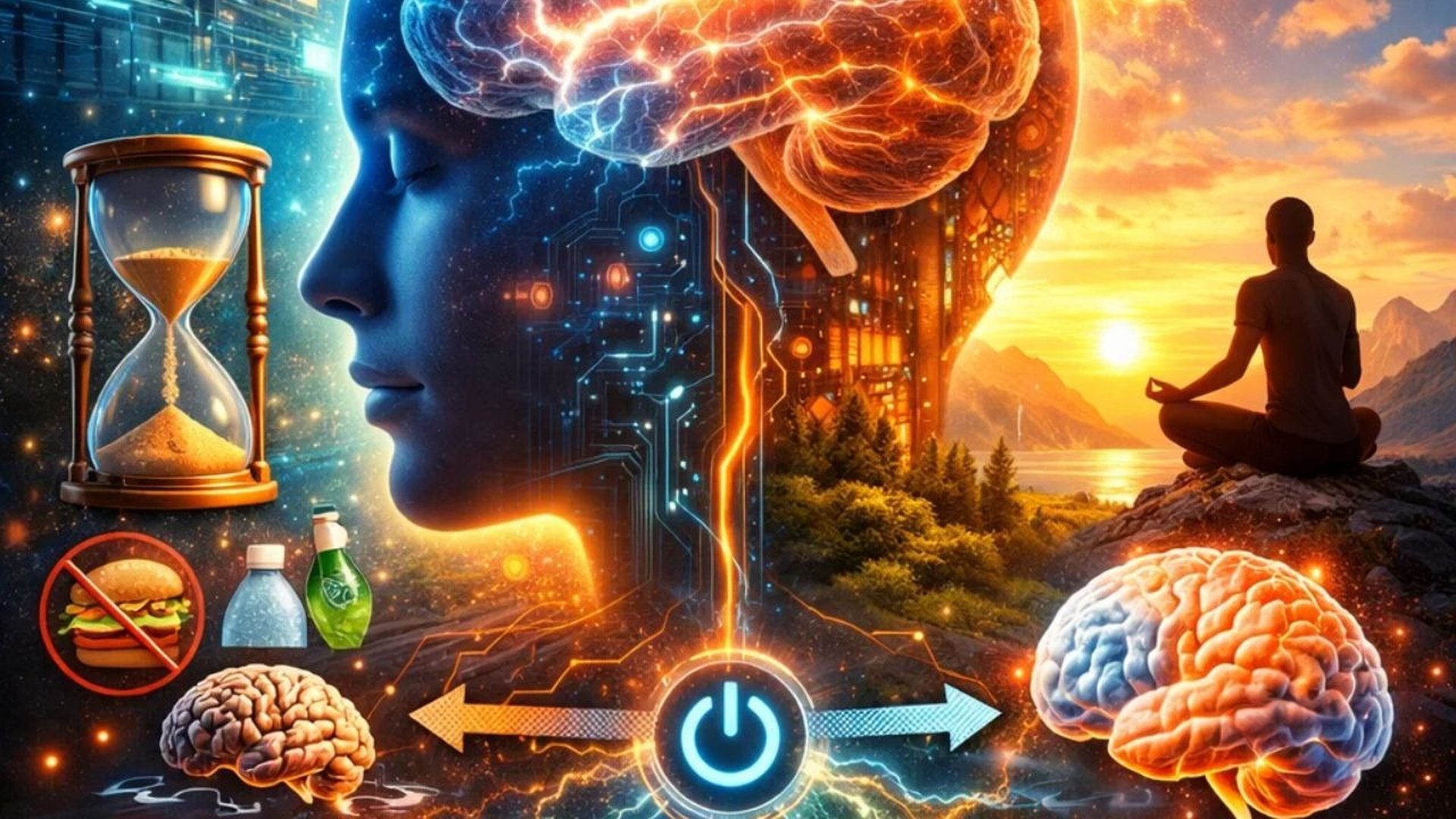
⚡🧠 Infology 2026: Brain Reboot via Fasting
Discover how fasting may enhance brain function, support neuroplasticity, and promote mental clarity. The 2026 Fasting Brain Reset Protocol explained simply.
FASTINGNERVOUS SYSTEM NEUROPSYCHIATRY
Dr Hassan Al Warraqi
4/16/20268 min read

⚡🧠 Infology 2026: Brain Reboot via Fasting
Discover how fasting may enhance brain function, support neuroplasticity, and promote mental clarity. The 2026 Fasting Brain Reset Protocol explained simply.
Overview
This document provides a concise "Infology" summary of the 2026 Fasting Brain Reset Protocol, highlighting key mechanisms and protocol phases for neurological optimization through strategic fasting.
It distills complex scientific information into essential data points for rapid comprehension.
Core Mechanisms of Brain Transformation
Fasting induces profound cellular and molecular changes that enhance brain health:
Mechanism Key Process Brain Impact
Primary Molecule/Pathway
Metabolic Switch Glucose to Ketone (BHB) utilization Cleaner energy, reduced oxidative stress, epigenetic modulation BHB, HDACs
Autophagy & Mitophagy Cellular waste recycling, dysfunctional mitochondria removal Neuroprotection, enhanced neuronal efficiency, reduced neuroinflammation Autophagy, Mitophagy
GABA-Glutamate Rebalancing Shift towards inhibitory GABA dominance Reduced anxiety, improved focus, emotional regulation GABA, Glutamate
Inflammation Reset Suppression of neuroinflammation Protection against neurodegenerative diseases, healthier brain milieu BHB, NLRP3 inflammasome
Longevity Pathways Activation of AMPK and Sirtuins Decelerated brain aging, increased stress resilience, cellular repair AMPK, Sirtuins
2026 Fasting Brain Reset Protocol: Phases at a Glance
The protocol is structured into four critical phases:
Phase Duration Primary Goal Brain Benefit
1. Metabolic Priming 3–5 days Deplete glycogen, upregulate ketone enzymes Smooth transition to ketosis, reduced brain fog
2. The Reset Fast 24–72 hours Peak autophagy, BDNF surge, GABA shift Reduced neuroinflammation, heightened plasticity
3. Controlled Refeed 2 days Suppress mTOR re-engagement Consolidate neural gains, prevent rebound inflammation
4. Maintenance Weekly 24h or monthly 48h Sustain low inflammation, BDNF sensitivity Long-term cognitive resilience, mood stability
Key Considerations
Benefits: Helps with metabolic brain fog, mild cognitive impairment (adjunct), habit rewiring, mood stability (complementary).
Limitations: Does NOT erase traumatic memories, cure PTSD, reverse advanced neurodegeneration, or replace medication for severe conditions (e.g., bipolar, epilepsy, Type 1 diabetes).
Cautions: Avoid for underweight individuals, those with eating disorders, pregnant/breastfeeding women, Type 1 diabetics, or those on specific medications (blood thinners, BP meds, insulin) without strict medical supervision.
Conclusion
The 2026 Fasting Brain Reset Protocol is a sophisticated system optimization, not a literal rewrite.
It creates an optimal biological environment for the brain to self-repair, strengthen connections, and age more slowly, offering a powerful strategy for long-term cognitive health when applied intelligently and consistently.
Frequently Asked Questions (FAQs): The 2026 Fasting Brain Reset Protocol
This document addresses common questions regarding the 2026 Fasting Brain Reset Protocol, providing clear and concise answers based on current scientific understanding.
General Questions
Q1: What is the 2026 Fasting Brain Reset Protocol?
A1: The 2026 Fasting Brain Reset Protocol is a structured, non-pharmacological approach that leverages strategic fasting to optimize brain function, enhance neurological resilience, and improve mental well-being.
It is based on cutting-edge research in neuroscience and metabolic health, demonstrating how fasting reconfigures the brain's operational dynamics and self-protective mechanisms.
Q2: Does fasting literally "rewrite" the brain?
A2: No, fasting does not literally "rewrite" the brain like a computer program. Instead, it profoundly reprograms how the brain functions, adapts, and protects itself at a cellular and molecular level.
It creates an optimal biological environment for the brain to repair itself, clear debris, strengthen connections, and age more slowly.
Q3: Who developed this protocol?
A3: The protocol is based on clinical data and research from esteemed institutions such as the Buck Institute and USC’s Longevity Institute, synthesizing the latest scientific consensus on fasting and brain health.
Mechanisms of Action
Q4: How does fasting affect brain energy?
A4: Fasting induces a "metabolic switch" where the body transitions from using glucose to ketone bodies (primarily beta-hydroxybutyrate or BHB) as its main energy source.
BHB is a cleaner, more efficient fuel for the brain, reducing oxidative stress and stabilizing neuronal function.
It also modulates gene expression related to inflammation and stress resistance.
Q5: What is BDNF, and how does fasting influence it?
A5: BDNF (Brain-Derived Neurotrophic Factor) is a critical protein often called "Miracle-Gro for your brain." Fasting significantly amplifies BDNF production (by 200-400% during extended periods), which is vital for neurogenesis (new brain cell creation), synaptogenesis (new neural connections), and overall neuroplasticity (the brain's ability to reorganize).
Elevated BDNF is linked to improved learning, memory, and cognitive flexibility.
Q6: What are Autophagy and Mitophagy, and why are they important for the brain?
A6: Autophagy is the cellular process of "self-eating" where cells dismantle and recycle damaged components.
Mitophagy is a specialized form targeting dysfunctional mitochondria within neurons.
These processes are crucial for maintaining cellular health, preventing toxic waste accumulation, and enhancing neuronal energy production and resilience, thereby mitigating neuroinflammation.
Q7: How does fasting impact neurotransmitters like GABA and Glutamate?
A7: Modern lifestyles and stress often disrupt the balance between excitatory glutamate and inhibitory GABA.
Extended fasting (48-72 hours) helps recalibrate this balance towards GABA dominance, effectively dampening neural noise and reducing hyper-reactivity.
This leads to subjective experiences of "calm alertness," reduced anxiety, and improved emotional regulation.
Q8: Can fasting reduce brain inflammation?
A8: Yes, fasting actively contributes to reducing chronic low-grade neuroinflammation.
Ketone bodies, particularly BHB, suppress the NLRP3 inflammasome, a key driver of inflammatory responses.
This anti-inflammatory effect creates a healthier brain environment, protecting neurons from damage.
Q9: What are longevity pathways, and how does fasting activate them?
A9: Longevity pathways include AMPK (AMP-activated protein kinase) and sirtuins (often called "longevity genes").
Fasting activates these pathways, which are linked to decelerated brain aging, enhanced cellular repair, and increased resilience against various stressors, ultimately upgrading the brain for adaptability.
Protocol Implementation
Q10: What are the phases of the 2026 Fasting Brain Reset Protocol?
A10: The protocol consists of four phases:
1.Metabolic Priming (3-5 days): Low-carb, time-restricted eating to deplete glycogen and prepare for ketosis.
2.The Reset Fast (36-72 hours): Water-only fast for peak autophagy, BDNF production, and GABA shift.
3.Controlled Refeed (2 days): Low-protein, high-healthy-fat diet to suppress mTOR and consolidate gains.
4.Maintenance: Regular fasting (weekly 24h or monthly 48h) to sustain benefits.
Q11: What should I expect to feel during the protocol?
A11: Subjective experiences vary by phase:
•Days 1-2 ("Uninstall" Phase): Fogginess, hunger, irritability as the body adapts to ketones.
•Day 3 (Transition Phase): Mental sharpness, emotional equanimity, reduced reactivity.
•Post-Refeed (Days 4-7): Enhanced neuroplasticity, new habits stick easily, vivid sensory experiences, attenuated cravings.
Important Considerations and Safety
Q12: What brain-related conditions can fasting help with?
A12: Fasting can reliably help with metabolic brain fog, mild cognitive impairment (as an adjunct), habit rewiring during heightened plasticity, and mood stability (complementary to clinical treatment).
Q13: What can fasting NOT do for the brain?
A13: Fasting will NOT erase traumatic memories, cure PTSD, reverse advanced neurodegeneration, or replace medication for severe conditions like bipolar disorder, epilepsy, or Type 1 diabetes.
Q14: Who should be cautious or avoid this protocol?
A14: Fasting is not suitable for everyone.
High-risk groups who should avoid extended fasts without strict medical supervision include:
•Underweight individuals or those with a history of eating disorders.
•Pregnant or breastfeeding women.
•Individuals with chronic illnesses like advanced diabetes.
•Older adults (70+) due to risks of sarcopenia and electrolyte imbalances.
•Those on specific medications (e.g., blood thinners, blood pressure medication, insulin).
Q15: Is medical supervision necessary?
A15: While the protocol offers significant benefits, individuals with pre-existing health conditions, especially chronic illnesses, or those on medication, should always consult with a healthcare professional before initiating any extended fasting regimen.
=========================================================================================================================================================================================
⚡🧠 Infology 2026: Brain Reboot via Fasting
Your brain is not a fixed machine. It is a dynamic network that rewires, repairs, and regenerates — if you give it the right signal. In 2026, that signal is clearer than ever: fasting.
The Reboot Sequence
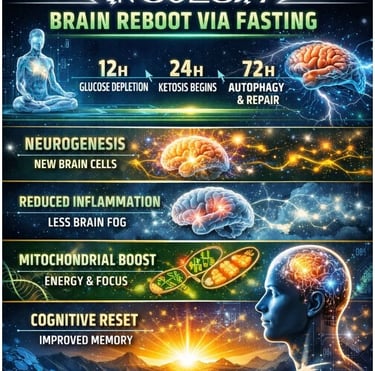
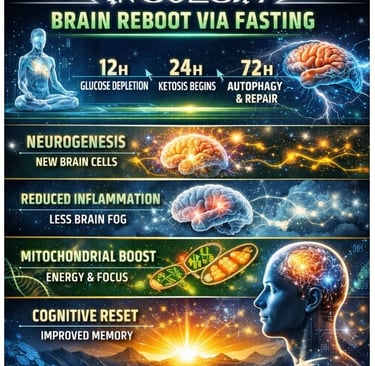
When you stop eating, your brain does not shut down. It upgrades. Within 12 to 24 hours, glucose drops and ketones rise. These molecules do not just fuel neurons. They flip genetic switches that reduce oxidative stress, dampen inflammation, and activate brain repair pathways.
Autophagy kicks in — the brain's deep-clean mode. Damaged mitochondria get dismantled. Misfolded proteins linked to cognitive decline are cleared. Neurons cannot replace themselves like other cells, so they must recycle from within. Fasting is the command that starts this internal maintenance.
BDNF surges — brain-derived neurotrophic factor, the protein that fertilizes neural connections. Memory sharpens. Learning accelerates. Stress resilience strengthens. This is not theory. It is measurable biology.
Neuroinflammation drops. The silent fire behind brain fog, anxiety, and accelerated aging is suppressed. Microglia shift from attack mode to protection. The blood-brain barrier tightens. Thinking becomes clearer, calmer, more sustained.
Why It Feels Like a Reboot
Norepinephrine rises during fasting, increasing alertness without the jitter of caffeine. Ketones burn cleaner than glucose, delivering steady neural energy without metabolic waste. The result is not starvation fog. It is cognitive clarity — the mental sharpness people report after the initial adjustment window.
The 2026 Edge
This year, fasting meets precision. Wearables now track metabolic states in real time, allowing personalized fasting windows instead of rigid rules. The science has moved beyond whether fasting works to how to optimize it for individual neurological goals.
Time-restricted eating remains the foundation: a 16-hour fast with an 8-hour eating window aligned to circadian biology. Periodic 24 to 72-hour fasts push deeper autophagy and stem cell renewal. The 5:2 pattern sustains metabolic flexibility without burnout.
The Non-Negotiables
Fasting is powerful, not universal. If you have diabetes, hypertension, a history of cardiovascular events, or are underweight, pregnant, or managing an eating disorder, medical guidance is essential. Blood sugar, blood pressure, and medication timing must be calibrated professionally.
During eating windows, quality matters. Omega-3s, polyphenols, choline, and adequate protein give the brain the raw materials to rebuild. Sleep amplifies every benefit. Exercise synergizes with fasting to boost BDNF and autophagy. Mental stimulation and stress management seal the gains.
The Bottom Line
Your brain already possesses the code to heal, adapt, and renew. Fasting is the input that executes that code. No pharmaceuticals required. No invasive procedures. Just a metabolic switch that has been part of human biology for millennia, now understood and optimized by 2026 neuroscience.
Reboot your brain. Start with the fast.
https://www.h-k-e-m.com/-infology-2026-brain-reboot-via-fasting
fasting brain, neuroplasticity, brain reset, intermittent fasting, autophagy brain, mental clarity, dopamine reset, longevity, metabolic health, brain optimization
#FastingBrain #BrainReset #Neuroplasticity #IntermittentFasting #MentalClarity #BrainHealth #Longevity #FastingScience #DopamineReset #MetabolicHealth
====================================================================================================================================================================================================
🧠 Fasting and Reverse Aging: Resetting the Brain and Body (Short)
Aging is not just time passing. It is cellular clutter, damaged mitochondria, chronic inflammation, and stiffened metabolic pathways. Fasting does not stop the clock, but it flips the biological switches that slow it down.
When you fast, your body shifts from growth mode to repair mode. Autophagy activates, your cells' internal recycling program. Old mitochondria are dismantled and replaced. Misfolded proteins linked to neurodegeneration are cleared. Inflammatory debris is swept out. Neurons cannot easily replace themselves, so they depend on this deep cleaning to survive decades of use.
Two molecular pathways control this process. mTOR, the growth promoter, quiets down. AMPK, the repair sensor, rises. The result is enhanced fat burning, restored insulin sensitivity, and the birth of new, efficient mitochondria.
Fasting also activates sirtuins, the longevity genes that repair DNA, reduce inflammation, and stabilize the epigenome, the system that controls which genes turn on and off. Over time, this may slow epigenetic aging and make cells biologically younger than your calendar age.
In the brain, fasting triggers a profound reset. Ketones cross the blood-brain barrier and fuel neurons with less oxidative waste than glucose. BDNF surges, supporting new neural connections and protecting against cognitive decline. Neuroinflammation drops. The blood-brain barrier tightens. Mental clarity replaces brain fog.
Metabolically, fasting restores insulin sensitivity after years of resistance. The liver exports stored fat. Visceral fat, the dangerous kind wrapped around organs, begins to burn. Triglycerides fall. Growth hormone pulses, preserving muscle, bone, and skin integrity without the fat-storing effects of insulin.
The gut microbiome shifts toward beneficial bacteria that produce calming neurotransmitters. The cardiovascular system benefits as blood pressure drops and vascular inflammation quiets. Even the skin renews as autophagy clears damaged collagen and growth hormone stimulates fresh structural proteins.
The most accessible approach is time-restricted eating: a daily 16-hour fast with an 8-hour eating window. The 5:2 pattern offers flexibility with two reduced-calorie days per week. Deeper 24 to 72 hour fasts once a month push autophagy and stem cell renewal further. Consistency matters more than intensity. Benefits compound over months and years, not days.
But fasting is not for everyone. People with active eating disorders, those who are underweight, pregnant or breastfeeding women, children, and individuals with certain adrenal or thyroid conditions should avoid it. If you have diabetes, hypertension, high cholesterol, or a history of stroke, fasting can help but only under careful medical supervision. Hydration and electrolyte balance are essential during longer fasts.
Reverse aging is not about looking young forever. It is about preserving function: insulin sensitivity, cognitive clarity, mitochondrial power, and emotional stability as the decades pass. Fasting activates the repair programs already inside you. Your body is not fixed. Cells turnover. Proteins replace. Connections rewire. Fasting is the signal that tells your biology to clean house instead of storing junk. Use it wisely, use it consistently, and let your body do what it was built to do.
===========================================================================================================================================================================================

Get in touch
Address
Cairo Al Rehab
Contacts
+20 109 405 2056
hassanalwarraqi@h-k-e-m.com