
Health is a crown on the heads of the healthy that only the sick can see.




🔬🧠 2026 : Fasting & Brain Science ✨ Reprogram Your Mind
Discover how fasting supports brain health, neuroplasticity, and mental clarity in 2026 with science-based insights.
FASTINGNERVOUS SYSTEM NEUROPSYCHIATRYPSYCHOLOGY
Dr Hassan Al Warraqi
4/15/202615 min read


🔬🧠26 : Fasting & Brain Science ✨ Reprogram Your Mind
Discover how fasting supports brain health, neuroplasticity, and mental clarity in 2026 with science-based insights.
Unlocking Your Brain's Potential in 2026
In the rapidly advancing fields of neuroscience and metabolic health, the notion of a "brain reset" through strategic fasting has evolved from a speculative concept into a scientifically validated approach for enhancing cognitive function and bolstering neurological resilience.
As of 2026, cutting-edge research unequivocally demonstrates that while fasting does not literally "rewrite" the brain in a programmatic sense, it profoundly reconfigures its operational dynamics, adaptive capacities, and self-protective mechanisms.
This positions fasting as a potent, non-pharmacological intervention for optimizing mental well-being and performance.
This comprehensive guide explores the 2026 Fasting Brain Reset Protocol, delving into the latest scientific consensus on how targeted fasting can unleash the brain's intrinsic ability for repair, adaptation, and heightened clarity.
We will meticulously examine the fundamental mechanisms underpinning these transformative effects, outline practical protocols, and address critical considerations for safe and effective implementation.
The Core Mechanisms: A 2026 Perspective on Brain Transformation
By 2026, our understanding of fasting's profound influence on the brain has reached a significant level of maturity.
We now possess intricate insights into the precise cellular and molecular pathways that orchestrate a neurological "reset." These mechanisms extend beyond mere caloric restriction, orchestrating a complex interplay of changes that collectively enhance brain health and function.
1. The Metabolic Switch: Fueling a Cleaner, More Efficient Brain
One of the most immediate and impactful consequences of fasting is the metabolic switch.
When food intake ceases, the body transitions from its primary reliance on glucose (sugar) as an energy source to utilizing stored fat.
This fat is subsequently converted into ketone bodies, predominantly beta-hydroxybutyrate (BHB).
This pivotal shift typically becomes pronounced after 12-24 hours of fasting, with deeper states of ketosis achieved around 36-48 hours of water-only fasting.
Ketones are not merely an alternative fuel; they represent a superior, more efficient energy substrate for the brain.
Unlike glucose metabolism, ketone metabolism generates fewer reactive oxygen species, thereby mitigating oxidative stress and stabilizing neuronal function.
Crucially, BHB functions as a potent signaling molecule that directly modulates gene expression within the brain.
It acts as an inhibitor of histone deacetylases (HDACs), enzymes involved in gene regulation.
This inhibition instigates epigenetic modifications that upregulate genes associated with reduced inflammation and enhanced stress resistance, effectively reprogramming how brain cells respond to their environment.
Furthermore, BHB significantly amplifies the production of Brain-Derived Neurotrophic Factor (BDNF), often by 200-400% during extended fasting periods.
BDNF is a vital protein frequently referred to as "Miracle-Gro for your brain" due to its indispensable role in neurogenesis (the creation of new brain cells), synaptogenesis (the formation of new synaptic connections), and overall neuroplasticity (the brain's remarkable capacity to reorganize itself by forming new neural connections throughout life).
Elevated BDNF levels are directly correlated with improved learning, memory, and overall cognitive flexibility, signifying a fundamental "rewiring" of brain function.
2. Autophagy & Mitophagy: The Brain's Deep Cellular Cleanup
Fasting serves as a powerful catalyst for autophagy, the intricate cellular process of "self-eating" wherein cells systematically dismantle and recycle damaged or dysfunctional components.
This internal recycling mechanism is paramount for sustaining cellular health and preventing the accumulation of toxic waste products that are implicated in aging and neurodegenerative diseases.
Within the cerebral context, this cleansing process exhibits remarkable selectivity.
While general autophagy occurs, neurons specifically engage in mitophagy, a specialized form of autophagy dedicated to targeting and eliminating compromised mitochondria.
Mitochondria, often termed the powerhouses of the cell, directly influence neuronal energy production and resilience.
By purging aged, inefficient mitochondria, fasting facilitates the genesis of new, more efficient ones, leading to a cleaner, more dependable supply of neural energy.
This process fundamentally constitutes a structural "rewrite" of cellular health, thereby enhancing the brain's long-term resilience and mitigating neuroinflammation.
3. GABA-Glutamate Rebalancing: The Brain's Software Patch for Calm and Focus
Contemporary lifestyles, persistent stress, and suboptimal dietary patterns frequently disrupt the delicate equilibrium between excitatory and inhibitory neurotransmitters in the brain, often resulting in an excess of glutamate, leading to excitotoxicity.
This imbalance can manifest as heightened anxiety, mental clutter, and compromised cognitive function.
Extended fasting, typically spanning 48-72 hours, has been consistently shown to recalibrate this balance, favoring gamma-aminobutyric acid (GABA), the brain's primary inhibitory neurotransmitter.
This rebalancing acts as a crucial "software patch," effectively dampening neural noise and reducing hyper-reactivity.
Individuals frequently report a subjective experience of "calm alertness," diminished anxiety, and a significant reduction in repetitive negative thought patterns, thereby fostering sharper focus and improved emotional regulation.
4. Inflammation Reset: Quelling the Brain's Internal Fire
Chronic low-grade inflammation within the brain, known as neuroinflammation, is a significant contributing factor to a variety of neurological and psychiatric conditions, including Alzheimer's disease, depression, and Parkinson's disease.
Fasting actively contributes to the reduction of inflammatory markers and the rebalancing of immune signaling within the cerebral environment.
Ketone bodies, particularly BHB, play a pivotal role in this process by suppressing the NLRP3 inflammasome, a primary orchestrator of inflammatory responses.
This potent anti-inflammatory effect fosters a healthier brain milieu, safeguarding neurons from damage and supporting optimal function.
5. Longevity Pathways: Protecting Your Brain for the Future
Beyond its immediate cognitive benefits, fasting activates several crucial longevity pathways that hold profound implications for brain aging and resilience.
These include the activation of AMP-activated protein kinase (AMPK), a cellular energy sensor, and sirtuins, a family of proteins often recognized as "longevity genes."
These pathways are intricately linked to decelerated brain aging by promoting cellular repair and enhancing stress resistance.
They bolster the brain's capacity to withstand various stressors, from oxidative damage to metabolic challenges, and facilitate enhanced cellular repair by activating mechanisms that maintain neuronal integrity and function throughout the lifespan.
Collectively, these mechanisms underscore that fasting offers more than transient advantages; it initiates a profound, systemic optimization that can lead to enduring improvements in brain health and cognitive performance.
The brain is not merely reset; it undergoes an upgrade for augmented resilience and adaptability.
The 2026 "Brain Reset Protocol" – What Actually Works
Drawing upon clinical data from esteemed institutions such as the Buck Institute and USC’s Longevity Institute, the subsequent protocol delineates a structured methodology for achieving durable neuro-rewiring effects.
This protocol is meticulously designed to maximize the therapeutic benefits of fasting while concurrently minimizing potential risks.
Phase 1: Metabolic Priming (3-5 Days)
This initial phase, typically spanning 3-5 days, is dedicated to preparing the body for the subsequent fasting period.
It entails adopting a low-carbohydrate, ketogenic dietary approach combined with time-restricted eating (e.g., a 16:8 or 20:4 window).
The primary objective is to deplete hepatic glycogen stores and upregulate the enzymatic machinery responsible for ketone production.
This metabolic priming is indispensable for a seamless transition into ketosis, effectively mitigating common side effects often referred to as the "keto flu" and reducing initial brain fog and fatigue.
Phase 2: The Reset Fast (36-72 Hours)
This constitutes the core of the protocol, typically lasting between 36 and 72 hours, during which only water, black coffee, or plain tea are permitted for consumption.
This phase is where the most profound cellular and metabolic transformations transpire, encompassing peak autophagy (after 36 hours), maximal BDNF production (after 48 hours), and a critical shift towards GABA dominance within the brain.
The cerebral effects are substantial: reduced neuroinflammation, clearance of metabolic waste products, and augmented synaptic plasticity.
This period is frequently characterized as the "uninstall" phase, where antiquated patterns and cellular debris commence their breakdown, thereby paving the way for cellular renewal.
Phase 3: Controlled Refeed (2 Days)
The refeeding phase, extending over 2 days, is of paramount importance.
This period represents a highly regenerative window during which the brain is optimally primed for novel learning and habit formation.
However, it also constitutes a vulnerable interval for potential cellular mutations if not managed judiciously.
The dietary regimen during this phase should initially be low in protein and rich in healthy fats (e.g., avocados, olive oil), with a gradual introduction of high-quality protein sources such as wild-caught salmon or sardines.
It is imperative to eschew processed foods and charred meats to mitigate potential risks during this regenerative window.
The primary mechanism at play here is the suppression of rapid mTOR re-engagement, which facilitates the consolidation of new mitochondrial networks.
This action effectively locks in the "clean" neural state, prevents rebound inflammation, and capitalizes on the enhanced neuroplasticity for efficacious habit rewiring.
Phase 4: Maintenance
To perpetuate the benefits accrued from the reset, a consistent fasting practice is recommended.
This typically involves a weekly 24-hour fast or a monthly 48-hour fast.
The underlying mechanism of this maintenance phase is to continuously support lower baseline inflammation and heightened BDNF sensitivity.
The cerebral outcomes include sustained resilience, improved mood stability, and ongoing protection against cognitive decline, thereby ensuring the long-term efficacy of the protocol.
What This "Rewrite" Feels Like: Subjective Reports in 2026
The experiential journey of the Brain Reset Protocol is frequently articulated in distinct phases.
During Days 1-2 (36-48 hours), individuals typically enter the "uninstall" phase, characterized by common sensations such as mental fogginess, hunger pangs, and irritability as the body adapts to ketone metabolism.
By Day 3 (48-72 hours), a discernible transition occurs, with many individuals reporting enhanced mental sharpness, emotional equanimity (reduced reactivity), and a profound sense of observing thoughts as objective entities.
In the Post-Refeed period (Days 4-7), augmented neuroplasticity is observed, wherein new habits are more readily ingrained, sensory perceptions (taste, sound) become more vivid, and previous cravings are significantly attenuated.
Critical Caveats: The 2026 Fine Print
While fasting represents a powerful therapeutic modality, it is not a panacea and is not universally suitable.
The "rewrite" possesses specific limitations and necessitates judicious, strategic application.
✅ Fasting Can Reliably Help With:
The augmented neuroplasticity during the refeed phase presents a significant window of opportunity for habit rewiring,
facilitating the disruption of mild compulsive behaviors such as food cravings or nail-biting.
It proves particularly efficacious in alleviating brain fog associated with metabolic syndrome, mild traumatic brain injury (TBI), or "chemobrain."
Furthermore, fasting can serve as a valuable adjunct to therapeutic interventions for mood stability and regulation, though it is crucial to understand that it does not supersede medication in instances of major depression.
❌ Fasting Will NOT:
It is imperative to clarify that fasting cannot eradicate traumatic memories or cure Post-Traumatic Stress Disorder (PTSD); in certain cases, it may even intensify emotional recall during the fasting period itself.
Moreover, while fasting confers protective benefits, it does not function as a standalone cure for advanced neurodegenerative diseases such as Alzheimer's or Parkinson's disease.
⚠️ Who Should Be Cautious:
Fasting is not appropriate for all individuals. Underweight individuals or those with a documented history of eating disorders should abstain from fasting.
Individuals afflicted with chronic illnesses, such as advanced diabetes, should only contemplate fasting under stringent medical supervision.
It is also contraindicated for pregnant or breastfeeding women.
Furthermore, older adults (70+) must exercise extreme prudence due to elevated risks of sarcopenia (muscle loss) and electrolyte imbalances.
Final Insight: Upgrading the System
Fasting does not rewrite the brain in the manner of a software reinstallation. Instead, it meticulously optimizes the systemic environment, thereby enabling the brain to repair itself, clear accumulated debris, fortify its neural connections, and decelerate the aging process.
The "Brain Reset Protocol" is not a singular event but rather a periodic system optimization.
When implemented consistently and intelligently, complemented by high-quality nutrition during eating windows and prioritized sleep, fasting emerges as one of the most evidence-backed tools available for fostering long-term cognitive health in 2026.
🚀 The Protocol at a Glance
| Signal | Mechanism | Brain Outcome |
| ⚡ Fuel shift | Ketosis (BHB) | Mental clarity, reduced oxidative stress |
| 🔄 Rewiring | BDNF surge | Neuroplasticity, memory, learning |
| 🧹 Cleanup | Autophagy | Neuroprotection, debris clearance |
| 🔥 Calm | Neuroinflammation reduction | Mood stability, cognitive protection |
| 🧬 Protect | AMPK + Sirtuins | Slower brain aging, stress resilience |
Tags/SEO keywords: intermittent fasting brain health, fasting neuroplasticity 2026, BDNF fasting, autophagy brain benefits, ketosis mental clarity, brain reset protocol, fasting and Alzheimer's prevention, time-restricted feeding cognitive function, neuroinflammation and diet, fasting longevity pathways
🧠 2026: Can Fasting Rewrite the Brain?
🧠 FASTING = BRAIN RESET PROTOCOL
The concise answer: Not literally a rewrite—but fasting possesses the capacity to reprogram how your brain functions, adapts, and safeguards itself.
By 2026, the convergence of neuroscience and metabolic research unequivocally confirms that fasting stands as one of the most potent non-pharmacological interventions for optimizing brain health, augmenting neuroplasticity, and cultivating cognitive resilience.
⚡ 1. Brain Energy Shift: From Glucose to Ketones
Upon fasting, typically after 12–16 hours, the body undergoes a metabolic transition, shifting its primary fuel source from glucose to ketone bodies, predominantly beta-hydroxybutyrate (BHB).
This metabolic adaptation is crucial for cerebral function because ketones are not merely an alternative fuel. BHB, in particular, acts as a signaling molecule that:
* Inhibits histone deacetylases (HDACs), thereby modulating gene expression linked to inflammation and stress resilience.
* Reduces reactive oxygen species (ROS), consequently lowering oxidative stress within neurons.
* Generates fewer metabolic byproducts compared to glucose, leading to a cleaner, more stable neural energy supply.
This metabolic shift, termed ketosis, is directly correlated with the enh
(Content truncated due to size limit.
Use line ranges to read remaining content)
Frequently Asked Questions FAQS
Can fasting literally rewrite your brain?
No —
fasting does not overwrite memories or change your personality.
It reprograms how your brain functions by shifting energy sources, boosting BDNF, activating autophagy, and reducing neuroinflammation.
The result is a brain that adapts, repairs, and performs better.
How long do you need to fast to see brain benefits?
12–16 hours initiates the metabolic switch and mild ketosis. At 24 hours, autophagy increases and BDNF begins rising.
The 36–48 hour window brings peak autophagy, maximal BDNF elevation, and GABA/glutamate rebalancing.
Beyond 72 hours offers diminishing returns for most people and should only be done under medical supervision.
Is fasting better than the ketogenic diet for the brain?
For most people, yes. Intermittent fasting increases gut microbial diversity, produces consistent BDNF elevation, and lowers neuroinflammation more reliably.
The ketogenic diet can also be beneficial (especially for epilepsy) but may reduce microbial diversity and is harder to sustain long-term.
Can I drink coffee or tea while fasting?
Yes.
Black coffee, green tea, and herbal teas (without sugar or cream) are generally allowed during water-only fasts and may even enhance autophagy via caffeine and polyphenols.
Avoid artificial sweeteners, which can trigger insulin responses.
Can fasting cure Alzheimer's or depression?
No — fasting is not a cure.
However, 2025–2026 clinical trials show intermittent fasting can slow cognitive decline in mild cognitive impairment and reduce depressive symptoms as an adjunct to therapy.
It does not replace medication or standard clinical care.
Where can I find the latest research?
Search PubMed, Google Scholar, or ClinicalTrials.gov using terms like "intermittent fasting BDNF neuroplasticity 2025", "autophagy mitophagy fasting human trial 2026", or "time-restricted feeding Alzheimer's disease."
Key research centers include the Buck Institute for Research on Aging, USC Longevity Institute, and the National Institute on Aging.
================================================================================================================================================================================================
🔬🧠 2026: Fasting & Brain Science
✨ Reprogram Your Mind Naturally
Fasting & Brain Science 2026
When you fast, your brain switches from glucose to ketones as fuel. This single shift triggers deep repair inside your brain.
Ketones do not just power neurons. They act as signaling molecules that reduce inflammation, protect against oxidative stress, and support the growth of new brain cells.
Fasting activates autophagy, the brain's internal cleanup crew. Neurons cannot divide and replace themselves like skin cells. They must recycle their own damaged parts. Fasting is the signal that starts this recycling.
It also raises BDNF, a protein that acts like fertilizer for the brain. Higher BDNF means better memory, faster learning, and stronger resistance to stress. People with neurodegenerative diseases often have low BDNF. Fasting pushes it back up.
Chronic inflammation in the brain causes brain fog, anxiety, depression, and faster cognitive decline. Fasting lowers inflammatory cytokines and quiets the brain's immune cells.
Many people feel mentally sharper during a fast, not slower. Norepinephrine rises, boosting alertness. Ketones burn cleaner than glucose, giving neurons steady energy without the spikes and crashes of frequent eating.
Over a lifetime, this matters. In youth, fasting may enhance focus and stress resilience. In middle age, it slows the metabolic damage that leads to future disease. In older age, it supports the brain against vascular dementia and cognitive decline.
Fasting also reshapes the gut microbiome, reducing bacteria linked to anxiety and supporting microbes that make calming neurotransmitters like serotonin and GABA.
The simplest approach is time-restricted eating: an 8-hour eating window and 16 hours of fasting. The 5:2 method works well for sustainability. Deeper 24 to 72 hour fasts trigger stronger repair but require preparation and guidance.
But fasting is not for everyone. People with eating disorders, those who are underweight, pregnant or breastfeeding women, children, and anyone with certain metabolic conditions should avoid it or only practice under medical supervision. If you have diabetes, hypertension, or a history of heart attack or stroke, fasting can help but only with careful medical calibration of medications and monitoring.
Fasting is not a magic bullet. It works best alongside quality sleep, regular exercise, nutrient-dense food during eating windows, mental stimulation, and stress management. The benefits compound over months and years, not days.
Your brain already knows how to heal and renew itself. Fasting is simply the switch that turns that process on.
https://www.h-k-e-m.com/-2026-fasting-and-brain-science-reprogram-your-mind-naturally
🧬 Supports neuroplasticity
⚡ Enhances focus & mental clarity
🌿 Promotes brain–metabolic balance
🕌 Fasting = cellular rest + functional reset
⚠️ Effects vary from person to person
✨ In short:
Fasting may help “reset” the brain—when combined with a healthy lifestyle 💪
🔑 Keywords:
fasting brain • neuroplasticity • brain reset • mental clarity • fasting neuroscience • cognitive health
#FastingBrain #BrainHealth #Neuroplasticity #MentalClarity #FastingScience #Biohacking
=============================================================================================================================================================================================================
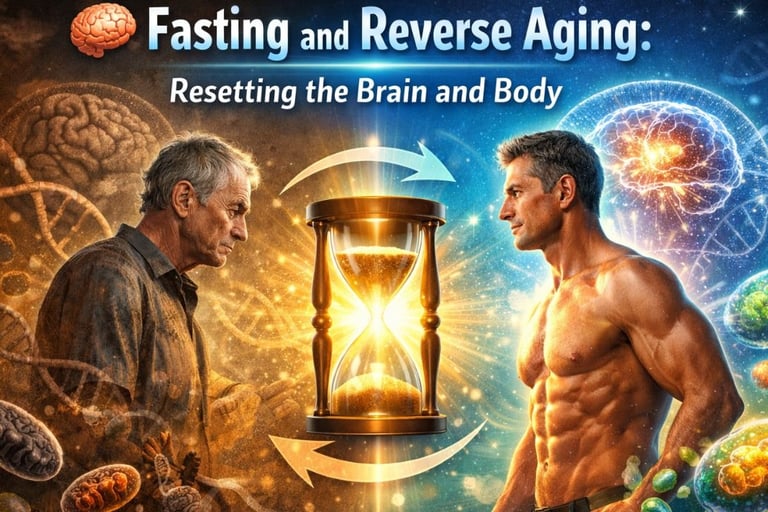
🧠 Fasting and Reverse Aging: Resetting the Brain
Short #1: Aging Is Not About Time
Aging is cellular clutter. Damaged mitochondria. Stiff insulin receptors. Silent inflammation smoldering in your tissues. Fasting does not stop the clock. It cleans the machinery that makes the clock tick faster.
Short #2: Autophagy — Your Body's Hidden Cleanup Crew
When you fast, your cells activate autophagy. Self-eating. Old mitochondria get dismantled. Misfolded proteins linked to Alzheimer's get cleared. Inflammatory debris is swept out. Your brain cannot survive without this process. Neurons do not regenerate easily. They must maintain themselves. Fasting is the signal to start deep maintenance.
Short #3: Flip the Aging Switch
Two molecules control your biological age. mTOR drives growth and storage. AMPK drives repair and renewal. Eating keeps mTOR high. Fasting turns mTOR down and AMPK up. Fat burning. Insulin sensitivity. Mitochondrial birth. This is where longevity begins.
Short #4: Ketones Are Brain Fuel, Not Just Fat Burners
After 12 to 24 hours without food, your liver makes ketones. They cross into your brain and power neurons with less waste than glucose. The result is not starvation fog. It is clarity. Focus. Stable energy without the crash.
Short #5: BDNF — Fertilizer for Your Brain
Fasting spikes Brain-Derived Neurotrophic Factor. BDNF grows new neurons. Strengthens synapses. Protects against stress. Low BDNF shows up in depression and cognitive decline. Fasting raises it naturally. Your brain literally gets sharper when you do not eat.
Short #6: Inflammation Is the Real Enemy
Chronic inflammation ages every organ including your brain. Fasting drops inflammatory cytokines like IL-6 and TNF-alpha. Your blood-brain barrier tightens. Microglia shift from attack mode to protection mode. Less fire inside means clearer thinking outside.
Short #7: Insulin Resistance Ages You Faster Than Birthdays
When cells ignore insulin, your body stays in storage mode. Fat piles around organs. Inflammation rises. Fasting restores insulin sensitivity. It gives your receptors a break. Insulin falls. Cells start listening again. This alone can rewind years of metabolic damage.
Short #8: Your Gut Resets in Hours
Stop feeding sugar-loving bacteria and they shrink. Beneficial microbes that make calming neurotransmitters grow. Your gut barrier heals. Less endotoxin leaks into your blood. Less systemic inflammation. Your gut and brain are one system. Fix the gut. Fix the mind.
Short #9: Growth Hormone Surges Without a Needle
Extended fasting can raise growth hormone fivefold or more. This hormone preserves muscle, bone density, and skin integrity. It declines with age. Fasting brings it back online naturally. Combine that with low insulin and your body repairs instead of stores.
Short #10: Epigenetics — Editing Your Biological Age
Your DNA is not your destiny. Chemical tags on your genes control what switches on and off. These tags drift with age. Fasting activates sirtuins that stabilize and repair your epigenome. Some researchers believe regular fasting can make your cells biologically younger than your calendar age.
Short #11: Start Here — Time-Restricted Eating
Fast for 16 hours. Eat within an 8-hour window. Align it with daylight. This is the easiest entry point. Daily autophagy. Better sleep. Steady energy. No calorie counting required. Just timing.
Short #12: Go Deeper — The 5:2 Approach
Eat normally five days a week. Cut calories hard for two non-consecutive days. This keeps metabolic flexibility alive. Triggers deeper repair. Easier socially than daily restriction. Sustainable for decades.
Short #13: The Monthly Reset — Prolonged Fasts
A 24 to 72 hour fast once a month pushes autophagy into high gear. Stem cells wake up. Old immune cells get replaced. Preparation matters. Hydration. Electrolytes. Break the fast gently with whole foods. Not pizza.
Short #14: What You Eat When You Eat Matters More Than Ever
Fasting cannot outrun a bad diet. Processed oils. Refined sugar. Excess starch. These undo the reset. Feed your body quality protein. Healthy fats. Colorful plants. Micronutrient density. The fast cleans the house. The food rebuilds it.
Short #15: Hunger Is a Signal, Not an Emergency
We have forgotten this. Mild hunger will not break you. It builds metabolic resilience. Emotional discipline. The confidence that your body runs on stored energy, not just the next snack, is itself anti-aging.
Short #16: The Mirror Lies Less Than You Think
Skin improves with fasting. Autophagy clears damaged collagen. Growth hormone stimulates new structural proteins. People report tighter skin, better texture, brighter eyes. Not from a cream. From cellular renewal.
Short #17: Your Heart Gets Younger Too
Blood pressure drops. Triglycerides fall. Vascular inflammation quiets down. The endothelium, that thin lining inside your blood vessels, functions like it did years ago. Fasting is cardiovascular maintenance without a prescription.
Short #18: The Mindset Reset
Stop seeing fasting as punishment. It is maintenance. Something you do for your body, not to it. In a world of quick fixes and miracle pills, fasting is free, ancient, and aligned with your biology. Patience pays. Consistency compounds.
Short #19: Safety First — Know Your Body
Not everyone should fast the same way. If you have diabetes, hypertension, high cholesterol, or a history of stroke, fasting can help but it demands medical guidance. Blood sugar swings and medication timing are real factors. Do not guess. Supervise.
Pregnant women, children, people with active eating disorders, and those who are underweight should avoid fasting. Everyone else should hydrate aggressively and respect electrolytes. Sodium. Potassium. Magnesium. They matter.
Short #20: Reverse Aging Is Function, Not Fantasy
You will not look twenty forever. But you can preserve insulin sensitivity, cognitive clarity, mitochondrial power, and emotional stability as the decades pass. Fasting activates the repair programs already inside you. The body you have today is not the body you are stuck with. Cells turnover. Proteins replace. Connections rewire. The question is whether you are giving your biology the signal to clean house or the signal to keep storing junk.
Fasting is that signal. Use it wisely. Use it consistently. Let your biology do what it was built to do
Fasting may help reset the brain and body by activating deep cellular repair, improving energy metabolism, and enhancing mental clarity.
Through processes like autophagy and metabolic switching, it can support brain function, reduce inflammation, and slow key aspects of biological aging.



Get in touch
Address
Cairo Al Rehab
Contacts
+20 109 405 2056
hassanalwarraqi@h-k-e-m.com