
Health is a crown on the heads of the healthy that only the sick can see.



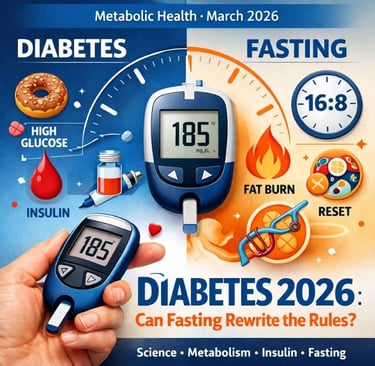
The Role of Fasting⚡ Diabetes 2026 : Can Fasting Rewrite the Rules ?
Discover how fasting impacts diabetes in 2026. Learn about blood sugar control, insulin sensitivity, weight loss, benefits, risks
FASTINGDIABETESDIABETESGENERAL
Dr Hassan Al Warraqi
3/24/202624 min read
The Role of Fasting⚡ Diabetes 2026 : Can Fasting Rewrite the Rules ?
Discover how fasting impacts diabetes in 2026.
Learn about blood sugar control, insulin sensitivity, weight loss, benefits, risks, and what the latest science reveals about fasting for diabetes management.
The complete integrated guide — ADA 2026 Standards, IDF-DAR risk stratification, TRE meta-analyses, stem cell beta cells, baricitinib, GLP-1 in T1D, and every safety interaction you need to know.
Verified from primary peer-reviewed sources.
PublishedMarch 2026 · H-K-E-M Medical Research
Primary sources ADA Standards 2026 · IDF-DAR 2026 · The Lancet · NEJM · Diabetologia 2025 · ADA-EASD Consensus 2026
Reading time~22 minutes · 7 sections · 15 FAQs
Contents
Shared biology: diabetes and fasting operate on the same machinery
What the TRE and IF research actually shows — benefits and caveats
Fasting protocols: TRE, intermittent, prolonged, and Ramadan
Infology at a glance — key findings, tables, patient framework
01 The Evolving Paradigm
Diabetes Management in 2026: From Pharmaceutical Control to Glycemic Resilience
As we move through 2026, the landscape of diabetes management has shifted significantly from a purely pharmaceutical approach to one that integrates advanced technology, personalized nutrition, and chronobiology — the study of the body's internal clock.
With over 500 million adults living with diabetes globally, and projections suggesting this will reach 783 million by 2045, the focus has pivoted from simply managing high blood sugar to achieving what clinicians increasingly call glycemic resilience: metabolic stability across eating, fasting, exercise, and sleep cycles.
In this context, fasting has emerged as a powerful — though complex — therapeutic lifestyle intervention.
The American Diabetes Association's 2026 Standards of Care, released in January 2026, incorporate several pivotal updates that directly intersect with fasting biology and practice.
Recommendation 5.32 now advises using an updated, comprehensive pre-fasting risk assessment to generate a risk score for the safety of religious fasting.
Recommendation 2.22 was added to prompt fasting or random plasma glucose monitoring at each visit for patients on specific medications such as mTOR inhibitors.
The guidelines continue to support shared decision-making based on individual values, preferences, and comorbidities when considering dietary interventions including fasting.
These are not peripheral updates.
They represent the ADA's recognition that fasting — in its various forms — is now sufficiently mainstream and sufficiently studied to warrant formal clinical guidance rather than institutional silence or blanket caution.
The technology shift that makes fasting safer
2026 is marked by the widespread adoption of continuous glucose monitors (CGMs) as standard of care for most people with type 2 diabetes and many with type 1, alongside automated insulin delivery (AID) systems that allow individuals to explore different eating patterns with real-time safety monitoring.
ADA 2026 Recommendation 9.25 updated CGM to be recommended at diabetes onset for adults on insulin or therapies causing hypoglycemia.
Recommendation 9.27 established that AID systems should be offered to all adults with T1D or T2D on insulin — without the previous C-peptide threshold requirement.
These two recommendations together represent the infrastructure shift that makes structured fasting meaningfully safer in 2026 than it was in 2020.
02 Shared Biology
Diabetes and Fasting Operate on the Same Metabolic Machinery
The pathways that define Type 2 diabetes — chronic beta cell overload, insulin resistance, elevated IGF-1 signaling, and dysregulation of the mTOR axis — are precisely the pathways most consistently modulated by fasting.
This is not coincidence.
Both the metabolic dysfunction of diabetes and the physiological response to caloric restriction operate on the same biological substrate: the insulin-glucose-IGF-1 system that governs cellular growth, fuel utilization, and pancreatic function.
The ADA-EASD 2026 Consensus Report on Management of Type 1 Diabetes in Adults confirms that "nutrition, in particular carbohydrate intake, has a major effect on blood glucose levels" and that both low-carbohydrate eating patterns and structured dietary restriction reduce HbA1c levels.
ADA 2026 Recommendation 9.7 states that for adults with T2D and established or high risk of ASCVD, the treatment plan should include GLP-1 RA and/or SGLT2 inhibitor for glycemic management and comprehensive cardiovascular risk reduction — and fasting adds complementary insulin sensitization through AMPK activation and circadian metabolic alignment that pharmacotherapy alone cannot provide.
Metabolic reprogramming
Glucose & IGF-1 axis
Blood glucose↓ acute drop
IGF-1↓ suppressed
mTOR / PI3K↓ downregulated
AMPK↑ activated
Ketone bodies↑ alt. fuel
Beta cell relief
Workload reduction
Beta cell load↓ reduced
Ectopic pancreas fat↓ cleared
1st-phase insulin↑ restored
T2D remission~46% at 12 mo
Autophagy↑ cell cleanup
GLP-1 + fasting
Additive pathways
Insulin sensitivity↑ both pathways
Hepatic fat↓ additive
Appetite↓ complementary
Inflammation CRP↓ both reduce
Harvard 2026Confirmed additive
Circadian alignment
Time-restricted eating
Insulin sensitivityPeaks AM
HbA1c reduction0.3–1.54%
Fasting insulin↓ improved
Blood pressure↓ 4–8 mmHg
Dawn phenomenon↓ reduced
Why fasting matters beyond weight loss
The benefits of fasting in 2026 are understood to extend far beyond simple caloric restriction.
Fasting triggers autophagy — a cellular cleanup process that removes damaged organelles and misfolded proteins.
In the context of diabetes, autophagy may reduce pancreatic inflammation and improve the function of remaining beta cells.
Fasting also resets the circadian rhythm of the liver, reducing hepatic glucose production during the night — a primary driver of the dawn phenomenon that causes elevated fasting blood glucose in many patients despite good overall glycemic control.
Additionally, fasting-induced ketosis provides an alternative fuel source for cells that have developed insulin resistance, potentially breaking the cycle of compensatory hyperinsulinemia that sustains that resistance.
03 The Evidence
What the TRE and Intermittent Fasting Research Actually Shows
The 2025–2026 evidence base for fasting in type 2 diabetes has matured substantially.
A 2026 systematic review and meta-analysis found that time-restricted eating was associated with improved glycemic control, weight management, and metabolic parameters in people with T2DM.
Meta-analyses of six eligible studies demonstrated that TRE significantly reduced fasting glucose by a mean difference of −0.74 mmol/L.
HbA1c reductions of 0.3–1.54% have been observed in medium- to long-term TRE trials, alongside improvements in 24-hour glucose profiles — a range that competes meaningfully with the effect sizes of established oral pharmacotherapy.
TRE meta-analysis 2026 — significant reductions in fasting glucose, HbA1c, and metabolic parameters in T2DM
Systematic review 2026
A 2026 systematic review and meta-analysis confirmed that TRE was associated with improved glycemic control, weight management, and metabolic parameters in people with type 2 diabetes.
Six eligible studies demonstrated TRE significantly reduced fasting glucose (mean difference: −0.74 mmol/L).
HbA1c reductions of 0.3–1.54% observed in medium-to-long-term TRE trials, alongside improvements in 24-hour glucose profiles.
Intermittent fasting more broadly has emerged as a beneficial dietary strategy for managing type 2 diabetes, with studies showing improvements in glycemic control.
Clinical significance: HbA1c reductions of 0.3–1.54% are comparable to DPP-4 inhibitors and additive to GLP-1 therapy.
This places TRE among the most evidence-backed lifestyle additions to T2D pharmacotherapy.
T2D remission — DiRECT trial: 46% remission at 12 months via intensive caloric restriction
Lancet Diabetes & Endocrinology
The DiRECT trial established that intensive dietary caloric restriction produces T2D remission — defined as HbA1c below 6.5% sustained for at least 3 months without glucose-lowering pharmacotherapy — in approximately 46% of participants at 12 months and 36% at 24 months.
ADA 2026 explicitly states that sustained weight loss greater than 10% confers "disease-modifying effects and possible remission of type 2 diabetes,"
making remission a formally recognized therapeutic goal rather than a collateral benefit.
The biological mechanism confirmed in human studies: caloric restriction reduces ectopic fat deposition in the pancreas and liver, lowering lipotoxic stress on beta cells and restoring first-phase insulin secretion.
Clinical significance: T2D remission through caloric restriction is ADA 2026-endorsed. Best candidates: T2D duration under 6 years, baseline HbA1c below 9%, and meaningful weight loss achieved.
Long-standing T2D with exhausted beta cells is less likely to achieve remission.
Important caveats the evidence demands
Benefits are dose- and duration-dependent:Short-term (<3 months) metabolic improvements from TRE may not persist after discontinuation.
The evidence for durable benefit applies to sustained protocols with ongoing adherence — not short-course experiments.
Calorie intake matters independently:A key 2025/2026 study found that time-restricted eating without any reduction in total caloric intake showed no measurable metabolic or cardiovascular benefit.
The timing benefit of TRE appears to be additive to, not a substitute for, appropriate caloric management.
Evidence is still evolving:While promising, long-term outcomes and optimal protocols for fasting in diabetes are under active investigation.
The ADA 2026 Standards explicitly note that dietary interventions including fasting should be implemented within a comprehensive, person-centered care framework.
Not universally appropriate:Individuals with type 1 diabetes, advanced CKD, history of eating disorders, severe frailty, or who are pregnant should not attempt extended fasting protocols without specialist guidance — and some should not fast at all.
"Fasting is not a substitute for foundational care: medication adherence, balanced nutrition, physical activity, and regular monitoring remain essential."
ADA Standards of Care 2026 — person-centered care framework for dietary interventions
04 Clinical Protocols
Fasting Protocols in 2026: TRE, Intermittent Fasting, Prolonged Fasting, and Ramadan
Time-restricted eating — the most studied and safest protocol
TRE remains the most studied and most clinically accessible fasting protocol for people with diabetes.
In 2026, the standard recommendation emerging from clinical practice is a 14:10 or 12:12 schedule — fasting for 14 hours, eating within a 10-hour window — for most individuals with T2D.
The 16:8 protocol (16 hours fasting, 8-hour eating window) is increasingly common in metabolically motivated patients.
For individuals with type 2 diabetes, TRE has demonstrated significant benefits in improving insulin sensitivity, reducing fasting glucose, and aiding in visceral fat loss — a key driver of insulin resistance.
For those with type 1 diabetes, TRE can simplify bolus calculations and improve time-in-range, provided basal insulin rates are appropriately adjusted using AID systems.
Early TRE — ending the eating window by 5–6pm — consistently produces greater glycemic and blood pressure benefits than late TRE (eating window ending at 8pm or later), aligned with the circadian biology of insulin sensitivity peaking in the morning and declining through the afternoon.
Prolonged and intermittent fasting — high benefit, high supervision
Longer fasts of 24–72 hours are now recognized as a potential pathway to induce therapeutic ketosis and promote beta cell rest.
However, the risk of hypoglycemia and euglycemic DKA remains a significant barrier.
The 2026 clinical consensus is that prolonged fasting is contraindicated for individuals with type 1 diabetes due to elevated euglycemic DKA risk.
For type 2 diabetes, prolonged fasting can be effective but is reserved for patients with very close medical supervision, often in a clinical setting with laboratory monitoring of ketones and electrolytes throughout.
Religious fasting — the IDF-DAR 2026 risk stratification framework
The 2026 IDF-DAR (International Diabetes Federation and Diabetes and Ramadan International Alliance) Risk Calculator offers a refined, evidence-based framework for evaluating fasting risk in individuals with diabetes during Ramadan.
The calculator stratifies patients into low, moderate, high, or very high risk categories based on diabetes type, medications, complications, and comorbidities.
It recommends structured pre-Ramadan assessment and individualized counseling, and supports shared decision-making about whether and how safely a person may fast.
The ADA 2026 Standards incorporated this framework through Recommendation 5.32: "Use an updated comprehensive pre-fasting risk assessment to generate a risk score for the safety of religious fasting."
Factor
2026 Recommendation
Safety level
Medication adjustments
Work with care team to adjust insulin or sulfonylureas to reduce hypoglycemia risk before any fasting period
Mandatory before starting
Glucose monitoring
ADA 2026 recommends CGM at diabetes onset for most patients on insulin/hypoglycemia-risk medications; use CGM during fasting window adaptation
Strongly recommended
Hydration & nutrition
Prioritize nutrient-dense, protein-first meals during eating windows; maintain adequate water intake throughout fasting periods
Essential for safety
SGLT2 inhibitors
ADA 2026: hold during prolonged fasting; DKA risk is serious and clinically easy to miss (euglycemic DKA)
High-priority interaction
Sulfonylureas
Dose reduction or hold required during any fasting period — they stimulate insulin regardless of glucose level
High-priority interaction
When to break a fast
Blood glucose <70 mg/dL (3.9 mmol/L) or >300 mg/dL (16.7 mmol/L); symptoms of hypo-/hyperglycemia; acute illness
Absolute triggers
How to break a fast for optimal glycemic control
The composition of the first meal after fasting meaningfully affects the postprandial glucose response.
The 2026 recommendation is to break a fast with a meal that prioritizes protein (30–40g), healthy fats (avocado, olive oil), and fiber-rich non-starchy vegetables.
This protein-first approach slows gastric emptying and blunts the postprandial glucose rise.
Breaking a fast with high-sugar fruits or refined carbohydrates can cause a sharp glucose spike that is difficult to correct, particularly in patients whose postprandial insulin response is already impaired.
05 The 2026 Frontier
Beta Cell Replacement, Disease Modification, and the GLP-1 Revolution
Zimislecel (Vertex VX-880) — stem cell beta cells: 10/12 patients insulin-free at 1 year, regulatory submission 2026
Lancet 2025 · FORWARD study
Vertex Pharmaceuticals' VX-880 (Zimislecel) consists of stem cell-derived post-mitotic beta cells delivered to the portal vein under conventional immunosuppression.
In the expanded Phase 1/2 FORWARD study, 10 of 12 participants who received the full dose remained insulin-independent at one year, with HbA1c below 7% and above 70% time-in-range.
Regulatory submission expected 2026.
Sana Biotechnology is developing a parallel platform using hypoimmune gene-edited cells designed to evade rejection without immunosuppression — first patient treated August 2025; Phase 1 beginning 2026.
Clinical significance: The first scalable potential functional cure for T1D approaching regulatory submission.
Immunosuppression requirement limits initial eligibility to patients with severe hypoglycemia unawareness or recurrent severe hypoglycemic events.
Baricitinib BARICADE Phase 3 — oral pill preserving beta cells in new-onset T1D
NEJM BANDIT · Eli Lilly 2026
Baricitinib is a JAK1/2 inhibitor already approved for rheumatoid arthritis.
The Phase 2 BANDIT trial confirmed it significantly preserved C-peptide levels in new-onset T1D.
Eli Lilly launched two pivotal Phase 3 trials in 2025–2026: BARICADE-DELAY (preventing Stage 2→3 T1D progression) and BARICADE-PRESERVE (preserving beta cell function in newly diagnosed Stage 3a T1D).
Enrollment opened 2026.
The Lancet meta-analysis of 21 T1D immunotherapy trials established a precise quantification: 24.8% greater C-peptide preservation = 0.55% lower HbA1c — making the clinical stakes explicit.
Clinical significance: An oral once-daily pill that delays T1D onset or preserves beta cells in new-onset T1D would be the most accessible disease-modifying therapy in T1D history.
The oral vs infusion (teplizumab) distinction matters enormously for global access.
GLP-1 agents in T1D — ADA 2026 adds GLP-1 RA as obesity treatment option; clinical evidence base grows
ADA Standards Jan 2026 ·
PMC evidence review
The largest clinical trials of GLP-1 receptor agonists in type 1 diabetes conducted with liraglutide 1.8 mg daily showed modest A1C reductions of approximately 0.4%, decreases in weight of approximately 5 kg, and reductions in insulin doses.
The ADA 2026 Standards added GLP-1 RA-based therapy and metabolic surgery as treatment options for obesity in people with type 1 diabetes for the first time.
Prospective trials including evaluation of cardiovascular and kidney outcomes are ongoing.
Real-world evidence consistently shows GLP-1 RAs reduce weight and insulin requirements in T1D.
The SEMA-AP trial established that semaglutide used alongside an AID system improves time-in-range in T1D.
Clinical significance: GLP-1 agents facilitate TRE adherence in T1D by reducing appetite substantially.
Their official addition to ADA 2026 T1D obesity
treatment options removes a key prescribing barrier.
GLP-1 + fasting: the additive case confirmed
A 2026 Lancet Diabetes & Endocrinology study from Harvard confirmed that GLP-1 therapy combined with healthy lifestyle habits delivers significantly greater cardiovascular and metabolic benefits than either approach alone.
TRE is mechanistically complementary to GLP-1 — adding AMPK activation, circadian metabolic alignment, and direct IGF-1 suppression that GLP-1 pharmacology doesn't provide through its incretin mechanism.
ADA 2026 Recommendation 9.7 explicitly supports GLP-1 RA for glycemic management and cardiovascular risk reduction in T2D with ASCVD risk — making the case for adding TRE to this pharmacological foundation compelling.
06 Safety & Patient Selection
Who Can Fast, Who Cannot, and the Drug Interactions That Matter Most
May be appropriate for fasting
→ T2D on metformin alone (low hypoglycemia risk)
→ T2D on GLP-1 agents (no hypoglycemia risk)
→ Prediabetes with overweight/obesity
→ T1D on AID + CGM under endocrinologist guidance
→ T2D on DPP-4 inhibitors (low hypoglycemia risk)
→ Stable T2D in Ramadan (low-moderate IDF-DAR score)
Contraindications or high caution
✕ T1D on SGLT2 inhibitors (euglycemic DKA risk)
✕ T2D on sulfonylureas without dose adjustment
✕ Advanced CKD (eGFR <30) — drug clearance
✕ History of severe hypoglycemia or unawareness
✕ Active eating disorders — absolute contraindication
✕ Pregnancy and breastfeeding
✕ Severe frailty or cachexia
The drug interactions that demand clinical attention
SGLT2 inhibitors carry the highest fasting-interaction risk.
The ADA 2026 hospital and perioperative guidance explicitly states they should be held during acute illness and prolonged fasting.
The mechanism: SGLT2 inhibitors increase urinary glucose excretion, which creates a relative carbohydrate deficit.
Combined with fasting-induced ketone production, this creates conditions for euglycemic DKA — where ketones accumulate to dangerous levels without obvious blood sugar elevation.
Clinically, this is easy to miss: the patient feels unwell but their glucose is normal, so the alarm is not raised.
Any T2D patient on an SGLT2 inhibitor who wishes to practice structured fasting must discuss this explicitly with their prescribing physician before beginning.
Sulfonylureas (glipizide, glimepiride, glyburide) stimulate insulin secretion regardless of blood glucose level — meaning they will continue driving insulin secretion during a fasting period when no glucose is available to buffer the insulin effect.
The ADA 2026 Standards explicitly note: insulin secretagogues "may need to be dose-reduced or held in the setting of illness, fasting, or when eating is otherwise impaired."
For any fasting period beyond typical overnight, discuss dose reduction or temporary hold with your prescribing physician.
Insulin requires active dose management during fasting.
Basal insulin doses typically require reduction of 10–20% in the early weeks of TRE as insulin sensitivity improves.
Prandial insulin doses require adjustment to the timing and size of meals within the eating window.
CGM use — now ADA 2026-endorsed for all insulin-treated patients — is essential during fasting protocol adaptation.
Article 1 · Diabetes & Fasting 2026
Diabetes 2026 & Fasting — The Key Findings at a Glance
The five most clinically significant findings, the fasting protocol safety table, and the patient selection framework — sourced from ADA 2026, IDF-DAR 2026, Lancet, NEJM, and meta-analyses.
ADA 2026 Recommendation 5.32 — new pre-fasting risk assessment for religious fasting
ADA Jan 2026
ADA 2026 added a formal recommendation to use an updated comprehensive pre-fasting risk assessment to generate a risk score for the safety of religious fasting (Recommendation 5.32).
Aligns with the 2026 IDF-DAR Risk Calculator, which stratifies patients into low, moderate, high, and very high risk categories based on diabetes type, medications, complications, and comorbidities.
This formalizes Ramadan-safe fasting assessment into clinical practice globally.
TRE meta-analysis 2026 — fasting glucose ↓0.74 mmol/L, HbA1c ↓0.3–1.54% in T2DM
Meta-analysis 2026
2026 systematic review and meta-analysis confirmed TRE significantly reduces fasting glucose (mean difference −0.74 mmol/L) and HbA1c (0.3–1.54% range in medium-to-long-term trials).
TRE also improved 24-hour glucose profiles, body weight, and metabolic parameters. Effect comparable to DPP-4 inhibitors and additive to GLP-1 therapy.
Critical caveat: TRE without caloric reduction showed no measurable metabolic benefit in one 2025/2026 study — timing and calories work together.
Zimislecel (Vertex VX-880) — 10/12 T1D patients insulin-free at 1 year, regulatory submission 2026
Lancet 2025
Stem cell-derived beta cells Phase 1/2/3 pivotal trial.
10 of 12 full-dose patients insulin-independent at 1 year (HbA1c <7%, TIR >70%).
Regulatory submission expected 2026.
Requires conventional immunosuppression — limiting initial eligibility.
Sana Biotechnology hypoimmune platform (no immunosuppression) in first-in-human testing August 2025.
Baricitinib BARICADE Phase 3 — oral pill targeting beta cell preservation in new-onset T1D
Eli Lilly 2026
BANDIT Phase 2: baricitinib significantly preserved C-peptide vs placebo.
BARICADE-DELAY and BARICADE-PRESERVE Phase 3 enrollment opened 2026.
Lancet T1D meta-analysis quantified stakes: 24.8% more C-peptide = 0.55% lower HbA1c.
Oral once-daily pill vs teplizumab infusion = transformative accessibility advantage globally.
ADA 2026 — CGM for all insulin patients, AID universal, GLP-1 in T1D: the infrastructure of safer fasting
ADA Jan 2026
Recommendation 9.25: CGM at onset for all insulin/hypoglycemia-risk adults.
Recommendation 9.27: AID for all insulin-treated adults without C-peptide threshold.
New T1D subsection: GLP-1 RA and metabolic surgery added as obesity treatment options.
These updates directly improve safety infrastructure for fasting in insulin-treated patients.
Fasting type
T2D effect
T1D safety
Key interaction
Protocol
TRE 14:10 / 16:8
HbA1c ↓0.3–1.54% · ↓ fasting glucose · ↑ sensitivity
Feasible with AID + CGM + endocrinologist
Hold SGLT2 if >24h fast; reduce sulfonylurea
First-line in 2026
Intermittent (5:2)
HbA1c ↓0.5–1.0% · significant weight loss · remission pathway
High supervision required
Mandatory sulfonylurea/insulin dose adjustment
Second-line, supervised
Caloric restriction
T2D remission 36–46% (DiRECT) — ADA 2026 endorsed goal
Requires clinical team oversight
All insulin-lowering drugs require adjustment
Best for remission pathway
Religious (Ramadan)
Improved glycemia in stable T2D · use IDF-DAR 2026 score
High risk in T1D — individualized assessment
IDF-DAR risk stratification mandatory beforehand
Risk stratification first
Prolonged (>24h)
Strong ketosis · max beta cell rest · remission evidence
Contraindicated in T1D (euglycemic DKA)
SGLT2 must be held; clinical monitoring required
Clinical supervision only
verdict — diabetes & fasting 2026
Fasting and diabetes share the same metabolic machinery — this is not a lifestyle coincidence but a biological fact.
ADA 2026 formalizes T2D remission as a therapeutic goal achievable through caloric restriction.
The new IDF-DAR risk calculator provides the most evidence-based framework yet for religious fasting safety in diabetes.
CGM + AID expansion makes fasting safer in insulin-treated patients than at any previous time.
GLP-1 + TRE is the most mechanistically coherent lifestyle-pharmacotherapy combination for T2D in 2026.
The beta cell frontier — Zimislecel approaching approval, baricitinib in Phase 3 — offers the genuine prospect of T1D cure and disease modification that fasting can support but cannot achieve alone.
Non-negotiable safety: SGLT2 inhibitors must be held during extended fasting per ADA 2026.
Sulfonylureas require dose adjustment.
Any fasting in T1D or insulin-treated T2D requires endocrinologist coordination.
15 Clinical Questions Answered from Peer-Reviewed Sources
Every answer sourced from ADA 2026 Standards, IDF-DAR 2026, ADA-EASD Consensus 2026, Lancet, NEJM, Diabetologia, and clinical trial data. Updated March 2026.
Can intermittent fasting cure or lead to remission of type 2 diabetes?
While not a cure in the permanent pharmacological sense, sustained intermittent fasting combined with caloric restriction can lead to T2D remission — defined as achieving HbA1c below 6.5% without glucose-lowering medication for at least three months.
The DiRECT trial achieved this in 46% of participants at 12 months and 36% at 24 months through intensive dietary caloric restriction.
ADA 2026 explicitly recognizes remission as a formal therapeutic goal, requiring sustained weight loss greater than 10%.
Important: remission is not guaranteed to be permanent and requires long-term lifestyle maintenance.
Best candidates are patients with T2D duration under 6 years, baseline HbA1c below 9%, and capacity to achieve meaningful weight loss.
Patients with long-standing T2D and near-complete beta cell exhaustion are less likely to achieve remission through dietary intervention alone.
ADA Standards 2026, Section 8; DiRECT trial — Lancet Diabetes & Endocrinology; Diabetologia 2025 beta cell remission review
Is it safe for someone with type 1 diabetes to fast?
It can be safe, but it requires advanced preparation and ongoing medical supervision.
With modern AID systems and real-time CGM — both of which ADA 2026 now recommends at diabetes onset for insulin-treated patients — many individuals with T1D safely practice TRE (14:10 or 16:8).
The critical step is lowering basal insulin rates during the fasting window to prevent hypoglycemia.
The ADA-EASD 2026 T1D Consensus Report explicitly addresses fasting as a cultural and religious consideration, stating patients should receive individualized medical nutrition therapy in conjunction with their diabetes technology.
Prolonged fasting beyond 24 hours is generally not recommended in T1D due to elevated euglycemic DKA risk — where ketones rise dangerously even while blood glucose appears normal.
Never begin TRE in T1D without: endocrinologist guidance, AID basal programming review for fasting periods, and CGM use throughout the protocol.
ADA Standards 2026, Recommendations 9.25 and 9.27; ADA-EASD T1D Consensus Report 2026
What is the difference between intermittent fasting and just skipping a meal?
Intent and consistency are the key differences.
Intermittent fasting — specifically TRE — involves a structured schedule where you consistently consume all calories within a defined 8–12 hour window every day.
This consistency allows the body to align eating patterns with circadian rhythm, leading to predictable hormonal responses including improved insulin and cortisol patterns.
The liver resets its glucose production rhythm, reducing the dawn phenomenon.
Fasting-induced AMPK activation becomes more robust with consistent repetition.
Sporadic meal skipping — missing breakfast occasionally, eating inconsistently — can actually worsen metabolic outcomes by creating erratic glucose levels, promoting compensatory overeating, and disrupting rather than optimizing the circadian metabolic rhythm.
The metabolic benefits of TRE are specifically tied to the consistent, timed approach — not to the occasional act of not eating.
Circadian TRE biology; ADA 2026 nutritional recommendations framework
Do I need to stop my diabetes medications before starting a fasting regimen?
Absolutely not without prior discussion with your doctor.
This is the most important point before starting any fasting protocol with diabetes medications.
Stopping or reducing medications without guidance can cause dangerous hyperglycemia; but failing to adjust medications before fasting — particularly insulin, sulfonylureas, and SGLT2 inhibitors — can cause dangerous hypoglycemia or DKA.
The 2026 standard protocol is for your endocrinologist to use your CGM data to proactively reduce medication doses before you initiate a fasting regimen.
Metformin and DPP-4 inhibitors generally do not require dose adjustment for TRE and carry no hypoglycemia risk.
SGLT2 inhibitors should be held for extended fasting per ADA 2026.
Sulfonylureas require dose reduction or hold. Insulin requires active basal rate adjustment. GLP-1 agents require no special adjustment for TRE and may actually facilitate fasting by reducing appetite.
ADA Standards 2026, hospital guidance; ADA 2026 Section 9 pharmacologic approaches
I take an SGLT2 inhibitor (empagliflozin, dapagliflozin, canagliflozin). Is 16:8 TRE safe?
This is the highest-priority drug-fasting interaction in diabetes care.
The ADA 2026 Standards explicitly state SGLT2 inhibitors should be held during acute illness and surgical procedures involving prolonged fasting.
For 16-hour TRE: risk is lower than for 24+ hour fasts but is not zero — discuss explicitly with your prescribing physician before starting.
For any fast exceeding 24 hours: hold the SGLT2 inhibitor beforehand.
The risk is euglycemic DKA — where ketones accumulate to dangerous levels without obvious blood sugar elevation.
This is clinically easy to miss: symptoms (nausea, abdominal pain, fatigue) may be attributed to fasting discomfort rather than recognized as DKA.
Monitor for these symptoms during any fasting period on SGLT2 inhibitors and seek medical review promptly if they appear.
Ketone monitoring (blood or urine) during extended fasting on SGLT2 inhibitors is advisable.
ADA Standards of Care 2026, perioperative/hospital section; StatPearls SGLT2 inhibitors 2025
I'm on a sulfonylurea. Is any fasting safe?
Sulfonylureas are the most important drug class to address before any fasting protocol.
ADA 2026 explicitly notes insulin secretagogues may need to be dose-reduced or held during fasting or when eating is impaired.
The reason: sulfonylureas stimulate insulin secretion regardless of blood glucose level, creating substantial hypoglycemia risk during any fasting period where no carbohydrate is available to buffer the insulin effect.
For standard overnight fasting (8–10 hours): usually manageable with existing doses, but monitor glucose in the early morning.
For 16-hour TRE or any longer protocol: discuss dose reduction or temporary hold with your prescribing physician beforehand. CGM use — now ADA 2026-endorsed for relevant therapy contexts — is particularly valuable for sulfonylurea-treated patients beginning any fasting regimen.
If glucose falls below 80 mg/dL (4.4 mmol/L) during fasting windows, this is a signal to break the fast and discuss medication adjustment.
ADA Standards 2026, Section 13; sulfonylurea pharmacology and insulin secretagogue guidelines
I'm on metformin and a GLP-1 agent. Does adding TRE provide additional benefit?
Yes — and this is one of the most evidence-compatible combinations in T2D management.
Metformin causes no hypoglycemia and has no problematic food-timing interactions; take it during your eating window with food.
GLP-1 agents reduce appetite substantially, making fasting windows more physiologically achievable for most patients.
Mechanistically, TRE adds AMPK activation and circadian metabolic alignment that GLP-1 pharmacology doesn't provide through its incretin mechanism.
A 2026 Lancet Diabetes & Endocrinology study confirmed GLP-1 therapy combined with healthy lifestyle habits delivers significantly greater metabolic and cardiovascular benefits than either approach alone — and TRE is among the most evidence-backed lifestyle additions.
TRE also may facilitate earlier GLP-1 dose stabilization for patients with GI side effects by reducing the total caloric load during the adaptation period.
Lancet Diabetes & Endocrinology 2026, Harvard; ADA Standards 2026, Section 9
What exactly does the IDF-DAR 2026 Ramadan risk calculator do?
The 2026 IDF-DAR (International Diabetes Federation and Diabetes and Ramadan International Alliance) Risk Calculator provides a structured, evidence-based framework for evaluating how safely a person with diabetes can observe Ramadan fasting.
It stratifies patients into low, moderate, high, or very high risk categories based on: diabetes type and duration; current medications and their hypoglycemia potential; presence of complications (retinopathy, nephropathy, neuropathy, cardiovascular disease); recent acute episodes (DKA, hypoglycemia); comorbidities; age and frailty indicators.
ADA 2026 Recommendation 5.32 formally adopted this approach: "use an updated comprehensive pre-fasting risk assessment to generate a risk score for the safety of religious fasting."
The calculator supports shared decision-making about whether and how safely a person may fast, recommends structured pre-Ramadan medical assessment at least 4–8 weeks before Ramadan begins, and provides individualized counseling about medication adjustments, glucose monitoring frequency, and when to break a fast.
Discuss your specific risk category with your diabetes care team before Ramadan begins.
ADA Standards 2026, Recommendation 5.32; IDF-DAR Risk Calculator 2026; Thieme Connect IDF-DAR 2026 update
When should I break a fast if I have diabetes?
The ADA 2026 Standards provide clear glucose thresholds for breaking a fast: blood glucose below 70 mg/dL (3.9 mmol/L) — hypoglycemia that requires immediate action regardless of fasting intention.
Blood glucose above 300 mg/dL (16.7 mmol/L) — hyperglycemia requiring treatment and potentially indicating DKA development.
Any symptoms of hypoglycemia (shakiness, sweating, confusion, palpitations) or hyperglycemia (excessive thirst, frequent urination, nausea, abdominal pain).
Any acute illness during a fasting period.
For T1D patients and those on SGLT2 inhibitors: also break the fast if ketones are elevated above your physician-specified threshold, even if blood glucose appears normal. The euglycemic DKA risk means normal glucose does not equal safety during fasting on these medications.
For Ramadan specifically: the IDF-DAR 2026 guidelines include the same glucose thresholds as absolute triggers to break the fast regardless of religious intent — these are medical imperatives, not optional.
ADA Standards 2026, fasting glucose safety thresholds; IDF-DAR 2026 fasting safety guidelines
Can fasting preserve my remaining beta cells if I was recently diagnosed with T1D?
The biological rationale is genuinely plausible — reducing beta cell metabolic workload through fasting and suppressing systemic inflammation are mechanistically consistent with slowing autoimmune beta cell loss.
However, dedicated human clinical trials testing fasting specifically as a beta cell preservation strategy in new-onset T1D have not been conducted.
The trials that are directly addressing this question pharmacologically — BARICADE-DELAY and BARICADE-PRESERVE with baricitinib — are ongoing and their results will define what is achievable in beta cell preservation.
The Lancet meta-analysis of 21 T1D immunotherapy trials established the quantitative stakes: 24.8% greater C-peptide preservation = 0.55% lower HbA1c.
Any meaningful beta cell preservation — through immune modification, reduced metabolic demand, or both — translates directly to better glycemic outcomes.
Fasting in new-onset T1D requires especially close endocrinologist coordination: insulin requirements are variable and unstable during the honeymoon phase, making the metabolic complexity of fasting particularly demanding to manage safely.
BARICADE trials — Eli Lilly 2026; Lancet Diabetes & Endocrinology T1D immunotherapy meta-analysis
What is the best food to eat to break a fast for blood sugar control?
The goal is to avoid a rapid postprandial glucose spike while providing adequate protein for satiety and muscle maintenance.
The 2026 evidence-based recommendation is to break a fast with a meal prioritizing: protein first (30–40g of high-quality protein — eggs, poultry, fish, legumes); healthy fats (avocado, olive oil, nuts) which slow gastric emptying and blunt the glucose rise; and fiber-rich non-starchy vegetables (leafy greens, cruciferous vegetables, cucumber).
This protein-first, fat-present approach takes advantage of the incretin response and gastric emptying kinetics to minimize the glucose excursion from refeeding.
What to avoid when breaking a fast: high-glycemic index foods (white bread, fruit juice, sweetened beverages, refined carbohydrates), which cause sharp glucose spikes that can be difficult to correct, particularly in patients whose postprandial insulin response is impaired.
For T1D patients on AID: consider pre-bolusing 15–20 minutes before breaking the fast rather than dosing at the moment of eating — your AID system will respond faster to a pre-loaded insulin curve than to the glucose spike itself.
Postprandial glycemia management guidelines; protein-first meal timing research; AID pre-bolusing evidence
Does Ramadan fasting provide the same metabolic benefits as intermittent fasting?
Ramadan fasting shares some metabolic properties with TRE — 13–17 hours of daily caloric abstinence for 30 consecutive days — and observational studies consistently document glycemic improvements in well-managed T2D during Ramadan, consistent with TRE biology.
However, Ramadan differs from standard TRE in important clinical ways: it typically includes complete fluid and medication abstinence during daylight hours in many interpretations, creating dehydration and specific drug-timing challenges that standard TRE does not present.
The nocturnal eating pattern (pre-dawn suhoor and post-sunset iftar) also reverses the circadian alignment that makes early TRE most metabolically effective — eating primarily at night is metabolically less favorable than eating in morning-to-afternoon windows.
The IDF-DAR 2026 framework accounts for these differences with its risk stratification approach.
For people with well-managed T2D on metformin alone (low-moderate IDF-DAR risk), Ramadan can be metabolically beneficial and manageable.
For T1D patients or those on insulin, sulfonylureas, or SGLT2 inhibitors: the clinical management requirements are more intensive and the IDF-DAR risk assessment is mandatory before participating in Ramadan fasting.
IDF-DAR 2026 risk stratification; ADA Standards 2026 Recommendation 5.32; Ramadan TRE circadian comparison studies
Can fasting help prevent type 2 diabetes if I'm prediabetic?
Yes — and this is one of the most robustly evidence-backed applications of fasting in metabolic health.
The Diabetes Prevention Program established that lifestyle intervention achieving 7% weight loss reduced T2D incidence by 58% in prediabetic adults — significantly outperforming metformin alone (31%).
ADA 2026 recommends structured lifestyle modification programs as first-line prevention in prediabetes.
TRE-based protocols that achieve 7–10% weight loss in overweight prediabetic adults reach the DPP threshold while additionally providing AMPK activation, circadian metabolic alignment, and insulin sensitivity improvements that operate through mechanisms beyond caloric restriction alone.
Prediabetes is the optimal intervention window: beta cell function is preserved, insulin sensitivity can recover meaningfully, and return to normoglycemia is achievable in many patients with sufficient lifestyle change sustained for 12–24 months.
The evidence supports starting early — before progression to T2D — because beta cell recovery becomes progressively less achievable as disease duration increases.
ADA Standards 2026, Section 2 prediabetes screening; Diabetes Prevention Program trial data; circadian AMPK mechanisms in TRE
What are the absolute contraindications to fasting in diabetes?
Based on the synthesized guidance from ADA 2026 and IDF-DAR 2026, individuals with diabetes who should not practice extended fasting without specialist clinical endorsement include: patients with active or
history of eating disorders (absolute contraindication — fasting reinforces disordered restriction patterns); patients with advanced chronic kidney disease (eGFR below 30 — impaired drug clearance and dehydration risk); T1D patients on SGLT2 inhibitors without ketone monitoring capacity; patients with severe or unpredictable hypoglycemia unawareness; pregnant or breastfeeding patients; and patients with severe frailty, malnutrition, or cachexia.
For T1D specifically, the ADA and IDF-DAR both classify T1D as high-to-very-high risk for religious fasting unless: they use an AID system; have excellent hypoglycemia awareness; receive individualized medical nutrition guidance in conjunction with their diabetes technology; and have completed a structured pre-fasting clinical assessment.
Even then, prolonged fasting beyond 24 hours is generally not recommended in T1D due to euglycemic DKA risk.
ADA Standards 2026; IDF-DAR Risk Calculator 2026; contraindications to extended fasting in diabetes populations
When will stem cell beta cell therapy for T1D actually be available?
Vertex Pharmaceuticals' Zimislecel (VX-880) has regulatory submission expected in 2026 following impressive Phase 1/2 FORWARD study data.
If approved — and the data are compelling — it would initially be indicated for adults with T1D experiencing severe hypoglycemia unawareness or recurrent severe hypoglycemic events, where the chronic immunosuppression requirement is justified by the clinical urgency.
It will not immediately be appropriate for all T1D patients, particularly younger patients without these specific clinical indications.
The next generation — Sana Biotechnology's hypoimmune platform, with gene-edited cells that evade immune rejection without requiring immunosuppression — entered first-in-human testing in August 2025 and will begin Phase 1 in 2026.
If this platform validates, it could eventually open beta cell replacement to the full T1D population without the immunosuppression barrier.
However, Phase 1 data from Sana will take several years to mature into Phase 3 and regulatory submission.
Realistically, a hypoimmune beta cell therapy accessible to all T1D patients without immunosuppression is a 2030+ prospect.
Lancet 2025 — T1D future therapy review; FORWARD study data; Sana Biotechnology August 2025 milestone announcement
Medical disclaimer
This article is published by H-K-E-M.com for informational and educational purposes only.
It reflects peer-reviewed research and clinical guidelines as of March 2026.
It does not constitute medical advice, a diagnosis, or a treatment recommendation. Individual medical circumstances vary significantly.
No content in this article should be used as the basis for starting, stopping, or modifying any diabetes management plan, medication, or dietary protocol without prior consultation with a qualified endocrinologist, diabetes care team, and registered dietitian.
ADA Standards of Care 2026 cited directly; all clinical guidance reflects the current understanding as of the date of publication and is subject to revision as new evidence emerges.
===============================================================================================================================================================================
The Role of Fasting⚡ Diabetes 2026 : Can Fasting Rewrite the Rules ?
https://www.h-k-e-m.com/the-role-of-fasting-diabetes-2026-can-fasting-rewrite-the-rules-
diabetes fasting 2026 · ADA Standards of Care 2026 fasting · time-restricted eating type 2 diabetes TRE meta-analysis · T2D remission caloric restriction DiRECT trial · IDF-DAR Ramadan diabetes risk calculator 2026 · baricitinib BARICADE T1D beta cell preservation · Zimislecel Vertex VX-880 stem cells · GLP-1 type 1 diabetes ADA 2026 · SGLT2 inhibitor fasting euglycemic DKA risk · automated insulin delivery AID fasting · CGM fasting diabetes safety 2026 · intermittent fasting HbA1c reduction 0.3–1.54% ·
religious fasting diabetes risk stratification · beta cell workload reduction caloric restriction ·
ADA Recommendation 5.32 9.25 9.27 ·
h-k-e-m.com diabetes fasting complete guide
#DiabetesFasting#ADA2026#T2DRemission#TRE#GLP1T1D#BetaCells#SGLT2Fasting#IDF-DAR#HKEM
===================================================================================================================================================================================

Get in touch
Address
Cairo Al Rehab
Contacts
+20 109 405 2056
hassanalwarraqi@h-k-e-m.com