
Health is a crown on the heads of the healthy that only the sick can see.


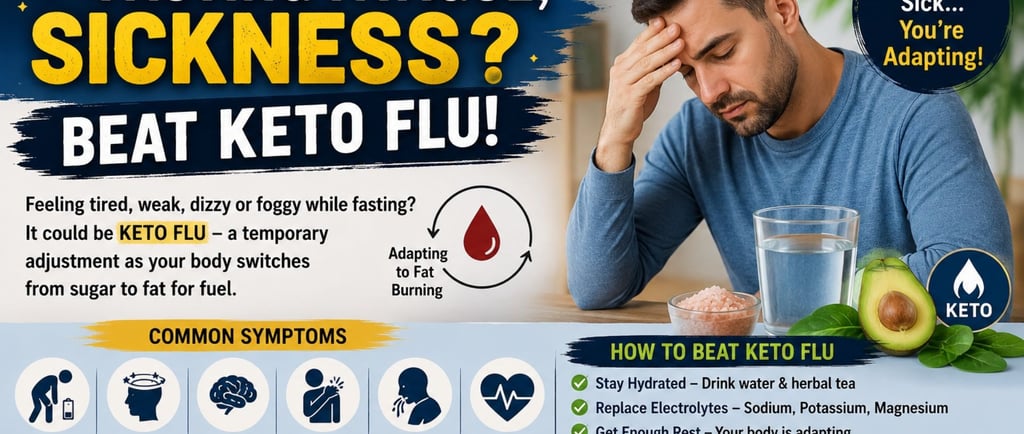
Fasting Fatigue , Sickness? Beat Keto Flu!
Experiencing fasting fatigue or keto flu? Learn the common causes, symptoms, prevention strategies, hydration tips, electrolyte balance, and how to support your body during fasting safely.
FASTING
Dr Hassan Al Warraqi
7/13/20268 min read
Fasting Fatigue , Sickness? Beat Keto Flu!
Experiencing fasting fatigue or keto flu? Learn the common causes, symptoms, prevention strategies, hydration tips, electrolyte balance, and how to support your body during fasting safely.
"Fasting sickness" is not an official medical diagnosis.
It is a general term people use to describe the collection of symptoms that can occur during fasting, especially during the first few days when the body adapts to using stored fat instead of glucose for energy.
It is also commonly referred to as fasting fatigue or, when associated with nutritional ketosis, the keto flu.
Most cases are temporary and resolve as the body adapts, but some symptoms may indicate a serious medical problem rather than a normal response to fasting.
Why does fasting sickness happen?
Several physiological changes contribute to these symptoms.
1. Depletion of glycogen stores
During the first 12–24 hours of fasting, the body uses glycogen (stored carbohydrate) in the liver and muscles.
As glycogen is depleted, the body begins relying more heavily on fat for energy.
This transition may cause:
Fatigue
Weakness
Reduced exercise performance
2. Ketosis
After approximately 24–72 hours of fasting (depending on the individual), the liver begins producing ketone bodies from fat.
Although the brain gradually adapts to ketones, the transition period may produce:
Headaches
Mental fog
Irritability
Mild nausea
3. Fluid loss and dehydration
Each gram of glycogen is stored with several grams of water.
As glycogen is broken down, water is released and excreted.
This can lead to:
Thirst
Dry mouth
Dizziness
Headaches
Low blood pressure
4. Electrolyte changes
Fasting increases sodium excretion through the kidneys, particularly during the first few days.
Low sodium, potassium, or magnesium may contribute to:
Muscle cramps
Weakness
Fatigue
Heart palpitations
Dizziness
5. Blood sugar changes
Blood glucose naturally falls during fasting, although healthy individuals usually maintain safe levels through hormonal regulation.
Some people may experience:
Hunger
Trembling
Sweating
Difficulty concentrating
People taking diabetes medications—especially insulin or sulfonylureas—are at increased risk of hypoglycaemia (dangerously low blood sugar).
6. Caffeine withdrawal
If fasting also involves stopping coffee, tea, or energy drinks, withdrawal may cause:
Headaches
Sleepiness
Irritability
Difficulty concentrating
Common symptoms
Typical symptoms include:
Headache
Hunger
Fatigue
Weakness
Dizziness
Light headedness
Mild nausea
Irritability
Brain fog
Poor concentration
Bad breath (from acetone produced during ketosis)
Feeling cold
Mild constipation
These symptoms are generally mild and improve within a few days.
How long does fasting sickness last?
The duration depends on the individual and the type of fast.
Typical timeline:
Day 1: Hunger and mild fatigue are common.
Days 2–3: Symptoms often peak as glycogen becomes depleted and ketosis develops.
Days 4–7: Many people report improved energy and reduced hunger as the body adapts.
Not everyone experiences noticeable symptoms.
Factors that increase the likelihood of fasting sickness
Symptoms may be more likely if you:
Begin a prolonged fast suddenly
Are dehydrated
Consume very little salt
Have poor sleep
Stop caffeine abruptly
Perform strenuous exercise while fasting
Have diabetes or another chronic illness
Take medications affected by food intake
How to reduce fasting sickness
If fasting is medically appropriate for you, these measures may help:
Drink adequate water.
Maintain appropriate electrolyte intake if your fasting plan allows it.
Avoid strenuous exercise during the adaptation period.
Get sufficient sleep.
Reduce caffeine gradually before starting a fast if you normally consume large amounts.
Break prolonged fasts gradually rather than eating a very large meal immediately.
When fasting sickness is not normal
Seek medical attention immediately if you experience:
Loss of consciousness
Severe dizziness or repeated fainting
Confusion
Difficulty speaking
Sudden weakness on one side of the body
Severe chest pain
Shortness of breath
Persistent vomiting
Seizures
An irregular or very rapid heartbeat
Severe hypoglycaemia
Inability to keep fluids down
These symptoms are not considered a normal part of fasting.
Refeeding syndrome
Refeeding syndrome is a serious complication that occurs after prolonged fasting or severe malnutrition—not during the fast itself.
When carbohydrates are reintroduced after a prolonged period without adequate nutrition, insulin secretion increases rapidly, causing phosphate, potassium, and magnesium to move into cells.
This can result in:
Low phosphate (hypophosphatemia)
Low potassium (hypokalaemia)
Low magnesium (hypomagnesemia)
Fluid overload
Cardiac arrhythmias
Heart failure
Respiratory failure
Neurological complications
People at highest risk include those who have:
Fasted for five days or more (especially much longer fasts)
Experienced severe weight loss
Had prolonged poor nutritional intake
Suffered from chronic malnutrition or eating disorders
High-risk individuals should restart eating gradually under medical supervision.
Who should be cautious about fasting?
Medical supervision is recommended for people with:
Diabetes, particularly those taking insulin or sulfonylureas
Pregnancy or breastfeeding
Chronic kidney disease
Significant liver disease
Heart disease
A history of stroke
Eating disorders
Frailty or advanced age
Underweight or malnourished status
Key points
"Fasting sickness" refers to a temporary group of symptoms that can occur as the body adapts to fasting.
The most common causes are glycogen depletion, ketosis, dehydration, electrolyte shifts, and sometimes caffeine withdrawal.
Most symptoms are mild and resolve within a few days.
Severe symptoms—such as confusion, chest pain, fainting, or severe hypoglycemia—are not normal and require prompt medical evaluation.
Refeeding syndrome is a separate, potentially life-threatening condition that can occur when nutrition is restarted after prolonged fasting or severe malnutrition. Proper refeeding is essential for those at risk.
Frequently Asked Questions (FAQs) About Fasting Sickness
1. What is fasting sickness?
Fasting sickness is an informal term for a group of temporary symptoms that some people experience when they begin fasting.
These symptoms occur as the body adjusts from using glucose as its primary fuel to using stored fat and ketones.
2. Is fasting sickness a real medical condition?
No.
"Fasting sickness" is not an official medical diagnosis.
It is a descriptive term used to refer to common adjustment symptoms during fasting.
3. What are the most common symptoms?
Common symptoms include:
Headache
Fatigue
Hunger
Dizziness
Lightheadedness
Nausea
Irritability
Brain fog
Difficulty concentrating
Bad breath
Muscle weakness
Feeling cold
4. When does fasting sickness usually begin?
Symptoms typically begin within the first 12–48 hours of fasting, although timing varies depending on the person's metabolism, previous diet, and fasting duration.
5. How long does fasting sickness last?
For most people, symptoms improve within 2–7 days as the body adapts to fasting and ketosis.
6. Why do headaches occur during fasting?
Headaches may result from:
Dehydration
Low sodium intake
Caffeine withdrawal
Changes in blood glucose
Hormonal changes during fasting
7. Does everyone experience fasting sickness?
No.
Many people experience few or no symptoms, while others have noticeable discomfort during the first few days.
8. Can fasting cause low blood sugar?
Yes.
Healthy individuals usually maintain safe blood glucose levels during fasting.
However, people with diabetes, especially those taking insulin or sulfonylureas, are at higher risk of hypoglycemia.
9. How can I reduce fasting sickness?
Helpful strategies include:
Drink plenty of water.
Maintain adequate electrolyte intake if appropriate.
Get enough sleep.
Avoid excessive physical activity during the first few days.
Reduce caffeine gradually before fasting.
Break prolonged fasts gradually.
10. Is dizziness normal during fasting?
Mild dizziness can occur due to dehydration or temporary low blood pressure.
However, severe dizziness, fainting, or persistent lightheadedness should not be ignored and requires medical evaluation.
11. Why do I have bad breath while fasting?
During ketosis,
the body produces ketones, including acetone, which can be exhaled through the lungs and cause a fruity or metallic odor on the breath.
12. Is nausea common while fasting?
Yes.
Mild nausea can occur, particularly during the body's adjustment period.
Persistent or severe nausea, especially with vomiting, is not typical and should be evaluated.
13. Can fasting cause muscle cramps?
Yes.
Muscle cramps may occur due to dehydration or low levels of electrolytes such as sodium, potassium, or magnesium.
14. When should I stop fasting?
Stop fasting and seek medical attention if you experience:
Severe dizziness or fainting
Confusion or difficulty speaking
Chest pain
Persistent vomiting
Severe weakness
Irregular heartbeat
Symptoms of severe hypoglycemia (shaking, sweating, confusion, loss of consciousness)
15. What is refeeding syndrome?
Refeeding syndrome
is a serious condition that can occur when food is reintroduced too quickly after prolonged fasting or severe malnutrition.
It involves dangerous shifts in electrolytes and requires careful medical management in high-risk individuals.
16. Is fasting safe for everyone?
No.
Fasting may not be appropriate without medical supervision for people who are:
Pregnant or breastfeeding
Living with diabetes requiring medication
Underweight or malnourished
Living with chronic kidney, liver, or heart disease
Recovering from major illness or surgery
Living with an eating disorder
17. Can fasting improve health?
Research suggests
that certain forms of fasting, such as intermittent fasting, may benefit some individuals by improving weight management,
insulin sensitivity, and metabolic health. However, these benefits depend on the individual, the type of fasting, and overall diet and lifestyle.
Fasting is not suitable for everyone and should be individualized.
18. Can I exercise while fasting?
Light to moderate exercise is generally well tolerated by many people.
However, vigorous exercise during prolonged fasting may increase fatigue, dehydration, and the risk of low blood sugar in susceptible individuals.
19. What should I eat after a prolonged fast?
After a prolonged fast, begin with small, balanced meals that are easy to digest.
Avoid consuming a very large meal immediately. Individuals at risk for refeeding syndrome should restart nutrition under medical supervision.
20. What's the difference between fasting sickness and keto flu?
Fasting Sickness
Keto Flu
Occurs during fasting
Occurs after starting a ketogenic diet
Usually temporary
Usually temporary
Related to fasting adaptation
Related to carbohydrate restriction
Symptoms often overlap
Symptoms often overlap
Managed with hydration, electrolytes, and time
Managed similarly with hydration, electrolytes, and time
===================================================================================================================================================================================
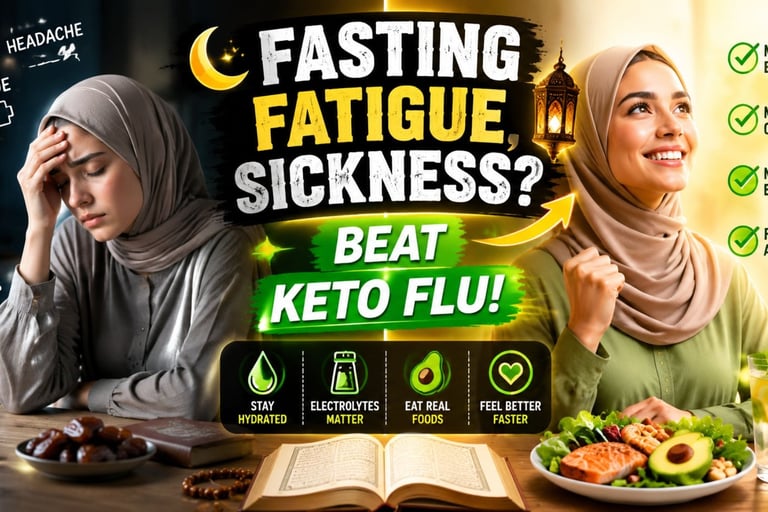
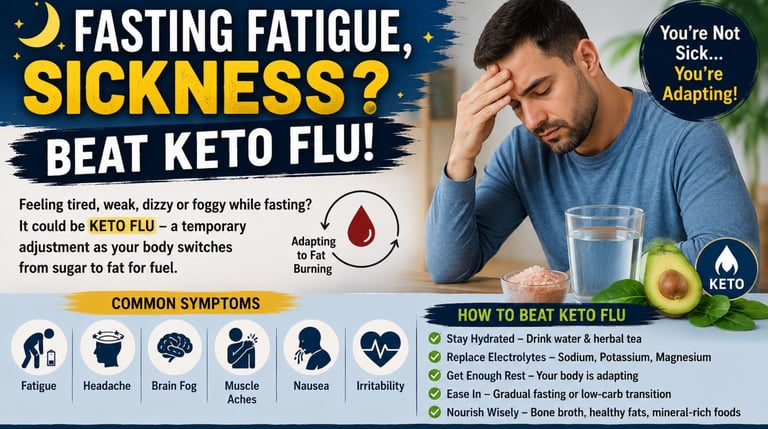
🌙 Fasting Fatigue or Sickness? Beat Keto Flu!
Feeling tired, weak, dizzy, or mentally foggy while fasting?
These symptoms may be part of keto flu—a temporary adjustment that can occur as your body shifts from using glucose to burning fat for energy.
Staying well hydrated, maintaining adequate electrolytes, getting enough rest, and transitioning gradually into fasting may help reduce discomfort.
If symptoms are severe, persistent, or accompanied by concerning signs, seek medical advice.
Keywords
fasting fatigue, fasting sickness, keto flu, fasting symptoms, intermittent fasting, prolonged fasting, ketosis, metabolic switching, electrolyte imbalance, dehydration, low-carb adaptation, fasting health, therapeutic fasting, autophagy, healthy fasting
Hashtags
#Fasting #FastingFatigue #KetoFlu #IntermittentFasting #TherapeuticFasting #Ketosis #MetabolicHealth #Electrolytes #Hydration #HealthyFasting #Autophagy #LowCarb #Nutrition #Wellness #HealthTips #Energy #Longevity #HKEM
====================================================================================================================================================================================
🐝 The Dual Nature of Bee Venom: Harms and Surprising Benefits
Bee venom is one of nature's most fascinating biological substances.
While a bee sting can cause pain, swelling, or even life-threatening allergic reactions, researchers have also discovered that bee venom contains bioactive compounds with promising therapeutic potential.
This remarkable contrast makes bee venom both a potential hazard and a subject of growing medical research.
⚠️ The Harmful Effects of Bee Venom
For most people, a bee sting causes temporary pain, redness, and swelling that resolve within a few hours or days.
However, bee venom can sometimes produce more serious effects:
Severe allergic reactions (anaphylaxis), which require immediate emergency treatment.
Extensive local swelling lasting several days.
Multiple stings that can lead to toxic effects, including muscle damage, kidney injury, or cardiovascular complications.
Rare nerve or eye injuries depending on the sting location.
Individuals with a history of severe allergic reactions should always carry emergency medication, such as an epinephrine auto-injector if prescribed by their physician.
🌿 The Surprising Therapeutic Potential
Bee venom contains more than 100 biologically active compounds.
Among the best studied are:
Melittin – the primary peptide responsible for many anti-inflammatory and antimicrobial effects.
Apamin – a neuroactive peptide that influences nerve signaling.
Phospholipase A₂ – an enzyme involved in immune responses.
Adolapin – a compound with potential pain-relieving and anti-inflammatory properties.
Laboratory and early clinical research suggests bee venom may have potential in several areas:
🦴 Arthritis and Chronic Pain
Bee venom therapy has shown anti-inflammatory effects in some studies of rheumatoid arthritis and osteoarthritis, although evidence remains mixed and larger clinical trials are needed.
🧠 Neurological Disorders
Experimental studies are investigating whether bee venom components may help modulate inflammation in conditions such as Parkinson's disease, multiple sclerosis, and peripheral neuropathy.
These treatments remain investigational.
🦠 Antimicrobial Activity
Melittin has demonstrated activity against certain bacteria, fungi, and viruses in laboratory settings. Researchers are exploring ways to use it safely without damaging healthy cells.
🎗️ Cancer Research
Melittin has attracted considerable attention because it can destroy cancer cells in laboratory experiments by disrupting their cell membranes.
Scientists are developing targeted delivery systems to reduce toxicity to normal tissues.
However, bee venom is not an established cancer treatment, and current evidence is largely limited to laboratory and animal studies.
🩹 Wound Healing
Some research suggests bee venom may promote tissue repair and reduce inflammation, though further clinical evidence is required.
⚖️ Risks and Precautions
Despite its promising properties, bee venom should never be used without professional supervision because it may cause:
Severe allergic reactions.
Excessive inflammation.
Tissue injury.
Drug interactions.
Serious complications in susceptible individuals.
Bee venom therapy should only be administered by qualified healthcare professionals experienced in allergy management.
🔬 The Bottom Line
Bee venom illustrates how nature can produce substances with both harmful and potentially beneficial effects.
While its compounds continue to inspire exciting biomedical research, current evidence supports bee venom as an area of ongoing investigation rather than a proven treatment for most diseases.
Future advances may allow scientists to harness its therapeutic properties while minimizing its risks.
=================================================================================================================================================================================



Get in touch
Address
Cairo Al Rehab
Contacts
+20 109 405 2056
hassanalwarraqi@h-k-e-m.com