Health is a crown on the heads of the healthy that only the sick can see.



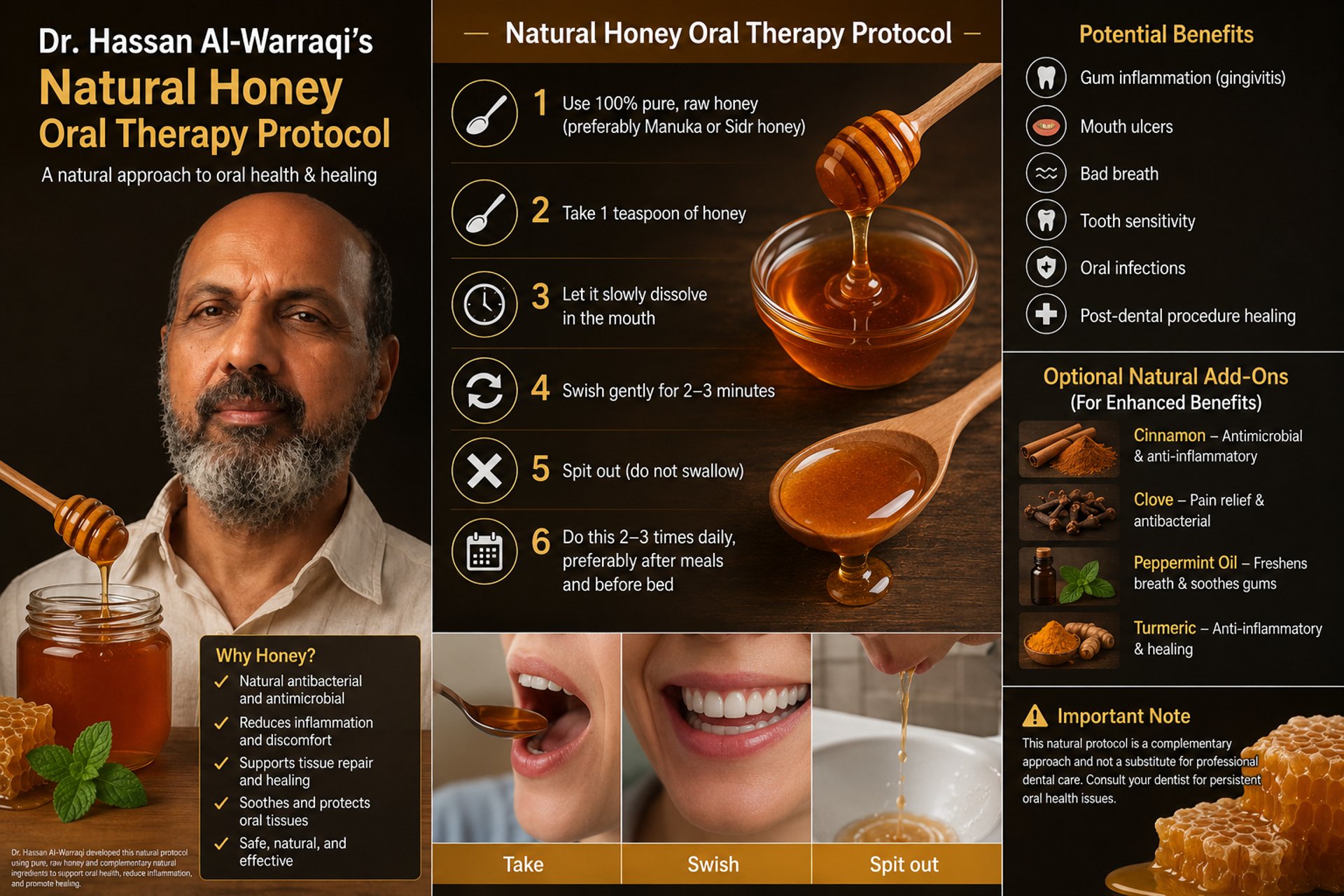
🍯Dr. Hassan Al-Warraqi’s Natural Honey Oral Therapy Protocol
using raw honey and medical-grade Manuka honey. Learn the science-backed benefits of honey for gum health, oral microbiome balance, sore throat relief, plaque control, and tissue healing—plus essential safety guidelines.
MOUTHPOLICYGENERAL
5/22/20268 min read
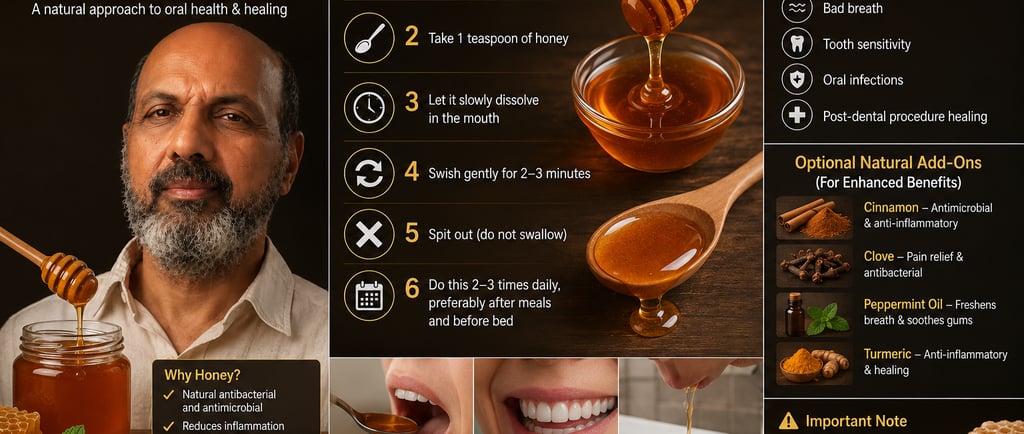
🍯Dr. Hassan Al-Warraqi’s Natural Honey Oral Therapy Protocol
using raw honey and medical-grade Manuka honey. Learn the science-backed benefits of honey for gum health, oral microbiome balance, sore throat relief, plaque control, and tissue healing—plus essential safety guidelines.
A Science-Based Guide to Supporting Oral, Gum & Throat Health
🍯 What Is Dr. Hassan Al-Warraqi’s Honey Oral Therapy Protocol?
Dr. Hassan Al-Warraqi’s Honey Oral Therapy Protocol is a natural supportive approach that uses raw honey as a complementary tool to promote:
Oral health
Gum wellness
Oral microbiome balance
Throat comfort
Mucosal tissue hydration
Tissue recovery and soothing
The protocol relies on the biologically active properties of raw honey, particularly medical-grade Manuka honey, including:
Antibacterial activity
Antifungal effects
Anti-inflammatory support
Tissue-soothing properties
Natural antioxidant compounds
⚠️ This protocol is designed to complement conventional oral hygiene—not replace fluoride toothpaste, flossing, or professional dental care.
🔬 Science-Backed Benefits of Honey for Oral & Gum Health
✅ 1. Fighting Tooth Decay Bacteria
Research suggests that honey—especially Manuka honey—may help inhibit:
Streptococcus mutans
This bacterium is strongly associated with dental cavities and enamel damage.
Honey may support oral defense by:
Disrupting biofilm formation
Reducing bacterial acid production
Limiting plaque accumulation
Decreasing bacterial adhesion to teeth surfaces
Medical-grade Manuka honey contains:
MGO (Methylglyoxal)
This compound provides stable antimicrobial activity against many oral pathogens.
🦷 2. Supporting Gum Health & Reducing Gingivitis
Studies demonstrate honey’s activity against periodontal bacteria such as:
Porphyromonas gingivalis
Fusobacterium nucleatum
Clinical findings suggest that Manuka honey may help:
Reduce gingival inflammation
Improve breath freshness
Lower plaque buildup
Support healthier gum tissue
Raw dark honey varieties also contain polyphenols and flavonoids that may reduce oxidative stress within gum tissues.
🍄 3. Antifungal & Antiviral Effects
Oral Thrush (Candida albicans)
Honey may help inhibit fungal growth through:
Osmotic activity
Natural hydrogen peroxide production
MGO activity in Manuka honey
Its thick texture also forms a temporary protective layer over irritated oral tissues.
Oral Herpes (HSV-1)
Preliminary evidence suggests topical honey application may:
Reduce lesion duration
Soothe irritation
Support tissue repair
Potentially decrease viral shedding
⚠️ Persistent mouth sores lasting more than 7 days require medical evaluation.
🛡️ 4. Mucosal Protection & Tissue Healing
Honey’s viscous consistency acts as a soothing barrier over inflamed tissues,
helping to:
Reduce irritation
Protect sensitive mucosa
Moisturize dry tissues
Support natural healing
Raw honey also contains:
Flavonoids
Polyphenols
Natural antioxidants
These compounds may help decrease oxidative stress and support oral tissue recovery.
🌿 5. Honey for Sore Throat & Tonsils
Honey gargling may help:
Soothe viral sore throats
Calm mild tonsil irritation
Moisturize the throat
Deliver antimicrobial compounds directly to inflamed tissues
Manuka honey is especially valued because of its high:
MGO (Methylglyoxal) content
This provides enhanced antimicrobial support for throat and oral tissues.
⚠️ Honey does not replace antibiotics for confirmed bacterial throat infections.
🪥 Dr. Hassan Al-Warraqi’s Honey Oral Care Steps
1️⃣ Preparation
Use:
½ to 1 teaspoon of raw, unprocessed honey
Preferred choices include:
Medical-grade Manuka honey
Raw buckwheat honey
Dark wildflower honey
Raw local honey from trusted beekeepers
For therapeutic use, choose:
UMF 10+ or higher
MGO 250+ or higher
2️⃣ Apply Honey to a Toothbrush
Place honey onto:
A soft-bristled toothbrush
⚠️ Do not apply toothpaste during this specific step.
3️⃣ Brush Gently
Brush softly for:
1–2 minutes
This helps distribute honey across:
Teeth surfaces
Gumlines
Plaque-prone areas
4️⃣ Massage the Gumline
Using:
A clean fingertip
orThe toothbrush
Massage the gums using gentle circular motions.
This may help:
Improve gum comfort
Support circulation
Reduce irritation
5️⃣ Coat the Palate
Spread a thin layer of honey across:
The hard palate
The soft palate
This may help soothe irritated throat tissues and oral mucosa.
6️⃣ Honey Gargling
Place approximately:
1 teaspoon of honey
into the throat area and gargle gently for:
30–60 seconds
You may then:
Swallow the honey
orSpit it out
This step targets:
Tonsils
Pharyngeal tissues
Posterior oral cavity
7️⃣ Rinse with Water (Very Important)
After:
5–10 minutes
Rinse thoroughly with plain water to remove residual sugars while preserving therapeutic contact time.
⚠️ This step is essential to reduce cavity risk.
⏰ Best Timing for the Protocol
✅ Once daily in the evening after standard oral care
✅ Twice daily during throat irritation
✅ After meals for people with diabetes
✅ During eating windows for intermittent fasting
⚠️ Avoid eating or drinking for 30 minutes afterward.
🍯 Best Honey Types for the Protocol
Honey Type
Main Benefit
Medical-Grade Manuka Honey (UMF 10+ / MGO 250+)
Strong antimicrobial support
Raw Buckwheat Honey
High antioxidant content
Dark Wildflower Honey
Daily preventive oral support
Raw Local Honey
Microbiome and immune support
🔍 How to Verify High-Quality Manuka Honey
Look for:
UMF 10+ or higher
MGO 250+ or greater
“Raw” or “Unpasteurized” labeling
No added sugars or corn syrup
Certifications such as:
UMF™
True Source Certified
Avoid heavily processed commercial honey that may lose important bioactive compounds.
😷 Can Honey Improve Bad Breath?
Possibly yes.
Honey may help freshen breath by:
Reducing gum inflammation
Limiting odor-causing bacteria
Supporting oral microbiome balance
However, persistent bad breath should be professionally evaluated to rule out dental or medical causes.
❌ Can Honey Whiten Teeth?
There is currently no strong scientific evidence that honey whitens teeth.
Honey:
Does not contain whitening agents
Does not mechanically polish enamel
Cannot remove deep stains
Its primary benefits are:
Antimicrobial support
Tissue soothing
Oral microbiome support
Gum health enhancement
⚠️ Important Safety Precautions
❌ Never Use in Infants Under 12 Months
Because of the risk of:
Infant botulism
⚠️ Diabetes Precautions
People with diabetes should:
Limit use to ½ teaspoon or less
Apply after meals
Monitor blood glucose carefully
Consult their healthcare provider
If blood sugar control is unstable, consider discussing:
Sugar-free soothing alternatives
with a healthcare professional.
⚠️ Tooth Decay Risk
Despite its antimicrobial properties, honey still contains natural sugars.
Therefore:
✅ Always rinse after 5–10 minutes
✅ Continue fluoride toothpaste use
✅ Maintain flossing and routine dental care
⚠️ Allergy Warning
Avoid this protocol if allergic to:
Bee products
Propolis
Pollen
🌙 Ideal Night Routine
1️⃣ Brush using fluoride toothpaste
2️⃣ Floss thoroughly
3️⃣ Apply the honey protocol
4️⃣ Wait 5–10 minutes
5️⃣ Rinse with water
6️⃣ Avoid food and drinks for 30 minutes
🔚 Final Takeaway
Dr. Hassan Al-Warraqi’s Honey Oral Therapy Protocol offers a science-informed natural approach to supporting:
Gum health
Oral microbiome balance
Sore throat relief
Oral tissue healing
Mucosal hydration
Breath freshness
For best results:
✅ Choose high-quality raw honey
✅ Prefer medical-grade Manuka honey when possible
✅ Rinse after application
✅ Maintain conventional oral hygiene
✅ Follow medical safety precautions
🍯 When used thoughtfully and responsibly, raw honey may become a valuable complementary tool for natural oral wellness and throat support.
#HoneyOralProtocol #ManukaHoney #RawHoney #OralHealth #NaturalOralCare #GumHealth #HoneyGargle #OralMicrobiome #HolisticDentistry #NaturalHealing
Frequently Asked Questions (FAQs) About Dr. Hassan Al-Warraqi’s Honey Oral Therapy Protocol
1. What is Dr. Hassan Al-Warraqi’s Honey Oral Therapy Protocol?
Dr. Hassan Al-Warraqi’s Honey Oral Therapy Protocol is a natural, science-informed oral care method that uses raw honey—especially medical-grade Manuka honey—as a complementary support for:
Gum health
Oral microbiome balance
Sore throat relief
Oral tissue hydration
Mouth comfort and healing
The protocol combines gentle brushing, gum massage, palate coating, and honey gargling to maximize honey’s antimicrobial and soothing properties.
2. Can honey really help support oral health?
Yes. Scientific studies suggest that raw honey and Manuka honey may help:
Reduce harmful oral bacteria
Support healthier gums
Lower plaque buildup
Soothe irritated throat tissues
Help maintain oral microbiome balance
Honey has demonstrated activity against bacteria such as:
Streptococcus mutans (linked to tooth decay)
Porphyromonas gingivalis (associated with gum disease)
3. Is Manuka honey better than regular honey for oral care?
Medical-grade Manuka honey is considered one of the strongest options because it contains:
MGO (Methylglyoxal)
Stable antimicrobial compounds
Potent bioactive activity
For therapeutic oral use, many experts recommend:
UMF 10+ or higher
MGO 250+ or greater
However, raw dark honeys like buckwheat honey or wildflower honey also provide valuable antioxidant and soothing benefits.
4. Can honey replace toothpaste?
No.
Honey should never replace:
Fluoride toothpaste
Flossing
Professional dental care
Honey does not contain fluoride and cannot mechanically remove plaque the way proper brushing does.
It should only be used as a complementary oral wellness tool.
5. Does honey help with gingivitis and gum inflammation?
Research suggests honey may help reduce mild gum inflammation because of its:
Antibacterial effects
Anti-inflammatory activity
Tissue-soothing properties
Some clinical findings involving Manuka honey reported improvements in:
Gingivitis
Plaque accumulation
Breath freshness
6. Can honey help with bad breath?
Possibly yes.
Honey may improve breath freshness by:
Reducing gum inflammation
Limiting odor-causing bacteria
Supporting healthier oral microbiome balance
Persistent bad breath, however, should always be evaluated by a dental professional.
7. Is honey useful for sore throat or tonsil irritation?
Yes. Honey gargling may help:
Soothe sore throat irritation
Calm inflamed tonsils
Moisturize throat tissues
Deliver antimicrobial compounds directly to affected areas
This is one reason Manuka honey gargles are popular in natural throat-support routines.
8. Can honey help oral thrush (Candida)?
Some studies suggest honey may help inhibit Candida albicans due to:
Osmotic effects
Natural hydrogen peroxide activity
Antifungal bioactive compounds
However, severe oral thrush still requires professional medical evaluation and treatment.
9. Does honey whiten teeth?
No strong scientific evidence supports honey as a teeth-whitening treatment.
Honey’s benefits are mainly:
Antimicrobial
Soothing
Anti-inflammatory
It does not contain whitening agents or abrasives capable of removing stains effectively.
10. How often should the honey oral protocol be used?
Typical recommendations include:
Once daily for maintenance
Twice daily during throat irritation or oral discomfort
The ideal timing is usually:
Evening after brushing and flossing
11. Why is rinsing after honey application important?
Although honey has antimicrobial benefits, it still contains natural sugars.
Rinsing with water after 5–10 minutes helps:
Remove residual sugars
Reduce cavity risk
Protect tooth enamel
This step is considered essential in the protocol.
12. Is the protocol safe for people with diabetes?
People with diabetes should use caution because honey contains carbohydrates.
Recommended precautions include:
Using very small amounts
Applying after meals
Monitoring blood glucose
Consulting a healthcare provider
Sugar-free soothing alternatives may be preferable for some individuals.
13. Can children use this honey oral protocol?
⚠️ Honey must NEVER be used in infants under 12 months due to the risk of infant botulism.
Older children may use honey only under appropriate supervision and medical guidance.
14. What type of honey is best for oral therapy?
Recommended options include:
Honey Type
Main Benefit
Medical-Grade Manuka Honey
Strong antimicrobial support
Raw Buckwheat Honey
High antioxidant content
Dark Wildflower Honey
Daily preventive support
Raw Local Honey
Microbiome and immune support
Choose honey that is:
Raw
Unpasteurized
Free from added sugars
Properly certified when possible
15. How can I identify authentic Manuka honey?
Look for labels such as:
UMF™ certification
MGO ratings
“Raw” or “Unpasteurized”
True Source Certified
For oral therapeutic use, common recommendations include:
UMF 10+
MGO 250+
16. Can honey help oral herpes sores (HSV-1)?
Preliminary research suggests topical honey may help:
Reduce irritation
Shorten lesion duration
Support tissue healing
However, persistent or severe lesions require medical evaluation.
17. What is the ideal nightly oral routine?
A balanced nighttime routine may include:
Brush with fluoride toothpaste
Floss thoroughly
Apply the honey protocol
Wait 5–10 minutes
Rinse with water
Avoid food or drinks for 30 minutes
18. Is commercial processed honey suitable for this protocol?
Highly processed commercial honey is generally less preferred because heating and ultra-filtration may reduce:
Enzymes
Polyphenols
Natural antimicrobial compounds
Raw, minimally processed honey is usually recommended.
19. Can honey damage teeth if left too long?
Yes.
Leaving honey on teeth for prolonged periods may increase cavity risk because oral bacteria can feed on residual sugars.
That is why the protocol strongly recommends rinsing after 5–10 minutes.
20. What is the main goal of Dr. Hassan Al-Warraqi’s protocol?
The protocol aims to naturally support:
Oral microbiome balance
Gum wellness
Tissue soothing
Mouth and throat hydration
Oral comfort and recovery
It is intended as a complementary wellness approach—not a replacement for evidence-based dental care.
===========================================================================================================================================================================================================================================================
🍯 Dr. Hassan Al-Warraqi’s Natural Honey Oral Therapy Protocol
https://www.h-k-e-m.com/dr-hassan-al-warraqis-natural-honey-oral-therapy-protocol
🍯 Dr. Hassan Al-Warraqi’s Natural Honey Oral Therapy Protocol
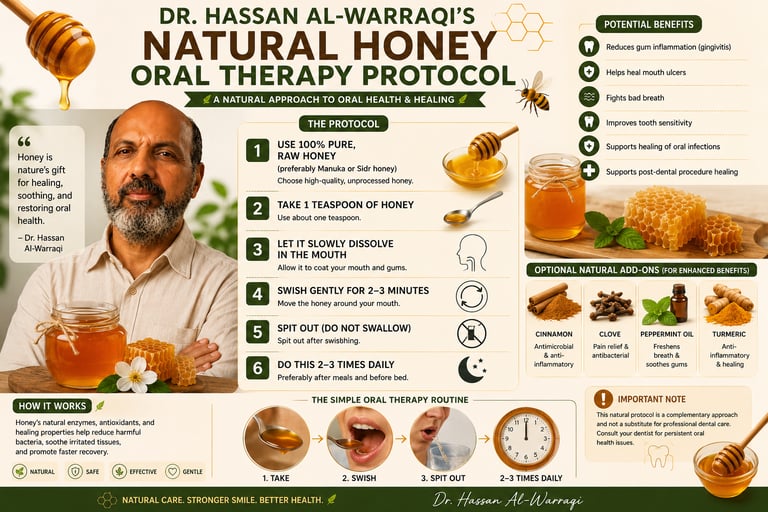
A natural oral care approach using raw honey to help soothe gums, support healing, reduce inflammation, and improve oral comfort. The protocol involves slowly dissolving a small amount of pure honey in the mouth, gently swishing for a few minutes, then spitting it out. Optional natural add-ons like cinnamon, clove, peppermint oil, and turmeric may enhance the benefits.
🌿 Supports:
Gum health
Mouth ulcer relief
Fresher breath
Oral tissue healing
Natural antibacterial protection
Meta Description
Discover Dr. Hassan Al-Warraqi’s natural honey oral care protocol using raw honey and medical-grade Manuka honey.
Learn the science-backed benefits of honey for gum health, oral microbiome balance, sore throat relief, plaque control, and tissue healing—plus essential safety guidelines.
Primary Keywords
Honey oral protocol, Dr. Hassan Al-Warraqi, honey for gum health, Manuka honey for oral care, honey gargle remedy
Secondary Keywords
Honey against tooth decay, natural gingivitis treatment, raw honey oral benefits, honey for oral thrush, honey for tonsillitis, oral microbiome support, Manuka honey UMF 10+, raw honey for sore throat
#NaturalHealing #HoneyTherapy #OralHealth #NaturalMedicine #RawHoney #ManukaHoney #DentalCare #HolisticHealth #HoneyHealing #GumHealth #OralCare #AlternativeMedicine #NaturalRemedies #HealthyMouth #HealingNaturally #HoneyBenefits #DrHassanAlWarraqi #IntegrativeMedicine #WellnessJourney #HerbalHealing #MouthHealth #NaturalProtocol #ImmuneSupport #HealthyGums #HoneyForHealth
===========================================================================================================================================================================================================================================================
🍽️✨ Barakah in Every Bite 🌙
Begin with “Bismillah” and eat together with gratitude, kindness, and moderation. Sharing food strengthens love, family bonds, and spiritual connection.
🤲 Blessings in food come through:
• Gratitude and remembrance
• Eating in moderation
• Sharing with others
• Avoiding waste
• Choosing wholesome nourishment
🕊️ A meal shared with mercy and thankfulness nourishes both the body and the heart.
===========================================================================================================================================================================================================================================================

Get in touch
Address
Cairo Al Rehab
Contacts
+20 109 405 2056
hassanalwarraqi@h-k-e-m.com