Health is a crown on the heads of the healthy that only the sick can see.



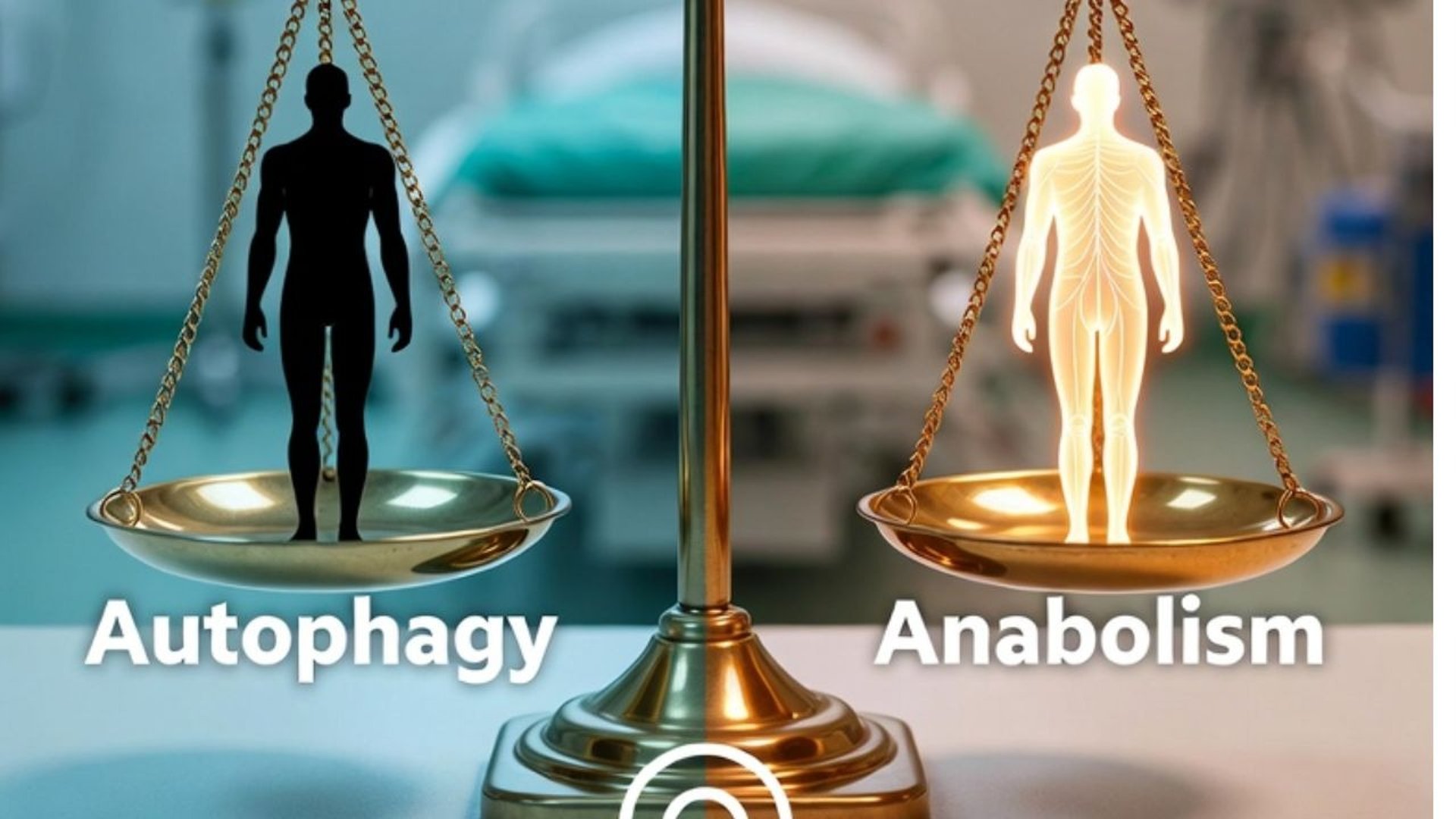
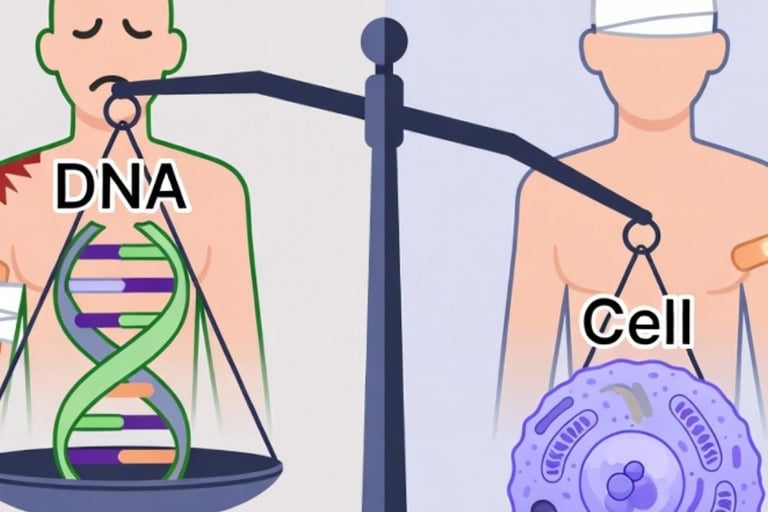
⚖️🧬Autophagy vs. Anabolism in Burn Recovery : Finding the Right Balance
A clinical guide to nutrition, metabolism, and the safe role of fasting in wound healing and recovery after severe burn injuries.
HONEYGENERAL FASTING
Dr Hassan Al Warraqi
12/25/202510 min read
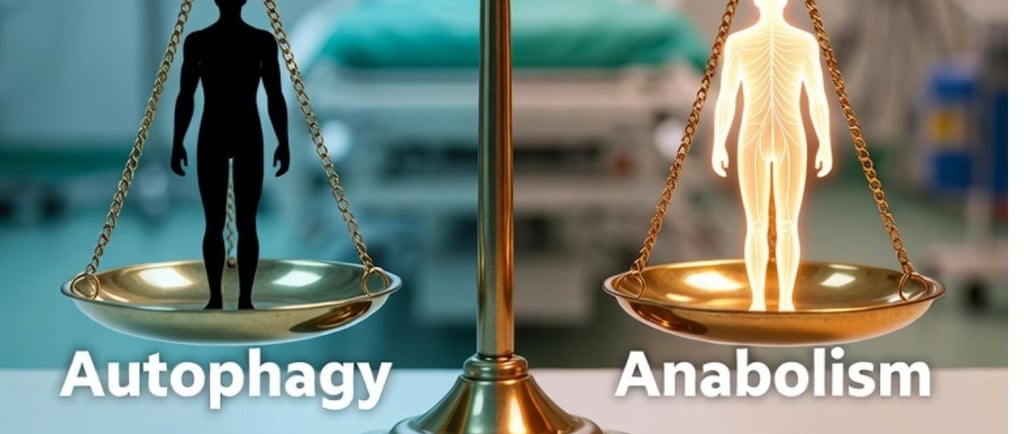
⚖️🧬Autophagy vs. Anabolism in Burn Recovery : Finding the Right Balance
A clinical guide to nutrition, metabolism, and the safe role of fasting in wound healing and recovery after severe burn injuries.
Serious burn injuries, those affecting over 20% of the body's surface area, start a long-lasting period where the body works harder than normal, breaking down tissue at a high rate.
This state can persist for many months, even years. Initial lab studies suggest that carefully planned fasting might help wounds mend faster by boosting blood vessel growth and cell cleanup.
Still, standard medical practice dictates giving plenty of nutrition early on as essential for caring for burn patients.
A main point to remember is that while controlled, short-term fasting can aid wound repair in animal tests, letting burn patients go without enough food for too long can be dangerous.
It's crucial to see the difference between a beneficial fasting plan and a harmful lack of food.
The Reality of How Burns Affect the Body
When someone has a major burn, their the body responds strongly, increasing metabolism.
What This Means for the Patient:
* The body breaks down muscle to get amino acids, which help heal wounds and make proteins needed in emergencies.
* The body's cells waste energy.
* The body struggles to use sugar properly.
* The defense system gets weaker, raising chances of infection.
* A constant state of swelling slows recovery.
How Fasting Affects Wound Repair: The Science
What Animal Tests Show
When short-term fasting is carefully used in animal models, some benefits appear:
* Cycles of 24-hour fasting (done before or after the injury):
* Wounds close quicker in burn and diabetes models.
* Skin reforms faster.
* The body deposits collagen better.
* Less scarring occurs.
* The area around the burn stays healthier.
* How It Works – The Fasting-Refeeding Cycle:
* During Fasting:
* Genes encouraging blood vessel growth (SMOC1, SCG2) increase.
* The body preps for healing.
* Cells become tougher against stress.
* During Refeeding:
* Protein creation surges.
* Endothelial cells (lining blood vessels) work better.
* The body grows new blood vessels.
* Tissue repair speeds up.
Fasting before an injury can be more helpful than doing it after.
A key point is that these advantages show up in rodent studies with regulated methods.
There aren't reliable human studies on using fasting to treat burn wounds.
How Cell Cleanup (Autophagy) Is Linked
Autophagy is a process where cells clean themselves by removing damaged parts.
* In Normal Situations:
* Fasting or cutting calories boosts autophagy, refreshing cells.
* In Burn Wounds:
* Autophagy drops, contributing to the burn getting worse and healing slowing.
* This makes it a possible target for treatment.
It’s possible that restarting autophagy with controlled treatments (not actual fasting) might boost burn recovery.
Tricking the Body: Calorie Restriction Mimickers
What They Are
These are substances that copy the good things about calorie cutting or fasting without needing to eat less.
How They Operate:
* They turn on pathways that are similar (AMPK, sirtuins, turning off mTOR).
* They start autophagy.
* They make cells able to handle stress.
* They help tissues fix themselves.
Good Examples:
|
They might get the benefits of fasting without stressing the body or cutting calories in fragile patients.
This is still experimental and needs testing on burn patients.
Important: Controlled Fasting vs. Lack of Food
For example, keeping a burn patient without food before or after surgery for too long causes bad fasting, not good.
What to Do: Nutrition Guidelines for Burn Care
What Experts Suggest:
1. Give Food Early (Within 24-48 Hours)
* What It Does:
* Lowers the strong body response.
* Lowers inflammatory signals.
* Helps the gut work right and stops bacteria from moving into the body.
* Lowers infection levels.
* Lowers death rates.
* Aids wound repair.
* How to Give It:
* Through a tube is better than IV.
* Keeps the gut healthy.
* More natural.
2. How Much to Give
Focus on Protein: Helps offset tissue breakdown, supports defense, gives materials for collagen.
3. Change Feeding as Needed
A New Way: Giving sugar solutions early (before the stomach can handle full feeding) carefully bridges to full nutrition without causing issues.
How to Do It:
* Start sugar IVs soon after the burn.
* Slowly move to full formula over a day or two.
* Watch how well it's tolerated (stomach fullness, swelling).
4. Keep Pre-Surgery Fasting Short
The Issue: Old nothing by mouth rules (8+ hours) hurt burn patients because they have high energy needs.
The Fix:
* Give clear fluids up to 2 hours before when safe.
* Restart tube feeding soon after (4-6 hours).
* Plan surgery with the nutrition team.
* Use IV nutrition if tube feeding is late.
5. Give Extra Nutrients
Important for Repair:
6. Use Special Formulas
Think About:
* High-protein options (over 25% of calories from protein).
* Formulas that help the immune system (arginine, glutamine, omega-3s).
* Options enriched with protective elements.
How to Feed Based on the Burn Stage
Phase 1: Reviving the Body (0-48 Hours)
* Focus: Getting stable, handling fluids.
* Nutrition:
* Start careful or early tube feeding.
* Start within a day.
* Watch carefully.
* Don't overfeed when fluids shift.
* Do not fast.
Phase 2: High Metabolism (Days 3-21+)
* Focus: Give as much support as possible for building back.
* Nutrition:
* Strong tube feeding (try to meet all calculated needs).
* Lots of protein (at least 1.5-2.5 g/kg/day).
* Check often (weekly weight, albumin, prealbumin).
* Give extra support.
* Think about building agents (oxandrolone, propranolol per doctor).
* Do not fast.
Phase 3: Stabilizing and Grafting (Weeks 3-8)
* Focus: Keep nutrition going through operations.
* Nutrition:
* Keep up high protein.
* Keep pre-operation fasting short.
* Use IV if tube feeding stops.
* Support repeated surgeries with steady nutrition.
* Do not fast.
Phase 4: Getting Back to Normal (Months 2-12+)
* Focus: Get body makeup back, help therapy.
* Nutrition:
* Slowly lower calorie amount.
* Keep protein high (1.2-1.5 g/kg/day).
* Focus on good food.
* Support exercise.
* Fasting: Only with doctor help. Start slow.
Phase 5: Long-Term (1+ Years After)
* Focus: Body health, prevent long-term issues.
* Nutrition:
* Balanced diet.
* Keep up protein (1.0-1.2 g/kg/day).
* Eat to lower swelling.
* Fasting: OK with care.
* Might use short-term fasting if watched by a doctor, but keep up protein and nutrients.
Trying New Things: The Future
1. Controlled Short-Term Fasting (Needs Human Studies)
Might Work for Stable Patients:
* Wait at least 3-6 months after.
* Wounds need to be fully closed.
* Metabolism must be normal.
* Use 24-hour fasting cycles.
* Give high-protein meals when not fasting.
* Watch closely.
What It Could Do:
* Boost autophagy.
* Grow blood vessels better.
* Get metabolism right.
* Lower scarring.
Risks:
* Lack of protein and energy.
* Muscle loss.
* Healing slows if started too soon.
* Mental stress.
This needs testing in studies and is experimental only.
2. Calorie Restriction Mimickers
Could Be Good Soon:
* They turn on good pathways without cutting calories.
* Safe when metabolism is high.
* Might restart autophagy just in wounds.
* Goes well with good nutrition.
* Examples:
* Resveratrol.
* Spermidine
* Polyphenol liquids.
* Metformin (if diabetic).
* Needs:
* Dosage research.
* Safety tests in burns.
* Tests to see if it aids wounds.
3. Tailored Nutrition
An Evolving Idea:
* Not all burn patients respond the same way.
* Some might handle changed fasting better.
* Nutrition based on:
* Metabolism rates (measured).
* Body makeup.
* Genes.
* Gut bacteria.
Future:
* Fasting plans for some patients
* Checking metabolism as it happens
* Nutrition that adjusts itself.
Is This Patient Ready to Try Fasting?
Checklist
A Patient Might Be Ready If:
* More than a year after injury.
* Wounds fully close.
* Inflammation is normal.
* Albumin is good.
* Body composition is good.
* No active infections.
* Normal metabolism.
* Doctor approves.
* Dietitian helps.
* Patient is ready mentally.
Never OK If:
* Less than six months post-injury.
* Wounds open.
* Inflammation high.
* Albumin low.
* Poor nutrition.
* Infection or sepsis.
* High metabolism.
* Diabetes not controlled well.
* History of eating issues.
* Pregnant or breastfeeding.
* Child patient.
If there is any no, fasting is not right.
What We Know and Need
What We Know:
* Fasting aids in animal models with careful fasting and refeeding.
* Human burn patients need maximum nutrition.
* Doing things to minimize fasting is beneficial .
* Autophagy dropping in burns suggests a treatment area, but real fasting can risk loss of tissue.
* Calorie restriction mimickers might start good pathways without stress.
* Time matters—things risky at two weeks might help at twelve months.
* People vary, and fasting isn't for everyone.
What We Need:
* Human studies to testing intermittent fasting in late recovery
* Human trials of calorie restriction mimickers in burn populations
* Ways to tell which patients can handle fasting
* Ways to measure autophagy in burn wounds
What to Do: A Summary
For Doctors:
* Prioritize early tube feeding, which is the most important thing
* Give high-protein nutrition throughout care.
* Plan to shorten pre-operation fasting with surgical teams.
* Don't suggest fasting during burn care.
* Think about calorie restriction mimickers after tests show they're safe.
* If considering late-recovery fasting:
* Check body.
* Have a dietitian plan.
* Watch closely.
For Patients:
* During care, focus on eating often, high-protein, and nutrient-rich.
* During getting back to normal, keep up protein. Short term eating might be an option if OK'd by your team.
* Long-term, fasting might be safe with clearance, but keep up protein.
* Never fast: with open wounds, losing weight, infections, weakness, or team advice.
For Researchers:
* Study the effects of fasting in fully recovered patients.
* See if calorie restriction mimickers are safer for starting autophagy.
* Find ways to tell who might aid from changed fasting.
In conclusion:
Fasting might help burn recovery in the future through proper testing.
Current advice:
* Fasting treats well.
* Fasting is not good in early burn injury.
* Fasting is experimental in later part of recovery with care.
* Calorie restriction mimickers might work.
In short, food serves as medicine now. Only after full recovery might changed fasting be tried cautiously.
The skill lies in knowing to feed strongly and if/when to modify a therapeutic approach (possibly including fasting) might help.
This information is for medical staff. Decisions need team thoughts.
Frequently Asked Questions
Why can't I fast during burn recovery?
Severe burns create an extreme hypermetabolic state where your body burns 40-100% more calories than normal—sometimes for months or years.
Your body is working overtime to:
Heal wounds
Fight infections
Rebuild damaged tissue
Maintain vital organs
Fasting during this period would be like trying to renovate a house while cutting off the electricity and water supply.
Your body needs maximum fuel, especially protein (1.5-2.5 g/kg/day), to prevent muscle wasting and support healing.
Fasting would force your body to break down even more muscle tissue when it's already in a catabolic crisis.
*I heard fasting assists wound healing.
Is that right?*
Yes and no.
There are certain types of results that show short term fasting did show benefits for the body for healing.
However, these are:
Controlled laboratory conditions
Healthy animals with minor wounds
Structured fasting-refeeding protocols
NOT applicable to human burn patients in hypermetabolic crisis
What's the difference between therapeutic fasting and harmful fasting?
They are very different:
Therapeutic Fasting (Preclinical/Research):
Planned ahead with professionals
Enhances repair ( in animal models)
Harmful Fasting (Clinical Reality in Burns):
Undermines benefits
Exacerbates muscle wasting
Worsens results and compromises healing
When is it safe to consider any form of fasting after a burn?
You need to have meet these requirement to prevent negative affect on the body.
Also it is best under a doctors care to have the best support system.
Even then, start small with any eating schedule change.
Always maintain minimum protein requirements to keep a healthy diet
I am 3 months post injury with closed wounds. Can I try intermittent fasting?
Its best to wait until you can comprehensive assessment.
This will help the staff come up with the vest support plan for you.
What about time-restricted eating (like 16:8)? Is that safer than other fasting?
Time restricted eating needs to be careful to always allow you to consume enough protein and calories.
Also any signs of weight loss or tiredness is a sign the eating is detrimental to your recovery.
How much protein do I really need during recovery?
As shown above the needs can be as high as 1.5-2.5 g/kg/day.
The needs are dependent on the injuries and its best to follow a plan with dietitian to have the best chances on success.
What should I eat during recovery?
You need a nutrient dense and high protein diet to ensure your body has the tools to recover safely.
Avoid sugars and limit alcohol.
Should I take supplements?
Yes, you most likely need one to help fill in the nutrition gap.
What are Caloric Restriction Mimetics (CRMs)?
It is a form of fasting without the stress and without fasting.
What is autophagy and why does it matter?
It is your cells ability to clean itself. Its ability is affected in burn wounds and this can affect the burn progression.
Could fasting have a chance to be part of burn treatments in the future?
It possibly could with the right patient selection with structured protocols.
What are some warning signs that shows my nutrition is not working?
It is vital to contact your burn team if experience
*Weightloss
*New Infections
*Open Wounds
Who should NEVER attempt fasting after a burn?
People with
*Ongoing infections
*Poor health
*Pregnancy
====================================================================================================================================================================================
Burn Recovery Physiology: Ebb Phase (30% TBSA)
The Ebb Phase, occurring within the first 24-48 hours post-burn, is characterized by hypometabolism, decreased cardiac output, and impaired tissue perfusion.
At 30% TBSA, the body enters a state of shock where cellular energy is diverted from growth to survival, leading to a critical imbalance where anabolic processes are stalled and autophagy is overwhelmed by the massive influx of cellular debris and oxidative stress.
Nutritional Strategy
The immediate focus is on aggressive fluid and electrolyte resuscitation rather than caloric intake to restore volume and prevent organ failure.
Early enteral nutrition is introduced at trophic rates primarily to maintain gut mucosal integrity and minimize bacterial translocation, as the body cannot yet effectively utilize substrates for protein synthesis or anabolism.
Hormonal Status
Dominance of the sympathetic nervous system and the adrenal axis, resulting in a surge of catecholamines, cortisol, and glucagon.
This hormonal profile creates a highly catabolic environment with profound insulin resistance, effectively inhibiting the PI3K/Akt/mTOR pathway necessary for anabolic repair.
Clinical Directive
Prioritize hemodynamic stabilization and fluid resuscitation to restore oxygen delivery to tissues, which is the necessary precursor for the metabolic shift from the Ebb phase to the hypermetabolic Flow phase.
Autophagy in burn recovery, anabolism after burn injury, metabolic response to severe burns, catabolism versus anabolism in burns, burn wound healing metabolism, hypermetabolism in burn patients, clinical nutrition in burns, protein synthesis and wound repair, muscle wasting after burns, mTOR and AMPK signaling pathways, inflammation and immune response in burn injury, oxidative stress and tissue regeneration, feeding timing after burn injury, intermittent fasting and autophagy, enteral nutrition burns, metabolic reprogramming after injury, mitochondrial function in burns, regenerative medicine and wound healing,
#BurnRecovery #Autophagy #Anabolism #WoundHealing #ClinicalNutrition #Metabolism #CriticalCare #BurnInjury #Hypermetabolism #RegenerativeMedicine #CellularHealth #MedicalScience #FastingScience #mTOR #AMPK
https://www.h-k-e-m.com/autophagy-vs-anabolism-in-burn-recovery-finding-the-right-balance
====================================================================================================================================================================================


Get in touch
Address
Cairo Al Rehab
Contacts
+20 109 405 2056
hassanalwarraqi@h-k-e-m.com