
Health is a crown on the heads of the healthy that only the sick can see.


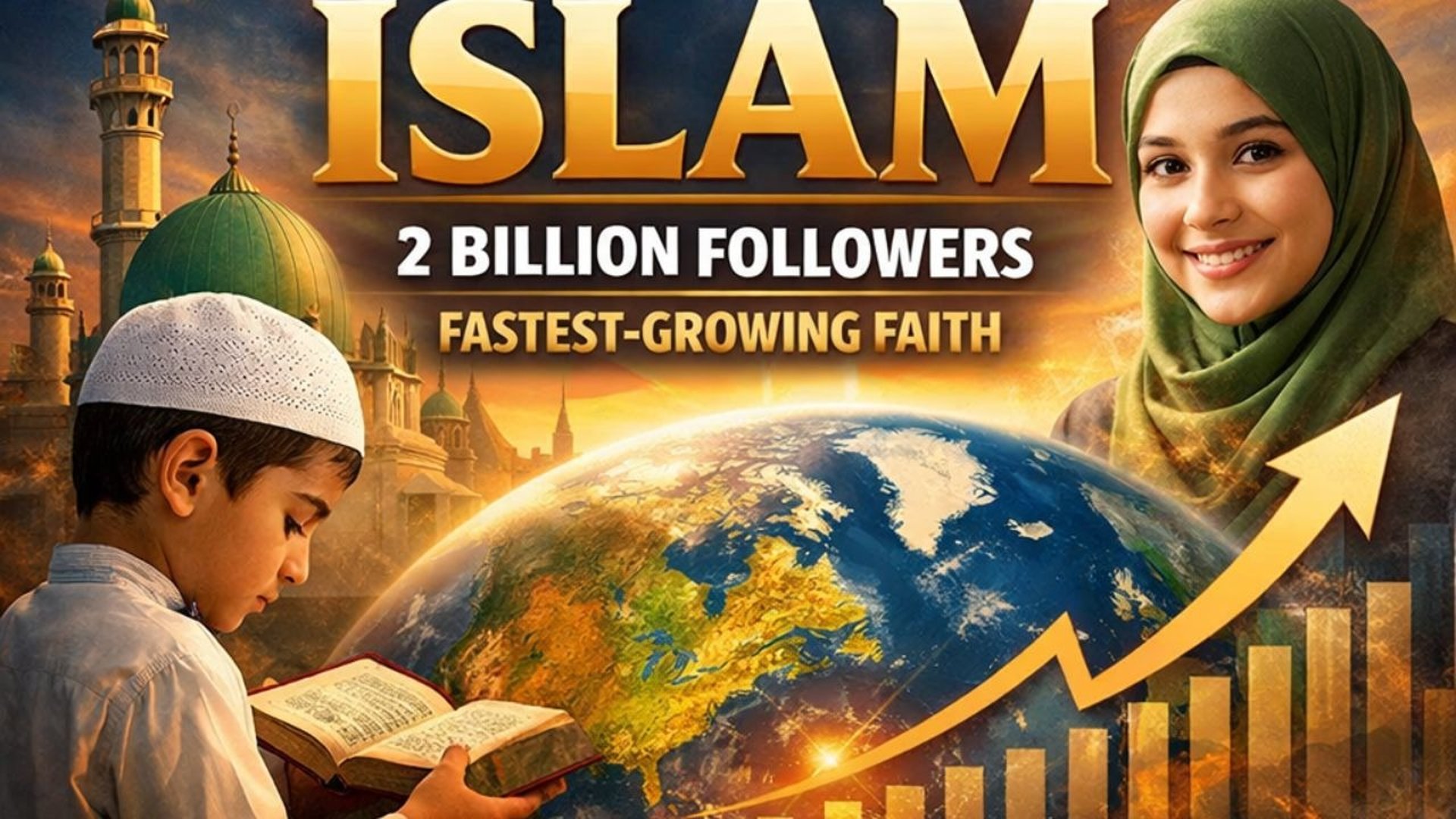
👉 🌍📈 Which Is the Number One Fastest-Growing Religion Globally?
A data-driven analysis of Islam as the world’s fastest-growing religion, exploring global demographic trends, conversion patterns, population projections, and the factors behind its continued expansion despite negative media coverage.
ISLAMICGENERAL
Dr Hassan Al Warraqi
2/14/2026
👉 🌍📈 Which Is the Number One Fastest-Growing Religion Globally?
Islam: Why It's the World's Fastest-Growing Religion, Despite Negative Press
A data-driven analysis of Islam as the world’s fastest-growing religion, exploring global demographic trends, conversion patterns, population projections, and the factors behind its continued expansion despite negative media coverage.
👉 🌍📈 What is the #1 Fastest-Growing Religion in the World?
Islam: The World's Fastest-Growing Religion - Facts, Numbers, and Reasons
An Undeniable Reality
In our current era, where information is readily available and demographic data is precise, all credible scientific studies point to one indisputable fact:
Islam is the world's fastest-growing religion
This is not an opinion or religious claim, but a documented statistical reality confirmed by:
Pew Research Center (USA)
United Nations Population Division
Academic demographers worldwide
Independent research institutions
And this growth is occurring despite:
❌ Continuous negative media campaigns
❌ Widespread Islamophobia after 9/11
❌ Political opposition in numerous countries
❌ Deliberate distortion of Islam in Western media
❌ Disinformation campaigns on social media
So how does a religion facing all these obstacles continue to grow and spread so rapidly?
Section 1: The Numbers Speak
Current Statistics (2024)
Global Muslim Population:
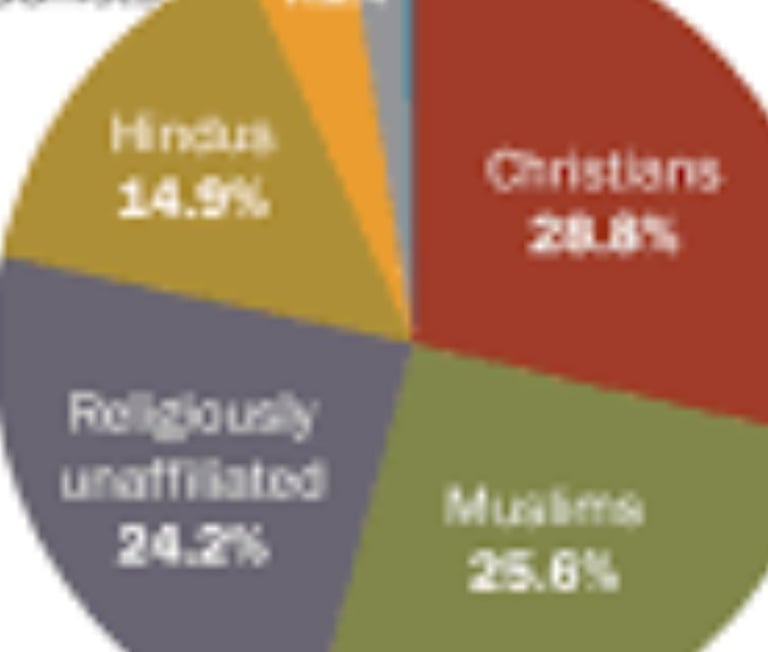
1.9 billion Muslims (approximately one-quarter of the world's population)
24% of all people on Earth
Present in every country on the planet
Majority population in more than 50 countries
Annual Growth Rate:
2.7% annually for Muslims
1.4% annually for global population
Islam is growing at twice the rate of global population growth
Future Projections
By 2050:
2.8 billion Muslims (30% of world population)
Islam will nearly equal Christianity in numbers
India will become the country with the largest Muslim population
By 2070:
Islam will equal Christianity in total adherents
By 2100:
Islam will become the world's largest religion by number of followers
3.2+ billion Muslims (35% of world population)
The Quran states:
"They want to extinguish the light of Allah with their mouths, but Allah will perfect His light, even though the disbelievers dislike it." (Quran 61:8)
Section 2: Where Do Muslims Live?
A Surprising Truth
80% of Muslims are NOT Arabs!
Contrary to popular Western belief, only 20% of Muslims live in the Middle East and North Africa.
Actual Geographic Distribution:
📊 Asia-Pacific: 62% (1.18 billion)
Indonesia: 231 million Muslims 🇮🇩
Pakistan: 212 million Muslims 🇵🇰
India: 200 million Muslims 🇮🇳
Bangladesh: 153 million Muslims 🇧🇩
📊 Middle East & North Africa: 20% (380 million)
Egypt: 87 million Muslims 🇪🇬
Iran: 82 million Muslims 🇮🇷
Turkey: 79 million Muslims 🇹🇷
Algeria: 42 million Muslims 🇩🇿
Saudi Arabia: 34 million Muslims 🇸🇦
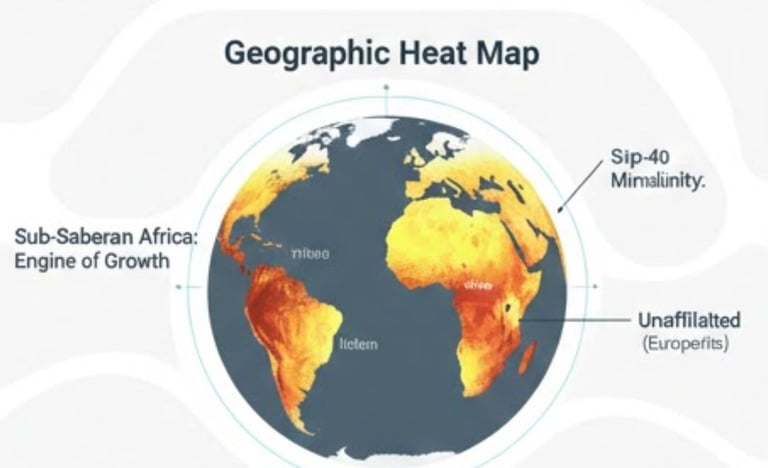
📊 Sub-Saharan Africa: 16% (304 million)
Nigeria: 99 million Muslims 🇳🇬
Sudan: 41 million Muslims 🇸🇩
Ethiopia: 35 million Muslims 🇪🇹
📊 Europe: 2% (38 million)
France, Germany, UK, Russia
📊 Americas: Less than 1% (19 million)
United States, Canada, Brazil
Stunning Fact:
Indonesia alone has more Muslims than all Arab countries combined!
The Quran states:
"And We have not sent you except as a mercy to the worlds." (Quran 21:107)
Islam is a universal religion, not just an Arab religion.
Section 3: Why Is Islam Growing So Fast?
Two Primary Factors
Factor One: Higher Birth Rates
Fertility rate in Muslim-majority countries: 2.9 children/woman
Global average: 2.5 children/woman
Developed countries: 1.7 children/woman
Reasons for Higher Birth Rates:
Younger median age (24 years for Muslims vs. 32 globally)
Cultural emphasis on family
Religious encouragement of marriage and childbearing
Developing economies
The Quran states:
"Wealth and children are the adornment of worldly life." (Quran 18:46)
Factor Two: Religious Conversion
Stunning Numbers of Annual Conversions:
In Western Countries:
🇺🇸 United States: 20,000-25,000 converts annually
🇬🇧 United Kingdom: 5,000-6,000 converts annually
🇫🇷 France: 3,000-5,000 converts annually
🇩🇪 Germany: 4,000+ converts annually
In Africa and Asia:
Tens of thousands annually in Sub-Saharan Africa
Thousands in Southeast Asia
Growing numbers in Latin America
Global Total Estimate: Hundreds of thousands convert to Islam annually worldwide!
Who Converts to Islam?
Surprising Facts:
Women:
50-60% of Western converts are women!
Often educated professionals
Cite empowerment, not oppression
Ages:
Majority between 20-40 years old
Peak conversion age: late 20s
Education:
Converts are disproportionately educated
Many hold university degrees
Previous Religious Backgrounds:
Former Christians: 50%
Atheists/Agnostics: 25%
Other religions: 25%
The Quran states:
"Whoever Allah wills to guide, He opens their heart to Islam." (Quran 6:125)
Section 4: Why Do People Convert to Islam?
Reason #1: The Quran
An Unmatched Book:
When people read the Quran for the first time, they discover:
1. Direct Divine Voice: Unlike other scriptures, the Quran is the direct word of God:
"Indeed, it is We who sent down the Reminder (Quran), and indeed, We will be its guardian." (Quran 15:9)
2. Intellectual Challenge: The Quran encourages thinking and reasoning in 700+ verses!
"Do they not then reflect on the Quran?" (Quran 4:82)
3. Scientific Miracles: Accurate descriptions of scientific phenomena unknown in 7th-century Arabia:
Embryology:
"We created man from an extract of clay. Then We placed him as a drop in a firm resting place. Then We made the drop into an alaqah (leech, suspended thing, blood clot), then We made the alaqah into a mudghah (chewed substance)..." (Quran 23:12-14)
Expanding Universe:
"And the heaven We constructed with strength, and indeed, We are [its] expander." (Quran 51:47)
Water Cycle:
"And We sent down from the sky water in measured amounts, then We caused it to settle in the earth." (Quran 23:18)
4. Perfect Preservation:
No changes in Quran text for 1,400 years
Millions have memorized it entirely
Ancient manuscripts match modern copies
The Quran states:
"Falsehood cannot approach it from before it or from behind it; [it is] a revelation from a [Lord who is] Wise and Praiseworthy." (Quran 41:42)
Reason #2: Prophet Muhammad's Character ﷺ
The Truthful, The Trustworthy:
Prophet Muhammad ﷺ was known as "Al-Sadiq Al-Amin" (The Truthful, The Trustworthy) even before prophethood.
What He Endured ﷺ:
Severe persecution for 13 years in Mecca
Economic and social boycott
Lost his beloved wife Khadijah and uncle Abu Talib in one year
Multiple assassination attempts
Lost 6 of his 7 children during his lifetime
What He Refused ﷺ:
Offers of wealth, power, and kingship
Revenge against his enemies after victory
How He Lived ﷺ:
In extreme simplicity despite leading a state
Died with his armor pawned to a Jew for food
Left no wealth for his family
The Logical Question: Why would a person endure all this for a lie?
Logic says: It's impossible he was lying.
Reason #3: Islam Appeals to Reason
The Islamic Golden Age:
While Europe was in the Dark Ages, Muslims were:
In Mathematics:
Invented Algebra (Al-Khwarizmi)
Developed Trigonometry
Spread Arabic numerals
In Medicine:
Ibn Sina (Avicenna): The Canon of Medicine (used for 600 years)
First hospitals with specialized departments
In Astronomy and Physics:
Ibn al-Haytham: Father of modern optics
Built astronomical observatories
In Chemistry:
Jabir ibn Hayyan: Father of chemistry
Distillation and crystallization techniques
The Quran states:
"Say: Are those who know equal to those who do not know?" (Quran 39:9)
"Allah will raise those who have believed among you and those who were given knowledge, by degrees." (Quran 58:11)
Reason #4: Social Justice
1. Ending Racism:
The Quran states:
"O mankind, indeed We have created you from male and female and made you peoples and tribes that you may know one another. Indeed, the most noble of you in the sight of Allah is the most righteous of you." (Quran 49:13)
The Prophet ﷺ said in his Farewell Sermon:
"All mankind is from Adam and Eve. An Arab has no superiority over a non-Arab, nor does a non-Arab have any superiority over an Arab; a white has no superiority over a black, nor does a black have any superiority over a white; except by piety and good action."
Hajj: Practical Implementation:
2-3 million Muslims of all races
Wearing the same simple white garments
Performing the same rituals
No distinction between rich and poor, white and black
2. Fighting Poverty - Zakat System:
The Quran states:
"Establish prayer and give Zakat." (Quran 2:43)
Zakat:
Mandatory annual contribution (2.5% of wealth)
Distributed to the poor and needy
Obligatory system, not optional
Historical Impact: During the reign of Caliph Umar ibn Abdul Aziz, poverty was so rare that Zakat collectors struggled to find eligible recipients!
3. Prohibition of Interest (Riba):
The Quran states:
"Those who consume interest cannot stand [on the Day of Resurrection] except as one stands who is being beaten by Satan into insanity." (Quran 2:275)
"O you who have believed, fear Allah and give up what remains [due to you] of interest, if you should be believers. And if you do not, then be informed of a war [against you] from Allah and His Messenger." (Quran 2:278-279)
Why?
Interest exploits the poor
Concentrates wealth among the rich
Creates unstable economic cycles
Causes financial crises (as we saw in 2008)
Reason #5: Women's Rights (1,400 Years Ago!)
The Quran states:
"And they (women) have rights similar to those (of men) over them in kindness." (Quran 2:228)
"Indeed, the Muslim men and Muslim women, the believing men and believing women... for them Allah has prepared forgiveness and a great reward." (Quran 33:35)
Rights Islam Granted Women:
Independent property ownership
Right to inheritance
Right to keep all their earnings
Right to education
Right to choose spouse
Right to divorce
Right to work
Fact: 60% of Western converts are women!
If Islam oppressed women, why would educated professional women convert?
Section 5: Correcting Misconceptions
Misconception #1: "Spread by the Sword"
The Truth:
The Quran states:
"There shall be no compulsion in religion. The right course has become clear from the wrong." (Quran 2:256)
Historical Evidence:
Indonesia (231 million Muslims) was never conquered by Muslim armies!
Malaysia (20 million Muslims) Islam spread through trade
Ottoman Empire ruled Christians and Jews for 600 years without forcing conversion
Islamic Spain: 700 years of peaceful coexistence
Today: Conversions occur freely in the West without any coercion!
Misconception #2: "Oppresses Women"
The Quran states:
"Whoever does righteousness, whether male or female, while being a believer - those will enter Paradise and will not be wronged [even as much as] the speck on a date seed." (Quran 4:124)
The Truth:
Confusion between oppressive cultures and true Islam
The Quran gave women rights 1,400 years ago
60% of converts are women
Muslim-majority countries have elected female heads of state (Pakistan, Bangladesh, Turkey, Indonesia)
Misconception #3: "Islam and Terrorism"
The Quran states:
"Whoever kills a soul... it is as if he had slain mankind entirely. And whoever saves one - it is as if he had saved mankind entirely." (Quran 5:32)
The Truth:
Terrorists represent 0.01% of Muslims
More Muslims are victims than perpetrators
All Muslim scholars condemn terrorism
If Islam were violent, 1.9 billion Muslims would be violent!
Section 6: Islam - A Complete Way of Life
The Quran states:
"This day I have perfected for you your religion and completed My favor upon you and have approved for you Islam as religion." (Quran 5:3)
Islam Encompasses:
1. Worship and Spirituality:
Five daily prayers
Fasting
Zakat
Hajj
2. Ethics and Conduct:
Honesty and trustworthiness
Patience and gratitude
Justice and kindness
3. Family and Society:
Parents' rights
Children's rights
Neighbors' rights
Social solidarity
4. Economics and Finance:
Lawful earnings
Prohibition of interest
Zakat and charity
5. Politics and Governance:
Justice as foundation
Consultation (Shura)
Human rights
6. Knowledge and Science:
Seeking knowledge is obligatory
Reflection and contemplation
Scientific research
The Quran states:
"And I did not create the jinn and mankind except to worship Me." (Quran 51:56)
Section 7: Convert Testimonies
Why Did They Embrace Islam?
From Converts:
"I was searching for truth, and I found it in the Quran"
American convert, former Christian
"Islam gave me dignity and freedom I didn't find in my culture"
British convert, lawyer
"Logic and reason in Islam don't contradict faith"
French convert, former atheist
"I saw in the equality of Hajj what I never saw anywhere else"
African American convert
Section 8: How to Learn About Islam?
The Quran states:
"Say, 'This is my way; I invite to Allah with insight, I and those who follow me.'" (Quran 12:108)
Practical Steps:
1. Read the Quran:
Start with short chapters
Use a good translation
Contemplate the meanings
2. Learn About the Prophet ﷺ:
Read his biography (Seerah)
Learn about his character
Study his guidance
3. Visit a Mosque:
Attend Friday prayer
Ask the Imam
Meet Muslims
4. Research Yourself:
Don't rely on media
Study from authentic sources
Be objective
5. Pray to God: The Quran states:
"And when My servants ask you concerning Me - indeed I am near. I respond to the invocation of the supplicant when he calls upon Me." (Quran 2:186)
Conclusion: An Open Invitation
The Quran states:
"And whoever desires other than Islam as religion - never will it be accepted from him, and he, in the Hereafter, will be among the losers." (Quran 3:85)
"Then whoever wills - let him believe; and whoever wills - let him disbelieve." (Quran 18:29)
The Clear Truth:
Islam is the world's fastest-growing religion NOT because of:
❌ Coercion or force
❌ Deception or misinformation
❌ Demographic coincidence
But because of:
✅ The truth it contains
✅ The justice it calls for
✅ The natural disposition it aligns with
✅ The reason it addresses
✅ The heart it reassures
The Quran states:
"It is He who sent His Messenger with guidance and the religion of truth to manifest it over all religion, although those who associate others with Allah dislike it." (Quran 61:9)
Final Message:
If you're reading this article:
Research for yourself the truth
Don't believe everything you hear in media
Ask Muslims directly
Read the Quran with an open mind
Pray to God to guide you
The Quran states:
"And those who strive for Us - We will surely guide them to Our ways. And indeed, Allah is with the doers of good." (Quran 29:69)
How to Enter Islam?
Very simply:
Testify sincerely from your heart:
"I bear witness that there is no god but Allah, and I bear witness that Muhammad is the Messenger of Allah"
That's it!
No intermediaries
No fees
No complex rituals
Just sincere faith
The Prophet ﷺ said:
"Islam is built upon five: testifying that there is no god but Allah and that Muhammad is the Messenger of Allah, establishing prayer, giving Zakat, fasting Ramadan, and performing Hajj to the House if you are able."
Additional Resources
For Learning:
Read the Quran with translation
Read Prophet's biography (Seerah)
Visit your local mosque
Contact Islamic centers
For Questions:
Talk to mosque Imam
Ask practicing Muslims
Research in authentic sources
Don't be shy to ask
Remember:
"Indeed, Allah is not timid of the truth"
In the name of Allah, the Most Gracious, the Most Merciful
"Our Lord, let not our hearts deviate after You have guided us and grant us from Yourself mercy. Indeed, You are the Bestower." (Quran 3:8)
"Our Lord, give us in this world [that which is] good and in the Hereafter [that which is] good and protect us from the punishment of the Fire." (Quran 2:201)
"Exalted is your Lord, the Lord of might, above what they describe. And peace upon the messengers. And praise to Allah, Lord of the worlds." (Quran 37:180-182)
Peace be upon you and the mercy of Allah and His blessings
Disclaimer: This article provides educational information about Islam's demographic growth based on studies from credible global research centers. Quranic verses and prophetic traditions are taken from authentic sources. We encourage readers to conduct independent research and engage with Muslim scholars for deeper understanding.
========================================================================================================================================================================================================
🌍📈 Understanding the World’s Fastest-Growing Religion
https://www.h-k-e-m.com/-the-worlds-fastest-growing-religion
Islam growth, fastest growing religion, why Islam is growing, Islam demographics, Muslim population statistics, Pew Research Center religion study, Islam conversions, global religion trends, Islamic beliefs explained, Prophet Muhammad biography, Qur'an teachings, Islam in the West, religion and media bias, world religions comparison, Muslim population 2050, Islamic theology, religious conversion trends, sociology of religion, faith and modern society,
#Islam #FastestGrowingReligion #WorldReligions #IslamGrowth #ReligionTrends #MuslimPopulation #IslamFacts #ComparativeReligion #FaithAndSociety #GlobalIslam
========================================================================================================================================================================================================
Frequently Asked Questions About Islam: The Fastest-Growing Religion
Complete FAQ Guide for Understanding Islam, Conversion, and Common Misconceptions
Growth and Demographics
What is the fastest-growing religion in the world?
According to Pew Research Center and multiple demographic studies, Islam is the fastest-growing major religion in the world.
Islam currently has approximately 1.8-2 billion followers (about 24% of the global population) and is projected to reach nearly 30% by 2050.
If current trends continue, Islam could become the world's largest religion by the end of this century, potentially surpassing Christianity in total adherents.
How many people convert to Islam each year?
Exact global conversion statistics are difficult to compile, but estimates suggest tens of thousands of conversions annually in Western countries alone.
In the United States, approximately 20,000-25,000 people convert to Islam each year.
The United Kingdom, France, Germany, and other European nations also report thousands of annual conversions.
Globally, when including Africa, Asia, and Latin America, the number likely reaches hundreds of thousands of new converts annually.
Why is Islam growing so fast despite negative media coverage?
Islam's growth despite negative media coverage demonstrates that people who study the religion directly from its primary sources (the Qur'an and authentic prophetic teachings) discover teachings that contradict negative stereotypes.
Many converts report that media criticism actually motivated them to research Islam for themselves, leading them to embrace it after finding the reality differed dramatically from portrayals.
The disconnect between media representations and actual Islamic teachings creates curiosity that often leads to conversion.
What countries have the most Muslims?
The countries with the largest Muslim populations are:
Indonesia - approximately 230 million Muslims (largest Muslim population globally)
Pakistan - approximately 200 million Muslims
India - approximately 195 million Muslims
Bangladesh - approximately 150 million Muslims
Nigeria - approximately 95 million Muslims
Egypt - approximately 85 million Muslims
Iran - approximately 82 million Muslims
Turkey - approximately 80 million Muslims
Notably, the Middle East (often associated with Islam) contains only about 20% of the world's Muslim population.
Is Islam growing mainly due to birth rates or conversions?
Islam's growth results from both factors: higher-than-average birth rates in Muslim-majority populations AND significant conversion rates globally.
While birth rates contribute substantially to demographic growth, the conversion phenomenon—especially in Western countries where birth rates are lower—demonstrates Islam's appeal based on its teachings rather than simply demographic trends.
Studies show Islam has among the highest retention rates of converts, meaning people rarely leave after embracing it sincerely.
Conversion and Converts
Why do people convert to Islam?
People convert to Islam for various reasons, but
common themes include:
Discovering Prophet Muhammad's character and biography - Finding his life demonstrates integrity beyond reasonable doubt
Intellectual satisfaction - Islam's rational framework, theological clarity, and emphasis on reasoning
Practical solutions to social problems - Islamic teachings on racism, poverty, economic justice
Comprehensive life guidance - Islam addresses all aspects of human existence
Spiritual fulfillment - Direct connection with God through worship
Universal brotherhood - Experiencing genuine equality across racial and ethnic lines
Women's empowerment - Many female converts find dignity, rights, and protection in Islamic teachings
Many converts report that studying Islam's primary sources—the Qur'an and authentic prophetic teachings—revealed something entirely different from media portrayals.
Who are some famous people who converted to Islam?
Notable contemporary conversions include:
Public Figures:
Muhammad Ali (legendary boxer) - Converted in the 1960s
Mike Tyson (former heavyweight champion) - Converted in prison
Kareem Abdul-Jabbar (NBA legend) - Converted in 1971
Dave Chappelle (comedian) - Converted in 1998
Akon (musician) - Raised Muslim, publicly discusses his faith
Recent High-Profile Conversions:
Andrew Tate (controversial influencer) - Stated Islam gave him discipline and purpose
Joram van Klaveren (former Dutch politician) - Converted while writing an anti-Islam book
Yusuf Islam/Cat Stevens (musician) - Famous 1977 conversion
Lauren Booth (journalist, Tony Blair's sister-in-law) - Converted after traveling to Muslim countries
Arnoud van Doorn (former anti-Islam Dutch politician) - Converted after studying Islam
Historical Figures:
Malcolm X - Transformed worldview after Hajj pilgrimage
Muhammad Asad (Leopold Weiss) - Austrian journalist who became influential Islamic scholar
Why do women convert to Islam if it oppresses them?
The premise that Islam oppresses women reflects common misconceptions. Many female converts report discovering that:
Qur'anic teachings elevated women's status 1,400 years before Western women's rights movements
Islam granted women comprehensive rights: property ownership, inheritance, education, choosing spouses, divorce, financial independence
Modest dress provided liberation from objectification rather than oppression
Islamic principles offered dignity and empowerment in personal, family, and social spheres
Protection from exploitation through clear rights and responsibilities
Spiritual equality - Women and men are equal before God in terms of worship and accountability
Significant numbers of educated, professional Western women convert to Islam after researching its teachings directly.
Studies show that women represent a substantial proportion of converts in Western countries, contradicting stereotypes.
What is the process of converting to Islam?
Converting to Islam is remarkably simple:
The Declaration (Shahada): A person sincerely declares in Arabic (with understanding in their language):
"Ash-hadu an la ilaha illa Allah, wa ash-hadu anna Muhammadan rasool Allah"
Translation: "I bear witness that there is no god but Allah, and I bear witness that Muhammad is the Messenger of Allah"
Requirements:
Sincere belief in the statement's truth
Understanding what the declaration means
Acceptance of Islam's core beliefs
Submission to God's will
That's it. No intermediaries, clergy approval, fees, or ceremonies are required.
The declaration can be made privately or with witnesses (recommended for community support).
After Conversion:
Learn the Five Pillars of Islam
Begin practicing prayers (Salah)
Study the Qur'an and Prophet's teachings
Connect with local Muslim community
Learn gradually at your own pace
Do converts have to change their names?
No, changing your name is not required when converting to Islam.
You may keep your birth name unless it has a meaning that contradicts Islamic beliefs (such as names meaning "servant of" someone other than God).
Many converts choose to adopt Arabic/Islamic names as a personal preference to mark their new identity, but this is optional, not obligatory.
What matters is your faith and practice, not your name.
Is there compulsion in converting to Islam?
No. The Qur'an explicitly states:
"There shall be no compulsion in religion.
The right course has become clear from the wrong."
Islamic law prohibits forced conversion, and historically protected religious minorities under Muslim governance.
The millions of contemporary Western converts to Islam do so freely without any coercion, demonstrating that authentic Islamic teaching opposes compulsion in religion.
For a conversion to be valid in Islam, it must be voluntary and based on sincere conviction.
Forced conversions are not recognized as legitimate.
Islamic Beliefs and Practices
What do Muslims believe?
Muslims believe in Six Articles of Faith:
Belief in One God (Allah): Absolute monotheism - God is one, unique, without partners, sons, or equals
Belief in Angels: Created beings made of light who serve God
Belief in Revealed Books: Including the Torah, Psalms, Gospel, and Qur'an (final revelation)
Belief in Prophets: All prophets from Adam to Muhammad, including Noah, Abraham, Moses, Jesus (peace be upon them)
Belief in the Day of Judgment: Accountability before God and eternal life after death
Belief in Divine Decree: God's knowledge encompasses all things, though humans have free will
What are the Five Pillars of Islam?
The Five Pillars are Islam's core practices:
Shahada (Declaration of Faith): "There is no god but Allah, and Muhammad is His messenger"
Salah (Prayer): Five daily prayers at prescribed times:
Fajr (dawn)
Dhuhr (midday)
Asr (afternoon)
Maghrib (sunset)
Isha (night)
Zakat (Obligatory Charity): Annual wealth distribution (typically 2.5% of savings) to the poor and needy
Sawm (Fasting): Fasting during Ramadan (9th Islamic month) from dawn to sunset
Hajj (Pilgrimage): Pilgrimage to Mecca once in a lifetime if physically and financially able
What makes the Qur'an unique or miraculous?
Muslims consider the Qur'an miraculous for multiple reasons:
Literary Excellence:
Inimitable Arabic eloquence that native speakers find impossible to replicate
Unique literary style combining prose and poetry
Rhythmic structure that aids memorization
Challenge to produce even a single chapter like it remains unmet
Scientific Accuracy:
Descriptions of natural phenomena unknown in 7th-century Arabia
Embryological development stages
Expanding universe
Water cycle
Barrier between fresh and salt water
Historical Preservation:
Textual preservation without variation across 1,400 years
Multiple independent transmission chains all matching
Early manuscripts confirming modern text accuracy
Millions of Muslims have memorized the entire Qur'an verbatim
Internal Consistency:
No contradictions despite being revealed over 23 years in various contexts
Theologically coherent from beginning to end
The Qur'an itself challenges critics to find contradictions
Prophetic Knowledge:
Accurate historical information unknown to Prophet Muhammad's contemporaries
Fulfilled prophecies
Knowledge of previous scriptures without access to them
Origin Through an Illiterate Prophet:
Muhammad ﷺ could neither read nor write
Yet produced this sophisticated, comprehensive text
The Qur'an itself emphasizes this fact
How do Muslims view Jesus?
Muslims have profound respect and love for Jesus (called Isa in Arabic, peace be upon him):
Islamic Beliefs About Jesus:
One of the greatest prophets and messengers of God
Born miraculously to the Virgin Mary without a father
Performed miracles by God's permission (healing blind, raising dead, etc.)
Revealed the Gospel (Injeel) as divine scripture
Was not crucified but raised alive to heaven by God
Will return before the Day of Judgment
Where Muslims Differ from Christian Doctrine:
Jesus was a prophet and servant of God, not God himself or God's son
Jesus did not die for humanity's sins (each person is accountable for their own deeds)
The Trinity is rejected as contradicting pure monotheism
Jesus himself preached worship of the One God
Muslims believe Jesus was a human messenger who delivered God's message, and rejecting or insulting Jesus is rejecting Islam itself.
Do Muslims worship the same God as Christians and Jews?
Yes.
Muslims, Christians, and Jews worship the same One God—the God of Abraham, Moses, and Jesus.
The Arabic word "Allah" simply means "The God" and is used by Arabic-speaking Christians and Jews as well.
It's the same God, though theological understandings differ:
Common Ground:
Creator of the universe
All-powerful, all-knowing, eternal
Source of moral guidance
Judge of humanity
Islamic Understanding:
Absolute oneness (Tawhid) without partners, sons, or divisions
Transcendent beyond creation
Neither incarnated nor anthropomorphic
Direct relationship with humanity without intermediaries
Social Issues and Misconceptions
What does Islam say about racism and equality?
Islam categorically rejects racial and ethnic superiority:
Prophet Muhammad's Teaching:
In his Final Sermon, Prophet Muhammad ﷺ declared:
"All mankind is from Adam and Eve.
An Arab has no superiority over a non-Arab, nor does a non-Arab have any superiority over an Arab; a white person has no superiority over a black person, nor does a black person have any superiority over a white person, except by piety and good action."
Practical Demonstration:
This principle finds powerful expression during Hajj (annual pilgrimage), where 2-3 million Muslims from every race, ethnicity, and nationality gather wearing identical simple white garments, performing the same rituals, standing equal before God.
Malcolm X's transformation during Hajj illustrates this reality—witnessing true racial equality among Muslims fundamentally changed his views on race relations.
What is Zakat and how does it reduce poverty?
Zakat is a mandatory annual wealth tax (typically 2.5% of savings and certain assets) that must be distributed to specified categories of the poor and needy.
Key Characteristics:
Obligatory, not voluntary (one of Islam's Five Pillars)
Purifies wealth and promotes circulation
Direct transfer from wealthy to poor
Eight Qur'anic categories of recipients
Religious duty, not government tax (though states may collect it)
Historical Impact: When properly implemented, Zakat dramatically reduced poverty:
During Caliph Umar ibn Abdul Aziz
Zakat administration became so effective that collectors reportedly struggled to find anyone eligible to receive it in some regions
Various Islamic societies used Zakat to fund poverty relief, public infrastructure, education, and healthcare
Economic analyses suggest proper global Zakat collection could lift hundreds of millions from extreme poverty
Modern Potential: If Zakat were properly collected and distributed among Muslim populations globally, it could:
Provide comprehensive social safety nets
Eliminate extreme poverty in many regions
Reduce wealth inequality significantly
Fund education and healthcare for underserved communities
Why does Islam prohibit interest (Riba)?
Islam categorically prohibits Riba (usury/interest)—one of the most strongly condemned practices in Islamic law.
Why Interest Is Prohibited:
Enables Exploitation: Lenders profit from borrowers' needs without sharing risk
Concentrates Wealth: Money flows from borrowers (often poor) to lenders (often wealthy)
Creates Debt Traps: Compounding interest makes debt unpayable, enslaving borrowers
Destabilizes Economies: Debt-based systems create boom-bust cycles
Encourages Non-Productive Investment: Money makes money without productive economic activity
Undermines Justice: Guaranteed returns regardless of outcome violate fairness
Modern Validation: Contemporary economic crises validate Islamic concerns:
2008 financial crisis from excessive debt and predatory lending
$1.7+ trillion U.S. student loan debt trapping millions
Payday lending devastates vulnerable populations
National debts consuming massive portions of budgets
Islamic Alternative: Islamic finance offers alternatives based on:
Profit-sharing (Mudarabah): Investors and entrepreneurs share profits AND losses
Partnership (Musharakah): All parties contribute and share outcomes
Asset-based financing: Transactions tied to real goods/services, not pure lending
These mechanisms align incentives, share risk fairly, and link finance to productive economic activity.
What does Islam say about terrorism and violence?
Islam categorically condemns terrorism, targeting civilians, and unjust violence.
Islamic Rules of War: Even in legitimate defensive warfare, Islamic law strictly prohibits:
Harming non-combatants (women, children, elderly, clergy)
Destroying homes, crops, or civilian infrastructure
Killing animals unnecessarily
Environmental destruction
Mutilation of bodies
Treachery or breaking treaties
Forced conversion
Scholarly Consensus: Mainstream Islamic scholars worldwide have issued fatwas (religious rulings) condemning:
Terrorism and suicide bombings
Targeting civilians
Extremist ideologies
Hijacking Islam for political violence
The Reality:
Terrorist groups represent tiny fringe elements, not mainstream Islam
More Muslims are victims of terrorism than perpetrators
Muslim scholars, leaders, and communities consistently condemn terrorism
Extremist interpretations contradict classical Islamic scholarship
How did Islam spread—was it by force?
The "spread by the sword" myth contradicts both historical evidence and Islamic teachings.
Historical Reality:
Indonesia and Malaysia (world's largest Muslim populations totaling 400+ million):
Never conquered by Muslim armies
Islam spread through trade and peaceful missionary activity
Attracted by Muslim merchants' moral example and teachings
The Ottoman Empire:
Ruled large Christian and Jewish populations for centuries
Did not force conversion
Protected religious minorities and their places of worship
Many regions under Ottoman rule retained Christian/Jewish majorities
Islamic Spain (Al-Andalus):
Muslims, Christians, and Jews coexisted for centuries
Religious pluralism and interfaith cooperation flourished
Forced conversions were rare exceptions, not the rule
Modern Conversions:
Millions in the West convert freely without any coercion
Conversion rates highest in countries with no Muslim political power
People convert after studying Islam, not from military conquest
When Was Fighting Permitted?
Islamic military expansion occurred primarily in contexts of:
Defensive warfare against aggression
Political conflicts (not religious conversion campaigns)
Tribal warfare common to the era
Protection of religious freedom and oppressed communities
Is Islam compatible with modern society and democracy?
Yes.
Islam is compatible with modern democratic societies, evidenced by:
Successful Integration:
Millions of Muslims successfully integrated into Western democracies
Muslims serve as doctors, engineers, teachers, business owners, public servants, community leaders
Active civic participation while maintaining Islamic identity
Contribution at highest levels of science, medicine, technology, business, arts
Islamic Principles Aligned with Democratic Values:
Justice (Adl): Foundation of governance
Consultation (Shura): Leaders should consult community
Accountability: Leaders answerable to people and God
Rule of Law: Equal application of law
Protection of Rights: Individual and minority rights safeguarded
Public Welfare (Maslahah): Prioritizing community wellbeing
Muslim-Majority Democracies
Several Muslim-majority countries maintain democratic institutions:
Indonesia (world's largest Muslim population)
Turkey, Malaysia, Tunisia, Bangladesh
Democratic participation varying by country
Challenges: Historical, political, and economic factors—not Islamic teachings themselves—create governance challenges in some Muslim-majority countries.
Many issues stem from:
Colonial legacy and arbitrary borders
Authoritarian regimes contradicting Islamic principles
External interference and geopolitical conflicts
Economic underdevelopment
Cultural practices conflated with religion
Can Muslims be friends with non-Muslims?
Yes, absolutely. Islam encourages positive relationships with people of all backgrounds.
Prophet Muhammad's Example:
Had friendly relations with non-Muslim neighbors, traders, and leaders
Made treaties and alliances with non-Muslim communities
Showed kindness to people of all faiths
Instructed Muslims to be good neighbors regardless of religion
What Islam Prohibits:
Taking as close allies those who actively fight against Muslims or Islam
Loyalties that lead to compromising Islamic principles
Relationships that harm one's faith
Modern Reality: Muslims worldwide maintain:
Friendships with non-Muslims
Professional relationships and collaboration
Interfaith dialogue and cooperation
Community service with people of all backgrounds
Marriage alliances (Muslim men may marry Christian/Jewish women)
The key is maintaining one's Islamic identity while engaging positively with diverse communities.
Women in Islam
What rights do women have in Islam?
Islam granted women comprehensive rights 1,400 years ago, predating women's rights movements by centuries:
Financial Rights:
Independent property ownership (women keep what they earn/inherit)
Right to inheritance (specified shares)
Financial independence (not obligated to spend on household)
Keep own wealth after marriage
Dower (Mahr) from husband as woman's exclusive property
Personal Rights:
Right to education and seek knowledge
Right to choose spouse (marriage requires consent; forced marriage is invalid)
Right to divorce (under Islamic law)
Right to work and earn income
Right to maintain identity (can keep family name)
Right to own businesses (first Muslim, Khadijah, was businesswoman)
Social and Political Rights:
Right to participate in community affairs
Right to testimony in legal matters
Right to give counsel and advice
Protection from abuse and exploitation
Right to seek knowledge (religious obligation)
Spiritual Equality:
Women and men are spiritually equal before God, accountable for their deeds, and rewarded accordingly.
Why do Muslim women wear hijab?
Muslim women wear hijab (modest covering) for several reasons:
Religious Obedience:
Qur'anic commandment to dress modestly
Act of worship and submission to God
Following example of righteous women in Islamic history
Modesty and Dignity:
Emphasis on inner character over physical appearance
Protection from objectification and sexualization
Statement that women are valued for intellect, character, and piety
Identity and Expression:
Visible Islamic identity
Personal choice and religious commitment
Empowerment through faith
Liberation, Not Oppression: Many Muslim women report hijab provides:
Freedom from appearance-based judgment
Focus on substance over superficiality
Control over their bodies and who sees them
Spiritual connection and constant reminder of God
Confidence from knowing their worth isn't tied to looks
Important Points:
Choice varies based on personal conviction and interpretation
Compulsion is wrong: Forced hijab contradicts Islamic teaching that "there is no compulsion in religion"
Cultural vs. Religious: Some cultural practices exceed Qur'anic requirements
Many successful Muslim women in all fields wear hijab proudly
Can Muslim women work and pursue careers?
Yes, absolutely.
Islam not only permits but encourages women to seek knowledge and contribute to society.
Historical Examples:
Khadijah (Prophet Muhammad's wife): Successful businesswoman who employed him
Aisha (Prophet Muhammad's wife): Scholar, teacher, and authority on Islamic law
Numerous female scholars throughout Islamic history taught, issued legal rulings, and contributed to Islamic sciences
Religious Perspective:
Seeking knowledge is obligatory for all Muslims (men and women)
No prohibition on women working
Women's earnings belong to them exclusively
Women can pursue any lawful profession
Modern Reality:
Muslim women worldwide work as:
Doctors, engineers, scientists
Teachers, professors, researchers
Business owners and entrepreneurs
Lawyers, judges, politicians
Artists, writers, journalists
And every other profession
Guidelines:
Maintain Islamic ethics and modesty in workplace
Balance career with family responsibilities (applies to both genders)
Work in lawful fields
Workplaces should respect religious practices (prayer times, hijab, etc.)
Many Muslim-majority countries have had female:
Prime ministers and presidents (Pakistan, Bangladesh, Turkey, Indonesia)
Cabinet ministers and parliamentarians
Supreme Court justices
University presidents and CEOs
Islamic Practice and Lifestyle
What is halal and haram?
Halal means "permissible" or "lawful" in Islam.
Haram means "forbidden" or "prohibited."
Food and Drink:
Halal Foods:
All vegetables, fruits, grains, nuts
Fish and seafood
Meat from properly slaughtered animals (cattle, sheep, goats, chicken, etc.)
Dairy products
Eggs
Haram Foods:
Pork and pork products
Alcohol and intoxicants
Blood
Meat from improperly slaughtered animals
Carnivorous animals and birds of prey
Meat dedicated to anyone other than God
Beyond Food: The halal/haram framework extends to all aspects of life:
Haram (Prohibited) Actions:
Lying, cheating, stealing
Murder, violence, oppression
Adultery and fornication
Gambling
Interest-based transactions
Backbiting and slander
Disobeying parents
Breaking promises and contracts
Halal (Permitted) encompasses everything not explicitly prohibited—Islam views creation as fundamentally good and permissible unless restricted for wisdom.
Do Muslims celebrate holidays?
Muslims celebrate two main Islamic holidays (Eids):
1. Eid al-Fitr (Festival of Breaking the Fast):
Celebrates end of Ramadan fasting month
Community prayers, feasting, giving gifts
Charity to poor (Zakat al-Fitr) before prayers
Three-day celebration
2. Eid al-Adha (Festival of Sacrifice):
Commemorates Abraham's willingness to sacrifice his son
Occurs during Hajj pilgrimage period
Sacrificing animals and distributing meat to poor
Four-day celebration
Larger of the two Eids
Other Islamic Observances:
Ramadan: Month of fasting (not a holiday but major annual observance)
Jumu'ah: Weekly Friday congregational prayer
Islamic New Year (Muharram 1)
Mawlid: Prophet Muhammad's birthday (some celebrate, others don't)
Laylat al-Qadr: Night of Power in Ramadan
Regarding Non-Islamic Holidays:
Muslims don't celebrate religious holidays of other faiths (Christmas, Easter, Hanukkah, etc.) as religious observances
Cultural celebrations like birthdays, national days may be observed
Participation in secular aspects of holidays (family gatherings, time off work) varies by interpretation
Interfaith respect: Muslims respect others' right to celebrate their holidays
What is Ramadan and why do Muslims fast?
Ramadan is the ninth month of the Islamic lunar calendar, during which Muslims fast from dawn to sunset.
What Ramadan Fasting Involves:
No food or drink (including water) from dawn (Fajr prayer) to sunset (Maghrib prayer)
No marital relations during fasting hours
Increased worship: Qur'an recitation, prayers, spiritual reflection
Night prayers (Taraweeh) performed in congregation
Charity and generosity emphasized
Who Must Fast:
Adult Muslims who are healthy and able
Exemptions: Elderly, chronically ill, travelers, pregnant/nursing women, menstruating women, pre-pubescent children
Those unable to fast provide food to the poor as compensation
Purposes of Fasting:
Spiritual:
Obedience to God's command
Increased consciousness of God (Taqwa)
Spiritual purification and self-discipline
Appreciation for God's blessings
Personal Development:
Self-control and willpower
Breaking bad habits
Patience and perseverance
Time management and productivity
Social:
Empathy for the hungry and poor
Community unity (everyone fasting together)
Increased charity and generosity
Family bonding during pre-dawn and sunset meals
Physical:
Detoxification and rest for digestive system
Potential health benefits (when done properly)
Mindful eating practices
Special Features:
Laylat al-Qadr (Night of Power): One of the last ten nights when Qur'an was first revealed; worth more than 1,000 months
Increased rewards: Good deeds multiplied during Ramadan
Breaking fast together (Iftar): Community meals at sunset
How do Muslims pray (Salah)?
Salah (ritual prayer) is performed five times daily at specific times:
Fajr (Dawn): Before sunrise
Dhuhr (Noon): After sun passes zenith
Asr (Afternoon): Late afternoon
Maghrib (Sunset): Just after sunset
Isha (Night): After twilight disappears
Prayer Requirements:
Before Prayer:
Wudu (ritual washing): Washing hands, mouth, nose, face, arms, head, feet
Cleanliness: Clean body, clothes, prayer area
Facing Qibla: Direction of Kaaba in Mecca
Intention (Niyyah): Conscious intention to pray
Appropriate time: Within the designated prayer window
Covering Awrah: Modest dress (men: navel to knees; women: entire body except face/hands)
Prayer Structure: Each prayer consists of units called Rakats:
Fajr: 2 rakats
Dhuhr: 4 rakats
Asr: 4 rakats
Maghrib: 3 rakats
Isha: 4 rakats
One Rakat Includes:
Standing (Qiyam): Reciting Qur'an's opening chapter (Al-Fatiha) and another passage
Bowing (Ruku): Saying "Glory be to my Lord, the Most Great"
Standing briefly
Prostration (Sujud): Forehead to ground, saying "Glory be to my Lord, the Most High" (done twice)
Sitting between prostrations
After specific rakats: Sitting (Tashahhud) for declaration of faith and blessings on Prophet
Prayer Ends With:
Tasleem: Turning head right and left saying "Peace be upon you and God's mercy"
Where to Pray:
Anywhere clean (mosque, home, work, outdoors)
Mosque (Masjid) for congregational prayers encouraged, especially for men
Women can pray at mosque or home
Purpose:
Direct communication with God
Regular spiritual connection throughout the day
Gratitude, humility, and remembrance
Community building (congregational prayers)
Is music allowed in Islam?
This is a nuanced topic with diverse scholarly opinions:
Strict View:
Most musical instruments prohibited
Only vocals and simple percussion (like drums) allowed
Based on certain hadith interpretations
Music may distract from worship and good deeds
Moderate View:
Music permissible if content is appropriate
No vulgar, immoral, or un-Islamic lyrics
Doesn't promote haram activities
Doesn't distract from religious obligations
Context and intention matter
Scholarly Considerations:
Consensus: Music promoting immorality, violence, substance abuse clearly prohibited
Islamic history: Some musical traditions in Muslim cultures (Nasheed vocal traditions, Sufi spiritual music)
Cultural variation: Practices differ across Muslim communities
Common Ground: Most scholars agree:
Nasheed (Islamic vocal songs without instruments) permissible
Simple percussion generally acceptable
Music should not replace or delay prayers
Avoid inappropriate content regardless of musical style
Intention and effect on one's spirituality matters
Modern Reality:
Muslims worldwide have diverse practices
Many listen to various music genres while maintaining Islamic values
Individual interpretation varies
Focus remains on content and spiritual impact
Islam and Other Religions
How do Muslims view other religions?
Islam teaches respect for other faiths, particularly People of the Book (Christians and Jews):
Recognition of Previous Prophets: Muslims believe in all prophets sent by God, including:
Adam, Noah, Abraham, Ishmael, Isaac, Jacob
Moses, Aaron, David, Solomon
Jonah, Job, Elijah, Elisha
John the Baptist, Jesus (peace be upon them all)
Muhammad as the final prophet
Religious Freedom:
Islam prohibits compulsion in religion
Islamic law historically protected religious minorities
Non-Muslims in Muslim states had rights and religious freedom
Churches, synagogues, and temples protected
Key Points:
Muslims respect other faiths' right to exist and practice
Disagreement on theology doesn't prevent respectful coexistence
Islamic history shows long periods of interfaith cooperation
Dialogue and mutual understanding encouraged
Where Muslims Differ:
Theological differences: Reject Trinity, Jesus as God, etc.
Finality of Muhammad's message: Consider Islam the completion of divine revelation
Qur'an's preservation: Believe previous scriptures were altered over time
Ultimate Judgment: Muslims believe God will judge all people fairly:
Can Muslims marry non-Muslims?
The answer depends on gender and the other person's faith:
Muslim Men:
Can marry Muslim women, Christian women, or Jewish women (People of the Book)
Qur'an explicitly permits this (5:5)
Children should be raised Muslim
Wife's religious freedom respected
Muslim Women:
Should marry Muslim men only
Based on Qur'anic guidance and scholarly consensus
Reasoning: Islamic law requires husband to provide and protect; non-Muslim men not bound by Islamic family law
Children's Islamic upbringing more secure
Wife's religious practice better protected under Islamic household
Practical Considerations:
Shared values and religious understanding important
Children's religious identity
Family acceptance
Ability to practice faith freely
Long-term compatibility
Interfaith Marriage Challenges: Even permitted interfaith marriages face unique challenges:
Religious differences in child-rearing
Holiday celebrations and religious observances
Dietary restrictions (halal food)
Extended family dynamics
Prayer and worship practices
Conversion: If a non-Muslim sincerely embraces Islam before marriage, this resolves restrictions. However, conversion should be genuine, not merely to enable marriage.
What happens to non-Muslims in Islamic belief?
This is an important theological question with nuanced answers:
Islamic Position:
God's Ultimate Justice: Islam teaches that God is perfectly just and will judge all people fairly based on:
What knowledge they had access to
How they responded to truth when encountered
Their sincerity in seeking God
Their moral conduct and good deeds
Their circumstances and opportunities
No Burden Beyond Capacity:
Scholarly Perspectives:
Classic View:
Those who receive Islam's message clearly and reject it knowingly may face consequences
Those who never received the message properly will be tested justly by God
God's wisdom encompasses situations we cannot fully understand
Mercy Emphasis:
God's mercy exceeds His wrath
God knows people's hearts, circumstances, and sincerity
No one can determine another person's eternal fate
Ultimate judgment belongs to God alone
Categories to Consider:
Those who never heard of Islam: God will judge them fairly based on their circumstances and response to truth they encountered
Those who heard distorted information: If someone's only knowledge of Islam comes from misrepresentation, God considers this in judgment
Those who rejected after clear understanding: Accountable for willful rejection of truth
Children: Those who die before maturity are considered innocent
Mentally incapacitated: Not held accountable for what they couldn't comprehend
The Point: Muslims don't claim to know non-Muslims' eternal fates—that judgment belongs exclusively to God, who is both perfectly just and infinitely merciful.
Practical Questions
What should I do if I'm interested in learning more about Islam?
If you're genuinely curious about Islam, here are
practical steps:
1. Read the Qur'an:
Get a reputable English translation with commentary (Sahih International, Muhammad Asad, Abdel Haleem)
Read with an open mind and take time to reflect
Note questions to ask knowledgeable Muslims
2. Study Prophet Muhammad's Biography:
Read authentic biographical accounts (Seerah)
Understand historical context
Examine his character and teachings
Recommended: "In the Footsteps of the Prophet" by Tariq Ramadan, "Muhammad: His Life Based on the Earliest Sources" by Martin Lings
3. Visit a Local Mosque:
Attend Friday prayers or community events
Ask to speak with the imam (prayer leader)
Most mosques welcome sincere visitors
Observe how Muslims actually practice their faith
4. Talk to Practicing Muslims:
Ask questions respectfully
Learn from their personal experiences
Understand diverse perspectives within Islam
Don't judge Islam by individuals' shortcomings
5. Attend Islamic Lectures/Classes:
Many mosques offer introductory classes
Online lectures from reputable scholars
Local Islamic centers often have study circles
6. Research Academic Sources:
Distinguished scholarly works on Islamic theology, history, and civilization
Avoid sensationalist or biased sources
Seek balanced, academically rigorous material
7. Be Patient and Sincere:
Take time to understand gradually
Don't rush to conclusions
Keep an open heart and mind
Make sincere supplication to God for guidance if you're seeking truth
8. Online Resources:
Reputable Islamic websites (IslamQA, SeekersGuidance, Yaqeen Institute)
Lecture series on YouTube from recognized scholars
Podcasts on Islamic topics
Be cautious of sources with questionable credentials
9. Read Conversion Stories:
Learn why others embraced Islam
Understand their journeys and reasoning
"Crossing Over: Muslim Converts Tell Their Stories" (various compilation books available)
Remember:
Judge Islam by its teachings, not by Muslims' actions
Research primary sources, not just secondary commentary
Take your time—there's no rush
Ask God for guidance sincerely
How can I find a mosque near me?
Online Directories:
IslamicFinder.org: Comprehensive mosque directory with prayer times
Salatomatic.com: Find mosques and prayer times globally
Google Maps: Search "mosque near me" or "Islamic center near me"
Yelp/Local directories: Often list mosques with reviews and information
What to Expect at a Mosque:
First Visit Tips:
Remove shoes before entering prayer area (usually rack provided)
Dress modestly: Men—long pants; Women—loose clothing, headscarf (often provided)
Men and women typically pray in separate areas
Friday prayers (Jumu'ah) best time to visit (usually midday, around 1-2 PM)
Be respectful during prayers (quiet, don't walk in front of people praying)
What You Can Do:
Observe prayers from designated visitor areas
Ask to speak with imam or volunteer after prayers
Request information about Islam
Attend community events (often advertised on mosque website)
Join study circles or classes
Common Mosque Features:
Prayer hall (main worship space)
Ablution (wudu) facilities
Library with Islamic books
Classrooms for educational programs
Community center for events
Women's section
Don't Be Shy:
Muslims typically welcoming to sincere visitors
Many mosques have dedicated outreach volunteers
Questions encouraged
Most appreciate genuine interest
Is learning Arabic necessary to be a Muslim?
No, learning Arabic is not required to convert to or practice Islam, but there are important nuances:
For Conversion:
Shahada (declaration of faith) should be understood in one's language
Saying it in Arabic is traditional but not absolutely required for validity
Understanding the meaning is what matters most
For Prayer:
Qur'an recitation in prayer is done in Arabic
New converts learn basic prayer verses gradually
Many resources available for pronunciation
Takes time—be patient with yourself
For Understanding Islam:
Qur'an translations available in virtually every language
Can study Islam effectively in your native language
Arabic knowledge enhances understanding but not mandatory
Scholarly works translated into many languages
Recommended Approach:
Essential Arabic:
Learn prayer phrases and short Qur'anic chapters for daily prayers
Understand common Islamic terms and phrases
Basic pronunciation for Qur'an recitation
Beyond Basics (Optional but Beneficial):
Study classical Arabic for direct Qur'an access
Understand nuances lost in translation
Access scholarly works in original language
Deeper comprehension of Islamic texts
Resources for Learning:
Online platforms (Bayyinah TV, Arabic Online)
Mosque classes
Language apps (Duolingo has Arabic)
Private tutors
University courses
Remember:
Millions of Muslims don't speak Arabic as native language
Start simple: Learn what you need for prayer first
Progress gradually: Don't let language barrier discourage you
Translations are acceptable for understanding while you learn
What are common mistakes new Muslims make?
Understanding common pitfalls helps new converts navigate their journey:
1. Trying to Change Everything Overnight:
Mistake: Attempting to implement all Islamic practices immediately
Better: Gradual, sustainable changes
Priority: Establish foundation (five pillars) then build progressively
Islam is a lifelong journey, not a sprint
2. Judging Islam by Muslims' Actions:
Mistake: Becoming disillusioned when Muslims don't meet expectations
Better: Remember Muslims are human and fallible
Focus: Islamic teachings, not people's imperfections
Hold yourself to Islamic standards, not others
3. Getting Overwhelmed by Different Opinions:
Mistake: Confusion from diverse scholarly views and schools of thought
Better: Find one reliable scholar/school to follow consistently
Understand: Diversity of opinion is natural in Islamic scholarship
Seek guidance from knowledgeable, mainstream scholars
4. Neglecting to Seek Knowledge:
Mistake: Practicing without understanding why
Better: Dedicate time to learning about Islam systematically
Balance: Practice and knowledge should grow together
Never stop learning
5. Isolating from Non-Muslim Family/Friends:
Mistake: Cutting off pre-conversion relationships
Better: Maintain good family relations (Islamic obligation)
Approach: Be example of Islamic character
Islam encourages honoring parents and maintaining family bonds
6. Becoming Overly Critical or Judgmental:
Mistake: Judging others' faith or practice level
Better: Focus on own spiritual development
Remember: Only God knows what's in hearts
Show mercy and kindness
7. Ignoring Cultural vs. Religious Distinctions:
Mistake: Adopting cultural practices thinking they're Islamic requirements
Better: Learn to distinguish culture from religion
Research: Not everything Muslims do is mandated by Islam
Focus on Qur'an and authentic Sunnah
8. Not Connecting with Muslim Community:
Mistake: Trying to practice Islam in isolation
Better: Build connections with local Muslim community
Support: Fellow Muslims provide encouragement and guidance
Attend mosque, study circles, social events
9. Expecting Perfection from Oneself:
Mistake: Feeling guilty about mistakes or struggles
Better: Remember God is Most Merciful and Forgiving
Growth: Every Muslim struggles and makes mistakes
Repentance and continuing effort are what matter
10. Neglecting Mental/Physical Health:
Mistake: Sacrificing wellbeing for religious practice
Better: Islam values balanced approach to health
Understand: Taking care of body is religious obligation
If struggling mentally, seek professional help
Advice for New Muslims:
Be patient with yourself
Seek authentic knowledge from reliable sources
Find good mentors in Muslim community
Maintain balance in all aspects of life
Ask questions when confused
Trust God's guidance and mercy
Advanced Topics
What are the different schools of thought (Madhabs) in Islam?
Madhab (plural: Madhahib) means "school of thought" or "school of Islamic jurisprudence."
The Four Main Sunni Schools:
1. Hanafi Madhab:’
Founder: Imam Abu Hanifa (699-767 CE)
Emphasis: Reason, logic, and analogical reasoning
Spread: Turkey, Central Asia, South Asia, Balkans
Largest following globally
Known for: Flexibility and adaptation to local contexts
2. Maliki Madhab:
Founder: Imam Malik ibn Anas (711-795 CE)
Emphasis: Practices of early Medinan Muslims
Spread: North Africa, West Africa, parts of Arabia
Known for: Consideration of public interest (Maslahah)
3. Shafi'i Madhab:
Founder: Imam Muhammad ibn Idris al-Shafi'i (767-820 CE)
Emphasis: Systematic methodology combining Qur'an, Hadith, consensus, and analogy
Spread: Southeast Asia, East Africa, parts of Middle East
Known for: Methodological balance and clarity
4. Hanbali Madhab:
Founder: Imam Ahmad ibn Hanbal (780-855 CE)
Emphasis: Strict adherence to Qur'an and Hadith
Spread: Arabian Peninsula (Saudi Arabia, Qatar)
Smallest of four schools
Known for: Conservatism and textual literalism
Shia Schools:
Ja'fari (Twelver Shia): Followed by majority of Shia Muslims
Ismaili and Zaydi: Smaller Shia branches with distinct jurisprudence
Important Points:
All Are Valid:
Differences are in methodology, not core beliefs
All four Sunni schools recognized as orthodox
Following any school is acceptable
Disagreements considered mercy (flexibility) for Muslim community
Not Sectarian Division:
Schools are jurisprudential (legal methodology), not theological sects
Prayers in same mosques, intermarriage common
Scholarly respect across schools
Why Different Schools?
Different source priorities (some favor Hadith, others favor analogy)
Different regional needs and contexts
Varied scholarly methodologies
All aim to derive Islamic law from same sources
For Converts:
Not required to choose a school immediately
Many follow local mosque's predominant school
Can study comparative jurisprudence
Focus on fundamentals first, then explore schools
What is Jihad really about?
Jihad is one of the most misunderstood concepts in Islam.
Literal Meaning:
Arabic root: J-H-D
Means: "To strive" or "to struggle"
Context: Exerting effort toward a worthy goal
Types of Jihad:
1. Greater Jihad (Jihad al-Nafs):
Struggle against one's own ego/desires
Most important form according to Prophet Muhammad ﷺ
Spiritual and moral self-improvement
Overcoming temptations and sins
Developing good character
2. Jihad of the Tongue and Pen:
Speaking truth
Calling people to good
Forbidding injustice
Writing, teaching, education
3. Jihad of the Hand:
Good deeds and charity
Building and serving community
Helping others
Social service
4. Lesser Jihad (Military Jihad):
Defensive warfare only
Protecting Muslim community from aggression
Strictly regulated by Islamic law
Last resort after all peaceful means exhausted
Military Jihad Rules:
When Permitted:
Self-defense against attack
Protection of religious freedom
Defending oppressed people
Must be declared by legitimate authority
Strict Prohibitions:
No targeting civilians (women, children, elderly, clergy)
No destruction of homes, crops, livestock
No environmental damage
No mutilation or torture
No treachery or breaking treaties
No forced conversion
Prophet Muhammad's Instructions:
"Do not kill women, children, or elderly. Do not cut down trees or destroy buildings."
Jihad ≠ Terrorism:
Terrorism (targeting civilians) completely prohibited in Islamic law
Extremists misuse term for political violence
Scholars worldwide condemn terrorism as un-Islamic
Jihad in Islam has ethical constraints terrorism violates
Contemporary Usage:
Many Muslims use "jihad" to mean personal spiritual struggle
Working to improve society, fighting poverty, pursuing education
Resisting oppression and injustice peacefully
For Non-Muslims: Understanding jihad properly prevents:
Misconceptions about Islam
Fear-mongering and stereotypes
Conflating Islam with violence
Misunderstanding Muslim motivations
How reliable are Islamic historical sources?
Islamic historical sources are considered remarkably reliable by historians due to rigorous preservation methods:
Qur'anic Preservation:
Written Compilation:
Recorded during Prophet Muhammad's lifetime by scribes
Memorized completely by numerous companions
Compiled into book form under Caliph Abu Bakr (d. 634 CE)
Standardized under Caliph Uthman (d. 656 CE)
Original Uthmanic manuscripts still exist
Oral Transmission:
Unbroken chain of memorizers (Hafiz/Huffaz) for 1,400 years
Millions have memorized entire Qur'an verbatim
Any textual variation immediately detectable
Memorization verified through multiple witnesses
Manuscript Evidence:
Early manuscripts (7th-8th century) match modern texts
Birmingham Qur'an manuscript carbon-dated to Prophet's lifetime
Topkapi and other ancient manuscripts confirm textual consistency
No significant variations across all manuscripts
Hadith Science:
Rigorous Methodology: Muslims developed sophisticated Hadith science (Ilm al-Hadith) to authenticate Prophet's sayings:
Isnad (Chain of Narration):
Every Hadith traced through complete chain of narrators back to Prophet
Each narrator's biography meticulously documented
Character, memory, and reliability assessed
Chains verified through multiple independent sources
Narrator Criticism (Ilm al-Rijal): Scholars evaluated each narrator based on:
Trustworthiness (Adalah): Moral character and honesty
Accuracy (Dabt): Memory and precision
Direct contact with previous narrator (no gaps)
Absence of contradictions with more reliable sources
Hadith Categories:
Sahih (Authentic): Highest reliability, strongest chains
Hasan (Good): Slightly weaker but acceptable
Daif (Weak): Questionable chain or content
Mawdu (Fabricated): Known forgeries, rejected
Major Collections:
Sahih Bukhari and Sahih Muslim: Most authentic (Sahih)
Compilers traveled extensively verifying chains
Bukhari examined ~600,000 narrations, included ~7,000
Rigorous standards for inclusion
Historical Biography (Seerah):
Multiple Sources:
Earliest biographies written within 100-150 years of Prophet's death
Ibn Ishaq's Seerah (compiled 8th century)
Cross-referenced with Hadith collections
Non-Muslim contemporary sources confirm major events
Archaeological Evidence:
Inscriptions, coins, architecture confirm historical accounts
Trade routes and locations verified
Political events corroborated by Byzantine and Persian sources
Comparison to Other Religious Texts:
New Testament:
Earliest complete manuscripts: 3rd-4th centuries (200-300 years after Jesus)
Thousands of textual variations
Authorship often uncertain
Old Testament:
Compiled/edited over many centuries
Multiple textual traditions
Dead Sea Scrolls show variations
Qur'an:
Manuscripts from Prophet's generation still exist
Textual uniformity across all manuscripts
Unbroken memorization tradition
Known compilation history
Academic Recognition:
Many non-Muslim historians acknowledge:
Islamic source preservation remarkably sophisticated for the era
Hadith science represents early form of historical criticism
Qur'anic textual integrity exceptional among ancient texts
Prophet Muhammad among best-documented historical figures from antiquity
Limitations:
Some early details have gaps
Later sources may contain legendary embellishments
Hadith authentication not infallible (hence categories)
Historical context sometimes needs interpretation
Conclusion: Islamic sources are among the best-preserved from ancient/medieval periods, though critical scholarship continues to examine and refine understanding.
========================================================================================================================================================================================================
👉 🌍📈 Which Is the Number One Fastest-Growing Religion Globally?
https://www.h-k-e-m.com/-which-is-the-number-one-fastest-growing-religion-globally
World's Fastest-Growing Religion, Islam Growth Statistics 2026, Global Religious Demographics, Pew Research 2026, Muslim Population Trends, Fertility Rates by Religion, Religious Parity 2050, Sub-Saharan Africa Religion Growth, Religious Switching Trends, Youth Bulge Demographics, Global Faith Landscape, Islamic Demographic Surge, Christianity vs Islam Growth, Religious Diversity Index 2026, Future of World Religions.
#FastestGrowingReligion #Islam2026 #ReligiousDemographics #GlobalFaith #PewResearch #WorldReligions #MuslimGrowth #DemographicTrends #FaithFacts #ReligionStatistics #FutureOfFaith #IslamStats #ReligiousLandscape #SubSaharanAfrica #PopulationGrowth.
========================================================================================================================================================================================================
Get in touch
Address
Cairo Al Rehab
Contacts
+20 109 405 2056
hassanalwarraqi@h-k-e-m.com