Health is a crown on the heads of the healthy that only the sick can see.



❤️ The Fat You Can’t See: How Visceral Fat Damages the Heart & Metabolism
Learn why visceral fat is more dangerous than weight gain. Discover its link to insulin resistance, heart disease, fatty liver, and how to reduce it safely.
FASTINGGASTROINTESTINAL
Dr Hassan Alwarraqi
12/15/20258 min read
❤️ The Fat You Can’t See: How Visceral Fat Damages the Heart & Metabolism
Learn why visceral fat is more dangerous than weight gain. Discover its link to insulin resistance, heart disease, fatty liver, and how to reduce it safely.
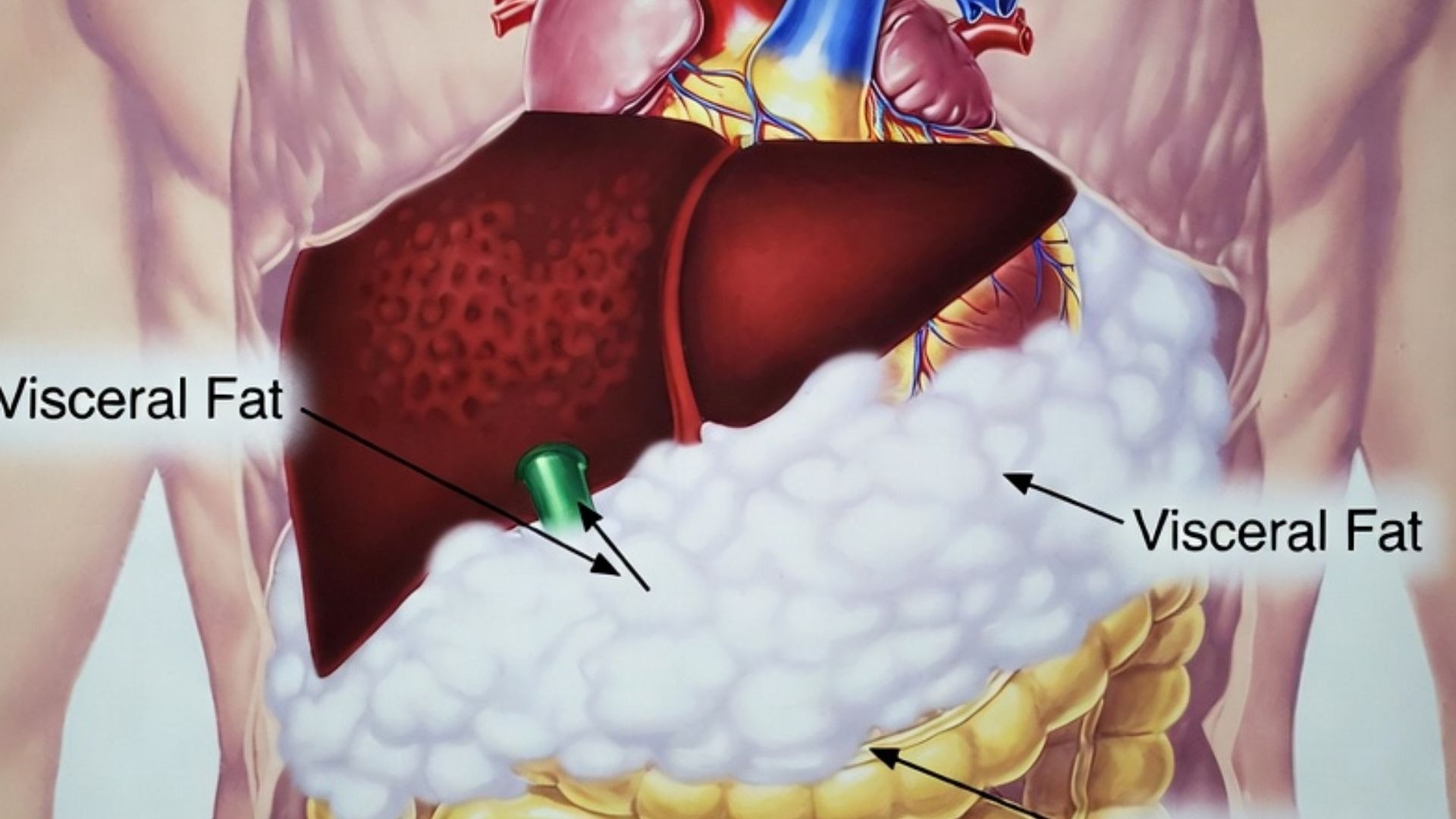
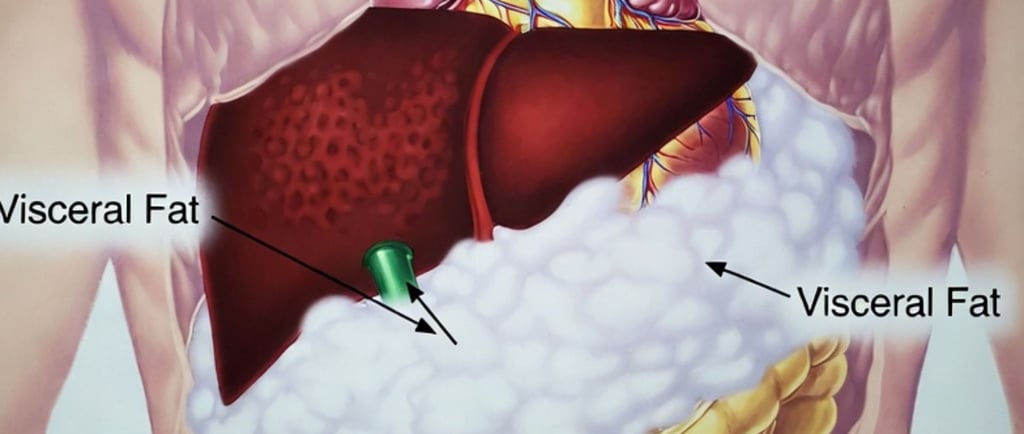
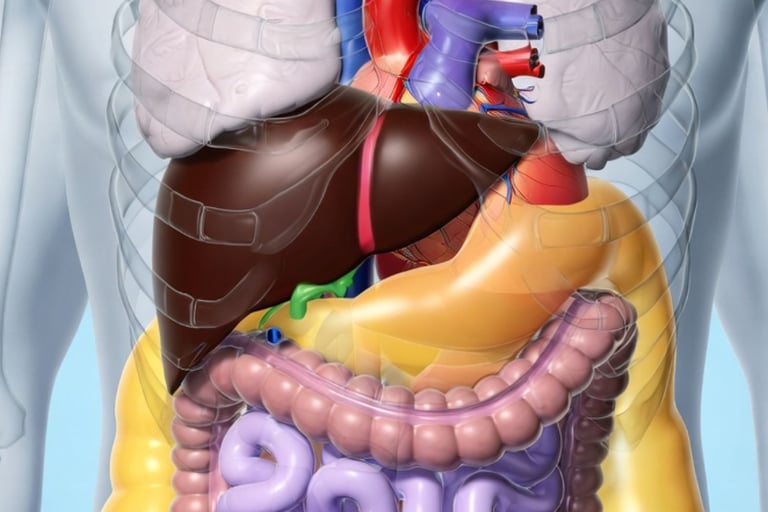
Visceral fat, the deep abdominal fat that surrounds vital organs like the liver, pancreas, and intestines, poses significant health risks.
Unlike subcutaneous fat (the kind you can pinch under your skin), visceral fat is metabolically active and linked to serious conditions such as type 2 diabetes, heart disease, stroke, and non-alcoholic fatty liver disease.
Even people with a normal BMI can have high levels of visceral fat, making it a hidden threat.
Research highlights that visceral fat accelerates cardiovascular aging and serves as a strong indicator of insulin resistance.
How Excess Sugar Drives Visceral Fat Accumulation
Overconsumption of sugar spikes blood insulin levels, signaling the body to store fat—particularly in the abdominal area.
frequent high-sugar intake overworks the pancreas, leading to insulin resistance.
The body then produces more insulin, creating a vicious cycle that promotes visceral fat buildup, fatty liver, chronic inflammation, and higher risks of metabolic syndrome and heart disease.
Intermittent Fasting: A Proven Strategy to Reduce Visceral Fat
Intermittent fasting (IF) lowers insulin levels, allowing the body to burn stored fat for energy.
This process targets visceral fat effectively, improves metabolism, reduces inflammation, and supports long-term heart health.
Studies from the National Institutes of Health show IF outperforms traditional calorie restriction for visceral fat loss.
One trial found participants using intermittent fasting reduced visceral fat by 33%, compared to just 14% in the calorie-restriction group—despite similar calorie intake and activity levels.
Unlike calorie cutting alone, fasting preserves muscle and avoids metabolic slowdown.
Popular Intermittent Fasting Methods
16:8 Method — Eat within an 8-hour window, fast for 16 hours.
5:2 Diet — Eat normally 5 days, restrict calories on 2 non-consecutive days.
Alternate-Day Fasting — Alternate between normal eating and very low-calorie days.
While IF offers benefits like weight loss and better insulin sensitivity, some observational studies suggest eating windows shorter than 8 hours may correlate with higher cardiovascular risks.
Experts emphasize these findings are not causal, and IF should be approached cautiously—especially for those with diabetes or heart conditions.
Always consult a healthcare professional before starting.
The Gut Microbiome's Role in Heart Health and Visceral Fat
The gut microbiome plays a crucial role in inflammation and cardiovascular risk.
Dysbiosis (imbalance in gut bacteria) contributes to conditions like atherosclerosis, hypertension, obesity, and type 2 diabetes.
When combined with excess visceral fat, it significantly raises coronary artery disease risk.
Inflammation is a primary link: Leaky gut allows bacterial compounds like lipopolysaccharides (LPS) to enter the bloodstream, triggering systemic inflammation and plaque buildup in arteries.
Key Gut Metabolites Affecting Heart Health
Trimethylamine N-oxide (TMAO) → Produced from dietary choline and carnitine (often in red meat); promotes atherosclerosis and thrombosis.
Short-Chain Fatty Acids (SCFAs) → From fiber fermentation; support gut barrier, reduce inflammation, and benefit metabolism.
Practical Strategies to Improve Gut Health and Combat Visceral Fat
Optimizing your gut microbiome can help reduce inflammation and visceral fat:
Prioritize fiber-rich whole foods → Vegetables, fruits, and legumes feed beneficial bacteria.
Include fermented foods → Kefir, yogurt, sauerkraut, and kimchi provide probiotics and postbiotics like vitamin K2 and SCFAs.
Get 7+ hours of sleep nightly → Essential for microbiome balance.
Manage stress → Through exercise, meditation, or mindfulness.
Reducing visceral fat requires a holistic approach: limit added sugars, consider evidence-based intermittent fasting (with medical guidance), and nurture your gut through diet and lifestyle.
These steps can significantly lower risks for heart disease, diabetes, and metabolic issues. Consult your doctor for personalized advice.
Concise Summary: Understanding Visceral Fat & Health
What visceral fat is: Deep abdominal fat surrounding organs (liver, pancreas, intestines). It’s metabolically active and more dangerous than subcutaneous fat.
Why it matters: Strongly linked to insulin resistance, type 2 diabetes, heart disease, stroke, fatty liver, and accelerated cardiovascular aging—even in people with normal BMI (“TOFI”).
Sugar’s role: Excess sugar repeatedly spikes insulin, driving fat storage preferentially in the abdomen, leading to insulin resistance, inflammation, fatty liver, and metabolic syndrome.
Intermittent fasting (IF): Lowers insulin and promotes fat burning, targeting visceral fat. Studies show IF can reduce visceral fat more than calorie restriction alone while preserving muscle.
Common methods: 16:8, 5:2, alternate-day fasting.
Caution: Very short eating windows may correlate (not prove) higher CV risk; medical guidance advised for diabetes, heart disease, pregnancy, or eating disorders.
Gut microbiome link: Dysbiosis increases inflammation and harmful metabolites (e.g., TMAO), worsening atherosclerosis. Beneficial SCFAs from fiber protect gut barrier and metabolism.
Practical strategies:
Cut added sugars and ultra-processed foods.
Emphasize fiber-rich whole foods and fermented foods.
Consider evidence-based IF with guidance.
Prioritize sleep (7+ hours) and stress management.
Monitoring: Waist circumference is a rough proxy; DEXA/CT/MRI are more accurate. Focus on sustainable habits over numbers.
Bottom line: Reducing visceral fat requires a holistic approach—less sugar, smart fasting, and gut-friendly lifestyle—to lower cardiometabolic risk.
Dr. Hassan Al-Warraqi’s Way of Fasting (David Fasting Method)
Name:
David Fasting / Alternate-Day–Style Fasting
Core Principle:
Structured fasting 3–4 non-consecutive days per week to achieve metabolic rest, insulin reduction, autophagy activation, and visceral fat loss—without continuous calorie deprivation.
📅 Weekly Structure (Example)
Fasting days: Saturday – Monday – Wednesday – Thursday
Eating days: Sunday – Tuesday – Friday
Days can be adjusted, but fasting days should not all be consecutive to allow recovery and hormonal balance.
Not allowed:
Calories
Sweeteners
Milk or juices
Goal:
Lower insulin → activate fat burning & autophagy → reduce visceral fat and inflammation.
🍽️ Eating Day Rules
2 meals only (no snacking)
Food focus:
Whole foods
High fiber
Adequate protein
Healthy fats
Avoid:
Sugar
Refined carbs
Ultra-processed foods
No calorie counting — quality and timing matter more.
🧬 Expected Physiological Benefits
↓ Visceral fat
↓ Insulin resistance
↑ Autophagy
↓ Chronic inflammation
↑ Mitochondrial efficiency
Preservation of lean muscle (vs daily calorie restriction)
🛑 Who Should NOT Do This Without Medical Supervision
Type 1 diabetes
Advanced type 2 diabetes on insulin/sulfonylureas
Pregnancy or breastfeeding
Active eating disorders
Severe chronic illness
🕊️ Philosophical Basis
Inspired by Prophet David’s fasting (peace be upon him):
“The most beloved fasting to Allah is the fasting of Dawood: he fasted one day and ate the next.”
Balanced, disciplined, and sustainable.
📌 Key Takeaway
3–4 fasting days weekly, spaced wisely, provide powerful metabolic benefits without daily restriction, making this method effective for visceral fat reduction, metabolic healing, and long-term health.
Health Benefits of Dr. Hassan Al‑Warraqi’s Fasting Method
✔ Reduction of visceral fat
✔ Improved insulin sensitivity
✔ Lower risk of type 2 diabetes
✔ Improved fatty liver markers
✔ Reduced chronic inflammation
✔ Cardiovascular protection
✔ Preservation of lean muscle mass
✔ Sustainable long‑term weight control
Unlike continuous calorie restriction, this method avoids metabolic slowdown and supports hormonal balance.
Frequently Asked Questions About Visceral Fat, Intermittent Fasting, and Gut Health
What is visceral fat, and why is it more dangerous than subcutaneous fat?
Visceral fat is the deep abdominal fat that surrounds vital organs such as the liver, pancreas, and intestines.
Unlike subcutaneous fat (the fat you can pinch under your skin), visceral fat is metabolically active and releases inflammatory compounds and hormones that interfere with normal bodily functions.
It is strongly linked to insulin resistance, type 2 diabetes, heart disease, stroke, and non-alcoholic fatty liver disease—even in people who appear slim or have a normal BMI.
Can someone with a healthy weight still have high visceral fat?
Yes.
Many people with a normal body weight or BMI carry significant amounts of visceral fat.
This is sometimes called “TOFI” (thin outside, fat inside).
Visceral fat is a hidden risk factor and a better predictor of metabolic and cardiovascular problems than total body weight.
How does excess sugar lead to visceral fat buildup?
Frequent consumption of added sugars spikes blood insulin levels.
Over time, constant high insulin signals the body to store excess energy as fat—preferentially as visceral fat.
This can progress to insulin resistance, where the body needs even more insulin to manage blood sugar, creating a cycle that promotes visceral fat accumulation, fatty liver, inflammation, and higher risk of metabolic syndrome and heart disease.
Is intermittent fasting effective for reducing visceral fat?
Yes.
Intermittent fasting lowers insulin levels and shifts the body into fat-burning mode, preferentially targeting visceral fat.
Research from the National Institutes of Health shows that intermittent fasting can reduce visceral fat by up to 33%, compared to only 14% with traditional calorie restriction, even when calorie intake and activity levels are similar.
Which intermittent fasting method is best for visceral fat loss?
Popular methods include:
16:8 – Eat within an 8-hour window and fast for 16 hours.
5:2 – Eat normally for 5 days and restrict calories on 2 non-consecutive days.
Alternate-day fasting – Alternate normal eating days with very low-calorie days.
The 16:8 method is the most widely studied and sustainable for most people.
Choose the one that fits your lifestyle, and start gradually.
Are there risks associated with intermittent fasting?
While generally safe and beneficial for many, some observational studies have suggested that eating windows shorter than 8 hours may be linked to higher cardiovascular risk.
These studies show correlation, not causation, and more research is needed. People with diabetes, heart conditions, eating disorders, or who are pregnant/breastfeeding should consult a doctor before starting intermittent fasting.
How does the gut microbiome influence visceral fat and heart disease?
An imbalanced gut microbiome (dysbiosis) contributes to chronic inflammation, insulin resistance, and higher levels of harmful metabolites like TMAO, which promotes atherosclerosis and plaque buildup.
Excess visceral fat and poor gut health create a vicious cycle that increases risk of heart disease, hypertension, obesity, and type 2 diabetes.
What foods should I eat to improve gut health and reduce inflammation?
Focus on:
High-fiber whole foods (vegetables, fruits, legumes, whole grains) to feed beneficial bacteria.
Fermented foods (kefir, yogurt, sauerkraut, kimchi) for probiotics and postbiotics like vitamin K2 and short-chain fatty acids.
Avoid ultra-processed foods, added sugars, and excessive red meat, which can increase harmful metabolites like TMAO.
How important are sleep and stress management for visceral fat and gut health?
Very important.
Aim for at least 7 hours of quality sleep per night and practice stress-reduction techniques (meditation, exercise, mindfulness).
Poor sleep and chronic stress disrupt the gut microbiome, increase inflammation, and promote insulin resistance and visceral fat storage.
How can I measure or monitor my visceral fat?
Visceral fat isn’t easily measured at home.
Waist circumference (over 40 inches for men or 35 inches for women) is a rough indicator.
More accurate methods include DEXA scans, CT/MRI scans, or specialized body composition scales used in clinical settings.
Focus on sustainable lifestyle changes rather than obsessing over exact numbers.
====================================================================================================================================================================================
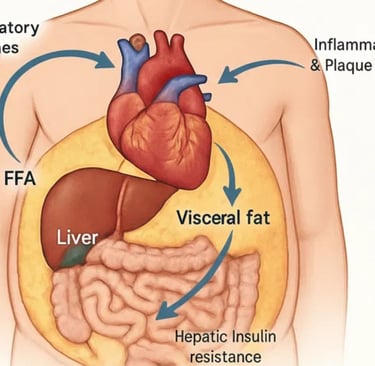
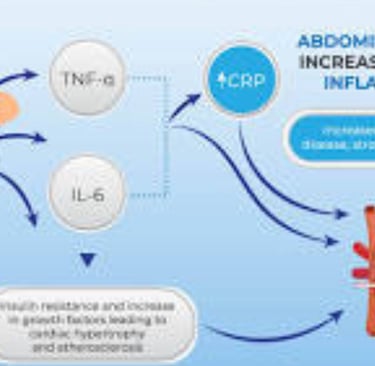
Visceral fat contributes to heart disease through multiple interconnected pathways, including inflammation, metabolic dysregulation, and direct mechanical effects on the heart.
Inflammatory Effects
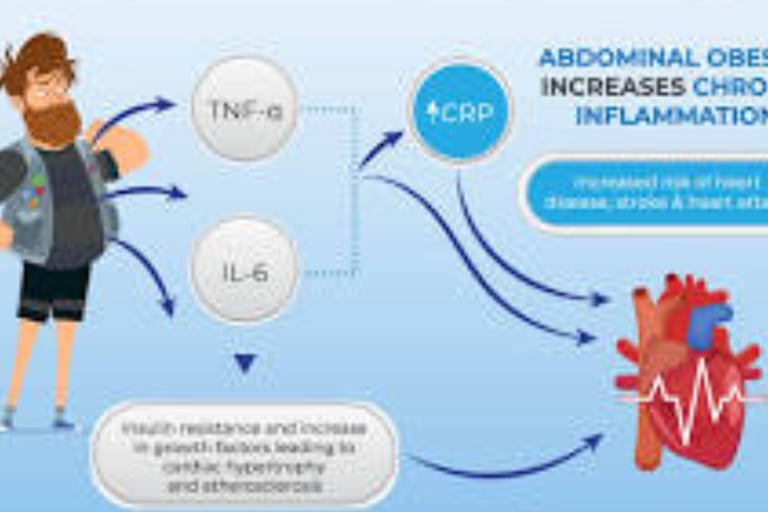
Visceral fat releases pro-inflammatory cytokines and adipokines that promote systemic inflammation, accelerating atherosclerosis by damaging arterial walls and fostering plaque buildup. This chronic inflammation also elevates blood pressure and contributes to endothelial dysfunction, impairing blood vessel relaxation.
Metabolic Pathways
It drives insulin resistance by flooding the liver with free fatty acids via the portal vein, leading to dyslipidemia with high triglycerides, low HDL, and excess LDL cholesterol. These changes heighten oxidative stress and thrombosis risk, directly promoting coronary artery disease and heart failure.
Cardiac-Specific Impacts
Excess visceral fat expands epicardial adipose tissue around the heart, causing myocardial fibrosis, hypertrophy, and reduced adiponectin, which worsens diastolic dysfunction. It also increases sympathetic nervous system activity, raising cardiac preload and afterload for hypertension and arrhythmias.
#VisceralFat #HiddenFat #HeartHealth #MetabolicHealth #InsulinResistance #FattyLiver #CardiovascularRisk #ChronicInflammation #MetabolicSyndrome #Type2Diabetes #GutHealth #Autophagy #IntermittentFasting #PreventiveMedicine #HealthyLifestyle
❤️ The Fat You Can’t See: How Visceral Fat Damages the Heart & Metabolism
https://www.h-k-e-m.com/-the-fat-you-cant-see-how-visceral-fat-damages-the-heart-and-metabolism
====================================================================================================================================================================================





Get in touch
Address
Cairo Al Rehab
Contacts
+20 109 405 2056
hassanalwarraqi@h-k-e-m.com