
Health is a crown on the heads of the healthy that only the sick can see.



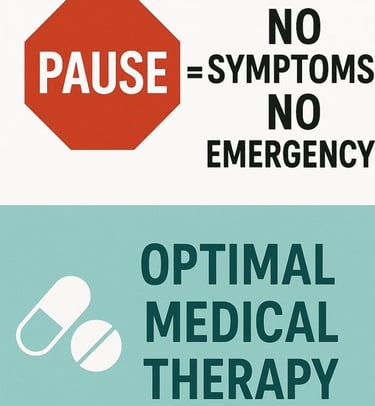
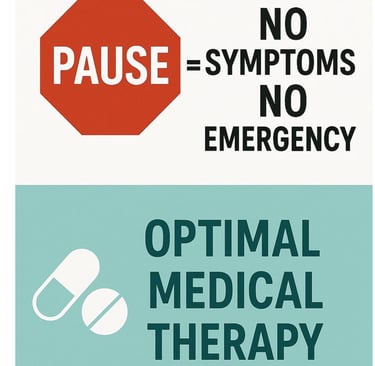
🛑 Pause – no symptoms = no emergency 💊 Optimal medical therapy
🫀 Treat the patient, not the angiogram 🔍 No symptoms + no high-risk ischemia = no stent
CARDIOVASCULAR
Dr Hassan Al Warraqi
12/14/20257 min read
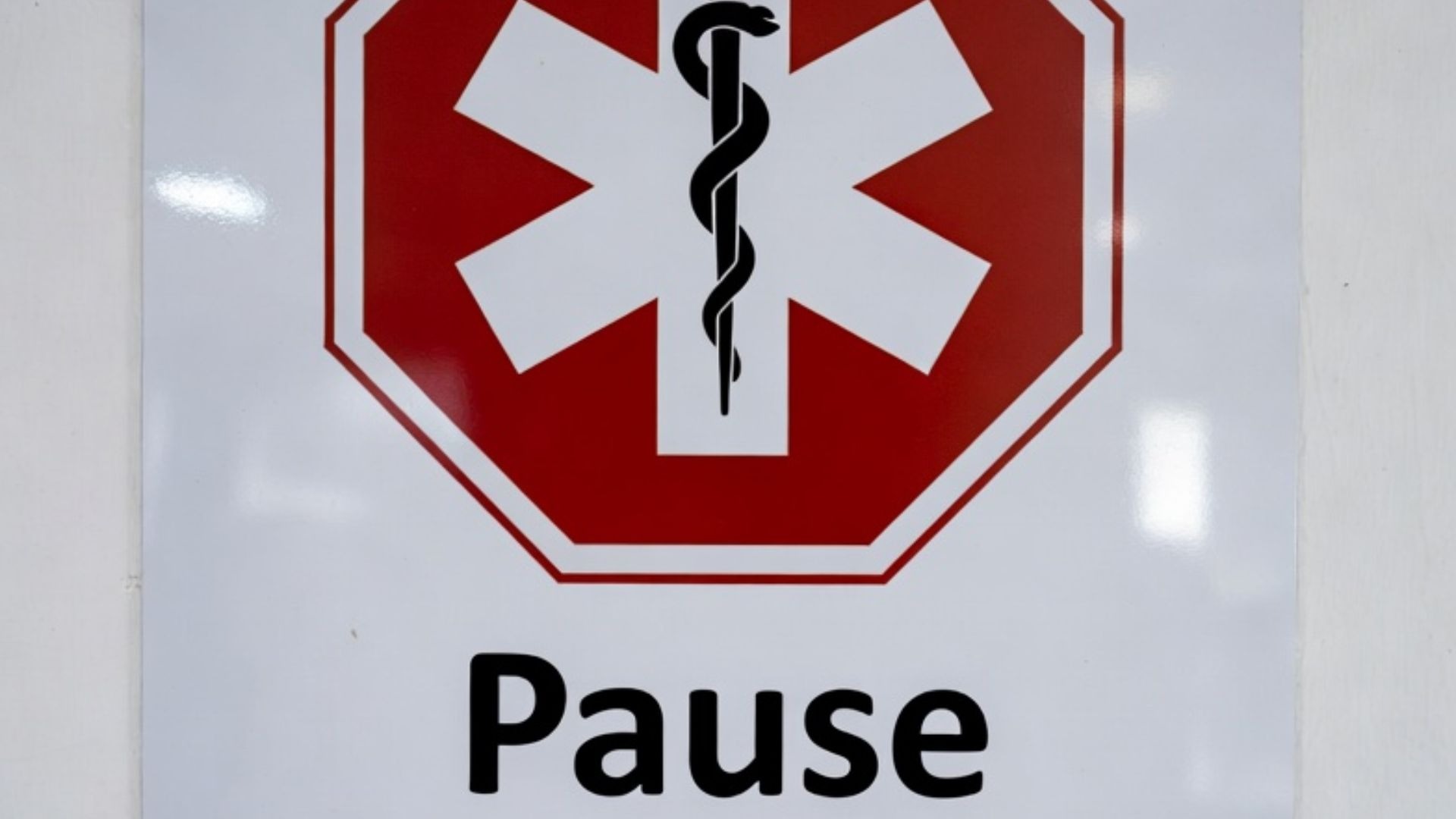
🛑 Pause – no symptoms = no emergency 💊 Optimal medical therapy
🫀 Treat the patient, not the angiogram
🔍 No symptoms + no high-risk ischemia = no stent
Clinical surveillance, which includes regular check-ups, blood work, scans, and continuous monitoring, is often seen as a key part of staying healthy.
But, too much of it or doing it without good reason can actually cause problems.
Too much monitoring can hurt patients mentally, physically, financially, and ethically, sometimes more than it helps.
How it Affects Your Mind and Emotions
Too much medical monitoring can be hard on your emotions and mental health.
* Worry and Pressure: Testing and waiting for results over and over can make you constantly worried and drained.
* Feeling Sick When You're Not: Constant monitoring can make healthy people feel like they're always about to get sick, even if their test results are fine.
* Thinking You're Safe When You're Not: Good test results can make you feel like you're in the clear, but this can cause you or your doctor to miss new symptoms and delay getting the care you need.
Health and Body Risks
Tests that aren't needed or are done too often can directly and indirectly put your health in danger.
* Fake Alarms: Sometimes, tests find things that look bad but are actually harmless.
This can lead to more tests and procedures that you don't need, which can be risky.
* Finding Problems That Don't Matter:
* Overdiagnosis: This means finding slow-growing tumors or other issues that would never have bothered you or needed treatment.
* Overtreatment: This means getting treatments like surgery, drugs, or radiation for problems that were overdiagnosed.
This can cause side effects and other issues.
* Direct Harm to Your Body:
* Radiation: Getting too many CT scans and X-rays can add up and be harmful, particularly if you're being watched for cancer or a long-term disease.
* Problems from Procedures: Biopsies can cause infections or bleeding, and other procedures can lead to bad reactions.
Money and Practical Problems
Too many tests can cause real-world problems.
* High Costs: The cost of tests, scans, and doctor visits, plus missing work, can really add up.
* Time Issues: Frequent appointments can mess up your work, family time, and daily life.
* Insurance and Job Troubles: Sometimes, being labeled high-risk can make your insurance more expensive, limit your options, or even affect your job.
Ethical and Personal Issues
Being constantly monitored can change how you see yourself and your health.
* Being Labeled: Being called high-risk or pre-disease can make you feel bad about yourself.
* Lower Quality of Life: Always thinking about disease and following a strict monitoring schedule can make you less happy and lower your overall well-being.
* Too Much Trust in Tests: Doctors might rely too much on lab results and scans instead of listening to your symptoms and looking at your overall health.
When Does Monitoring Become Too Much?
Monitoring is most likely to be harmful when it's:
* Done on people who are unlikely to get the disease.
* Based on old or unproven methods.
* Scheduled too often, without considering how the condition usually progresses.
* Continued even when the results won't change your treatment or make you better.
How to Get the Right Amount of Care
The right kind of clinical surveillance can prevent illness and save lives.
The goal is to find the right balance, not to avoid monitoring altogether.
Using guidelines that are based on evidence and that focus on individual risk is key.
This helps make sure you get the most benefit and the least harm from testing, like avoiding overdiagnosis, fake alarms, anxiety, radiation, and unnecessary treatment.
This approach helps you stay healthy and enjoy your life.
Frequently Asked Questions (FAQs)
Here are some common questions about the problems with too much clinical surveillance, based on what we've talked about.
More Details
* How Overdiagnosis Works: Overdiagnosis happens when doctors look too hard for problems in people who don't have symptoms. As tests get better, they can find smaller and slower-growing issues.
The problem is that it's hard to know which findings are harmless and which are dangerous.
So, doctors often treat everyone, which can harm those who didn't need it.
* How to Measure the Harms of Screening: It's helpful to know the numbers.
For example, studies show that if women get mammograms every year for 10 years starting at age 50, there's a 61.3% chance of a false alarm and a 9.4% chance of getting a biopsy that isn't needed.
Getting screened every two years instead can lower the false alarm rate to about 42%.
This shows why how often you get screened is important.
* The Role of Doctors: It's up to doctors to explain the risks and benefits of screening.
However, a study in 2025 found that doctors' understanding of overdiagnosis varies a lot, which affects how they talk about it with patients.
This can make it hard for patients to make informed decisions.
One expert said that cancer screening is often a judgment call, not a clear medical decision.
* How to Make Decisions:Deciding whether to get screened is a personal choice.
You need to weigh the potential benefits against the possible harms.
Experts say to look at the evidence behind a test and talk to your doctor about your risks and values.
For instance, how would you feel about a small chance of preventing cancer versus a higher chance of feeling anxious and getting unnecessary procedures?
Example: Asymptomatic Coronary Artery Disease
* What Happened: A patient with no symptoms gets an echocardiogram as part of a routine check-up.
* The Problem: The doctor recommends a coronary catheterization and stent based on the scan.
* The Right Approach: The correct approach is to be careful and make decisions based on evidence, not just automatically doing a procedure.
* Key Points:
* Stable coronary artery disease with no symptoms usually doesn't need invasive procedures.
* The first step is usually medication, like antiplatelet drugs, statins, and blood pressure control, plus lifestyle changes.
* Coronary catheterization in asymptomatic patients has risks but doesn't necessarily help them live longer.
* Stents in stable asymptomatic patients don't lower the risk of heart attack or death compared to medication.
* You and your doctor should discuss the options, risks, and benefits together.
* When a Procedure Might Be Needed:
* If there are high-risk features, like left main disease or severe multi-vessel disease.
* If stress testing shows significant problems.
* If medication isn't working and symptoms are getting worse.
* If clinical guidelines recommend it.
* The Harm of Too Much Monitoring:This situation shows how overdiagnosis and overtreatment can happen.
Finding things that lead to unnecessary procedures can expose patients to risks, stress, and costs without making them better.
Frequently Asked Questions (FAQs)
* Is clinical surveillance harmful?
No, it's not always harmful.
When it's done for the right reasons and based on evidence, it can save lives.
But, too much, unnecessary, or poorly targeted surveillance can cause medical, mental, and financial harm without helping.
* What is overdiagnosis?
Overdiagnosis is when tests find problems that would never have caused symptoms or harm during your life.
This can lead to unnecessary labeling, monitoring, and treatment for things that weren't a threat.
* How common are false positives?
False positive rates vary depending on the test. Some tests have rates of 10-50%, which means many people get more tests or feel anxious because of findings that turn out to be nothing.
* Can normal results be misleading?
Yes. Normal results can make you think you're safe, which can cause you or your doctor to ignore new symptoms or delay getting care.
Tests are just a snapshot in time and can't predict the future or replace good judgment.
* What is health anxiety from surveillance?
Health anxiety happens when frequent testing makes healthy people feel sick or worried about their health.
This can make people overly aware of normal body sensations.
* How much radiation comes from imaging?
A chest X-ray gives you a small amount of radiation. But, a CT scan can give you 50-100 times more.
Getting repeated imaging over the years can add up and slightly increase your cancer risk, especially if you're younger.
* What does risk-based surveillance mean?
Risk-based surveillance means tailoring the frequency and intensity of monitoring to your individual risk factors, family history, and guidelines.
High-risk people get more monitoring, and low-risk people get less.
* Should asymptomatic people get coronary catheterization if imaging shows problems?
Usually not. Stable coronary artery disease with no symptoms is usually treated with medication and lifestyle changes.
Catheterization and stents don't lower the risk of heart attack or death compared to medication alone.
* When should I question a test?
Ask your doctor:
What is the purpose of this test?
What are the risks and benefits?
What will we do based on the results?
Is this test recommended for someone like me?
What happens if I don't do this test?
* What is the difference between screening and diagnostic testing?
Screening tests are for people with no symptoms to find disease early.
Diagnostic tests are for people with symptoms to find a specific condition.
Screening has more false positives because most people are healthy.
* Can surveillance affect insurance or employment?
Yes. In some systems, it can affect your insurance or job.
Being labeled high-risk can have financial consequences.
* How can I balance the benefits and harms of surveillance?
Work with your doctor to:Know your risks
Follow guidelinesAvoid unnecessary testsFocus on proven benefits
Make decisions together
* What is the labeling effect?
The labeling effect is when being diagnosed with a condition changes how you see yourself and how others see you, even if the condition is minor.
* Are annual check-ups always good?
No. Studies show they don't always improve health.
Targeted screening is more effective.
* What if I feel my surveillance is too much?
Talk to your doctor.
Ask about the evidence and whether less monitoring is okay.
Get a second opinion if needed.
====================================================================================================================================================================================
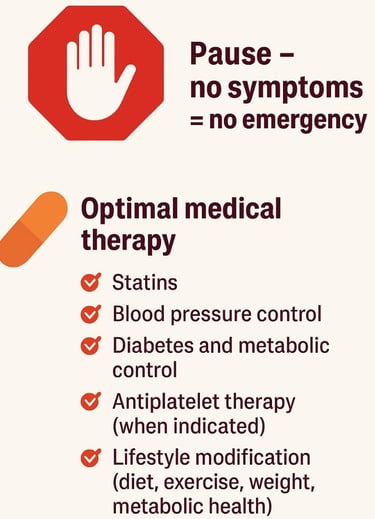
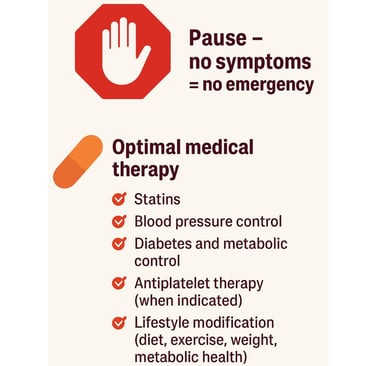
🛑 Pause – no symptoms = no emergency 💊 Optimal medical therapy
https://www.h-k-e-m.com/-pause-no-symptoms-no-emergency-optimal-medical-therapy
💊 Optimal medical therapy includes:
📉 Statins for plaque stabilization
🩺 Blood pressure control
🧬 Diabetes and metabolic control
💊 Antiplatelet therapy (when indicated)
🥗 Lifestyle modification (diet, exercise, weight management, metabolic health)
📌 Clinical rule:
Stents relieve symptoms — they do not improve survival in asymptomatic patients.
🫀 Treat the patient, not the angiogram.
Clinical surveillance rule:
🫀🛑 If you are asymptomatic and routine tests or echocardiography lead to a recommendation for catheterization and stent, you should pause, avoid rushing to invasive procedures, seek a second opinion, confirm objective ischemia with stress testing, prioritize optimal medical therapy (statins, BP/DM control, lifestyle modification), and reserve catheterization/stenting only for high-risk findings or symptoms, because in asymptomatic patients stents do not improve survival or prevent heart attacks.*
#ClinicalSurveillance #AsymptomaticPatient #NoSymptoms #DoNotRush #EvidenceBasedMedicine #Overdiagnosis #Overtreatment #SecondOpinion #StressTestFirst #MedicalTherapy #CardiologyGuidelines #PatientSafety #HeartNotAngiogram
====================================================================================================================================================================================



Get in touch
Address
Cairo Al Rehab
Contacts
+20 109 405 2056
hassanalwarraqi@h-k-e-m.com