
Health is a crown on the heads of the healthy that only the sick can see.




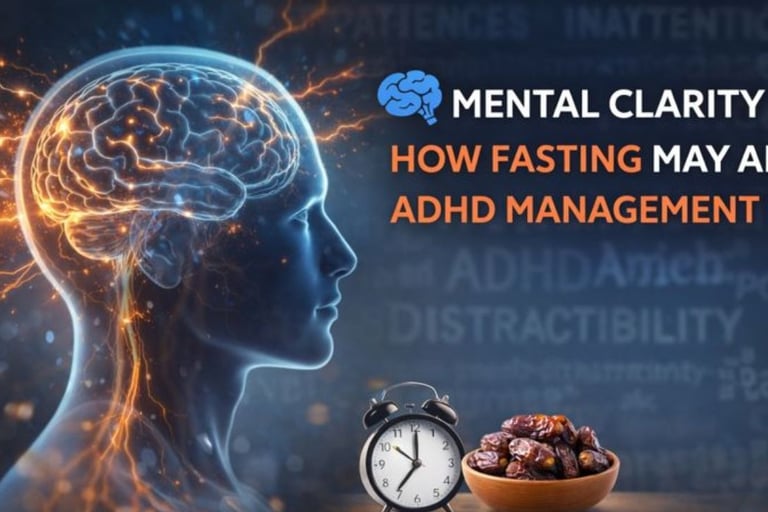
🧠 Mental Clarity : How Fasting May Aid ADHD Management
Explore the science behind how intermittent fasting may improve focus, stabilise energy, and reduce impulsivity for individuals managing ADHD
FASTINGNEUROPSYCHIATRYNERVOUS SYSTEM GENERAL
Dr Hassan Al Warraqi
2/11/20266 min read


🧠 Mental Clarity : How Fasting May Aid ADHD Management
Explore the science behind how intermittent fasting may improve focus, stabilise energy, and reduce impulsivity for individuals managing ADHD
What is ADHD?
ADHD — Attention-Deficit/Hyperactivity Disorder — is a neurodevelopmental condition that affects how the brain manages attention, impulses, energy, and motivation.
What it is not:
A character flaw
A moral failure
A lack of intelligence
A sign that someone “isn’t trying hard enough”
ADHD is about how the brain is wired, not how capable or worthy a person is.
People with ADHD don’t have broken brains — they have brains that work differently.
Tasks that feel automatic for others (starting, focusing, organizing, stopping) often require far more effort with ADHD.
At the same time, those same brains can be remarkably creative, intuitive, and fast-thinking.
Millions of children and adults live with ADHD, many without knowing it.
Understanding it is often the first moment of relief.
🔹 Core Symptoms (What This Actually Feels Like)
ADHD shows up in three main ways, but not everyone experiences all of them — and not in the same intensity.
1️⃣ Inattention (More Than “Getting Distracted”)
This isn’t about not caring.
It’s about attention not staying where you put it.
People often experience:
Reading the same paragraph five times and still not absorbing it
Zoning out during conversations they want to follow
Feeling overwhelmed by simple planning tasks
Knowing what needs to be done — but feeling unable to start
Organization can feel especially hard:
Time feels slippery and unreliable
Priorities blur together
Important items disappear constantly
Deadlines sneak up even when you’re trying to stay on top of them
And one of the most painful parts:
Starting things with excitement… and watching them slowly fall apart
Feeling shame about unfinished projects
Being labeled “lazy” when the reality is mental exhaustion
2️⃣ Hyperactivity (Often Invisible in Adults)
Hyperactivity isn’t always bouncing off the walls.
In adults, it often lives inside:
A mind that never quiets
Thoughts racing even when the body is still
A constant need for stimulation
Difficulty relaxing without feeling guilty or restless
Some people need movement to think:
Pacing during phone calls
Fidgeting to stay focused
Feeling trapped in situations that require stillness
For children, it may be physical.
For adults, it’s often mental noise that never shuts off.
3️⃣ Impulsivity (Acting Before the Brain Catches Up)
Impulsivity isn’t recklessness — it’s speed without brakes.
This can look like:
Saying something before realizing it might hurt
Making fast decisions and regretting them later
Struggling to wait — for turns, results, or rewards
Emotional reactions that arrive full-force, instantly
Many people with ADHD feel emotions deeply and immediately.
The problem isn’t feeling — it’s the lack of a pause before reacting.
🧩 Types of ADHD (Why It Looks Different in Everyone)
ADHD doesn’t have one face.
Predominantly Inattentive Type
Often missed, especially in girls and adults.
Quiet struggles
Internal chaos
Often labeled “unmotivated” or “spacey”
Diagnosed late — sometimes in adulthood
Predominantly Hyperactive-Impulsive Type
More visible and disruptive.
Restlessness
Impulse-driven behavior
Often diagnosed earlier, especially in boys
Combined Type
The most common — and often the most exhausting.
Attention struggles + impulsivity
Mental overload
Requires layered support strategies
Important: ADHD can change over time.
Many adults don’t recognize it because it no longer looks like childhood hyperactivity.
🧠 Causes of ADHD (Without Blame)
ADHD comes from biology, not behavior.
It’s shaped by:
Genetics (strongly)
Brain chemistry (especially dopamine and norepinephrine)
Brain development and connectivity
This explains why:
Motivation feels inconsistent
Rewards don’t register the same way
Boring tasks feel physically painful
Interesting tasks trigger intense focus (hyperfocus)
And just as important — what doesn’t cause ADHD:
Bad parenting
Sugar
Screens
Vaccines
Laziness
ADHD exists before parenting, before school, before effort.
🌟 ADHD Strengths (This Part Matters)
ADHD isn’t just challenges — it’s potential with friction.
Many people with ADHD are:
Creatively gifted
Emotionally perceptive
Fast thinkers
Excellent in crises
Deeply empathetic
Passion-driven
Hyperfocus can produce:
Stunning productivity
Deep expertise
Flow states others struggle to reach
The goal isn’t to “fix” ADHD — it’s to reduce friction so strengths can shine.
🕋 ADHD & Fasting
Fasting and ADHD have a complicated relationship.
Some people feel:
Clearer
Calmer
Less impulsive
Others feel:
Anxious
Foggy
Emotionally dysregulated
Completely depleted
Both experiences are valid.
Fasting isn’t a treatment for ADHD — but for some, it can be a tool when handled carefully.
For others, it adds stress to an already overloaded system.
The deciding factors are usually:
Sleep
Nutrition
Hydration
Medication timing
Stress levels
Self-awareness
If fasting helps you function better overall, that matters.
If it makes your life harder, that also matters — and it’s okay to stop.
💡 Final, Human Truth
ADHD is not a personal failure.
It’s not a lack of discipline.
It’s not something you outgrow by trying harder.
It’s a different nervous system.
With understanding, support, and the right strategies, people with ADHD don’t just survive — they build meaningful, creative, successful lives.
The goal is never perfection.
The goal is compassion, clarity, and tools that actually work for your brain.
ADHD and Fasting: Frequently Asked Questions (FAQs)
Fasting and ADHD can be a confusing mix.
Some people feel sharper and calmer when they fast.
Others feel foggy, irritable, or completely overwhelmed.
If you’re trying to figure out whether fasting is a good idea for your ADHD brain, this guide is here to help you think it through — safely and realistically.
This isn’t about pushing through suffering or following rigid rules.
It’s about understanding your body, your brain, and your limits.
🔹 General Questions
Q1: Can people with ADHD fast safely?
Short answer:
Yes, many can — but not everyone, and not in every situation.
Fasting can be safe for people with ADHD when it’s done thoughtfully and with attention to things like:
Overall physical health
ADHD severity
Medication use
Sleep quality
Nutrition during eating windows
For some people, fasting adds helpful structure.
For others, it adds stress and makes symptoms worse.
Think of it this way:
Fasting isn’t automatically good or bad for ADHD.
It’s a tool — and like any tool,
it only works if it fits the person using it.
If you’re on medication or have other health conditions, it’s important to involve a healthcare provider before starting.
Q2: Will fasting cure my ADHD?
No.
Fasting does not cure ADHD.
ADHD is a neurodevelopmental condition.
It’s related to how the brain is wired and how certain neurotransmitters (like dopamine) function.
There’s no diet, fast, or lifestyle hack that can make it disappear.
That said, some people find that fasting:
Improves focus temporarily
Reduces energy crashes
Helps with impulsive eating
Creates a sense of routine and structure
These effects can make ADHD feel more manageable — but they don’t replace medication, therapy, or other evidence-based treatments.
Bottom line:
Fasting can sometimes support ADHD management.
It should never replace proper treatment.
Q3: Why does fasting help some people with ADHD but make others feel worse?
Because ADHD brains are not all the same.
Some people respond well to fasting because:
Their blood sugar stays stable
They like clear rules and routines
They don’t get intense hunger crashes
Their ADHD symptoms are milder
They sleep well and manage stress effectively
Others struggle because:
Their blood sugar drops quickly
Hunger worsens emotional regulation
Stimulant medication hits harder on an empty stomach
Sleep is already poor
Executive function is already stretched thin
===================================================================================================================================================================================================================================================================================================================================================================================================================================================================
🧠 Mental Clarity : How Fasting May Aid ADHD Management
ADHD also often comes with anxiety, depression, or sensory sensitivity, all of which can change how fasting feels.
If fasting makes you calmer and clearer → that’s information.
If fasting makes you anxious, angry, or unable to function → that’s also important information.
Q4: How long should I try fasting before deciding if it works for me?
Give it 2–4 weeks, but only if you’re monitoring yourself honestly.
The first week is often uncomfortable — that doesn’t automatically mean fasting is bad for you.
But severe emotional instability, unsafe behavior, or physical symptoms are not something to push through.
A helpful way to test fasting:
Start with a short window (12–14 hours)
Track focus, mood, sleep, energy, and irritability
Notice patterns, not single bad days
If after a few weeks you’re functioning better overall, fasting might be a useful tool.
If you’re struggling more than before, it’s okay — and wise — to stop.
Q5: Can fasting replace my ADHD medication?
No — and trying to do that can be unsafe.
Medication works on the neurochemical systems that drive ADHD symptoms.
Fasting can’t replicate that effect.
Stopping or reducing medication without medical guidance can lead to:
Symptom rebound
Poor decision-making
Emotional dysregulation
Safety risks (especially at work or while driving)
If you fast, the safest approach is:
Keep your prescribed treatment
Use fasting only as a supportive strategy
Adjust medication timing with your doctor, not on your own
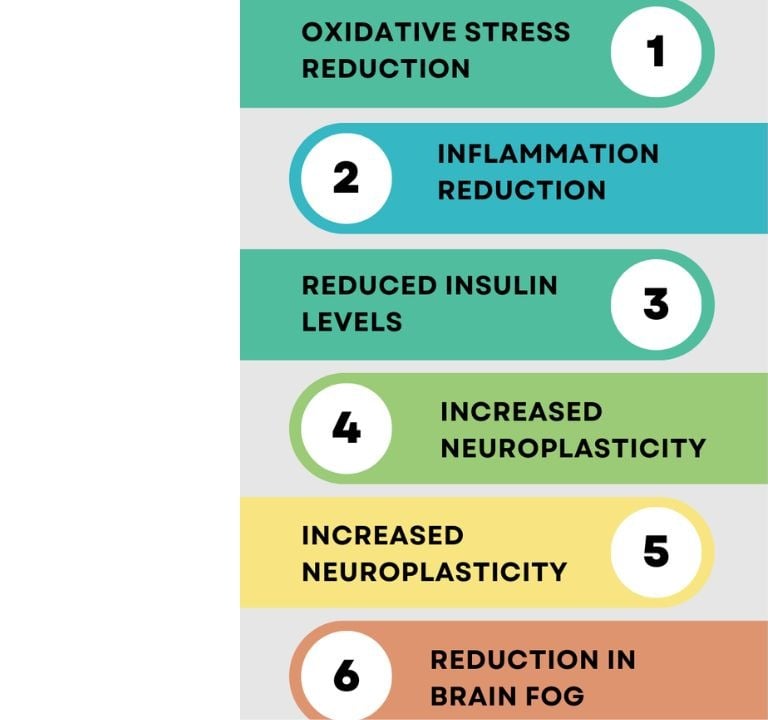
🧠 mental clarity and boost focus with fasting as a potential tool for ADHD management. By supporting dopamine regulation, enhancing neuroplasticity, and reducing brain fog, mindful fasting and balanced nutrition can improve cognitive function, energy, and overall wellness. Integrating intermittent fasting, mindfulness, and healthy lifestyle habits may help those with ADHD maintain sharper focus, productivity, and mental balance.
#ADHDClarity #FastingForFocus #BrainHealth #MentalClarity #ADHDSupport #Neuroplasticity #FocusBoost #BrainFogRelief #IntermittentFasting #HealthyMind #ADHDLife #ProductivityTips #MindfulLiving #EnergyBoost #WellnessJourney #ADHDWellness
https://www.h-k-e-m.com/-mental-clarity-how-fasting-may-aid-adhd-management
========================================================================================================================================================================================================
🫁🌙 العلاج بالأكسجين والصيام : توازن دقيق بين دعم الحياة وإصلاح الخلايا ⚖️🧬
https://www.h-k-e-m.com/ar/-alalaj-balaksjyn-walsyam-twazn-dqyq-byn-dam-alhyah-wislah-alkhlaya-
========================================================================================================================================================================================================

Get in touch
Address
Cairo Al Rehab
Contacts
+20 109 405 2056
hassanalwarraqi@h-k-e-m.com