Health is a crown on the heads of the healthy that only the sick can see.



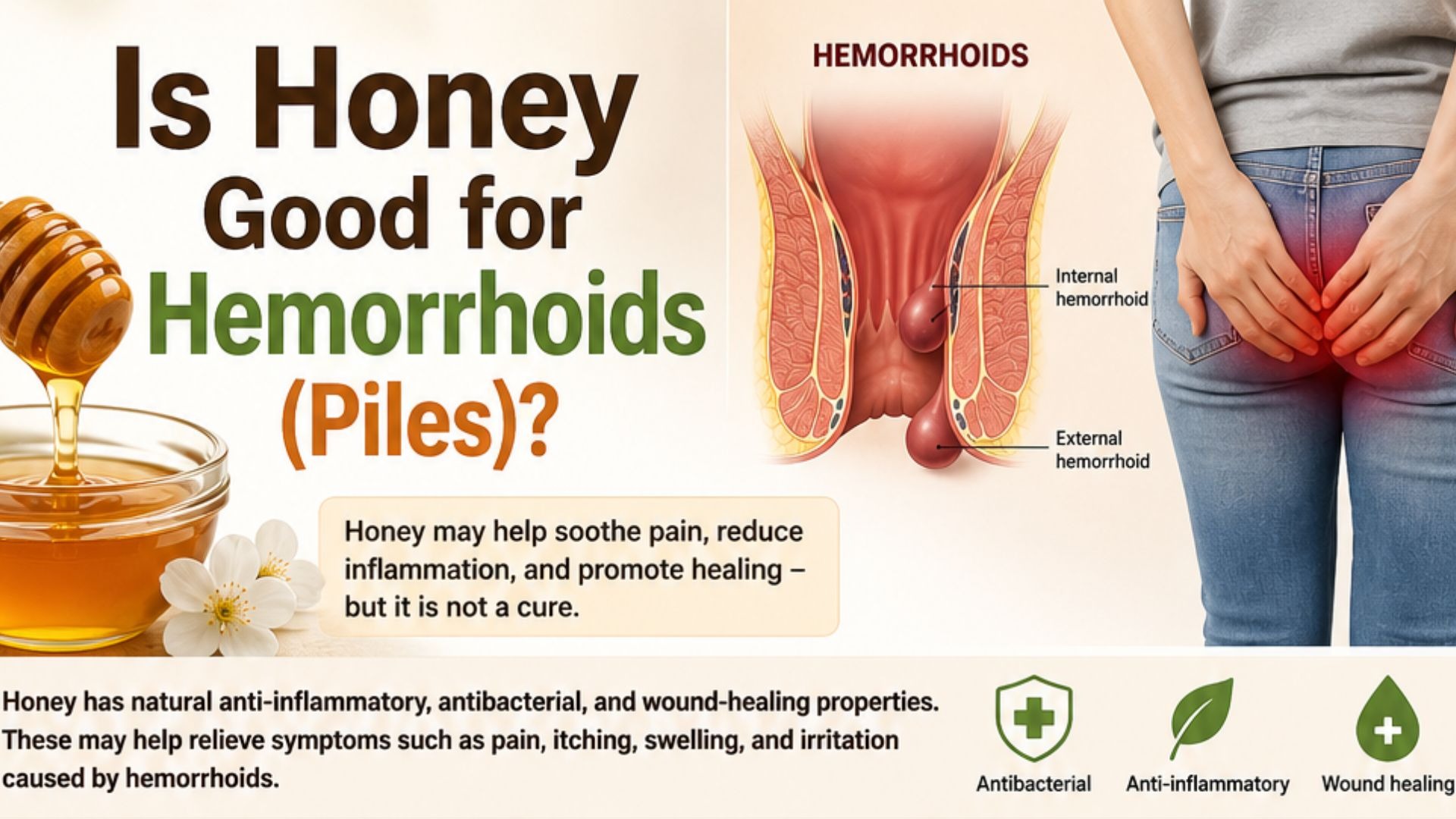
🍯 Is Honey Good for Haemorrhoids (Piles)?
FASTINGHONEYHEMORRHOIDS
Dr Hassan Al Warraqi
7/22/202610 min read


🍯 Is Honey Good for Hemorrhoids (Piles)?
Is Honey Good for Haemorrhoids (Piles)? really
Can honey help hemorrhoids? Learn the science behind honey's potential benefits, how to use it safely, possible risks, and evidence-based treatments.
Hemorrhoids — commonly called piles — are swollen veins in the lower rectum or anus that can cause pain, itching, bleeding, and significant discomfort.
While standard treatments like increasing fiber intake, staying hydrated, and using topical medications remain the foundation of care, many people wonder whether honey can offer a natural alternative for relief.
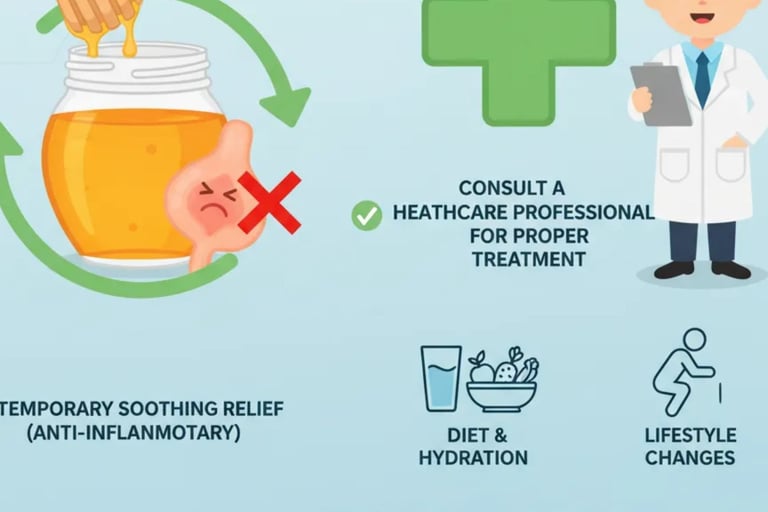
The short answer: Honey may help soothe external hemorrhoid symptoms when used correctly, but it is not a cure.
The evidence is limited, and honey should never replace proven medical treatments.
What Are Hemorrhoids?
Hemorrhoids develop when increased pressure in the lower rectum causes veins to swell and stretch.
Common triggers include straining during bowel movements, chronic constipation or diarrhea, prolonged sitting (especially on the toilet), pregnancy and childbirth, obesity, and a low-fiber diet.
There are two main types.
External hemorrhoids form under the skin around the anus. These are often painful, itchy, and may bleed.
Internal hemorrhoids develop inside the rectum.
These are usually painless but may cause bleeding during bowel movements.
Understanding the type and severity of your hemorrhoids is essential before trying any home remedy, including honey.
Can Honey Help Hemorrhoids?
Yes — honey may help relieve some symptoms of hemorrhoids, but with important caveats.
Thanks to its natural anti-inflammatory, antibacterial, and wound-healing properties, honey can soothe irritated skin and promote healing of minor tissue damage around external hemorrhoids.
How Honey May Reduce Pain and Inflammation
Research suggests that topical honey may help reduce pain and burning around the affected area, ease itching and irritation caused by inflamed tissue, support healing of damaged or inflamed tissues, and lower the risk of minor bacterial infection in broken skin.
However, current evidence comes from relatively small studies, and more high-quality clinical research is needed before honey can be recommended as a standard treatment.
How Honey Works
Honey contains several bioactive compounds that contribute to its potential therapeutic benefits.
Natural sugars help maintain a moist environment that supports tissue healing.
Hydrogen peroxide, produced enzymatically in many honey types, provides mild antibacterial activity.
Polyphenols and flavonoids act as antioxidants and may help reduce inflammation.
The acidic pH of honey can inhibit the growth of certain bacteria.
These properties make medical-grade honey useful in professional wound care and may explain why it can soothe irritated hemorrhoidal tissue when applied externally.
Scientific Evidence on Honey for Hemorrhoids
The evidence on whether honey is effective for treating hemorrhoids is mixed and limited.
While it remains a popular home remedy, it is not considered a first-line or proven medical treatment by mainstream healthcare guidelines.
The Positive Study: Honey, Olive Oil, and Beeswax
topical mixture of honey, olive oil, and beeswax on patients with first- to third-degree hemorrhoids.
Over the course of 4 weeks, this mixture significantly reduced bleeding, relieved itching, and produced no reported side effects.
This study tested honey in combination with olive oil and beeswax, not honey alone.
Both olive oil and beeswax have their own healing and protective properties, so the positive results cannot be attributed solely to honey.
What This Means
Honey in a mixture with other healing ingredients shows promise in small studies.
Honey alone has not demonstrated strong clinical benefits in rigorous trials.
Most studies are small, lack placebo controls, or rely on traditional use rather than modern clinical validation.
How to Use Honey Safely
If you choose to try honey for external hemorrhoid relief, follow these guidelines carefully.
Step-by-Step Application
First, wash the affected area gently with warm water — no harsh soaps or scrubbing.
Pat the skin completely dry with a soft, clean towel. Apply a thin layer of medical-grade honey, such as sterilized Manuka honey, directly to the external hemorrhoid.
Leave it on for 15 to 20 minutes, then rinse with warm water if desired.
Repeat once or twice daily if well-tolerated.
The 3 Best Ways to Use Honey (Safely)
The Quick Fix — Honey + Aloe Vera.
Mix 1 part raw honey with 2 parts pure aloe vera gel.
The aloe cools instantly while the honey reduces inflammation.
Apply a thin layer to the external area, leave on for 15 minutes,
then rinse with warm water. Do this twice daily.
The Lubricated Option — Honey + Coconut Oil.
Mix equal parts honey and coconut oil.
Coconut oil makes the honey less sticky and adds extra anti-inflammatory power.
Apply externally as needed for soothing relief.
The Soak — Honey Sitz Bath.
Add 2 tablespoons of honey to a shallow warm-water bath and sit in it for 15 minutes.
This allows the beneficial compounds to absorb without leaving a sticky mess behind.
The ONE Rule You Must NEVER Break
Do NOT put honey inside your anus.
No syringes, no applicators, no deep insertion.
The rectum absorbs sugar and bacteria directly into the bloodstream, which can trigger severe fungal infections or worsen diarrhea — and diarrhea is one of the worst things for hemorrhoids. Outside only.
Risks and Precautions
Honey is generally safe for topical use, but important precautions apply.
Skip the Honey If:
You have diabetes — sugar can absorb through broken skin and affect blood glucose levels.
The area is infected, meaning it is warm, oozing pus, or you have a fever — see a doctor immediately.
You are allergic to bees or pollen. You have internal hemorrhoids — honey should not be inserted rectally.
The skin is severely broken or ulcerated without medical supervision.
Use Medical-Grade Honey Only
Do not use regular kitchen honey.
Raw or unpasteurized honey can contain bacterial spores and impurities.
For topical use on sensitive or broken skin, always choose medical-grade, sterilized honey designed for wound care.
Medical-grade Manuka honey is generally preferred because it is sterilized, standardized, and has well-studied wound-healing properties.
Watch for Adverse Reactions
Stop using honey immediately if you experience increased irritation or burning, rash or redness, worsening symptoms, or any sign of allergic reaction.
Treatments That Work Better
Honey may provide temporary relief, but the most effective long-term strategies for managing and preventing hemorrhoids are well-established.
Increase Fiber Intake. Aim for 25 to 35 grams of fiber daily from fruits, vegetables, whole grains, and legumes.
Fiber softens stools and reduces straining — the primary cause of hemorrhoids.
Stay Hydrated. Drink 8 to 10 glasses of water daily. Adequate hydration keeps stools soft and easy to pass.
Take Warm Sitz Baths. Soak the affected area in warm water for 10 to 15 minutes, several times daily.
This is one of the most effective ways to relieve pain, itching, and inflammation.
Exercise Regularly.
Physical activity promotes healthy bowel function and reduces pressure on hemorrhoidal veins.
Practice Good Bathroom Habits. Don't strain during bowel movements.
Don't sit on the toilet for prolonged periods. Go when you feel the urge — don't delay.
Use Proven Over-the-Counter Remedies.
Witch hazel pads reduce swelling and itching.
Hydrocortisone creams reduce inflammation.
Lidocaine preparations numb pain.
Stool softeners like docusate or polyethylene glycol prevent straining during healing.
These measures address the root causes of hemorrhoids and provide more reliable relief than honey alone.
Frequently Asked QuestionsFAQS🍯 Is Honey Good for Hemorrhoids (Piles)?
Does honey shrink hemorrhoids?
No. Honey may soothe irritated tissue and support surface healing, but there is no strong evidence that it shrinks hemorrhoids or eliminates the underlying swollen veins.
Is Manuka honey better for hemorrhoids?
Medical-grade Manuka honey is preferred for topical use because it is sterilized, standardized, and has well-documented wound-healing properties. Regular honey lacks these quality controls
Can you apply honey directly to hemorrhoids?
A thin layer of medical-grade honey may be applied to external hemorrhoids only. Never insert honey into the rectum unless specifically advised by a healthcare professional.
Can eating honey cure piles?
No. Eating honey has not been proven to cure hemorrhoids. While honey is a nutritious natural food, there is no strong evidence that consuming it directly treats piles. Focus on a high-fiber diet instead.
Can honey stop hemorrhoid bleeding?
Honey may help promote healing of irritated tissue, but it should not be relied upon to stop significant or persistent bleeding.
Persistent bleeding requires medical evaluation.
When should I see a doctor?
Seek medical care if you experience heavy or persistent rectal bleeding, severe pain or a rapidly enlarging painful lump, fever, pus, or spreading redness, symptoms lasting longer than one to two weeks despite home treatment, or unexplained weight loss or changes in bowel habits.
Rectal bleeding can be caused by conditions other than hemorrhoids, including more serious issues. Persistent symptoms should always be evaluated by a healthcare professional.
Final Verdict
Honey can be a supportive, natural add-on for soothing mild, external hemorrhoid symptoms — particularly when combined with olive oil and beeswax, as suggested by limited research.
Its anti-inflammatory, antibacterial, and wound-healing properties may provide temporary relief from pain, itching, and irritation.
However, honey is not a cure for hemorrhoids.
It will not shrink swollen veins, stop significant bleeding, or address the underlying causes.
The most effective approach combines healthy bowel habits, adequate fiber and hydration, warm sitz baths, proven over-the-counter treatments, and medical evaluation when symptoms persist or worsen.
If you're considering honey, use medical-grade, sterilized honey only, apply it externally, and do a small patch test first. And remember — never insert honey into the rectum.
Featured Snippet Answer: Honey may help relieve pain, itching, and irritation from external hemorrhoids because it has natural anti-inflammatory, antibacterial, and wound-healing properties.
However, current evidence is limited, and honey is not a cure. Healthy bowel habits, increased fiber intake, hydration, and standard medical treatments remain the most effective ways to manage hemorrhoids.
=======================================================================================================================================================================================================
🍯 Is Honey Good for Hemorrhoids (Piles)?
The Short Answer
Honey has some supportive properties for hemorrhoid relief, but it is not a cure. Evidence is limited and mostly anecdotal or from small studies.
Potential Benefits
Anti-inflammatory – may reduce swelling and irritation
Antibacterial – helps prevent infection in irritated tissue
Wound healing – promotes tissue repair (supported by some research on skin wounds)
Moisturizing – soothes dryness and itching when applied topically
Antioxidant – supports overall tissue health
How People Use It
Topical application – raw honey applied directly to external hemorrhoids for soothing relief
Warm water + honey drink – some consume it to ease bowel movements (though fiber and water are more proven)
Combined with turmeric or aloe vera – popular home remedies, but clinical evidence is sparse
What the Evidence Actually Says
Strong clinical trials specifically on honey for hemorrhoids are lacking
Honey's wound-healing benefits are well-documented for external skin wounds, but hemorrhoidal tissue is different
It may provide symptomatic relief (itching, mild inflammation) but won't shrink hemorrhoids or address underlying causes
What Actually Works (Proven)
Dietary fiber (25–35g daily) – prevents straining
Adequate hydration – softens stools
Sitz baths – reduces swelling and pain
Topical treatments – witch hazel, hydrocortisone creams, lidocaine ointments
Stool softeners – if constipation is chronic
Medical procedures – rubber band ligation, sclerotherapy, or surgery for severe cases
Cautions
Do not use honey on bleeding or thrombosed hemorrhoids without medical advice
Avoid if allergic to bee products
Honey is not sterile in typical store-bought form – use medical-grade Manuka honey if trying topical use
See a doctor if you experience rectal bleeding, severe pain, or symptoms lasting more than a week
Bottom Line
Honey is a safe, natural soothing option for mild external hemorrhoid discomfort, but it should not replace proven treatments or medical evaluation for persistent or severe symptoms.
SEO Title: Is Honey Good for Hemorrhoids (Piles)? Benefits & Evidence
Meta Title: Is Honey Good for Hemorrhoids (Piles)? Benefits, Risks & How to Use It
Meta Description: Can honey help hemorrhoids? Learn the science behind honey's potential benefits, how to use it safely, possible risks, and evidence-based treatments.
URL Slug: is-honey-good-for-hemorrhoids
Primary Keyword: Is honey good for hemorrhoids
Secondary Keywords: Honey for hemorrhoids, Honey for piles, Natural remedies for hemorrhoids,
Manuka honey for hemorrhoids, Hemorrhoid home remedies, External hemorrhoid treatment, Can honey cure hemorrhoids, Hemorrhoid pain relief, Best natural treatment for piles, Medical-grade honey
Hashtags: #Honey #Hemorrhoids #Piles #NaturalRemedies #ManukaHoney #DigestiveHealth #GutHealth #Inflammation #Wellness #EvidenceBasedMedicine #HealthyLiving #HomeRemedies #Fiber #ColonHealth #HealthTips
=======================================================================================================================================================================================================
Understanding Therapeutic Fasting: A Quick Guide
What It Is
Therapeutic fasting is a deliberate, structured approach to eating that triggers cellular repair and metabolic switching. When the body runs out of glucose, it shifts to burning fat for energy (ketosis), activating processes like autophagy—where cells clean out damaged components and regenerate.
The Science
Key mechanisms include:
Autophagy – cellular cleanup and renewal
Ketosis – fat-burning for brain and body fuel
Improved insulin sensitivity – better blood sugar control
Hormonal shifts – increased growth hormone, reduced inflammation
Recent evidence: a 2026 Nature trial showed IF + calorie restriction in type 2 diabetes reduced HbA1c by 0.50% (vs. 0.20% for diet alone) and body weight by 6.51% over 12 weeks.
Types
Time-Restricted Eating (TRE) – 14–16 hour daily fasts, 8–10 hour eating window. Best for beginners.
5:2 Diet – normal eating 5 days, 500–800 calories 2 days. Flexible, strong metabolic benefits.
Alternate-Day Fasting (ADF) – fast every other day. Faster results, more demanding.
Periodic/Prolonged Fasting – 24–72+ hours, quarterly. Requires medical supervision.
Medically Supervised Water Fasting – clinical setting only.
Key Benefits
Weight and fat loss with lean mass preservation
Better blood sugar control and reduced diabetes medication needs
Lower blood pressure, triglycerides, and inflammation
Enhanced mental clarity and cellular repair
Simplified eating patterns
How to Prepare
Consult a doctor – essential if you have conditions, take medications, or are over 65
Review medications – insulin, SGLT2 inhibitors, diuretics, warfarin, lithium, and NSAIDs need special attention
Transition gradually – cut caffeine, sugar, and processed foods over 3–7 days
Hydrate – minimum 40 oz water daily; add electrolytes
Refeed slowly – refeeding should last half the fast duration, starting with broths and juices, then cooked foods, then proteins and grains
Myths vs. Reality
Fasting does not crash your metabolism – it temporarily boosts it
Muscle loss is not inevitable – growth hormone rises and protects lean mass
Breakfast being "most important" is marketing, not physiology
The brain thrives on ketones, it does not shut down
Food quality still matters during eating windows
There are now hundreds of RCTs supporting fasting – it is not a fad
Risks to Know
Short-term: headaches, fatigue, dizziness, bad breath, disrupted sleep (usually temporary)
Longer-term: muscle loss without adequate protein, gallstones, gout flares, nutritional deficiencies, disordered eating patterns
Women: excessive restriction can disrupt menstrual cycles and hormones
Do not fast without medical supervision if you are: pregnant, under 18, underweight, have a history of eating disorders, have type 1 diabetes, advanced kidney/liver disease, active cancer, or are frail.
Seek emergency help for: fainting, chest pain, severe confusion, or persistent vomiting.
Integrating It
Match your protocol to your goal: TRE for general health, 5:2 for weight loss, 12-hour nightly fasts for blood sugar
Align eating with daylight; finish 3–4 hours before bed
Avoid starting during high-stress periods; adaptation takes 2–4 weeks
If you break your protocol, just resume at the next meal – no guilt, no compensation
Bottom Line
Fasting is a tool, not a miracle. Personalize it, get medical guidance when needed, focus on food quality, be patient, and practice self-compassion. Done right, it creates space for your body to repair, renew, and thrive.
=======================================================================================================================================================================================================





Get in touch
Address
Cairo Al Rehab
Contacts
+20 109 405 2056
hassanalwarraqi@h-k-e-m.com