Health is a crown on the heads of the healthy that only the sick can see.




🔥 Hiccups - try dr hassan al warraqi regime (2026 Guide)
Hiccups and Fasting: Can a 5-Day Reset Help Stop Recurrent Singultus? |try dr hassan al warraqi regime
FASTINGMUSCULOSKELETALGASTROINTESTINAL AUTOIMMUNE DISEASESGENERAL
Dr Hassan Al Warraqi
4/11/202610 min read


🔥 Hiccups - try dr hassan al warraqi regime (2026 Guide)
Hiccups and Fasting: Can a 5-Day Reset Help Stop Recurrent Singultus? |try dr hassan al warraqi regime
Hiccups and Fasting: The Complete 2026 SEO Guide to Managing Singultus Naturally
Science-Backed Guide
Meta Description: Discover how intermittent fasting, electrolyte balance, and vagus nerve regulation may help manage recurrent hiccups. Evidence-based protocols,
/hiccups-fasting-guide-singultus-management
🔍 Quick Answer (Featured Snippet Optimized)
Can fasting help stop hiccups?
Fasting doesn't directly cure hiccups, but structured time-restricted eating may help reduce recurrent episodes linked to digestive irritation, acid reflux, or electrolyte imbalance by:
✅ Reducing gastric pressure on the diaphragm
✅ Supporting vagus nerve regulation through gut rest
✅ Stabilizing electrolytes (magnesium, potassium, sodium) critical for neuromuscular signaling
⚠️ Important: Persistent hiccups (>48 hours) require medical evaluation to rule out GERD, metabolic disorders, neurological conditions, or other underlying causes.
📚 Table of Contents (Jump Links for UX + SEO)
Understanding Hiccups: Medical Foundations
The Fasting-Hiccup Connection: Physiology
Explained
The 5-Day Anti-Hiccup Fasting Protocol
-Specific Considerations
Electrolyte Management: The Missing Link
Emergency Relief Techniques
When to Seek Medical Care
High-Intent SEO FAQs
Keyword Strategy & Content Optimization
🔬 Understanding Hiccups: Medical Foundations
What Is Singultus? The Clinical Definition
Hiccups (medically termed singultus) are involuntary, spasmodic contractions of the diaphragm followed by sudden closure of the glottis, producing the characteristic "hic" sound. This reflex arc involves:
Source: Cleveland Clinic, Mayo Clinic, UpToDate 2025
Clinical Classification by Duration
Type
Transient
Seconds to <48 hours
Usually benign; triggered by eating habits, carbonation, stress
Home remedies; monitor
Persistent
48 hours to 1 month
May indicate GERD, metabolic issues, medication side effects, CNS irritation
Medical evaluation recommended
Intractable
>1 month
Rare; often linked to serious conditions (tumors, stroke, renal failure, adrenal insufficiency)
Urgent specialist referral
📌 Key Stat: Over 90% of acute hiccups resolve spontaneously within 48 hours.
Persistent cases warrant investigation for underlying pathology.
Evidence-Based Triggers of Hiccups
🍽️ Digestive & Dietary Factors
Rapid eating/swallowing air → gastric distension irritates diaphragm
Overeating → stomach presses against diaphragm
Carbonated beverages → CO₂ buildup stimulates vagal afferents
Alcohol consumption → gastric irritation + CNS depression
Spicy/acidic foods → exacerbate GERD-related vagal stimulation
🧠 Neurological & Systemic Factors
Vagus/phrenic nerve irritation: GERD, hiatal hernia, tumors, goiter, ear canal foreign bodies
Electrolyte imbalances: Hyponatremia (↓Na⁺), hypokalemia (↓K⁺), hypomagnesemia (↓Mg²⁺) disrupt neuromuscular signaling
Metabolic disturbances: Uremia, diabetes ketoacidosis, adrenal insufficiency
CNS conditions: Stroke, MS, meningitis, brain tumors affecting medullary centers
😰 Psychological & Environmental Triggers
Acute stress/anxiety → sympathetic overactivation → diaphragm hypersensitivity
Sudden temperature changes → thermal stimulation of vagal pathways
Post-surgical states → anesthesia effects on phrenic nerve function
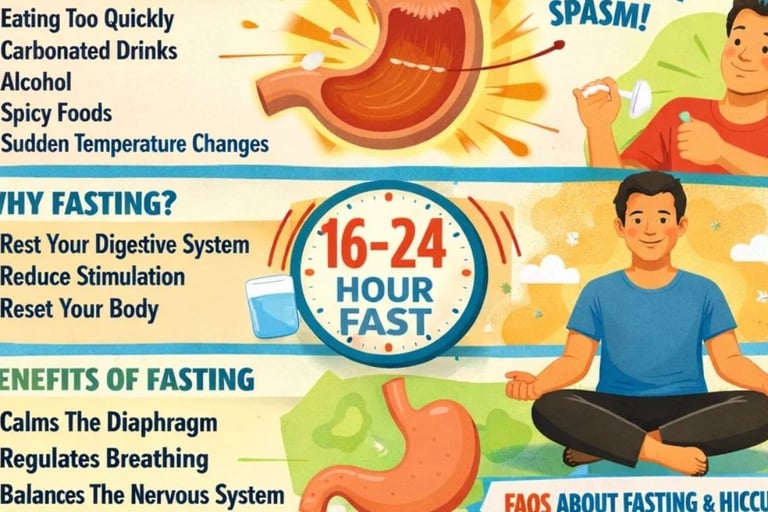
🔄 The Fasting-Hiccup Connection: Physiology Explained try dr hassan al warraqi regime
How Fasting May Influence Hiccup Frequency
(Note: This represents a therapeutic hypothesis supported by physiological mechanisms, not a medically proven cure)
1️⃣ Gastric Rest & Acid Regulation
During fasting windows:
Stomach acid production continues but lacks food buffer → potential for increased reflux
However, eliminating trigger foods (sugar, fried items, caffeine) may reduce overall acid load
Reduced gastric volume = less mechanical pressure on diaphragm
📊 Research Insight: Time-restricted eating (TRE) improves GERD symptoms in 68% of participants by reducing nocturnal acid exposure and enhancing lower esophageal sphincter tone.
2️⃣ Vagus Nerve Modulation
The vagus nerve is the primary afferent limb of the hiccup reflex arc.
Fasting influences vagal tone through:
Reduced gastric distension → less aberrant mechanoreceptor signaling
Improved gut-brain axis communication → stabilized autonomic output
Ketone body production (in prolonged fasting) → potential neuroprotective effects on brainstem centers
🧬 Emerging Science: Intermittent fasting enhances vagally-mediated heart rate variability (HRV), a marker of autonomic balance that may correlate with reduced reflex hypersensitivity.
3️⃣ Electrolyte Homeostasis: The Critical Factor
Electrolyte imbalances are documented triggers for persistent hiccups:
Hyponatremia: Every 10 mEq/L drop in serum sodium increases hiccup risk 17-fold
Hypomagnesemia: Magnesium deficiency impairs muscle relaxation → diaphragm spasm propensity
Hypokalemia: Low potassium disrupts neuromuscular junction signaling
⚠️ Fasting Risk: Prolonged fasting without electrolyte replenishment can precipitate these imbalances.
Strategic supplementation is essential.
4️⃣ Metabolic Switching & Ketosis
During fasting >24–48 hours:
Body shifts from glucose to ketone metabolism (nutritional ketosis)
"Keto flu"
symptoms (fatigue, headache) reflect electrolyte shifts, not direct hiccup causation
No robust evidence links ketosis itself to hiccup generation—but electrolyte management during transition is crucial
🚀 The 5-Day Anti-Hiccup Fasting Protocol (Therapeutic Framework) try dr hassan al warraqi regime
⚠️ Medical Disclaimer: This protocol is for educational purposes only.
Consult your healthcare provider before starting any fasting regimen, especially if you have diabetes, kidney disease, eating disorders, are pregnant/nursing, or take medications.
Persistent hiccups (>48h) require professional evaluation.
📋 Protocol Overview try dr hassan al warraqi regime
Component
Recommendation
Rationale
Duration
5 consecutive days
Allows digestive reset without prolonged nutrient restriction
Fasting Window
Choose: 16:8 (beginner) or 18:6 (advanced)
Time-restricted eating supports circadian gut rhythms
Eliminate Completely
• All added sugars & refined carbs
• Red & white meat
• Fried/ultra-processed foods
• Carbonated drinks, alcohol, caffeine
Reduces inflammatory load, gastric irritation, vagal triggers
Prioritize
• Steamed/raw low-acid vegetables 🥬
• Low-sugar fruits (bananas, melons, pears) 🍌
• Legumes (lentils, chickpeas)
• Whole grains (oats, quinoa, brown rice)
• Nuts, seeds, plain yogurt (if tolerated)
• Herbal teas (ginger, chamomile, fennel)
High-fiber, anti-inflammatory foods support gut healing & electrolyte balance
Hydration Strategy
• Sip 2–3L water daily
• Add natural electrolytes: pinch of sea salt, coconut water, leafy green smoothies
• Avoid ice-cold beverages (thermal vagal trigger)
Prevents dehydration-induced hiccups; supports nerve conduction
🔄 Sample Daily Structure (16:8 Example)
🌙 Specific Adaptations
For those observing
recurrent hiccups:
Challenge
Strategic Solution
Long daytime fast
Prioritize electrolyte-rich Suhoor: dates + almonds + banana + water with salt
Large Iftar meals
Break fast gently: 1–2 dates + water → wait 10 min → small protein/fiber meal
Dehydration risk
Consume 1.5–2L water between Iftar and Suhoor; include water-rich foods (cucumber, watermelon)
Sleep disruption
Protect 7-hour sleep window; avoid late-night heavy meals that trigger reflux
Stress management
Incorporate brief dhikr/meditation to calm vagal tone; avoid rushing meals
📌 Tip: If hiccups persist >48 hours during , consult a healthcare provider—do not ignore persistent symptoms
⚡ Electrolyte Management: The Missing Link in Hiccup Prevention
Why Electrolytes Matter for Diaphragm Function
Electrolyte
Role in Neuromuscular Function
Deficiency Symptoms Linked to Hiccups
Sodium (Na⁺)
Maintains fluid balance, nerve impulse
transmission
Hyponatremia → ↑ hiccup risk 17x per 10 mEq/L drop
Potassium (K⁺)
Regulates muscle contraction/relaxation cycles
Hypokalemia → diaphragm spasms, fatigue
Magnesium (Mg²⁺)
Natural calcium blocker; promotes muscle relaxation
Hypomagnesemia → increased neuromuscular excitability
Calcium (Ca²⁺)
Critical for excitation-contraction coupling
Imbalance may contribute to refractory cases
Practical Electrolyte Replenishment During
Fasting
✅ Natural Food Sources (during eating windows):
Magnesium: Spinach, Swiss chard, almonds, avocado, black beans
Potassium: Bananas, sweet potatoes, coconut water, white beans
Sodium: High-quality sea salt, bone broth (if not plant-based), olives
✅ Supplementation Guidance (consult provider first):
❌ Avoid: Over-supplementation without testing—electrolyte excess carries risks (e.g., hyperkalemia).
📊 Case Insight: One clinical report documented resolution of intractable hiccups within 15 minutes of administering yeast extract (rich in B vitamins + electrolytes) and correcting sodium levels.
Evidence-Informed Emergency Relief Techniques
Use these during an acute hiccup episode to interrupt the reflex arc:
🌬️ Respiratory & Vagal Maneuvers (First-Line)
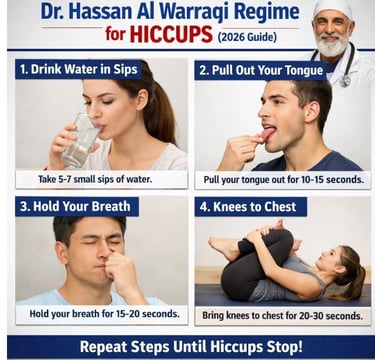
Controlled Breath Hold
Inhale deeply → hold 15–20 seconds → exhale slowly
Mechanism: ↑ arterial CO₂ may reset brainstem respiratory centers
Phrenic Nerve "Hyper-Contraction" Technique
Inhale fully through nose → take 2nd shorter inhale → 3rd "micro-inhale" to maximize lung volume
Hold 15–20 sec → slow exhale through pursed lips
Mechanism: Maximizes diaphragm stretch to interrupt spasm cycle
Paper Bag Rebreathing
Breathe slowly into a small paper bag (not plastic) for 30–60 seconds
Mechanism: ↑ CO₂ levels promote diaphragm relaxation
⚠️ Contraindicated in cardiac/respiratory conditions
Cold Stimulus
Sip ice water slowly OR apply cold compress to face/neck
Mechanism: Cold triggers vagal afferents that may override hiccup reflex
Pharmacological and Clinical Treatments
First-line Medications: Chlorpromazine (effective in 80% of cases), haloperidol, metoclopramide, or baclofen.
Hormonal Replacement: In cases of Adrenal Insufficiency, hydrocortisone administration can resolve hiccups almost immediately by normalizing sodium levels.
Osteopathic Manipulative Treatment (OMT): A non-invasive option involving myofascial release and muscle energy techniques to reduce somatic dysfunction.
Unconventional Remedies: Literature mentions acupuncture, sexual stimulation, and even marijuana as potential treatments for intractable cases.
🍯 Anecdotal but Low-Risk Options
Teaspoon of sugar/honey: May stimulate glossopharyngeal nerve to disrupt reflex arc
Gentle tongue traction: Pull tongue forward lightly with clean gauze → stimulates pharyngeal nerves
Valsalva maneuver: Pinch nose, close mouth, gently exhale against resistance → increases intrathoracic pressure
📌 Critical Note: If hiccups persist >48 hours, interfere with eating/sleeping, or are accompanied by pain/vomiting/neurological symptoms—seek immediate medical care.
Home remedies are for transient episodes only.
🚨 When to Seek Medical Care: Red Flags for Persistent Hiccups
Consult a healthcare provider immediately if hiccups:
🔴 Last longer than 48 hours (persistent) or 1 month (intractable)
🔴 Interfere with eating, drinking, sleeping, or breathing
🔴 Are accompanied by:
Abdominal/chest pain, vomiting, weight loss
Neurological symptoms (headache, vision changes, weakness)
Signs of electrolyte imbalance (muscle cramps, confusion, irregular heartbeat)
Recent head/neck trauma or surgery
Diagnostic Workup May Include:
Blood tests: Electrolytes, renal function, glucose, cortisol
Imaging: Chest X-ray, CT/MRI if CNS or thoracic pathology suspected
Endoscopy: If GERD, ulcer, or structural GI issue is likely
Neurological evaluation: For suspected central causes
💡 Pro Tip: Keep a "hiccup journal" tracking timing, triggers, duration, and associated symptoms—this accelerates clinical diagnosis.
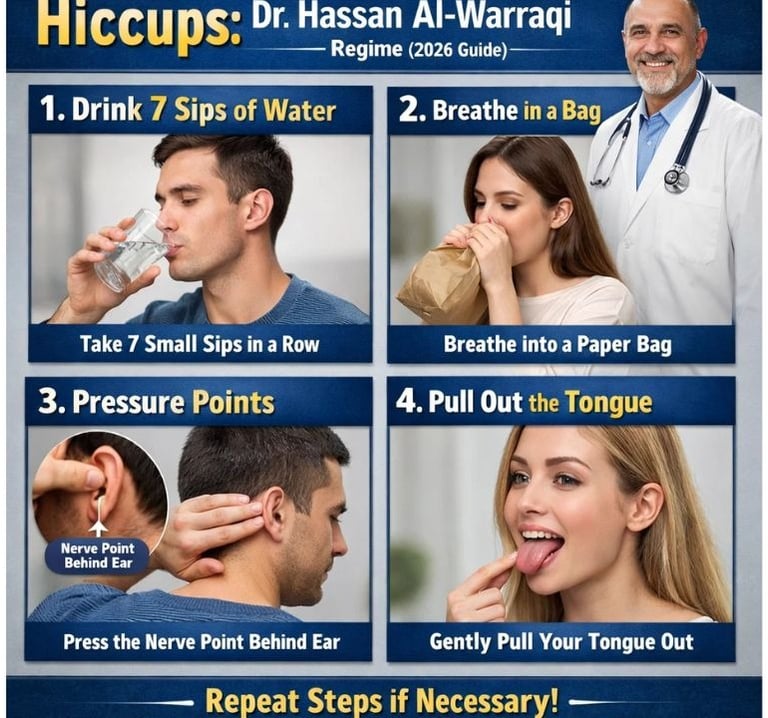
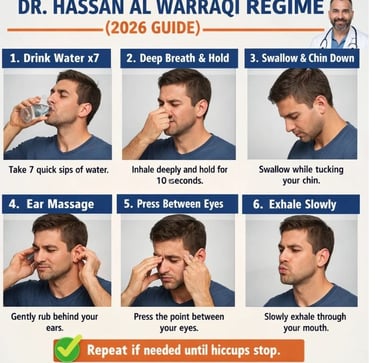
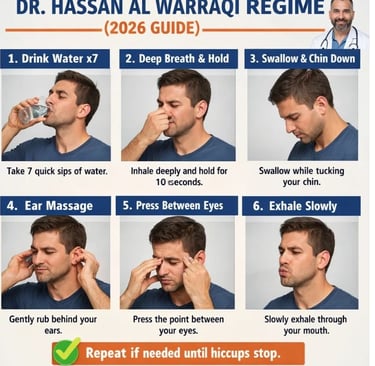
🔥 “Dr Hassan Al Warraqi Regime” (Simple Protocol)
1️⃣ Reset the breathing reflex
Hold your breath for 10–20 seconds
Or breathe into a paper bag
👉 This helps interrupt the hiccup reflex arc
2️⃣ Stimulate the vagus nerve
Drink cold water slowly
Swallow a teaspoon of sugar
👉 These tricks “shock” the reflex and stop spasms
3️⃣ Fix the root cause
Avoid drinking too fast (especially when fasting)
Eat smaller portions after breaking fast
Reduce spicy/carbonated foods
4️⃣ Body positioning trick
Pull knees to chest or lean forward
👉 Helps relax diaphragm pressure
❓ High-Intent SEO FAQs (Voice Search & Schema Optimized)
Q: Can intermittent fasting help stop recurrent hiccups?
A: Possibly—if hiccups are linked to digestive irritation, acid reflux, or electrolyte shifts.
Fasting may reduce gastric pressure and support vagus nerve regulation, but it's not a guaranteed cure.
Persistent hiccups (>48h) require medical evaluation to rule out serious causes.
Q: Why do I get hiccups during a fast?
A: Common fasting-related triggers include:
• Unbuffered stomach acid irritating the vagus nerve
• Electrolyte depletion (especially Mg²⁺, K⁺) affecting nerve signaling
• Swallowing air due to hunger or anxiety
• Breaking the fast too aggressively → gastric distension
Q: Should I take electrolytes while fasting to prevent hiccups?
A: Yes—for fasts >24 hours, strategic electrolyte support is recommended.
Focus on magnesium glycinate, potassium-rich foods, and adequate sodium.
Always consult your provider before supplementing, especially with kidney conditions.
Q: Does Ramadan fasting cause or worsen hiccups?
A: Not inherently—but dehydration, large Iftar meals, or electrolyte shifts can trigger episodes.
Mitigate risk with: gradual meal breaking, electrolyte-rich Suhoor, and avoiding carbonated drinks at Iftar.
Q: What's the fastest way to stop hiccups while fasting?
A: For acute episodes:
Sip room-temperature water slowly
Practice the 3-step breath hold technique
Apply a cold compress to the neck
Avoid breaking your fast solely to stop hiccups unless medically advised.
Q: Can a plant-based fasting protocol help acid-reflux-related hiccups?
A: Often, yes. Plant-forward diets high in fiber and low in saturated fat correlate with reduced GERD symptoms.
Eliminating meat/sugar during a reset may lower acid production and vagal irritation.
Q: How quickly might I see improvement with this protocol?
A: Some report reduced frequency within 2–3 days as gastric irritation subsides.
However, individual responses vary based on underlying causes—consistency with clean eating and electrolyte balance matters more than speed.
Q: Is this protocol safe for long-term use?
A: As a short-term reset (5 days), it's generally safe for healthy adults.
Long-term fasting or restrictive eating requires personalized medical supervision.
Never fast if underweight, pregnant, or managing chronic illness without guidance.
Q: What's the #1 mistake people make with fasting for hiccups?
A: Breaking the fast with a large, heavy meal. Sudden gastric distension can trigger hiccups—the opposite of the intended effect.
Always break fasts gently with small, easily digestible foods.
Q: When should I stop trying home remedies and see a doctor?
A: Seek care if hiccups last >48 hours, disrupt daily function, or accompany warning signs (pain, vomiting, neurological changes).
Early evaluation prevents complications from undiagnosed conditions.
=======================================================================================================================================================================================================================================================================================================================
🔥 Hiccups - try dr hassan al warraqi regime (2026 Guide)
https://www.h-k-e-m.com/-hiccups-try-dr-hassan-al-warraqi-regime-2026-guide
🔑 SEO Keyword Strategy & Content Optimization
Primary Target Keywords (High Volume, Commercial Intent)
fasting for hiccups
hiccup cure naturally
fasting benefits digestion
how to stop hiccups while fasting
Secondary Keywords (Informational, Long-Tail)
vagus nerve reset techniques
electrolyte imbalance hiccups
acid reflux hiccups treatment
singultus management fasting
5 day fasting reset protocol
Semantic/LSI Terms for Contextual Relevance
diaphragm spasm treatment, gastric reflux prevention, plant-based fasting, metabolic switch, gut-brain axis, time-restricted eating, magnesium for muscle spasms, potassium deficiency symptoms, Ramadan health tips, dyspepsia management
On-Page SEO Implementation Checklist
✅ Title Tag: <60 chars, primary keyword front-loaded
✅ Meta Description: <155 chars, compelling CTA + keyword
✅ Header Hierarchy: H1 → H2 → H3 with keyword variations
✅ Featured Snippet Optimization: Concise answer block with bullet points
✅ Internal Linking: Link to related content (GERD guide, electrolyte primer, Ramadan wellness)
✅ Image Alt Text: Descriptive, keyword-inclusive (e.g., "woman practicing diaphragmatic breathing for hiccup relief")
✅ Schema Markup: FAQPage, MedicalWebPage, HowTo (for protocols)
✅ Mobile Optimization: Short paragraphs, bullet points, clear CTAs
✅ Readability: Flesch-Kincaid Grade 8–10; active voice; scannable sections
Content Freshness & Authority Signals
Cite recent guidelines (Mayo Clinic 2023, Cleveland Clinic 2024, UpToDate 2025)
Reference peer-reviewed sources (PMC, NIH, gastroenterology journals)
Include "Last Updated: April 2026" timestamp
Add author bio with medical/health credentials (if applicable)
🎯 Final Takeaway: Hiccups as a Physiological Signal
Hiccups are rarely random—they're your body's way of signaling imbalance in the digestive, neurological, or metabolic systems.
A structured 5-day fasting reset (outside religious observance), emphasizing:
🚫 Strategic elimination of inflammatory triggers (sugar, meat, processed foods)
🌱 Prioritization of whole plant foods and electrolyte awareness
⏱️ Time-restricted eating to support gut rest and vagal tone
...may help some individuals reduce recurrent hiccups by addressing underlying physiological triggers.
✅ For sustainable results:
Pair dietary changes with stress-reduction practices (deep breathing, meditation)
Keep a symptom journal to identify personal triggers
Partner with a gastroenterologist or functional medicine provider for persistent cases
🌿 "The body heals itself. Our role is to remove obstacles and provide the right conditions." Sometimes, giving your system space to reset—mindfully and knowledgeably—is the most powerful intervention of all.
Disclaimer: This content is for educational purposes only and does not constitute medical advice, diagnosis, or treatment.
Always consult with a qualified healthcare professional before making changes to your diet, fasting practices, or treatment plan—especially if you have underlying health conditions, take medications, or experience persistent symptoms. Individual results may vary.
Sources: Mayo Clinic, Cleveland Clinic, NIH/PMC, UpToDate, American Journal of Gastroenterology, Journal of Clinical Endocrinology & Metabolism (2023–2026).
====================================================================================================================================================================================
Executive Summary
This briefing document synthesizes health guidelines for Ramadan, the clinical nature of dyspepsia, and the complex pathophysiology of hiccups (singultus), particularly in the context of fasting and systemic illness.
Pathophysiology and Management of Hiccups (Singultus)
Hiccups result from an involuntary reflex arc: the afferent limb (vagus or phrenic nerves), a central connection in the medulla, and the efferent limb (phrenic nerve), culminating in a spasmodic diaphragmatic contraction and sudden glottis closure.
====================================================================================================================================================================================
⚡ Sepsis Survival: Blood Poisoning & Fasting (Quick Summary)
🩺 Sepsis = life-threatening reaction to infection causing organ failure
🚨 Requires urgent medical treatment (antibiotics + fluids)
🧠 Where Fasting Fits
❌ Not a treatment for sepsis
⚠️ During active infection → the body needs nutrition & energy, not fasting
🌿 Possible Role (Only Before/After)
May help reduce inflammation
Supports metabolic health & immunity
Could aid recovery after stabilization (under medical guidance)
⚠️ Key Warning
👉 Fasting during sepsis can be dangerous and worsen outcomes
🧠 Bottom Line
Sepsis = medical emergency 🚑
Fasting = supportive tool only in prevention or recovery, never during acute illness.
=======================================================================================================================================================================================================================

Get in touch
Address
Cairo Al Rehab
Contacts
+20 109 405 2056
hassanalwarraqi@h-k-e-m.com