
Health is a crown on the heads of the healthy that only the sick can see.

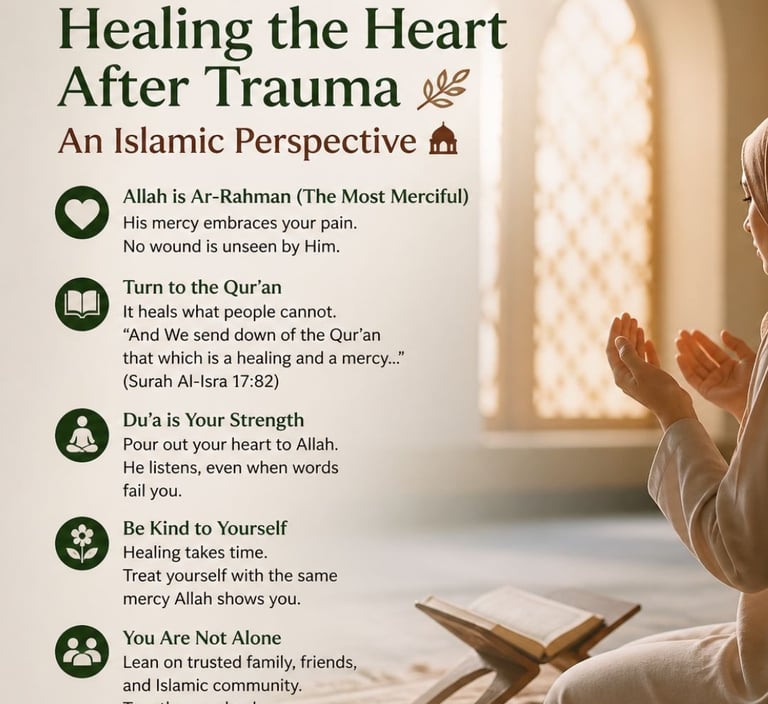
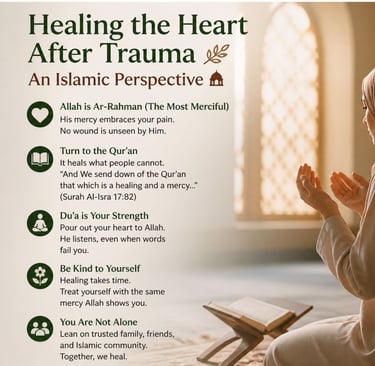
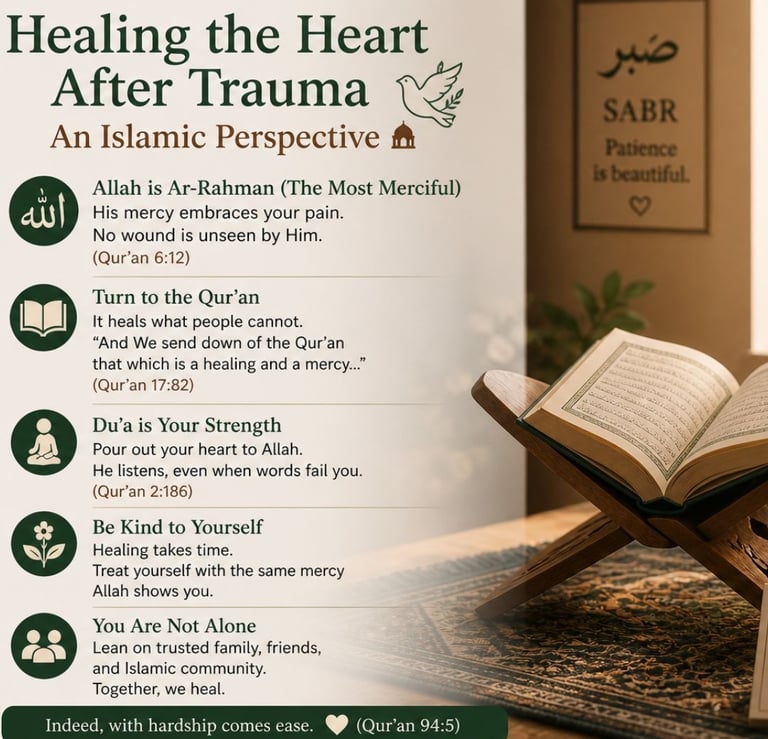
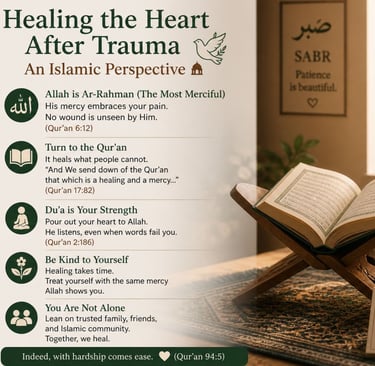
🕊️ Healing the Heart After Trauma — An Islamic Perspective 🕌
✅Discover how Islamic practices like du‘a, Qur’an, and dhikr can help heal emotional wounds. Learn how to find peace and strength after trauma, guided by faith.
PSYCHOLOGY
Dr Hassan Al Warraqi
11/25/202313 min read
🕊️ Healing the Heart After Trauma — An Islamic Perspective 🕌
✅Discover how Islamic practices like du‘a, Qur’an, and dhikr can help heal emotional wounds. Learn how to find peace and strength after trauma, guided by faith.
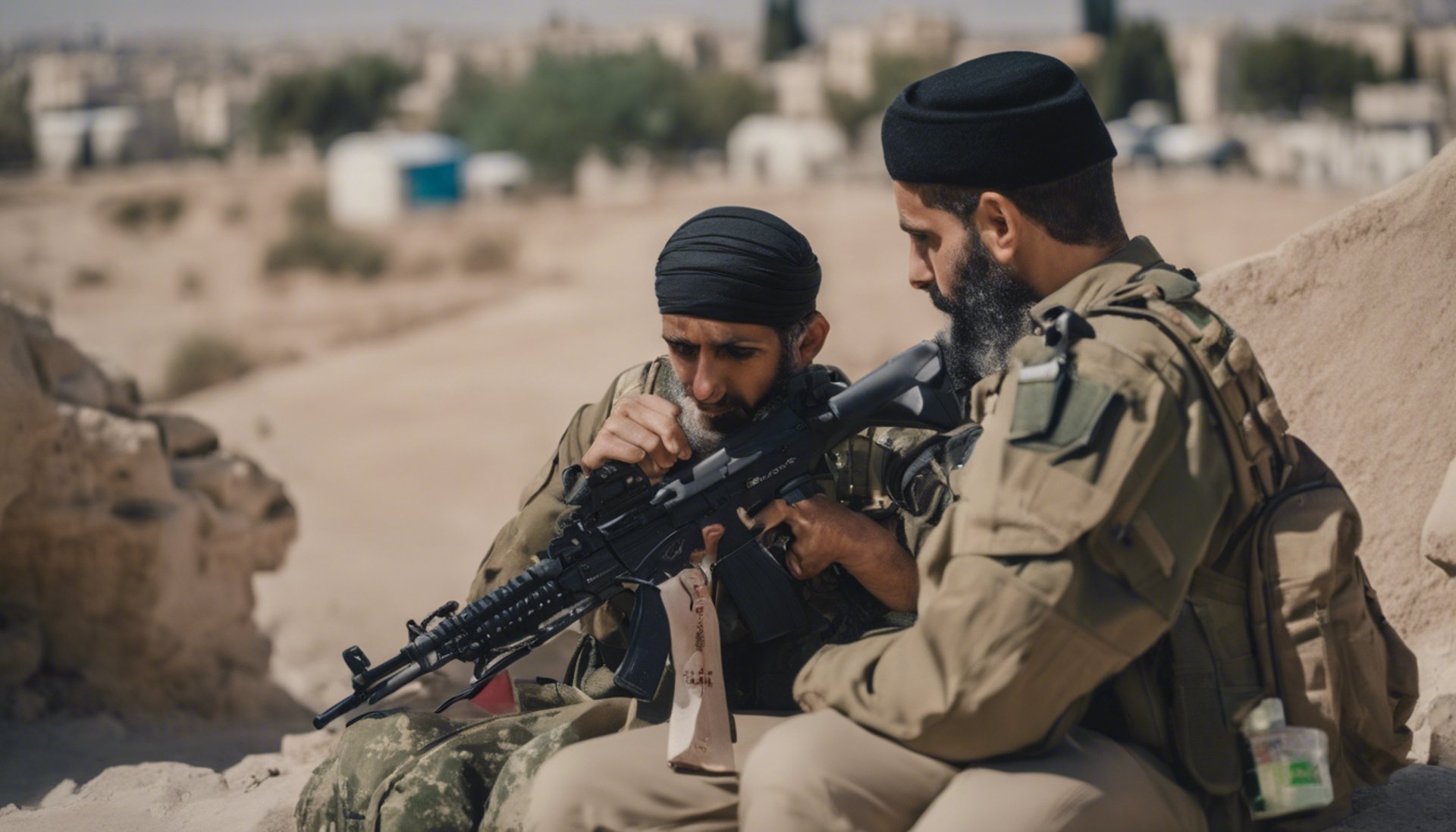
Post-traumatic stress disorder (PTSD) Islam and Palestine
It is a mental health condition that can develop after a person experiences or witnesses a traumatic event.
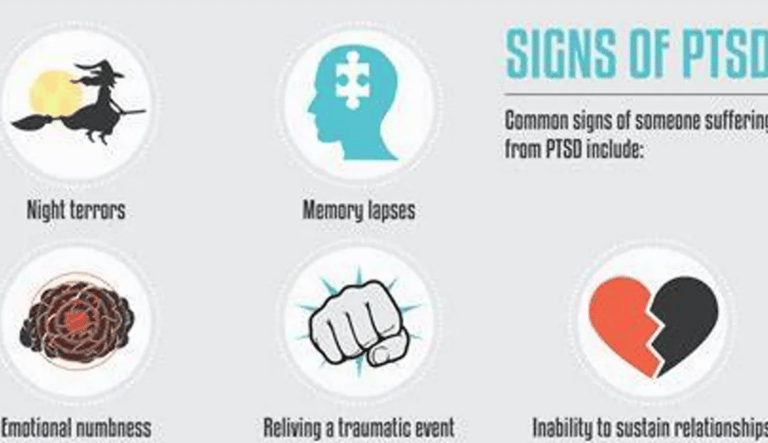
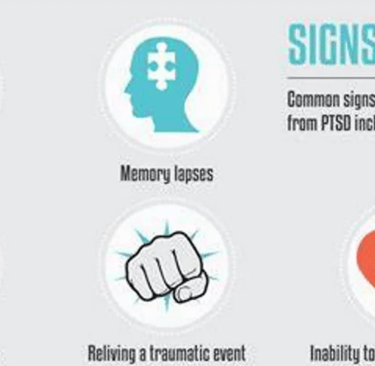
Symptoms of PTSD can include:
Intrusive thoughts
Memories of the past
Nightmares
Severe anxiety
The symptoms can be severe enough to interfere with a person's daily life and relationships, controlling them and ruining their lives
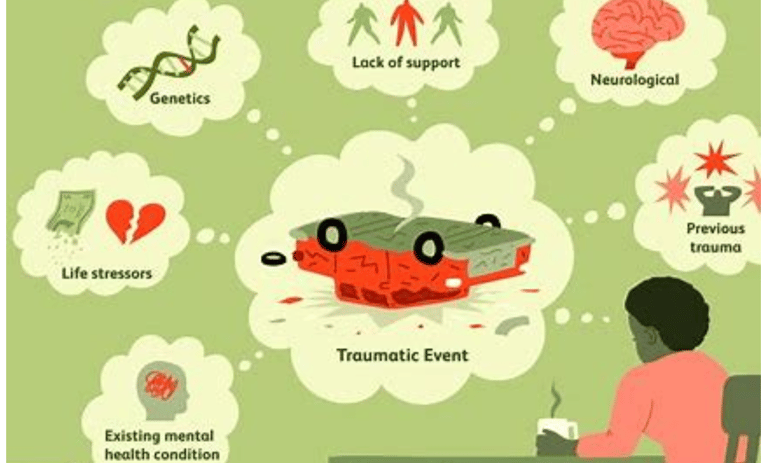
The exact cause of PTSD is unknown
But it can be caused by a variety of traumatic events such as
Sexual or physical assault
Death of a family member
An accident, war or natural disaster
risk factors for developing PTSD include exposure to traumatic events such as:
child abuse
Previously diagnosed depression or anxiety
Take drugs
Drinking wine
Treatment options for PTSD include:
pharmaceutical
Psychotherapy
Either alone or together
medications used to treat PTSD include
Antidepressants
Medicines to treat insomnia
Psychotherapy options include
Cognitive behavioral therapy
Exposure therapy
Dynamic psychotherapy
Eye movement desensitization and reprocessing (EMDR).
The one-year prevalence of PTSD has been found to range from 1 to 6 percent in the general adult population
Samples all over the world. In the United States, an estimated 5 out of every 100 adults (or 5%) experience PTSD in any given year.
The lifetime prevalence of PTSD in adolescents ages 13-18 is 8%.
Women are more likely to develop PTSD than men.
There are many misconceptions about PTSD. Here are some of the most common ones:
1. PTSD only affects military veterans. However, anyone can develop PTSD after experiencing or witnessing a traumatic event.
2. PTSD always occurs immediately after a traumatic event. Its symptoms may begin soon after the event, or you may not develop them until months or years later. They may come and go over many years.
3. People with PTSD cannot function. While PTSD can be debilitating, many people with PTSD are able to function well in their daily lives With appropriate treatment and support.
4. PTSD is a sign of weakness. PTSD is not a sign of weakness or a personality flaw. It is a mental health condition that can develop after a traumatic event.
5. PTSD is rare. PTSD is more common than you think. The one-year prevalence of PTSD has been found to range from 1 to 6 percent in general adult population samples worldwide.
While there is no known cure for PTSD,
It can be treated effectively with a combination of medications and psychotherapy.
The primary treatment for PTSD is psychotherapy, which can help you regain a sense of control over your life.
Some psychotherapy options include cognitive behavioral therapy, exposure therapy, psychodynamic psychotherapy, and eye movement desensitization and reprocessing (EMDR).
Medications such as antidepressants and insomnia medications may also be used to treat PTSD.
It is important to note that treating PTSD is a process that requires time and patience.
The duration of treatment can vary depending on the severity of symptoms and the individual's response to treatment.
PTSD can affect anyone, regardless of their religion.
Post-traumatic stress disorder (PTSD) can affect individuals exposed to psychological trauma, such as war, physical assaults, crimes, and natural disasters.
Israeli-Palestinian on individuals in particular. Conflict can cause individuals to experience many traumatic events, such as killing, displacement, arrest, torture, bombings, missile attacks, and aerial and artillery bombardment.
Belief in God, His angels, His books, His messengers, and in destiny has its good and evil, sweet and bitter
And what befalls you was not going to miss you, and what missed you was not going to befall you
And after this worldly life there is no abode except Paradise or Hell
All or some of these meanings can strengthen the Palestinian individual, whether man, woman, or child, and help him overcome post-traumatic stress disorder (PTSD).
So we see the Palestinians going to homes, not to hospitals, as we see the Israelis
Glory and support have made the release of captive women and children the first priority
How could they not be when they are our children, our women, our daughters and our sons?
The example of the believers in their mutual love, sympathy, and compassion is like the example of one body: if one limb complains, the rest of the body responds to it with sleeplessness and fever.
Post-traumatic stress disorder (PTSD), Islam, Palestinians,antidepressants , insomnia ,how to protect ,our children, our women, our daughters ,our sons,help him overcome post-traumatic stress disorder (PTSD), The example of the believers in their mutual love, sympathy, and compassion is like the example of one body: if one limb complains, the rest of the body responds to it with sleeplessness and fever.
Post-Traumatic Stress Disorder (PTSD) and Islam
This document aims to provide a comprehensive and detailed overview of Post-Traumatic Stress Disorder (PTSD) and its relationship with Islam,
emphasizing SEO optimization through strategic use of keywords such as "PTSD," "Islam," "mental health," and "Islamic therapy." It explores Islamic perspectives on managing PTSD, its prevalence among Muslims, and the challenges and opportunities for delivering mental health support aligned with Islamic values and beliefs.
Key Themes and Insights
Islamic Perspective on PTSD
Absence of Direct Guidelines: Islam does not explicitly address PTSD in its texts, but it offers general principles that support coping with psychological challenges.
Patience and Trust in God (Sabr and Tawakkul): Islam encourages steadfastness and reliance on Allah during adversity, as highlighted in the Quranic verse: "We will surely test you with something of fear and hunger and a loss of wealth and lives and fruits, but give good tidings to the patient" (Al-Baqarah: 155).
Supplication (Dua): Prayer to Allah is a powerful tool for calming the mind, as reflected in: "Our Lord, do not impose blame upon us if we have forgotten or erred" (Al-Baqarah: 286).
Charity (Sadaqah): Helping others fosters emotional healing and strengthens faith.
Psychological Therapy: Islam supports seeking treatment, as per the Hadith: "Seek treatment, O servants of Allah, for Allah has not created a disease without a cure" (Sahih Al-Bukhari).
Prayer and Remembrance (Salah and Dhikr): Daily practices reduce stress and promote inner peace.
Community Support: A supportive Muslim community provides an emotional and spiritual safety net.
Holistic Balance: Islam emphasizes harmony between the soul and body, advocating for mental health care.
Can Muslims Experience PTSD?
Yes: Muslims, like anyone else, are susceptible to psychological trauma regardless of their faith.
Rejecting Stigma: Believing that PTSD indicates weak faith is a misconception; mental health disorders are part of the human condition.
Seeking Help: Asking for support is a sign of strength and aligns with Islamic teachings.
Analysis of Muslim Mental Health (MMH) Literature
Prevalence: With the global Muslim population projected to reach 2.2 billion by 2030, there is a pressing need for in-depth research.
Research Focus: 65.6% of studies describe mental disorders, while only 11.2% explore spirituality and identity.
Common Keywords: Terms like "PTSD," "trauma," and "war" frequently appear.
Challenges: Limited global research collaboration and underrepresentation relative to the Muslim population.
Research Output: Muslim-majority countries like Turkey and Iran lead in publications, but researchers from the U.S. and Europe dominate citations.
Needs: Increased focus on access to mental health services and basic needs.
Personal Experience: PTSD
Religious Response: A scholar encouraged seeking human support and noted Islamic rulings .
Role of Religion in Mental Health
Holistic Framework: Islam offers a spiritual and psychological lens for addressing trauma.
Positive Impact: Adhering to Islamic teachings enhances mental and social well-being.
Modern Trends: Integrating spirituality into psychotherapy is gaining traction.
PTSD in Kashmir
Causes: Political conflicts and natural disasters drive rising cases.
Impact: Effects can be negative or positive (post-traumatic growth).
Islam’s Role: Provides effective coping strategies.
PTSD in Palestine
Context: Ongoing conflict exposes Palestinians to repeated trauma.
Faith-Based Support: Belief in destiny and the afterlife strengthens resilience.
Islamic Trauma Healing Initiative
Overview: A community-led program integrating cognitive-behavioral therapy (CBT) with Islamic practices.
Goal: Reduce stigma and promote healing through faith.
Conclusion
Islam offers a robust framework for addressing PTSD through patience, prayer, and community support, affirming that Muslims are not immune to mental health challenges.
There is a critical need for deeper research and global collaboration to meet the mental health needs of Muslims.
Integrating Islamic values into therapy, as seen in initiatives like Islamic Trauma Healing, enhances effectiveness and acceptance in Muslim communities.
Study Guide on Post-Traumatic Stress Disorder and Islam
This study guide delves into Post-Traumatic Stress Disorder (PTSD) within an Islamic context, optimized for SEO with keywords like "PTSD," "mental health," "Islam," and "Islamic therapy."
It covers the topic from multiple angles:
Key Topics
Definition and Symptoms of PTSD
PTSD is a psychological condition triggered by exposure to traumatic events like wars or disasters.
Symptoms include intrusive memories, nightmares, severe anxiety, and persistent avoidance of trauma-related triggers.
Islamic Perspective
While Islam lacks direct references to PTSD, principles like patience, trust in God, and supplication provide a supportive framework for addressing psychological challenges.
Supportive Islamic Principles
Patience and Trust in God: Encouraged through verses like: "We will surely test you with something of fear..." (Al-Baqarah: 155).
Supplication: Calms the mind, as in: "Our Lord, do not impose blame..." (Al-Baqarah: 286).
Charity: Enhances well-being and reduces emotional pain.
Therapy: Supported by the Hadith: "Seek treatment, O servants of Allah...".
Prayer and Remembrance: Daily tools for inner peace.
Community Support: Offers an emotional and spiritual safety net.
PTSD Among Muslims
PTSD affects everyone, including Muslims. Its occurrence does not reflect weak faith, and seeking help is a strength.
Muslim Mental Health (MMH) Literature
65.6% of research describes disorders, with only 11.2% addressing spirituality and identity.
Keywords: "PTSD," "violence," "trauma."
Gap: Limited global collaboration and representation.
Research Challenges
Challenges include weak international cooperation, funding shortages, and a lack of specialized researchers. Solutions involve cultural exchanges and online training programs.
Islam’s Role in Mental Health
Islam’s holistic view connects the soul and body, fostering resilience and trauma adaptation.
PTSD in Specific Contexts
Kashmir: Political unrest and disasters increase cases.
Palestine: Ongoing conflict exacerbates trauma; faith offers strength.
Therapeutic Programs
The Islamic Trauma Healing program blends CBT with Islamic values, using prophetic stories to aid recovery.
Short Quiz
What is PTSD?
A condition caused by trauma, involving intrusive memories and anxiety.
Three Supportive Islamic Principles?
Patience, supplication, charity.
No, supported by: "Seek treatment...".
Can Muslims Have PTSD?
Yes; it’s not a fault or sign of weak faith.
Focus of MMH Research?
Disorder descriptions, with less on spirituality.
Factors Increasing MMH Interest?
Political events, discrimination against Muslims.
What Helped in the Personal Story?
A dog; challenge: partner’s religious objection.
Religious Advice Given?
Patience, prayer, spiritual healing; dogs restricted.
Core Islamic Concept?
Submission to Allah, supporting mental health.
Factors Driving PTSD in Kashmir/Palestine?
Conflicts, disasters; faith fosters resilience.
Essay Questions
How Do Islamic Principles Support Recovery?
Patience, prayer, and community balance spiritual and psychological healing.
MMH Research Challenges?
Limited collaboration, funding; solutions include training and exchanges.
Role of Muslim Community?
Offers emotional support, complementing therapy.
Effectiveness of Islamic Trauma Healing?
Faith integration reduces stigma, scalable via trainer training.
Impact of Social Contexts?
Conflicts increase PTSD; faith aids coping strategies.
Glossary
PTSD: A condition from trauma, affecting emotions and behavior.
Patience (Sabr): Enduring hardship with contentment.
Trust in God (Tawakkul): Relying on Allah while taking action.
Supplication (Dua): Seeking Allah’s help.
Charity (Sadaqah): Giving to draw closer to Allah.
Remembrance (Dhikr): Reciting prayers for peace.
Psychotherapy: Techniques to improve mental health.
Spiritual Guidance: Support rooted in faith.
Muslim Community: A supportive network bonded by faith.
Bibliometrics: Quantitative research analysis.
Stigma: Negative bias causing exclusion.
Religiosity: Adherence to religious teachings.
Spirituality: Seeking life’s meaning.
Acculturation: Adapting to a new culture.
Ruqyah: Quranic recitation for healing.
Post-Traumatic Growth: Positive changes post-trauma.
CBT: Altering negative thought patterns.
Train-the-Trainer: Model for program expansion.
FAQs on Post-Traumatic Stress Disorder (PTSD) and Islam
This FAQ section provides in-depth answers to key questions about Post-Traumatic Stress Disorder (PTSD) within an Islamic context, optimized for SEO using keywords like "PTSD," "Islam," "mental health," and "Islamic therapy." Drawing from provided sources, it offers detailed insights to enhance understanding and accessibility.
1. What is Post-Traumatic Stress Disorder (PTSD)?
Answer:
Post-Traumatic Stress Disorder (PTSD) is a mental health condition triggered by experiencing or witnessing a traumatic event that threatens life or physical/psychological safety, such as wars, natural disasters, accidents, assaults, or the loss of loved ones.
Symptoms include:
Intrusive Memories: Uncontrollable flashbacks or vivid recollections of the event.
Nightmares: Disturbing dreams linked to the trauma.
Severe Anxiety: Persistent tension, panic attacks, or hypervigilance.
Avoidance: Deliberate efforts to steer clear of trauma-related triggers, such as places, people, or conversations.
These symptoms can significantly disrupt daily life, relationships, and work, making professional intervention essential for recovery.
2. Can Muslims Experience PTSD?
Answer:
Yes, Muslims, like anyone else, are susceptible to PTSD. Trauma does not discriminate based on religion, culture, or background—it’s a universal human condition affecting the body, mind, and soul after distressing experiences.
The notion that PTSD reflects weak faith or religious shortcomings is a profound misunderstanding.
Islam views mental health challenges as part of the human experience, encouraging believers to seek treatment and support to address them effectively.
3. How Does Islam View PTSD, and Are There Islamic Guidelines for Coping with It?
Answer:
Islamic Perspective: Neither the Quran nor Sunnah directly references PTSD, but Islam provides a comprehensive framework to support mental health through universal principles.
Islamic Guidelines:
Patience and Trust in God (Sabr and Tawakkul): Islam promotes enduring trials with resilience,
as stated in the Quran: "We will surely test you with something of fear..." (Al-Baqarah: 155).
Supplication (Dua): Prayer to Allah fosters calm, as in: "Our Lord, do not impose blame upon us..." (Al-Baqarah: 286).
Charity (Sadaqah): Acts of giving alleviate emotional pain and reinforce faith.
Prayer and Remembrance (Salah and Dhikr): Daily rituals reduce stress and cultivate inner peace.
Community Support: A compassionate Muslim community offers emotional and spiritual refuge.
Seeking Treatment: The Hadith "Seek treatment, O servants of Allah..." (Sahih Al-Bukhari) endorses psychological and medical care.
These principles form a holistic approach to navigating trauma, blending spiritual and practical strategies.
4. What Role Do Faith and Spirituality Play in Managing PTSD from an Islamic Perspective?
Answer:
Faith and spirituality are central to supporting Muslims with PTSD:
Framework for Suffering: Islam frames hardships as divine tests, providing purpose and hope.
Supplication: Connecting with Allah through dua reduces anxiety and nurtures tranquility.
Prophetic Stories: Examples like Prophet Job (Ayyub), who endured immense trials, inspire patience and perseverance
.
Community Belonging: A supportive Muslim community mitigates isolation, fostering a sense of connection.
Faith builds psychological resilience, enabling individuals to transform trauma into positive growth, known as post-traumatic growth, where challenges lead to personal development.
5. Does Islam Conflict with Psychological Therapy for PTSD?
Answer:
No, Islam fully supports psychological therapy. The Prophetic saying "Seek treatment, O servants of Allah, for Allah has not created a disease without a cure" (Sahih Al-Bukhari) underscores the importance of pursuing healing.
Muslims can benefit from evidence-based therapies such as:
Cognitive-Behavioral Therapy (CBT): Targets negative thought patterns to promote healthier thinking.
Exposure Therapy: Helps safely confront traumatic memories.
Eye Movement Desensitization and Reprocessing (EMDR): Processes trauma through guided eye movements.
Medication: May be prescribed when necessary.
Integrating these therapies with Islamic practices like prayer and community support enhances recovery outcomes.
6. What Challenges Exist in Researching Mental Health Among Muslims with PTSD?
Answer:
Limited Research: Despite projections of the Muslim population reaching 2.2 billion by 2030, mental health research for Muslims remains scarce relative to their numbers.
Narrow Focus: 65.6% of studies describe disorders, with only 11.2% exploring faith, spirituality, or identity.
Lack of Collaboration: Minimal global research partnerships hinder progress.
Underrepresentation: Researchers from Muslim-majority countries have less influence compared to Western counterparts.
Solutions:
Foster cross-cultural exchanges to diversify perspectives.
Develop online training programs for researchers.
Create dedicated journal sections for Muslim mental health studies.
Addressing these gaps is crucial for tailored mental health solutions.
7. What is the Islamic Trauma Healing Initiative, and How Does It Blend Islamic Teachings with Psychotherapy?
Answer:
Overview
Islamic Trauma Healing is a six-session, community-led group program initially developed within a Somali Muslim community.
Integration:
Combines cognitive-behavioral therapy (CBT) principles with Islamic cultural and religious practices.
Uses stories of prophets, like Job (Ayyub), to teach patience and facilitate cognitive shifts.
Incorporates supplication (dua) and imaginal exposure to process traumatic memories.
Goals: Transition participants from suffering to healing and growth, reduce mental health stigma, and ensure scalability through a "train-the-trainer" model.
Impact: Its faith-based approach increases acceptance in Muslim communities, making it a sustainable, culturally sensitive intervention.
8. Why Are Community and Social Support Important for Managing PTSD from an Islamic Perspective?
Answer:
Role: A loving Muslim community provides critical emotional and spiritual support, alleviating the isolation often tied to PTSD.
Integration:
Islam emphasizes solidarity, as in the Hadith: "The believer to the believer is like a building..." (Sahih Al-Bukhari), reinforcing mutual support.
Programs like Islamic Trauma Healing leverage group settings to create safe, empathetic spaces.
Impact: Sharing experiences and receiving mutual encouragement accelerates healing, complementing conventional psychotherapy by fostering a sense of belonging and purpose.
Conclusion
PTSD is a global condition affecting Muslims and non-Muslims alike, and Islam offers a supportive framework through patience, supplication, and community engagement.
Initiatives like Islamic Trauma Healing demonstrate how faith and modern therapy can merge to promote recovery in Muslim communities.
However, advancing research is essential to address growing mental health needs effectively.
=============================================================================================================================================================================================================================================================================================================================================================
✍️ AUTHOR BIOS
🧠 Short Byline:
Dr. Hassan Al Warraqi explores how Islamic practices like du‘a and dhikr can mend the heart and soul after emotional trauma, through the lens of prophetic healing.
🌿 Expanded Author Bio:
Dr. Hassan Al Warraqi is a physician and faith-based mental wellness advocate who focuses on trauma recovery through Islamic teachings. At H-K-E-M.com, he blends emotional intelligence with Qur’anic wisdom to help readers understand how to heal wounds of the heart through sabr (patience), tawakkul (trust), du‘a (supplication), and dhikr (remembrance). His work serves those seeking strength, peace, and divine meaning after pain.
🕊️ Your heart is not broken beyond repair.
In Islam, healing isn’t just possible—it’s sacred.
📖 Turn to the Qur’an
🧘♀️ Practice dhikr
🤲 Let du‘a become your refuge
💫 Trust Allah's timing
Explore how faith can heal the deepest wounds 👉 H-K-E-M.com
#IslamicHealing #TraumaRecovery #MuslimMentalHealth #FaithAndHealing #HealingThroughQuran
=============================================================================================================================================================================================================================================================================================================================================================
🕊️ Healing the Heart After Trauma — An Islamic Perspective 🕌
https://www.h-k-e-m.com/-healing-the-heart-after-trauma-an-islamic-perspective-
🕊️ Healing the Heart After Trauma — An Islamic Perspective 🕌
Trauma can leave deep emotional wounds—but in Islam, healing is a journey of faith, patience, and inner renewal.
🌿 1. Turning to Allah
In times of pain, the heart finds آرام (peace) by returning to Allah:
Supplication (du‘a) restores hope
Remembrance (dhikr) calms the mind
Prayer (salah) brings inner balance
“Verily, in the remembrance of Allah do hearts find rest” — Qur'an (13:28)
🤲 2. Patience with Purpose (Sabr)
Patience in Islam is not passive—it’s strength:
Enduring hardship without losing faith
Trusting that trials carry wisdom
Waiting with hope and resilience
💬 3. Expression & Seeking Support
Islam does not encourage harmful silence:
Share your feelings with trusted people
Seek professional help when needed
The Prophet Muhammad ﷺ listened, comforted, and supported others
🧠 4. Balance Between Spiritual & Psychological Healing
Healing is holistic:
Combine faith with psychological care
Understand trauma as a real condition
Care for sleep, nutrition, and physical health
🌙 5. Hope & Renewal
In Islam, despair is never the end:
Pain is temporary
Healing is possible
Allah can transform hardship into growth
✨ Bottom Line
Healing doesn’t mean forgetting the pain—
it means transforming it into strength, closeness to Allah, and a new beginning.
=============================================================================================================================================================================================================================================================================================================================================================
🧠 Stockholm Syndrome & Islamic Rules: Understanding Trauma and Consent
This is a sensitive topic that needs a careful balance between psychology and Islamic ethics.
🧠 What is Stockholm Syndrome?
It’s a psychological response that may occur when a person:
Is exposed to threat, control, or captivity
Begins to bond with or sympathize with the abuser
As a way to reduce fear and survive
👉 It is not genuine love, but a coping mechanism.
⚖️ Consent in Islam
In Islamic teachings:
Consent must be free, informed, and without coercion
Any agreement under fear or pressure is not valid consent
Coercion invalidates many moral and legal responsibilities
📌 Core principle:
“There is no compulsion…” (a foundational Qur’anic concept)
🔍 Where confusion happens
In cases similar to Stockholm Syndrome:
A person may appear to “agree” or comply
But internally, they may be acting out of fear, dependency, or trauma
👉 This creates a distinction between:
Apparent consent
True, valid consent
🕌 Islamic perspective
Islam takes into account:
Intention and psychological state
Presence of coercion or harm
Protection of human dignity
✔ Therefore:
Any “consent” that results from:
Threats
Captivity
Severe psychological pressure
❌ Is not considered valid consent in Islam
🧩 Practical implications
The person affected is not to be blamed
They deserve:
Compassion
Psychological support
Protection and justice
💡 Bottom line
🧠 Stockholm Syndrome = survival response
⚖️ Islam = requires true, free consent
👉 Any relationship formed under coercion is not ethically or religiously valid
=============================================================================================================================================================================================================================================================================================================================================================




Get in touch
Address
Cairo Al Rehab
Contacts
+20 109 405 2056
hassanalwarraqi@h-k-e-m.com