Health is a crown on the heads of the healthy that only the sick can see.


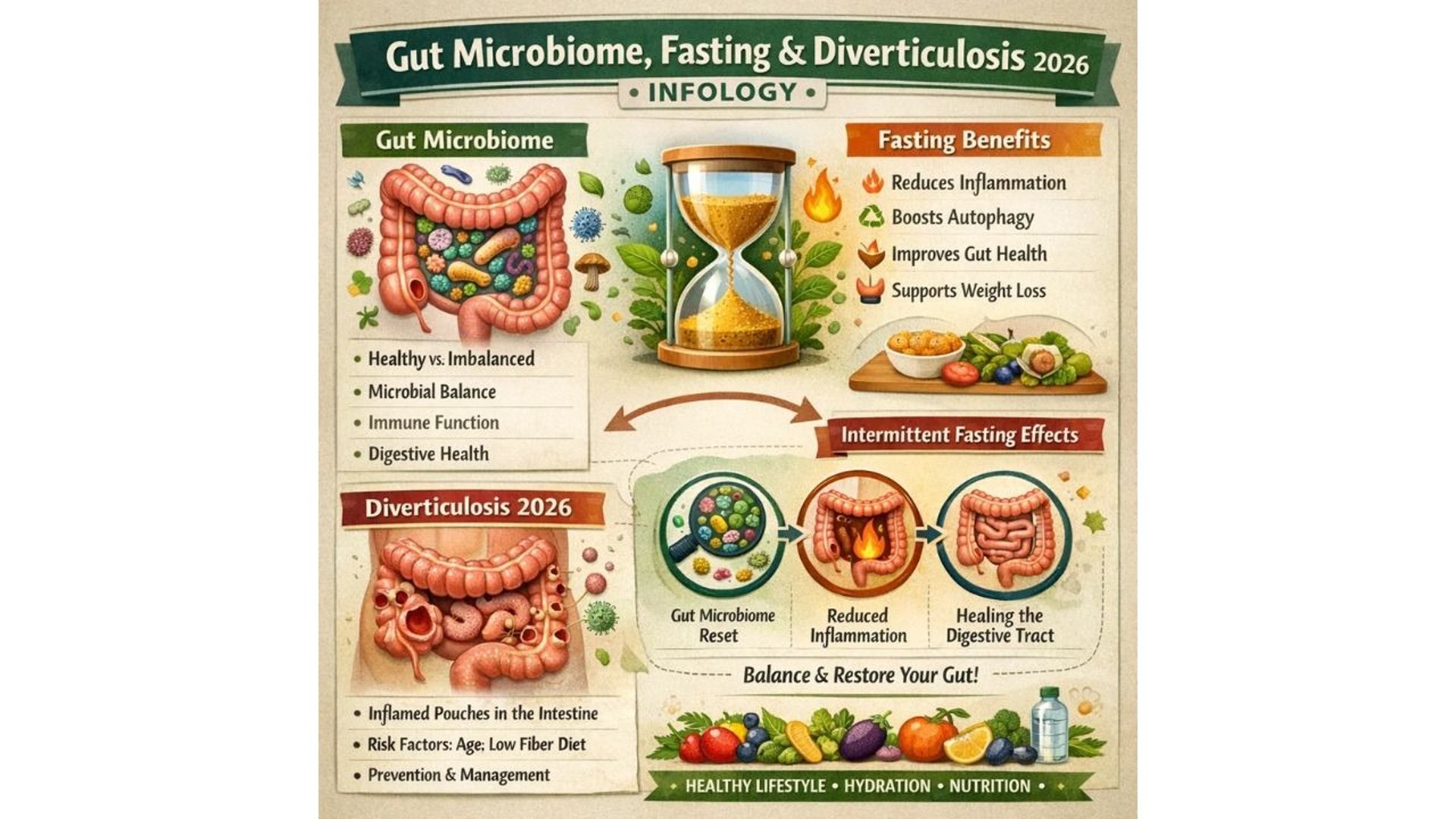
🌿🦠 Gut Microbiome, Fasting & Diverticulosis 2026 Infology
Explore how fasting influences the gut microbiome in diverticulosis. Learn the science behind safe fasting strategies in 2026..
GASTROINTESTINAL FASTING
Dr Hassan Al Warraqi
4/21/20264 min read
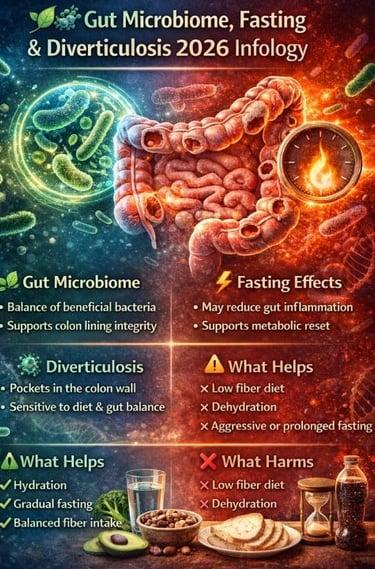
🌿🦠 Gut Microbiome, Fasting & Diverticulosis 2026 Infology
Explore how fasting influences the gut microbiome in diverticulosis. Learn the science behind safe fasting strategies in 2026.
The gut microbiome plays a central role in diverticulosis, influencing inflammation, digestion, and colon integrity. Fasting may help reset microbial balance, reduce inflammatory signals, and support gut healing—when combined with proper nutrition and fiber intake.
Understanding the Conditions
Diverticulosis is a condition where small pouches (diverticula) form in the colon wall, usually without symptoms
Diverticulitis occurs when these pouches become inflamed or infected, causing pain, fever, and digestive issues
Two Different Scenarios for Fasting
1. During Acute Diverticulitis Flares (Medical Bowel Rest)
When experiencing active diverticulitis, medical supervision is essential:
Clear liquid diet for 2-3 days is standard treatment for uncomplicated cases
May include: water, broth, unsweetened tea, black coffee, bone broth
More severe cases may require complete bowel rest (nothing by mouth)
This is not voluntary intermittent fasting—it's a prescribed medical intervention
⚠️ Warning: Prolonged clear liquid diets can cause nutrient deficiencies.
Never extend beyond medical recommendation
2. Intermittent Fasting with Stable Diverticulosis
For asymptomatic diverticulosis, the evidence is limited but clinical experience suggests:
Potential Benefits:
Temporary gut rest may reduce mechanical load on the digestive tract
Reduced intracolonic pressure during fasting periods
Metabolic improvements (insulin sensitivity, inflammation markers)
Autophagy activation (fasting ≥16 hours) may reduce low-grade inflammation
Significant Risks:
Constipation - Reduced food volume decreases stool bulk, increasing colon pressure
Dehydration - Hardens stools and compounds constipation risk
Reduced fiber intake - Makes hitting 25-38g daily fiber targets harder
Gut microbiome disruption - May alter bacterial composition
Research Findings
A 2025 study found that intermittent fasting may exacerbate colon inflammation by:
Compromising intestinal barrier function
Disrupting gut microbiota
Reducing anti-inflammatory metabolites
Promoting pro-inflammatory bacteria
However, clinical experts note that short-term fasting (12-14 hours) is unlikely to cause harm if fiber and hydration needs are met during eating windows
Evidence-Based Recommendations
✅ Safe Approach:
12-14 hour overnight fasts are generally safest
Maintain 25-38g daily fiber during eating windows
Drink 6-8 glasses of water daily
Break fasts with fiber-rich, hydrating foods
Avoid 24+ hour fasts without medical guidance
❌ Avoid Fasting If:
Active diverticulitis flare
History of frequent flares
Chronic constipation
Recent unexplained abdominal pain
🎯 Three Pillars of Colon Protection:
Fiber (25-38g/day) - Softens stool, reduces colon pressure
Hydration (6-8 glasses/day) - Essential for fiber to work properly
Physical activity - Improves bowel motility
Dietary Phases
Phase
Duration
Diet
Purpose
Acute Flare
2-3 days
Clear liquids only
Bowel rest
Recovery
Days-weeks
Low-fiber foods
Gradual reintroduction
Maintenance
Lifelong
High-fiber diet
Prevent flares
Key Takeaways
✓ Short, moderate fasting (12-14 hours) is likely safe for stable diverticulosis if well-managed
✓ Fasting cannot reverse existing diverticula—only manage symptoms
✓ During flares, follow medical advice for bowel rest—don't self-treat with fasting
✓ Prioritize fiber + hydration + movement over extreme fasting protocols
✓ Consult your gastroenterologist before starting any fasting regimen
Bottom Line: Fasting and diverticulosis can coexist when the condition is stable and fasting is moderate, but it becomes harmful if it causes constipation, dehydration, or reduced fiber intake
The foundation remains : fiber, hydration, and physical activity are more important than fasting for colon health
Diverticulosis & Fasting - FAQs
Q: Can I fast with diverticulosis?
A: Yes,
if asymptomatic. Stick to 12-14 hour overnight fasts and maintain fiber/hydration during eating windows.
Q: Can I fast during a diverticulitis flare?
A: No—follow your doctor's clear liquid diet prescription. This is medical bowel rest, not voluntary fasting.
Q: Will fasting help my diverticulosis?
A: No. Fasting doesn't reverse diverticula. High fiber, hydration, and exercise are proven preventive measures.
Q: How long can I safely fast?
A: 12-14 hours is generally safe. Avoid 24+ hour fasts without medical supervision.
Q: What are the risks of fasting with diverticulosis?
A: Constipation, dehydration, reduced fiber intake, and increased colon pressure—all can trigger flares.
Q: How much fiber do I need daily?
A: 25-38 grams per day, even when fasting.
Q: Should I break my fast with specific foods?
A: Yes—start with fiber-rich, hydrating foods (fruits, vegetables, whole grains).
Q: When should I avoid fasting entirely?
A: During active flares, with chronic constipation, frequent flares, or unexplained abdominal pain.
Q: Do I need doctor approval?
A: Yes—always consult your gastroenterologist before starting any fasting regimen.
Q: Can intermittent fasting cause diverticulitis?
A: Possibly.
Recent research suggests prolonged fasting may increase colon inflammation and disrupt gut bacteria.
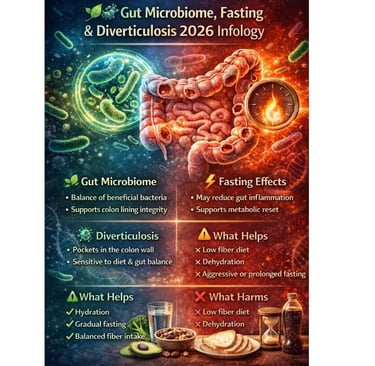
📊 Infographic Content
🌿 Gut Microbiome
• Balance of beneficial bacteria
• Supports colon lining integrity
⚡ Fasting Effects
• May reduce gut inflammation
• Supports metabolic reset
🦠 Diverticulosis
• Pockets in the colon wall
• Sensitive to diet & gut balance
🥦 Fiber & Nutrition
• Essential for prevention
• Supports healthy microbiome
⚠️ What Helps
✔ Hydration
✔ Gradual fasting
✔ Balanced fiber intake
❌ What Harms
✖ Low fiber diet
✖ Dehydration
✖ Aggressive or prolonged fasting
==========================================================================================================================================================================================
🌿🦠 Gut Microbiome, Fasting & Diverticulosis 2026 Infology
https://www.h-k-e-m.com/-gut-microbiome-fasting-and-diverticulosis-2026-infology
gut microbiome diverticulosis, fasting and colon health, diverticulosis diet 2026, gut bacteria balance, fasting and inflammation, fiber and gut health, digestive health optimization, microbiome diversity, colon inflammation control, therapeutic fasting gut,
#GutMicrobiome #Diverticulosis #FastingScience #DigestiveHealth #GutHealth #Microbiome #ColonHealth #Inflammation #TherapeuticFasting
=========================================================================================================================================================================================================
🩺 Short summary of the fasting approach (Al-Warraqi method):
The protocol linked to Hassan Al-Warraqi uses fasting as supportive therapy, not a replacement for treatment.
Fasting pattern: either 3–4 days per week or daily intermittent fasting (12–16 hrs).
Medications: continue all prescribed drugs without interruption.
Ocular procedures: delay elective interventions for ~48 hours after stabilization/recovery.
Applied in eye conditions like Glaucoma, Diabetic Retinopathy, and in BBV cases (e.g., Hepatitis C) as adjunct care.
✅ Key idea: fasting may support metabolism and inflammation control, but standard medical care remains essential.
================================================================================================================================================================================================

Get in touch
Address
Cairo Al Rehab
Contacts
+20 109 405 2056
hassanalwarraqi@h-k-e-m.com