Health is a crown on the heads of the healthy that only the sick can see.


🎗️🧵 Detection to Decision: A Patient’s Guide to CIS & Fasting
Patient-friendly guide to carcinoma in situ (CIS): early detection, diagnosis, treatment decisions, prognosis, and the latest scientific insights on fasting and fasting-mimicking diets in cancer care.
Dr Hassan Al Warraqi
12/5/202519 min read
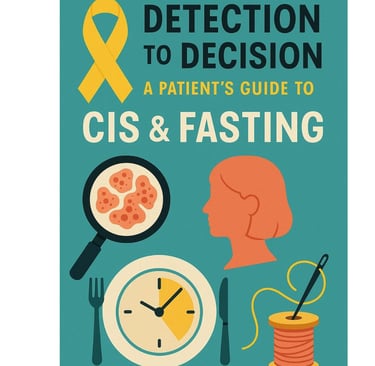
🎗️🧵 Detection to Decision: A Patient’s Guide to CIS & Fasting
Meta Description (SEO)
“Patient-friendly guide to carcinoma in situ (CIS): early detection, diagnosis, treatment decisions, prognosis, and the latest scientific insights on fasting and fasting-mimicking diets in cancer care.”
Understanding Carcinoma In Situ: What You Need to Know
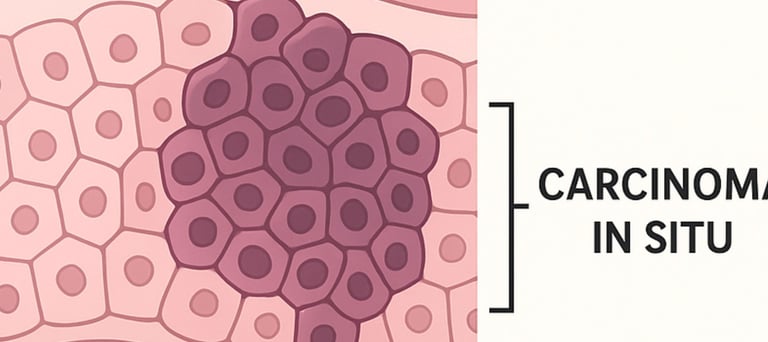
Carcinoma in situ (CIS) is spotted when cancer is at its earliest stage.
It's also called stage 0 cancer.
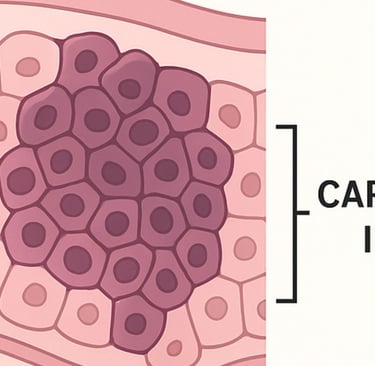
The words carcinoma in situ mean cancer in place.
The unusual cells are still in the spot they started and haven't moved into other tissues.
Even though it's technically called pre-cancer, CIS has to be dealt with.
If not, it could turn into a cancer that spreads.
What Makes CIS Different from Cancer That Spreads?
Here's what makes carcinoma in situ stand out:
* It stays put: The cancer cells haven't gone into deeper layers of tissue.
* It's stage 0: This is as early as cancer can be spotted.
* Good chances of recovery: If taken care of the right way, almost everyone gets better.
* Risk of changing varies: It relies on what kind of CIS it is, where it is, and things that are different for each person.
* No spread to lymph nodes: The cancer isn't in the lymph nodes or other body parts.
The best time to act is right away, before these unusual cells can move and cause problems in other places.
Types of Carcinoma In Situ and How to Treat Them
1. Ductal Carcinoma In Situ (DCIS) – Stage 0 Breast Cancer
What is DCIS?
Ductal carcinoma in situ is the most common type of breast cancer that doesn't spread.
About 20-25% of all breast cancers found during checkups are DCIS.
It means there are unusual cells inside the milk ducts, but they haven't gone into the breast tissue around them.
How is DCIS Found?
* Mammograms: Often, DCIS can be seen as tiny white spots (microcalcifications) on a mammogram.
* Breast MRI: This can give doctors a better look, especially for women who are at a higher risk.
* Ultrasound: Sometimes, DCIS can be spotted during an ultrasound.
* Core needle biopsy: Taking a small piece of tissue and looking at it under a microscope can tell if it's DCIS and what kind it is.
DCIS Treatment Choices:
* Breast-Conserving Surgery (Lumpectomy) + Radiation
* What's done: The tumor is taken out, along with a bit of healthy tissue around it.
* Radiation after: For 5-7 weeks, the patient gets radiation every day.
* How well it works: Radiation can bring down the risk of the cancer coming back in the same spot from 15% to 5%.
* How long to recover: Usually, it takes 1-2 weeks to feel better.
* Who it's good for: Women who just have DCIS in one spot and whose tumors aren't too big compared to their breasts.
* Things to think about: It keeps the breast looking normal.
It needs a commitment to go in for radiation every day.
* Mastectomy for DCIS
* What's done: All of the breast tissue is removed.
* Types: Simple mastectomy, skin-sparing, nipple-sparing.
* Risk of cancer coming back: Less than 2%.
* Rebuilding the breast: It can be done right away or later on.
* Who it's good for:
* Women who have DCIS in many spots in the breast.
* Women who have big DCIS tumors compared to their breast size.
* Women who can't have surgery to take out the tumor with clear edges.
* Women who want to be sure the cancer is completely gone.
* Women with a strong family history or gene problems (BRCA1/BRCA2).
* Hormone Therapy for DCIS
* Who it's for: Women whose DCIS is sensitive to hormones (ER+ or PR+).
* What's used:
* Tamoxifen (for women who haven't gone through menopause and those who have).
* Aromatase inhibitors (for women who have gone through menopause only).
* How long: For 5 years after surgery.
* What it does: Brings down the risk of the cancer coming back by about 50%.
It also lowers the risk of getting cancer in either breast.
* Side stuff: Hot flashes, joint pain, and a higher chance of blood clots (with tamoxifen).
* Watching and Waiting for Low-Risk DCIS
* What it is: This is a newer idea that's still being studied.
* Who it's for: Women with DCIS that's not growing fast, is small, and who are older.
* How it works: Regular mammograms and breast exams every 6 months.
* Why: To avoid doing too much when the risk is very low.
* Keep in Mind: This isn't the usual way to do things yet.
It should be talked about with the doctor.
DCIS: What to Expect
The 10-year survival rate for DCIS is close to 100% when treated right.
The main thing to worry about is stopping it from turning into a cancer that spreads.
This happens in about 30-50% of cases if DCIS isn't treated.
2. Cervical Carcinoma In Situ (CIN 3) – Pre-Cancer of the Cervix
What is Cervical CIS?
It's also called Cervical Intraepithelial Neoplasia Grade 3 (CIN 3) or severe dysplasia.
It means there are very unusual cells on the surface of the cervix.
Cervical CIS is commonly caused by a high-risk HPV (human papillomavirus) , mainly HPV 16 and 18.
How Cervical Cancer is Checked For and Found:
* Pap smear (Pap test): Finds unusual cells on the cervix.
* HPV test: Spots high-risk HPV.
* Colposcopy: Uses a magnifying tool to look at the cervix.
* Cervical biopsy: Confirms if it's CIN 3 and makes sure it hasn't spread.
Ways to Treat Cervical CIS:
* Cone Biopsy (Conization)
* Cold-knife conization: Uses a scalpel.
* Laser conization: Employs a laser.
* What it does: Takes out a cone-shaped piece of tissue from the cervix.
* Good things: Helps find out what's wrong and can treat it too.
* Checking it out: The whole piece is looked at to be sure there's no cancer that has spread.
* What about having kids?: Mostly, it still lets women have kids. There's a little bit higher chance of having a baby too early.
* LEEP (Loop Electrosurgical Excision Procedure)
* How it's done: A thin wire loop that uses electricity.
* Where: Done in the doctor's office.
* What to expect: Local numbing.
* Getting back to normal: Fast, can do regular things in days.
* Works well: Gets rid of it 90-95% of the time with a single treatment.
* Follow-up: Might need to be done again if the edges aren't clear.
* Cryotherapy for Cervical CIS
* What it is: Freezes the unusual cells off using liquid nitrogen.
* How long: 5-10 minutes in the office.
* Afterward: Has a watery discharge for 2-4 weeks.
* What it can't do: Can't get the tissue to look at under a microscope.
* Best for: When CIN 3 is confirmed and there's not a big worry about spread.
* Laser Ablation/Surgery
* Stuff used: CO2 or other lasers destroy unusual tissue.
* Accuracy: Great for getting to the exact spot.
* Healing up: Not much scarring.
* Requires: Colposcopy to see correctly.
* Hysterectomy for Cervical CIS
* When to think about it:
* Done having kids, doesn't want to get pregnant again.
* CIN 3 keeps coming back after a few tries.
* Can't get clear edges with conization.
* Other women's health issues are going on.
* Parts: Simple hysterectomy usually works for CIS.
* For Sure: Gets rid of the chance of cervical cancer in the future.
Checking In Afterward
After taking care of cervical CIS, it's super important to keep getting HPV tests and Pap smears every 6 months for 2 years, then every year.
3. Carcinoma In Situ (CIS) of the Bladder – High-Grade Bladder Cancer
What is Bladder CIS?
Bladder carcinoma in situ is when there's a flat, strong type of urothelial carcinoma that only stays in the lining of the bladder (urothelium).
Unlike bladder tumors that stick out, CIS looks like flat, red spots.
This is seen as a harsh kind of bladder cancer.
Around 60% of the time, it changes into a spreading cancer if it's not cared for.
What to Look For and How to Find Bladder Cancer:
* What to see: Blood in the pee (hematuria), peeing a lot, pain when peeing.
* Cystoscopy: A direct look inside the bladder. CIS looks like flat, red areas.
* Blue light cystoscopy: A better look using glowing stuff.
* Pee test: Finds unusual cells in the pee.
* Taking bits of the bladder: Makes sure it's CIS and finds out how far it goes.
Usual Treatment for Bladder CIS:
* Transurethral Resection (TURBT)
* What it's for: The first step to take out any spots that can easily be seen.
* How it's done: Done through a cystoscope, no cuts on the outside.
* Good things: Helps find out what's wrong (makes sure it hasn't spread) and treats it too.
* Can't always do: Can't always take out all of the CIS because it's flat.
* Afterward: Catheter for 1-2 days, back to normal in a week.
* BCG Immunotherapy – The Top Treatment
* What is BCG?: Bacillus Calmette-Guérin, a weak kind of tuberculosis bacteria.
* How it helps: Puts it right into the bladder, starts a strong defense from the body against the cancer cells.
* How it's done:
* Start: Every week for 6 weeks.
* Keep it up: Changes, usually 3 times a week at 3, 6, 12, 18, 24, 30, 36 months.
* Works well: 60-70% get better completely.
* Side stuff: Bladder gets irritated, feels like the flu. Rarely, a bad infection.
* Does the best: The best stuff to put in the bladder for CIS.
* Treatment if BCG Doesn't Work:
* If BCG doesn't work or can't be used:
* Second try to put stuff in the bladder.
* Gemcitabine + Docetaxel: Mostly used in the US/Canada.
* Mitomycin C: Another choice.
* Thiotepa: Older, but still used sometimes.
* Valrubicin: Approved for when BCG fails.
* Immunotherapy – Pembrolizumab (Keytruda).
* How to give it: Through a vein, not into the bladder.
* How it works: PD-1 controls things that help the immune system.
* Approval: For when BCG doesn't work, high danger, not entering the bladder muscle.
* Works well: Around 40% get better completely.
* How long: Every 3 weeks.
* Radical Cystectomy – For Sure Surgery
* When to consider: What's suggested when BCG doesn't work in those who can handle surgery.
* How it's done: Take out the bladder completely (and usually the prostate/uterus too).
* What to do with the urine:
* Ileal conduit (urostomy bag).
* Continent cutaneous diversion.
* Neobladder (new bladder made from intestine).
* Works well: 60-80% at 5 years.
* Really Big Surgery: Needs lots of recovery, changes life.
* When to do it: CIS stays after BCG, high danger, what the patient wants.
Checking In on the Bladder
Must keep checking for life:
* Cystoscopy: Every 3 months for 2 years, then every 6 months.
* Pee test: At each cystoscopy.
* Picture of upper parts: CT urogram or ultrasound sometimes.
4. Squamous Cell Carcinoma In Situ (Bowen's Disease) – Stage 0 Skin Cancer
What is Bowen's Disease?
Squamous cell carcinoma in situ (SCCIS), called Bowen's disease, affects the outer layer of the skin (epidermis).
It looks like red, bumpy spots that don't go away and can be mistaken for eczema or psoriasis.
If not taken care of, about 3-5% can change into a spreading squamous cell carcinoma.
Things That Make it More Likely:
* Too much sun (UV).
* Light skin.
* HPV.
* Arsenic.
* Weak immune system.
How to Tell:
* Seeing it.
* Holding a light to it (Dermoscopy).
* Taking a piece to look at (Skin biopsy).
Ways to Treat Bowen's Disease:
* Surgical Excision
* How: Takes it all out with edges of 4-6mm.
* See: Looks at it to be sure it's all out.
* Works well: Over 95% if taken out with good edges.
* Good for: When it's just one spot.
* Why: Gets a piece to look at.
* After: 2-3 weeks.
* Mohs Micrographic Surgery
* How: Takes off layer by layer and looks at it right away.
* Good: Works mostly (99%), saves skin.
* Best for: Spots on the face, ears, genitals, or spots where skin is needed.
* Often takes hours.
* Freezing (Cryosurgery)
* How: Puts liquid nitrogen on it to freeze it.
* Often needs 2-3 treatments.
* Takes 2-4 weeks. Can bubble up.
* Often leaves a white spot.
* Good for: When there are many spots that aren't in plain sight.
* Stuff to Put On
* 5-Fluorouracil (5-FU) Cream.
* How: Once or twice a day for 2-8 weeks.
* How: Kills cells that are dividing fast.
* Can look red and bubble up.
* About 50-93% clear up.
* Good for many spots.
* Imiquimod (Aldara) Cream.
* How: 3-5 times a week for 6-16 weeks.
* How: Makes the body fight it.
* Can make it red.
* About 70-85% clear up.
* Good look.
* Light (Photodynamic Therapy)
* How: Puts cream on it, then shines light on it.
* How: Light makes things that kill the unusual cells.
* Usually 1-2 treatments.
* Good: Looks good after, can do many spots at once.
* Bad: Can be hurt, doesn't like the light for a little while.
* Cutting and Burning (Curettage and electrodesiccation)
* Scrapes then burns it.
* Quick in the office.
* Takes 2-3 weeks.
* Small scar.
* Laser
* CO2 laser.
* Good: Takes out exact spots, can control how deep.
* Best for: Face, many spots.
* Like Cutting.
Checking In on The Skin
Keep checking skin because there's a risk of more skin cancers.
5. Other Types of Carcinoma In Situ
* Melanoma In Situ
* Unusual melanocytes in epidermis
* Take out with edges of 0.5-1cm
* Easy to fix, mostly 100%
* Check skin.
* Lobular Carcinoma In Situ (LCIS)
* More risk of breast cancer
* Keep watch or take meds.
* Makes breast cancer more likely.
* Adenocarcinoma In Situ
* In lungs, cervix, colon, pancreas
* Take out with surgery.
* Treat like squamous CIS if in cervix.
* Anal Intraepithelial Neoplasia (AIN)
* HPV
* Imiquimod cream, burn it, cut it.
* Keep watch because it can come back.
Standards of Treating Carcinoma In Situ
What to Try to Do:
* Take it all out or kill it all to stop it.
* Don't let it spread.
* Try to treat with high quality of life.
* Figure out the danger.
Checks
Even after treating CIS, keep checking because there's a chance of cancer coming back or making more cancer.
Keep a strong cancer-fighting team.
Food Intake Restriction and Cancer: Latest Research 2024-2025
What's the Deal?
Food Intake Restriction means going without food to make the body act in ways to fight cancer and make treatments work better while making bad side effects less.
Going without food is NOT a way to cure cancer by itself.
How Food Intake Restriction Might Affect Cancer:
Food Intake Restriction makes healthy cells stronger while cancer cells are weaker.
Food Intake Restriction not only protects standard cells but also makes cancer cells easier to kill and improves the body's defenses.
Things Change During Food Intake Restriction:
* Lower glucose and Insulin.
* Body Goes into Fat Burning.
* Body Cleans Itself.
* Keeps Body Strong.
Kinds of Food Intake Restriction:
* Food Intake Restriction (Most Studied).
* Time-Restricted eating.
What Studies have shown:
Food Intake Restriction Makes Chemo Work Better:
Meta-Analysis finds Food Intake Restriction across many types.
Food Intake Restriction and Body Strength.
Continuing clinical trials.
Food Intake Restriction For CIS:
No Real Studies.
Theoretical Possible Good Stuff for CIS:
What to Do Now:
Things to be Careful With
Who Should NOT Do Food Intake Restriction During Cancer.
Things that could go wrong.
How to Do Food Intake Restriction with Cancer Safely
* Get OK First;
* Check What to Eat;
* Personal protocol;
When to stop.
Following A Ketogenic Diet for Cancer: What's Known
A ketogenic diet is full of good fats, has low carbs, and has an average amount of protein, which forces the body to use fat burning for energy instead of the usual glucose.
Fat: 70-80%
Protein: 20-25%
Carbs: 5-10%
The Warburg Effect describes that Cancer cells often consume 10-100X higher Glucose
What to be aware of:
Strongest Evidence Is For:
* Glioblastoma;
Important Caveats is that many studies don't always mean the same in humans.
General Concern: Cancer is mixed
Studies In Use By people:
Glioblastoma(Most Studied):
Some can worsen the effects because there are concerns about ketogenic diets in BRAF-mutated melanomas: If you are anemic or cannot intake foods.
Ketogenic Diet may actually fuel certain kidney tumors, so Caution is recommended.
If ketoacids increase and cause high toxic levels.
May cause some fatigue
For Personal Advice, ask the team of health experts you trust.
The FAQ is summarized for the 2025 guide, and any human body can vary between its evolution with rapid results to each.
If there is a direct question on a specific CIS type or protocol, give the details as soon as you catch them.
Carcinoma In Situ (CIS) Treatment: Complete Guide & Fasting Research - FAQs
To help everyone out, some of the steps and knowledge will all contribute to the knowledge with a specific CIS type or protocol given the details as soon as they are caught in the human eye.
This helps people be open to questions and answers, and this FAQ section will go into:
Some of the sections people might be confused on with a guide for helping and easy navigation: Basic CIS, by the type that is used and needed,
treatment is needed to proceed correctly and knowledgable, the study to research any fast and cancer and food intake restrictions given, the high intense diet with science and evidence that helps the body, and how it should be well implemented given.
Everything that will be addressed is common sense and knowing what to seek from that common sense guide.
General CIS Overview
Q: What is exactly the Basic idea of Carcinoma In Situ, and why do they say it is stage 0?
A: CIS, or what they call it Cancer is in place is the first early stand of a cancer starting when abnormal cells are inside a tissue and starts invading into a deep side of other tissues or spreading more and more.
In the words of Stage 0, the non aggressive side is that there is no distant or node that can involve that spreading.
Before all the steps of cancer of spreading, there should be preventions and treatments to stop the spreading of the disease and make sure there are nearly 100% of curing rates to know everything will be alright.
Q: What does CIS need as an aggressive way to contrast against spreading more?
A: The CIS cells is known to make the Basement Membrane broken with how fast it spreads and needs the access to a spread.
A CIS cell wants to have the spread and have the lymph nodes as a main target of more sites of the body.
A CIS cell wants a long term spread that causes a ton of variable causes.
A lot needs to be checked to prevent a fast spread of the cancer cell at that intervention from the first start, that causes better success on a fast spread action, and the ability to take all the prevention before chaos spreads more.
Q: What is the key high factor when it comes to the start of CIS?
A: Those factors include fast chronic sun exposure (like skin CIS), High levels of HR HPV, mutations from BRCA, smoking can also affect any bad cells or tumors of the body by spreading, chemical exposure, genetic conditions, even a change of immune systems can cause a CIS spread.
A checkup is high suggestion for a good start, and high detection.
CIS by Type
Q: How does one know what a DCIS is breasting, and is there any symptoms for a breast to be acknowledged?
A: A symptom from DCIS includes being fully non aggressive, a breast can show little white dots ( microcalcifications ) and will need a breast MRI test that will see into more high risks with a ultrasound to check the condition deeply.
DCIS covers for 20-25% of breast cancer checking cases.
Q: For a mastectomy for a DCIS, how does one know a lumpectomy is needed?
A: A mastectomy is used when there is multifocal DCIS, DCIS is a large spread, and there is more mutation inside of the body.
Q: CERVICAL- How is cervical CIS checked, and where does fertility come in to play?
A: Options from LEEP is a high successful rate for a cervical remove, which is a 90-95% successful operation that takes out the damaged cells.
But there are implications for a pre-term birth because of laser ablation.
But everything needs to be checked every 6 months.
Q: Bladder CIS: Why is BCG so important, and is there failures?
A: BCG triggers a strong immune response, with a percentage of 60-70% for a fast and successful start.
After the body needs to be boosted with chemo intrave, which helps for a boost from PEMBRO
Q: Skin CIS: What treatment is needed to make squamous cell carcinoma work, and what methods are out there?
A: Mohs surgery makes the cells more easier to go around that protects the inner cells to prevent any spreading.
The treatment depends on the spot, how the cell spreads, and a treatment might include skin checks.
Q: What makes LCIS treated differently?
A: LICS is treated as more risk based rather than a cancer.
A mammogram will show, risk reduction meds, with Tamoxfen and mastectomy.
Treatment Principles and Surveillance
Q: For all types of cancer, what steps does CIs need to take?
A: All of CIs needs to take full precaution to protect any spreading inside of the abnormal cells.
All of the cells needs to be checked by a professional team such as radiologists or team lead.
Q: How Does post treatment work, and how important is it for a good cause to spread less of cancer in the body?
A: Even there is already cured, there are more and more risks that might hurt the body ( 30-50% increase). 3-6 month treatments needs to be checked.
Q: When cancer spreads what is the medical crew that can help with a good and great success rate?
A: There are nurses, surgeons, medical teams, radiologist that can assist with great and healthy care.
All the teams have a specific job to take action for everyone and make sure the person is getting the most high quality care they need.
Fasting and Cancer Research
Q: Is there a way to make the body a treatment by itself?
A: Food intake restriction does those steps but it can not be a cure all.
It is a process and step action to boost to keep up the cancer high risk chance away.
The time it takes to make the body healthy is depending on how well you take all that action.
Q: With fasting, which cells respond against healthy cells?
A: healthy cells makes the body high for boost, metabolic stress, and hurt high rates of cancer cells that helps make a better insulin
Q: Are short cuts useful in the science aspect?
A: Short cuts make it more sustainable that is longer from protolongued fasting, but its helps to boost any better chance to a body by making it more sustainability versus high risk rates from a food intake plan.
Q: What is the key factor that shows the body to grow in anti tumor?
A: FMD with a fast response shows a healthy way for the body and makes it more open to a anti boost against the cancer.
Q: For CIS what information is needed?
A: CIs does not us chemo, but for high risks of preventing spread or reduce inflammation may help prevent and help stabilize anything that is needed.
Ketogenic Diet for Cancer
Q: How does a ketogenic diet tie in against glucose?
A: The warburg effect tells that cancer needs higher level glucose intakes, forcing the diet into keto restrictions that results in good cells from cancer.
Q: What is the keto plan doing to the body, is there any success?
A: The result will boost anti bodies that protects high mutations within the body. It depends on how well you take good the proper steps, and to stick to a plan.
Safety and Implementation
Q: When should a person prevent high fasting in cancer patients? What are the precautions that is good for healthy steps?
A: Do not be a candidate if there are high malnutrition risks, consult with health professionals and doctors for a safe fasting guide.
Q: So, Keto is okay and what is the process that helps a body implement more vitamins needed?
A: Have more labs, more weight and monitor the symptoms to get a more great and healthy body.
Q: How does one safely start a keto cancer diet?
A: Check for all of the nutrients with the professionals to make your body have a proper boost to be a healthy body one step at a time.
Please check with an team to get the most safe guide out for personal advice, which is a 2025 that shows all the most recent and high quality guides .
If needed, all the requirements and protocols are good but the main focus is knowing what is and what is not going to have a good effect.
🥣 Dr. Hassan Method of Fasting (HKEM Fasting Framework)
A structured, metabolic, anti-inflammatory fasting system designed for safe long-term use.
The Dr. Hassan Way of Fasting combines prophetic wisdom, modern metabolic science, and clinical safety principles.
It is built on the idea that short, repeated fasts across the week can activate autophagy, lower inflammation, improve insulin sensitivity, and support cellular repair without the risks of long starvation fasts.
It includes three core fasting styles:
1️⃣ “David Fast” Style (صيام داود)
Fasting one day and eating the next
➡️ The strongest intermittent fasting pattern
➡️ Backed by prophetic tradition + strong metabolic evidence
Benefits
Significant autophagy activation
Reduces chronic inflammation
Enhances metabolic flexibility
Helps weight control
May enhance cancer-preventive metabolic pathways (AMPK ↑, IGF-1 ↓)
How it works
Day A: Full fasting (water allowed)
Day B: Normal eating (whole foods preferred)
Repeat continuously unless medically contraindicated.
2️⃣ 2–3 Days Per Week Fasting (Clinical HKEM Pattern)
A modern metabolic-therapy adaptation
This is the pattern most often recommended in metabolic research for:
✔️ cancer prevention support
✔️ autoimmune regulation
✔️ metabolic syndrome
✔️ longevity
✔️ digestive rest & microbiome reset
Structure
Fast Monday – Wednesday (choose 2–3 days)
Eat normally on remaining days
Fasts can be:
Water fasts
Low-calorie fasting-mimicking meals
Dry fasting (Islamic style) — safe for healthy people
Why 2–3 days?
This is the “sweet spot”: enough fasting to trigger autophagy and metabolic repair
But not too long to cause muscle loss or metabolic slowdown
Matches most early oncology fasting-mimicking protocols
3️⃣ Alternate-Day Fasting (ADF) — Scientific Version
Similar to David Fast but used in clinical trials.
Method
Fast 24 hours
Eat 24 hours with controlled calories
Repeat indefinitely
Common in metabolic & longevity research due to:
30–40% reduction in caloric load
Very high AMPK activation
Lower inflammatory cytokines
Proven weight & insulin improvement
⭐ How Dr. Hassan Simplifies the Choice
✔️ For weight loss
2–3 day weekly fast → Most sustainable
✔️ For metabolic diseases
Alternate-day fasting → Most effective in studies
✔️ For spiritual + metabolic benefits
David Fast → Strongest combined approach
✔️ For cancer-risk reduction / cancer-adjunct care
2–3 day cycles (similar to Fasting-Mimicking protocols)
🔥 The “HKEM Fasting Rules” (simple + safe)
No long fasts (>72 hours) without supervision
Hydration is essential unless dry fasting is religious
Break the fast with protein + vegetables
No sugar during refeed
Electrolytes during water fasts > 24 hours
Stop if dizzy, faint, extremely weak, or vomiting
Contraindications: pregnancy, breastfeeding, severe anemia, advanced cancer cachexia, uncontrolled diabetes
📌 Short definitions (for your website)
📘 David Fast (صيام داود)
“Fasting one day and eating the next — the most balanced and powerful fasting pattern.”
📗 HKEM 2–3 Day Weekly Fast
“A modern therapeutic fasting schedule for metabolic health and disease prevention.”
📙 Alternate-Day Fasting (ADF)
“A clinical fasting pattern where you fast 24 hours and eat 24 hours repeatedly.”
✅ Tags (SEO + Website Categories)
Carcinoma in Situ (CIS)
=============================================================================================================================================================================================================================================================================================================================================================================================================================================================================================================================
🎗️🧵 Detection to Decision: A Patient’s Guide to CIS & Fasting
https://www.h-k-e-m.com/-detection-to-decision-a-patients-guide-to-cis-and-fasting
Ductal Carcinoma In Situ (DCIS)
Fasting & Cancer
Fasting-Mimicking Diet (FMD)
Cancer Prevention
Oncology 2025
Cancer Screening
Early Detection
Metabolic Therapy
Stage 0 Cancer
Autophagy & Cancer
Integrative Oncology
Medical Education
HKEM Research
Dr Hassan Alwarraqi
HKEM Health Guide
✅ SEO Keywords (High-ranking + long-tail)
Primary keywords:
Carcinoma in situ guide
CIS treatment 2025
Fasting and cancer research
Stage 0 cancer patient guide
DCIS fasting
Fasting-mimicking diet cancer
Early cancer detection
HKEM cancer articles
Dr Hassan Alwarraqi oncology
Natural cancer prevention fasting
Secondary keywords:
Autophagy cancer benefits
Metabolic reprogramming fasting
CIS diagnosis explained
CIS vs invasive cancer
Cancer risk reduction fasting
Patient-friendly cancer education
Evidence-based fasting in oncology
HKEM medical articles
Long-tail keywords (High SEO impact):
“Is fasting safe for carcinoma in situ patients?”
“Best treatment options for carcinoma in situ 2025”
“How fasting affects cancer cells and metabolism”
“Should I fast during cancer treatment?”
“CIS explained for patients”
“Natural metabolic support for cancer prevention”
“DCIS active surveillance and fasting research”
Dr. Hassan Alwarraqi is a medical clinician, researcher, and the founder of H-K-E-M (Health Knowledge Empowering Minds) — an educational medical platform dedicated to simplifying science and providing evidence-based health guidance to the public.
With a strong focus on integrative medicine, metabolic therapy, fasting research, and cancer prevention, Dr. Alwarraqi’s mission is to bridge the gap between cutting-edge medical science and everyday clinical practice. His work covers a wide range of topics including:
Carcinoma in situ (CIS) & early cancer detection
The role of fasting and autophagy in disease modification
Metabolic health, chronic inflammation, and immune regulation
Patient-centered education and preventive healthcare
Dr. Alwarraqi is known for his clear, accessible explanations of complex medical issues and his ability to bring together modern research with holistic health principles. Through HKEM.com and social media platforms, he has built a trusted voice for accurate, compassionate, and science-based medical education.
====================================================================================================================================================================================
🧬 Autophagy and Fasting: Cancer-Fighting Potential
🧬 Autophagy and Fasting: Cancer-Fighting Potential
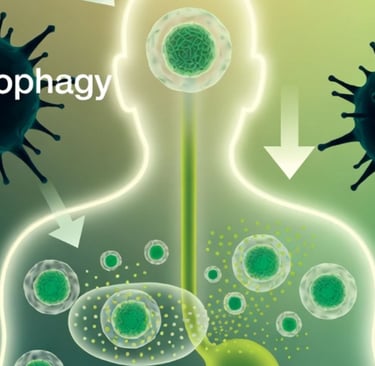
Autophagy (literally “self-eating”) is a natural cellular recycling system. It helps the body break down damaged proteins and organelles, keeping cells clean and functional. Fasting is one of the strongest known triggers of this process.
🔬 What is Autophagy?
In simple terms, autophagy is your body’s internal cleanup crew:
Removes damaged cell parts
Recycles nutrients during stress or fasting
Supports cellular repair and survival
⏳ How Fasting Activates It
When you fast (typically 12–24+ hours):
Insulin levels drop
Glycogen stores deplete
The body shifts to fat-burning (ketones)
This metabolic switch activates autophagy, especially in liver, muscle, and brain cells.
🧪 Link to Cancer: What Science Suggests
✅ Potential Benefits
Removes damaged cells that could become cancerous
Reduces oxidative stress and inflammation
May improve response to treatments like chemotherapy (in some studies)
Supports immune system surveillance
⚠️ The Complexity
Autophagy is a double-edged sword:
In early stages → may prevent cancer formation
In existing tumors → cancer cells may use autophagy to survive stress
So it’s not a simple “anti-cancer switch.”
🧠 Key Insight
Autophagy is protective, not a guaranteed cure.
Fasting may support overall metabolic health, but it does not replace medical cancer treatment.
⚖️ Practical Takeaways
Short-term fasting (intermittent fasting) may support cellular health
Prolonged fasting should be medically supervised, especially in cancer patients
Nutrition quality matters just as much as fasting
✨ Bottom Line
Fasting can activate a powerful cellular repair system, but:
🧬 Autophagy helps protect the body—it doesn’t act as a standalone cancer treatment.
Tags:
Autophagy, Fasting, Cancer Prevention, Cancer Therapy, Metabolic Health, Cellular Repair, Longevity, Natural Healing, Immune Boosting, Tumor Metabolism, Intermittent Fasting, Therapeutic Fasting, Dr Hassan Alwarraqi, HKEM.
Hashtags:
#Autophagy #Fasting #CancerPrevention #CancerTherapy #CancerResearch #CellularRepair #MetabolicHealth #Longevity #IntermittentFasting #HealingNaturally #FastingBenefits #HealthScience #ImmuneBoost #DrHassanAlwarraqi #HKEM
🧬 Autophagy and Fasting: Cancer-Fighting Potential
https://www.h-k-e-m.com/-autophagy-and-fasting-cancer-fighting-potential
====================================================================================================================================================================================
====================================================================================================================================================================================




Get in touch
Address
Cairo Al Rehab
Contacts
+20 109 405 2056
hassanalwarraqi@h-k-e-m.com