
Health is a crown on the heads of the healthy that only the sick can see.



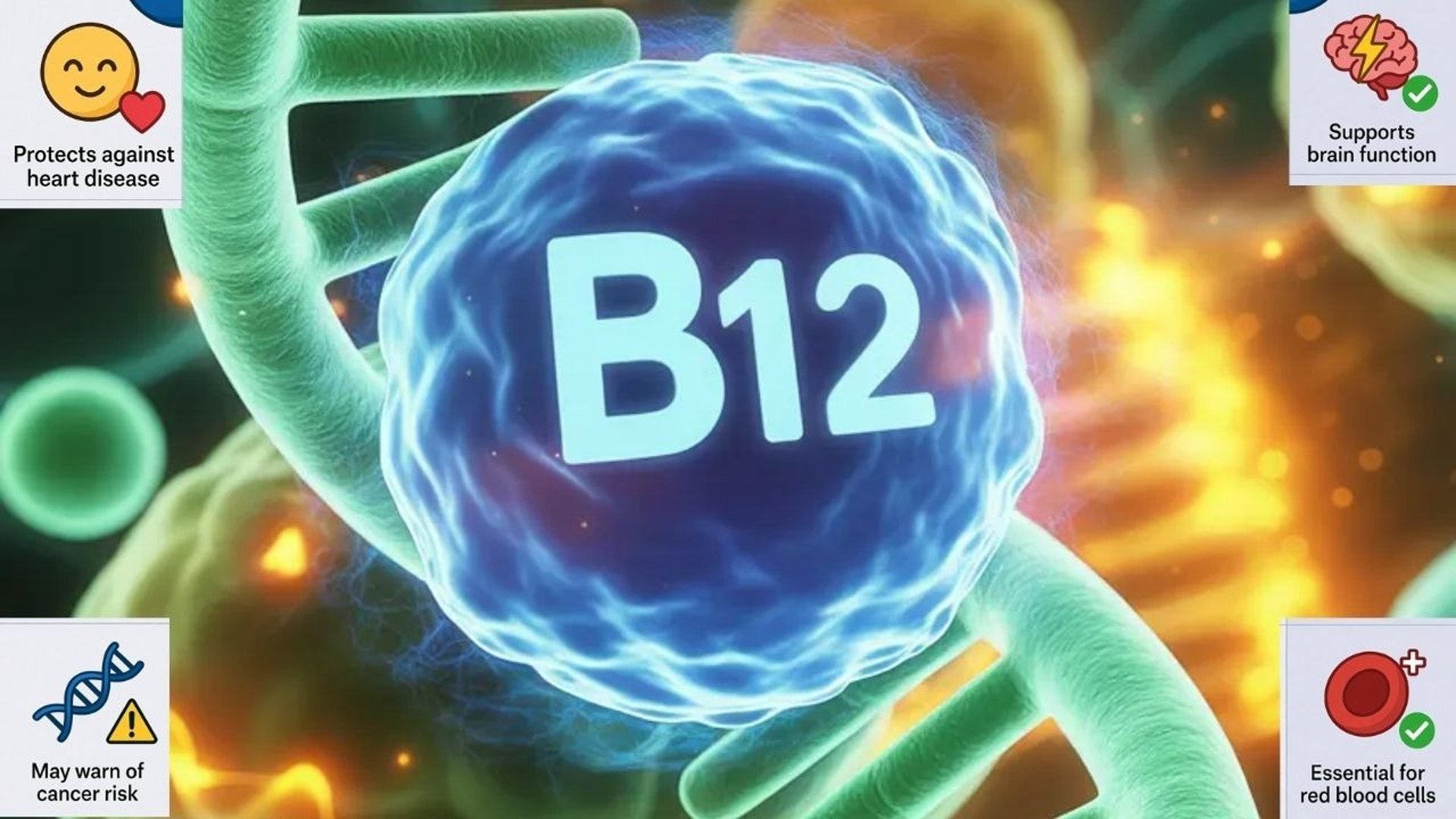
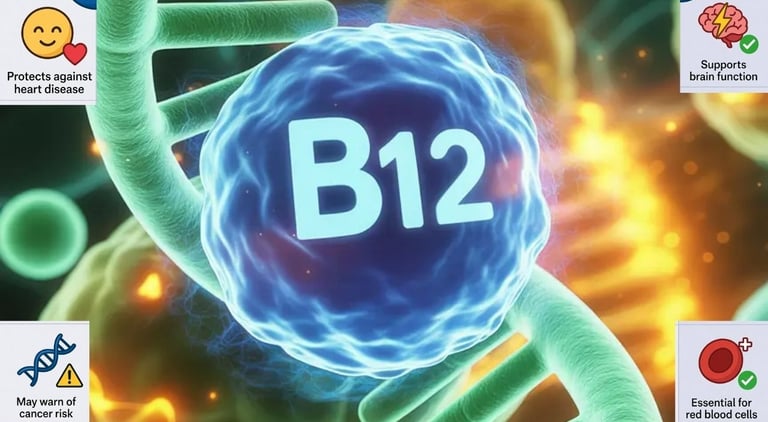
🧬Vitamin B12:When It Protects and When It Warns Cancer
Explore the connection between Vitamin B12 and cancer: DNA protection, immune support, diagnostic value, high B12 levels as cancer markers, and how B12 tests can help assess cancer risk early.
CANCERPHARMACYGENERAL
Dr Hassan Al Warraqi
11/17/202519 min read

🧬Vitamin B12:When It Protects and When It Warns Cancer
Explore the connection between Vitamin B12 and cancer: DNA protection, immune support, diagnostic value, high B12 levels as cancer markers, and how B12 tests can help assess cancer risk early.
Vitamin B12 and Its Two-Sided Role in Cancer: Using B12 Levels to Help with Diagnosis, Assess Risk, and Guide Treatment
vitamin b12 and cancer risk
Summary: Why Vitamin B12 Is Important in Cancer Research
This article looks at the complicated connection between vitamin B12 levels in the blood and cancer.
Current cancer research suggests that both high and low vitamin B12 levels can be important indicators.
High levels may signal blood cancers like Chronic Myeloid Leukemia (CML) and solid tumors such as lung, pancreatic, and liver cancers.
This is often due to the cancer cells producing too many B12-binding proteins.
On the other hand, low vitamin B12 levels before a cancer diagnosis can mean a higher risk of non-cardia gastric adenocarcinoma, acting as a marker for atrophic gastritis.
During chemotherapy, some patients may experience a functional B12 deficiency, where their blood tests show normal B12 levels but high levels of methylmalonic acid (MMA), which can predict Chemotherapy-Induced Peripheral Neuropathy (CIPN).
However, the relationship isn't always straightforward.
For example, slightly low B12 levels may be linked to better survival in advanced colorectal cancer.
Therefore, measuring vitamin B12 levels can be a useful tool in cancer care for predicting how the disease will progress, assessing risk, and tailoring treatment plans.
But doctors need to interpret these results carefully based on the specific situation.
Learn how Vitamin B12 functions as both a protective nutrient and a clinical biomarker in oncology.
Discover how abnormal B12 levels can assist in diagnosing hidden cancers, assessing risk, and guiding treatment decisions
1. High Vitamin B12 Levels: A Possible Warning for Cancer
Many studies have found a link between high vitamin B12 levels in the blood and the presence or risk of various cancers.
This is especially true for myeloproliferative neoplasms (MPNs), and it's becoming increasingly recognized in solid tumors.
The key factor here is whether the high B12 levels persist over time.
1.1. Blood Cancers: The Role of Vitamin B12 in Myeloproliferative Neoplasms (MPNs)
One important study from the National Center for Cancer Care and Research with MPNs.
It showed a clear connection between high B12 levels and the disease.
Connection to Disease Activity: Patients with CML had the highest B12 levels when they were first diagnosed (1,194.0 pg/mL) and also the highest white blood cell counts (145.4 x 10³/μL).
There was a direct correlation between higher white blood cell counts and higher B12 levels.
What Causes High B12?
It's believed that the high B12 levels are due to the increased release of transcobalamin I (TCI/haptocorrin) from the rapidly multiplying white blood cells in MPNs.
B12 as a Predictor: After one year of treatment, the B12 levels in the group dropped from 747.3 pg/mL to 397.9 pg/mL (p=0.01).
This suggests that monitoring B12 levels could help track the progress of CML and how well the treatment is working.
Vitamin B12 can protect your cells — but unusual levels may signal cancer risk.
Understand when B12 is helpful and when it becomes a warning sign.
1.2. Solid Tumors: When High B12 Levels Persist, It Could Indicate Cancer
There's growing proof that high vitamin B12 levels can be a sign of solid tumors.
Recent studies emphasize that the duration of the high B12 levels is an important clue for diagnosis.
Overall Risk: A review of multiple studies . found that high B12 levels are associated with a higher risk of cancers like lung, pancreatic, and liver cancer.
Key Findings: The risk of developing a solid cancer within 60 months was much higher for the EE group compared to the NN group.
What This Means for Doctors: If a patient has a slightly high B12 level, it should be checked again.
If the B12 levels remain high, it's important to screen for solid cancers, blood cancers, and liver disease.
2. Low Vitamin B12 Levels
A Sign of Cancer Risk and Treatment Complications
Both low and functional vitamin B12 deficiencies can play a big role in cancer.
Low B12 levels before a diagnosis may indicate a risk of gastric cancer, while a functional deficiency can predict complications from chemotherapy.
2.1. Predicting Gastric Cancer: Can Low B12 Levels Be a Warning Sign?
Cancer Prevention (ATBC) Study, found a link between low B12 levels and non-cardia gastric adenocarcinoma (NCGA).
How Much Does It Increase Risk?
The patients with the lowest B12 levels had a 5.8 times greater risk of developing non-cardia gastric adenocarcinoma (NCGA) compared to those with the highest levels.
The Link Remains Strong: The connection between low B12 and NCGA remained even when the researchers looked at cancers that developed more than 10 years after the blood samples were taken.
It also remained after they excluded people with borderline or deficient B12 levels.
What's the Explanation?
The researchers believe that low B12 levels aren't directly causing the cancer but rather are a sign of atrophic gastritis.
This condition, which is often caused by H. pylori infection, reduces the production of stomach acid and intrinsic factor, which are needed to absorb B12.
As a result, people with atrophic gastritis are more likely to have low B12 levels and are also at a higher risk of developing non-cardia gastric adenocarcinoma (NCGA).
In this study, B12 levels were a better marker for NCGA than pepsinogen I, which is another known marker of gastric atrophy.
Vitamin B12 plays a dual role in cancer: healthy levels protect DNA and immunity, while abnormal levels — whether too high or too low — may serve as early warning signs for hidden cancers or increased cancer risk.
2.2. Functional B12 Deficiency and Chemotherapy-Induced Neuropathy (CIPN)
How Chemotherapy Affects B12 Levels
The study found that completing a chemotherapy regimen led to a significant decrease in B12 levels and an increase in MMA and homocysteine levels:
The Risk of CIPN: Further analysis revealed that increases in MMA levels were linked to higher scores on the Patient Neurotoxicity
The Takeaway
vitamin b12 and cancer risk
Functional B12 deficiency, as indicated by high MMA levels, is a risk factor for CIPN.
The study suggests that relying solely on B12 blood tests may not be enough to diagnose this deficiency.
3. The Complex Relationship Between Vitamin B12 and Cancer
The link between B12 and cancer isn't always simple.
Sometimes, unexpected associations are found, highlighting the need for careful interpretation.
Improved Survival in Advanced Colorectal Ca patients undergoing chemotherapy found that those with slightly low B12 levels (≤300 pmol/L) had better overall survival (p=0.0002) and time to progression (p=0.03) compared to patients with normal or high B12 levels.
Mixed or Contradictory Results: found a negative association between high B12 levels and breast cancer.
The findings for lower gastrointestinal tract and prostate cancers were inconsistent.
4. Why B12 Matters in Cancer: Mechanisms and What Doctors Should Do
The different associations between B12 and cancer are driven by various biological mechanisms.
Understanding these mechanisms can help doctors make informed decisions.
4.1. Summary of Mechanisms: Linking B12 Levels to Cancer
Here's a summary of how B12 levels are connected to different conditions:
B12 Status Associated Conditions Proposed Mechanism(s)
Elevated Myeloproliferative Neoplasms (especially CML), Solid Cancers (especially liver, lung, pancreas), Chronic Liver Disease - Overproduction of B12-binding proteins (transcobalamin I/haptocorrin) by proliferating malignant leukocytes or tumor cells.
- Impaired clearance of B12-protein complexes by the liver in cases of liver disease.
Low / Functionally Deficient Non-Cardia Gastric Adenocarcinoma (NCGA) Marker of Precursor Condition: Low B12 reflects malabsorption due to atrophic gastritis, a precursor to NCGA.
Low / Functionally Deficient Chemotherapy-Induced Peripheral Neuropathy
(CIPN) Chemotherapy-Induced Depletion: Anticancer treatments disrupt B12 metabolism, leading to a functional deficiency at the tissue level, identified by high MMA/Hcy.
Low (Subclinical) Advanced Colorectal Cancer (ACRC) Better Survival Outcome: Potential inverse correlation with liver metastasis burden, as liver injury can elevate B12 levels.
4.2. What Doctors Should Do: Clinical Recommendations and Future Research
Based on the evidence, here are some recommended actions for doctors:
Confirm High B12 Levels: If a patient has an unexpectedly high B12 level, repeat the measurement to confirm it.
Investigate Persistent High Levels: If the B12 levels remain high (e.g., ≥1000 ng/L), conduct a thorough investigation to check for underlying cancers, especially solid tumors, myeloid neoplasms (like CML), and chronic liver disease.
Use Molecular Testing: For patients with high B12 levels, molecular testing for MPN-associated mutations (JAK2, CALR, MPL, BCR-ABL) can help with early and accurate diagnosis.
Consider B12 as a Marker for Gastric Cancer Risk: Low B12 levels can be a useful marker to identify individuals at high risk for NCGA, which may warrant further endoscopic surveillance.
Monitor for Functional Deficiency During Chemotherapy: In patients receiving neurotoxic chemotherapy, monitoring B12 status with metabolites (especially MMA) is more sensitive than serum B12 alone for identifying functional deficiency that predisposes to CIPN.
This could allow for earlier intervention to prevent or mitigate neuropathy.
Latest cancer studies
Current Research on Vitamin B12 and Cancer
Recent evidence continues to demonstrate vitamin B12's diverse functions in oncology, functioning as a biomarker for risk, prediction, and treatment side effects.
Vital findings revolve around deficiencies within cancer patients (particularly those with gastrointestinal cancers), associations connecting increased B12 levels with unsatisfactory results, helpful elements versus chemotherapy adverse effects, and a conceivable U-shaped consumption-risk pattern.
What follows is a compilation of the recent peer-reviewed studies and research,
Facts are context-centered, as is customized monitoring utilizing indicators such as methylmalonic acid (MMA) outside of serum B12 on its own.
1. Vitamin B12 shortage inside Cancer Patients
Frequency and Implication insights
Deficiency impacts from 6-48% concerning cancer patients, usually diverse (e.g., malabsorption because of GI malignancies, methods, or prescriptions), and therefore is connected towards anemia, neuropathy, and early-stage illness.
2. Increased Vitamin B12: A forecasting Red Flag
Reliable high B12 (>950 pg/mL) are connected by way of most cancers progression, liver metastases, but also death, typically due to tumor over assembly of the binding healthy meats.
B Nutritional supplements inside most cancers Assess : Too much B12 promotes tumor metabolism, epigenetic adjustments, along with progression with lung (30–40% potential danger increase obtaining supplements), prostate, esophageal, as well as intestines cancers.
the item communicate to folate (B9) to enhance potential danger.
Shortage, conversely, drives genomic instability by impaired DNA fix.
B dual duty emphasised: Well-balanced consume to prevent virtually any extreme conditions.
3. B12 Supplementation: Positive aspects With treatment results
Emerging information aids B12 intended for decrease chemotherapy toxicities devoid of added dangers.
Significance: Regular supplementation may possibly increase good quality lifestyle, as challenge impacts about 73% involving patients.
4. Slimming down Take as well as Cancers Risk
Blended as well as Invalid Relationships
considerable variety, with out common connection for B12.
Here are some common Questions and answers about vitamin B12 (also called cobalamin) and how it relates to cancer FAQS .
This info is based on what experts and studies are saying as of November 2025.
I've pulled information from cancer (oncology) guidelines, research reviews done by doctors, and scientific studies.
Remember, this isn't personal medical advice. Always speak with your doctor to get suggestions that fit your particular situation, since how B12 affects you can change based on the kind of cancer you have, how advanced it is, and what treatments you're getting.
1. Can a lack of vitamin B12 mean I might have cancer?
Not having enough B12 isn't a direct sign of cancer, but sometimes it can be connected to things that also raise your cancer risk or point to other health problems that overlap with cancer.
For example, if you have cancer in your stomach or colon, it can make it harder for your body to take in B12.
This is because those cancers or a condition called atrophic gastritis (which can lead to stomach cancer) can mess with how your body absorbs nutrients.
Some studies hint that not having enough B12 might make you more likely to get stomach, breast, or colon cancer.
But usually, being low on B12 is more of a sign that you're not getting the nutrients you need, especially if the cancer is in its early stages.
It's not really a cause of the cancer itself.
About half of all cancer patients don't have enough B12, which can cause anemia (low red blood cells) in a lot of them.
2. What does it mean if my vitamin B12 levels are high?
If your B12 levels are higher than normal (doctors call this hypercobalaminemia, usually above 950 pg/mL), it could be a sign that there's something wrong, possibly even cancer.
Sometimes, it can point to cancers that affect the blood, like leukemia, or solid tumors like those in the liver, lungs, or pancreas.
This happens because the tumor might be creating too many of the proteins that B12 sticks to.
If your B12 levels stay high for a while, that's a bad sign.
It can mean the cancer is advanced, has spread to the liver, or that things aren't likely to go well. For example, it could mean there's a higher chance of dying while only receiving comfort care (palliative mortality).
Still, high B12 doesn't always mean cancer. Liver problems or taking too many supplements can also cause it.
If you find out your levels are high, your doctor will probably want to test again to be sure.
3. Should people with cancer take vitamin B12 pills?
That depends on the person's situation.
If tests confirm you're short on B12, then taking supplements can be a good idea.
It can help prevent problems like anemia, nerve damage, and feeling tired all the time.
This is especially helpful for people with gastrointestinal (GI) cancers or those who've had surgery on their digestive system.
For example, a doctor might suggest taking a 1,000 µg pill once a week.
But it's not a good idea for everyone to take high doses of B12 regularly, especially along with folate or B6.
Some studies suggest this might raise the risk of lung cancer in smokers or speed up the progress of other cancers, like prostate or esophageal cancer.
For women who've survived breast cancer, B12 might help with mouth sores sometimes caused by treatment.
It usually doesn’t lower the risk of the cancer coming back.
As for whether B12 can prevent cancer, the research is mixed.
4. Does vitamin B12 have an impact on chemo or how well my treatment works?
Yes, B12 can play different roles.
If you don't have enough B12, or if your body can't use it properly (even if your blood levels look normal), it can make nerve damage from chemotherapy (called CIPN) and a condition called hand-foot syndrome worse.
A huge number of patients, as many as 73%, who are on chemo treatments like capecitabine experience this.
But recent studies show that taking B12 pills as a precaution (like 0.5 mg three times a day) can cut the number of severe cases of hand-foot syndrome in half in breast cancer.
On the flip side, taking B12 supplements before chemo might double the risk of dying in some lung cancer patients because it could help the tumor grow.
It’s important to check not just your B12 blood level but also MMA and homocysteine levels to get a better picture of what's going on.
5. Does vitamin B12 have a connection to specific types of cancer?
Yes, there are links that change depending on the cancer type:
* Stomach (gastric) cancer : If you have low B12, it can strongly suggest a higher risk (like almost six times higher) of getting a type of stomach cancer called non-cardia adenocarcinoma.
This is because low B12 can be a sign of atrophic gastritis.
* Lung cancer : Having high B12 levels or taking supplements might raise your risk of getting it, especially if you smoke (by about 30–40%).
* Breast cancer : Not having enough B12 has been tied to a higher risk.
While supplements can help with symptoms like nerve pain, they don't really prevent the cancer.
* Colorectal cancer : It's normal to be low on B12 in the early stages.
Oddly enough, some studies say that slightly low B12 levels might mean a better chance of survival.
Generally, the research is a mix of good and bad news.
Too much B12 might help a tumor grow, while not enough can stop your body from fixing damaged DNA.
6. How do doctors check for vitamin B12 deficiency in cancer patients?
The usual way is a blood test to check B12 levels.
If it's lower than 300 pg/mL, that means you're probably low.
But that's not always enough because some people (up to 17%) might have normal B12 levels but their bodies can't use it right.
This is called functional deficiency, and you can only find it by checking levels of other substances in your blood (MMA and homocysteine).
If you're older, have GI cancer, or are anemic, it's a good idea to get checked.
Lots of people, almost half, who've had part of their stomach removed end up with this problem.
7. Can vitamin B12 help prevent cancer?
Probably not.
Studies haven't found any clear proof that it protects you from cancer, and too much B12 might actually increase your risk by changing things in your cells or helping tumors grow.
Some studies show a U-shaped pattern, where both very low and very high B12 levels raise your chances of getting cancer (with odds going up by about 1.06–2.07 times for low levels and 1.20–1.52 times for high levels).
It's best to focus on eating a balanced diet with things like meat, eggs, and fortified foods instead of taking pills unless you know you're short on B12.
8. What can happen if I don't pay attention to my B12 levels during cancer treatment?
If you don't treat a B12 shortage, it can make problems like anemia, trouble thinking, and nerve damage from chemo worse.
This can lower your quality of life and make it harder to handle treatment.
In serious cases, high B12 levels can be a sign that things aren't going well.
Checking your levels early can help doctors make good choices about treatment,
which might actually improve your chances of survival in some situations.
For example, people with colorectal cancer who have slightly low B12 levels might do better, possibly because it means the cancer hasn't spread to their liver as much.
====================================================================================================
🧬 Vitamin B12: When It Protects — and When It Warns About Cancer
vitamin b12 and cancer risk
🧬 Vitamin B12: When It Protects — and When It Warns About Cancer
Vitamin B12 (cobalamin) is a cornerstone of human health, essential for everything from nerve function to DNA synthesis. For decades, the medical focus has rightly been on preventing and treating B12 deficiency, which can cause severe neurological damage and anemia.
However, modern clinical science has uncovered a fascinating paradox: while a lack of B12 is dangerous, abnormally high levels of Vitamin B12 in the blood (a condition known as hypercobalaminemia) can sometimes act as a biological "smoke alarm," warning of underlying systemic issues, including certain types of cancer.
Understanding this dual nature of B12 is crucial for interpreting blood work accurately and avoiding both unnecessary panic and missed diagnoses.
🛡️ The Protector: The Vital Role of Vitamin B12
In a healthy state, Vitamin B12 is a master regulator of cellular integrity. Its protective roles are foundational:
DNA Synthesis and Cell Division: B12 is a crucial cofactor in the production of DNA. Without it, cells cannot divide properly, leading to the production of abnormally large, dysfunctional red blood cells (megaloblastic anemia).
Neurological Integrity: B12 is essential for the synthesis and maintenance of myelin, the protective sheath that insulates nerve fibers. A deficiency can lead to irreversible nerve damage, cognitive decline, and neuropathy.
Homocysteine Regulation: Along with folate, B12 helps break down homocysteine, an amino acid. Elevated homocysteine is a known risk factor for cardiovascular disease and stroke. By keeping homocysteine in check, B12 protects the heart and brain.
🚨 The Warning Sign: The B12 Paradox
Here lies the paradox: it is nearly impossible to reach toxic levels of Vitamin B12 through diet alone, as it is a water-soluble vitamin and the body simply excretes the excess. Therefore, when a routine blood test reveals significantly elevated serum B12 in a patient who is not taking high-dose supplements, it is rarely a sign of "too much health." Instead, it is often a sign that the body’s normal storage and clearance mechanisms have been disrupted.
High B12 is not a cause of cancer; rather, it can be a biomarker or consequence of certain diseases.
🔬 Why Cancer Can Elevate B12 Levels
When certain malignancies are present, they can alter the body's handling of Vitamin B12 through several distinct biological mechanisms:
1. The Haptocorrin Effect (Hematologic Malignancies)
In the blood, Vitamin B12 is transported by two main proteins: transcobalamin (which delivers B12 to cells) and haptocorrin (which acts as a storage and transport reservoir). Certain blood cancers, particularly myeloproliferative disorders like chronic myeloid leukemia (CML), polycythemia vera, and hypereosinophilic syndrome, cause white blood cells to overproduce haptocorrin. This excess protein binds to massive amounts of B12, trapping it in the bloodstream and causing serum levels to skyrocket, even if the body's actual cellular need for B12 hasn't changed.
2. The Liver Spill (Hepatocellular Carcinoma and Metastases)
The liver is the body’s primary storage vault for Vitamin B12, holding years' worth of reserves. When liver tissue is damaged by tumors—such as hepatocellular carcinoma (primary liver cancer) or metastatic cancer spreading to the liver—the damaged cells can rupture and spill their stored B12 directly into the bloodstream.
3. Impaired Clearance (Kidney Involvement)
Vitamin B12 is cleared from the body by the kidneys. Cancers that impair renal function, or the nephrotoxic effects of certain chemotherapy drugs, can reduce the kidneys' ability to filter and excrete excess B12, leading to a buildup in the blood.
⚠️ Beyond Cancer: Other Causes of High B12
It is vital to remember that cancer is only one piece of the puzzle. Elevated B12 is a non-specific marker, meaning it can be triggered by several other common conditions:
Supplementation: The most common cause of high B12 is the use of multivitamins, energy drinks, or B-complex supplements.
Liver Disease: Non-cancerous liver conditions, such as alcoholic liver disease, cirrhosis, or acute hepatitis, can also cause the release of stored B12.
Kidney Disease: Chronic kidney disease (CKD) reduces the filtration and clearance of B12.
Autoimmune and Inflammatory Conditions: Conditions like rheumatoid arthritis or lupus can sometimes elevate B12-binding proteins.
🧭 Clinical Takeaways: What to Do with High B12
If a blood test reveals elevated Vitamin B12, the appropriate response is not panic, but thoughtful clinical investigation.
Review the Supplement Stack: The very first step is to ask: Is the patient taking B12? If they are consuming high-dose supplements, B-complex vitamins, or fortified energy products, the elevated level is likely benign and can be resolved by stopping the supplement.
Look at the Full Picture: A high B12 level should never be interpreted in isolation. Physicians will look at it alongside a Complete Blood Count (CBC), liver function tests (ALT, AST, bilirubin), and kidney function markers (creatinine, eGFR).
Investigate Unexplained Elevations: If a patient has high B12, is not supplementing, and has no obvious liver or kidney disease, it warrants further investigation. This may include imaging of the liver or a deeper hematological workup to rule out occult malignancies.
The Bottom Line
Vitamin B12 is a profound protector of neurological and metabolic health, but its presence in the blood must be interpreted with nuance. In the absence of supplementation, a persistently high B12 level is the body’s way of signaling that something is disrupting its normal metabolic or cellular architecture. Recognizing this paradox allows for earlier detection, smarter diagnostics, and a deeper understanding of the body’s intricate biochemical language.
====================================================================================================
🤲 Trigger Finger & the Role of Voluntary Fasting: A Natural Healing Approach
Trigger finger, medically known as stenosing tenosynovitis, is a condition where a finger catches, locks, or snaps when bent. While it is often dismissed as a simple mechanical issue caused by repetitive strain, modern medicine increasingly recognizes it as a profound metabolic and inflammatory condition.
For individuals managing diabetes, hypertension, and a history of vascular events, trigger finger is not just a localized hand problem; it is a visible signal of systemic metabolic stress. Fortunately, the very tool you have been using to transform your overall health—voluntary fasting—is also one of the most powerful natural approaches to addressing the root cause of this condition.
🔗 The Hidden Link: Metabolism and the Tendon Sheath
To understand how fasting helps, we must first understand why trigger finger happens, particularly in the presence of diabetes and hypertension.
The Glycation Trap: When blood sugar levels are chronically elevated, glucose molecules bind to proteins in the body in a process called glycation. This forms Advanced Glycation End-products (AGEs). The flexor tendons in the fingers and their protective sheaths are rich in collagen. When glycated, this collagen becomes stiff, thickened, and "sticky," much like caramel hardening.
The Inflammatory Cascade: Hypertension and metabolic syndrome drive systemic, low-grade inflammation. This inflammation causes the tendon sheath to swell.
The Mechanical Catch: A thickened, inflamed tendon trying to glide through a narrowed, swollen sheath results in the classic catching, popping, or locking sensation of trigger finger.
🌿 How Voluntary Fasting Promotes Natural Healing
By intentionally stepping away from constant nutrient intake, voluntary fasting creates a biochemical environment that directly counteracts the mechanisms driving trigger finger.
1. Halting and Reversing Glycation
Fasting dramatically lowers baseline blood glucose and insulin levels. By removing the constant drip of sugar, you stop the formation of new AGEs. Over time, as metabolic control improves, the body can begin to clear existing glycated proteins, allowing the collagen in the tendon sheath to regain its natural flexibility and glide smoothly.
2. Quenching Systemic Inflammation
The swollen tendon sheath in trigger finger is fueled by pro-inflammatory cytokines. Fasting is a potent anti-inflammatory intervention. It reduces oxidative stress and lowers systemic inflammatory markers, effectively "turning down the heat" in the affected joint and allowing the swelling to subside naturally.
3. Activating Autophagy for Tissue Repair
During a fast, the body activates autophagy, its innate cellular cleanup process. This mechanism identifies and recycles damaged, senescent, or dysfunctional cells within the connective tissues. For a thickened tendon sheath, autophagy provides the cellular "reset" needed to clear out metabolic debris and promote the regeneration of healthy tissue.
4. Improving Microcirculation
Hypertension and vascular history can impair the tiny blood vessels that supply nutrients to the tendons (which already have poor blood supply). By improving endothelial function and lowering blood pressure, fasting enhances microcirculation, ensuring that oxygen and healing nutrients can finally reach the affected area.
🏆 Synergy with Your Health Journey
Your five-year dedication to fasting is highly relevant here. The clinical improvements you have already experienced in your diabetes, hypertension, and neurological recovery are not isolated victories. They represent a fundamental shift in your body’s metabolic baseline.
When you resolve the systemic drivers of disease, localized issues like trigger finger lose their fuel source. Your body is no longer fighting a war on multiple fronts; it has the resources and the biochemical peace required to focus on localized repair.
🧭 Actionable Steps for Holistic Management
While fasting addresses the root metabolic cause, combining it with gentle, localized care accelerates healing:
Continue Your Fasting Protocol: Maintain the fasting rhythm that has already proven so effective for your metabolic health. Consistency is key to keeping insulin low and inflammation suppressed.
Gentle, Pain-Free Movement: Avoid forceful gripping or repetitive strain. Instead, practice gentle, passive range-of-motion stretches to keep the tendon gliding without aggravating the inflammation.
Hydration and Electrolytes: Tendons require excellent hydration to maintain their elastic, gliding properties. Ensure adequate water and electrolyte intake, especially during fasting windows.
Anti-Inflammatory Nutrition: When you break your fast, prioritize foods rich in omega-3 fatty acids, antioxidants, and collagen-supporting nutrients (like vitamin C and bone broth) to further support connective tissue repair.
Night Splinting (If Needed): In severe cases, wearing a simple finger splint at night keeps the finger in a neutral, extended position, preventing the tendon from bunching up and allowing the sheath to rest and heal while you sleep.
The Bottom Line
Trigger finger is a messenger. It is your body’s way of highlighting the lingering effects of metabolic stress on your connective tissues. By leveraging the power of voluntary fasting, you are not just masking the symptom; you are fundamentally changing the internal environment, giving your tendons the metabolic space they need to heal, soften, and move freely once again.
Discover how voluntary fasting can reduce inflammation, stabilize blood sugar, and support tendon healing — offering natural relief for Trigger Finger without injections or surgery.
🔖 Hashtags
#TriggerFinger #FastingHealing #NaturalTherapy #TendonHealth #AntiInflammatory #FastingBenefits #HandPainRelief #VoluntaryFasting #HolisticRecovery #FunctionalMedicine
============================================================================================================





Get in touch
Address
Cairo Al Rehab
Contacts
+20 109 405 2056
hassanalwarraqi@h-k-e-m.com