
Health is a crown on the heads of the healthy that only the sick can see.



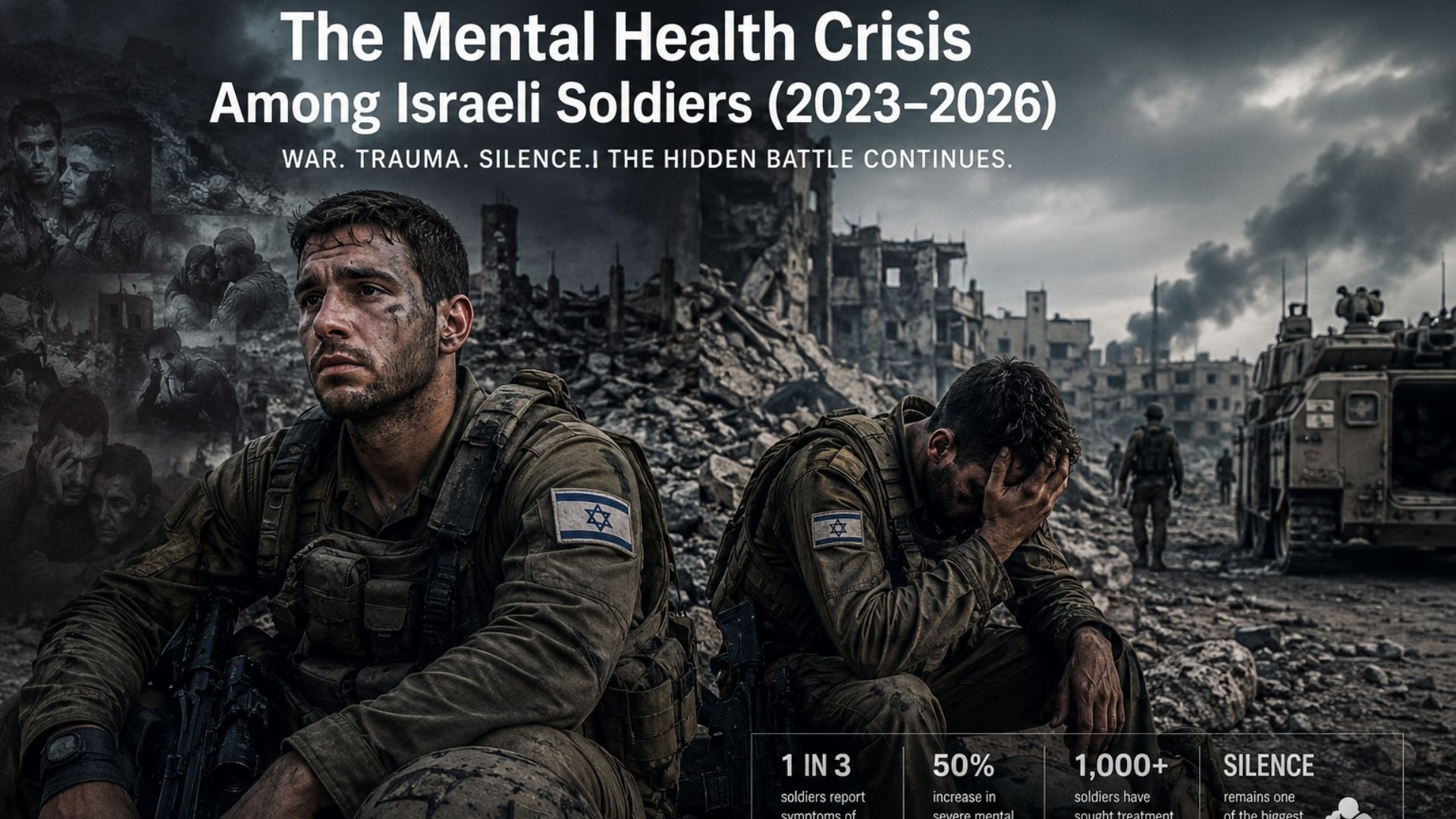
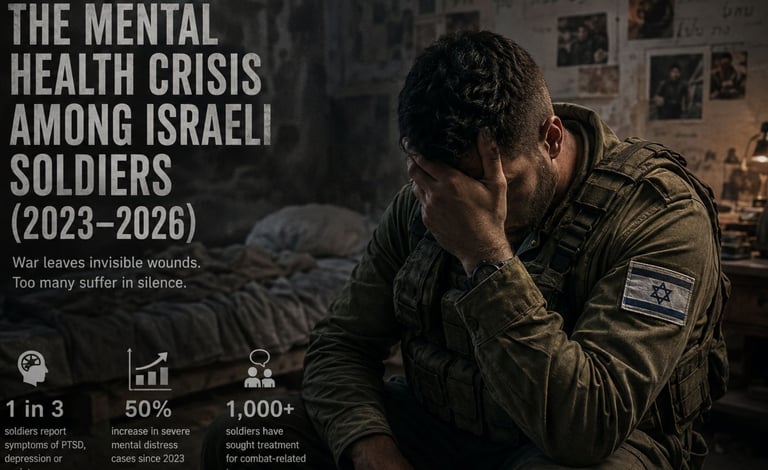
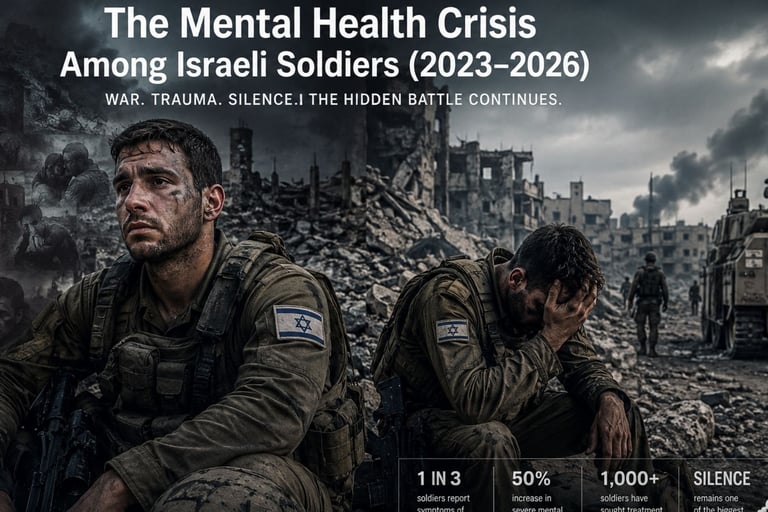
🧠The Mental Health Crisis Among Israeli Soldiers ( 23– 26)
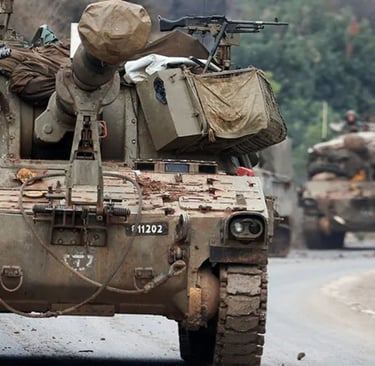
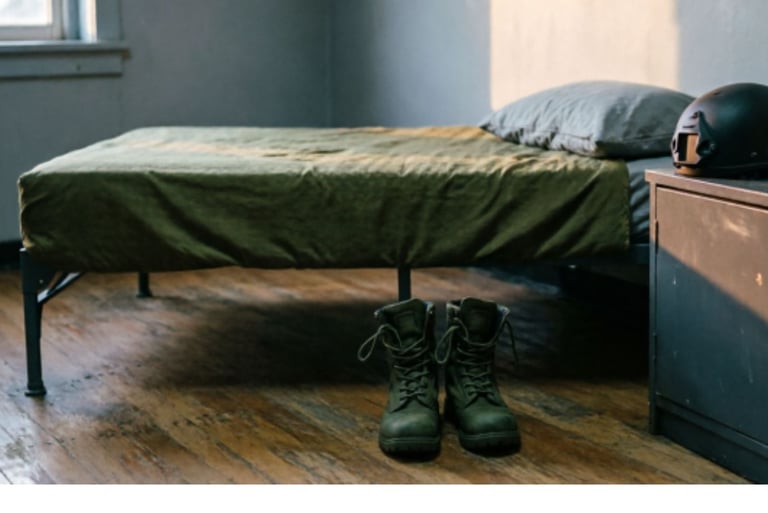
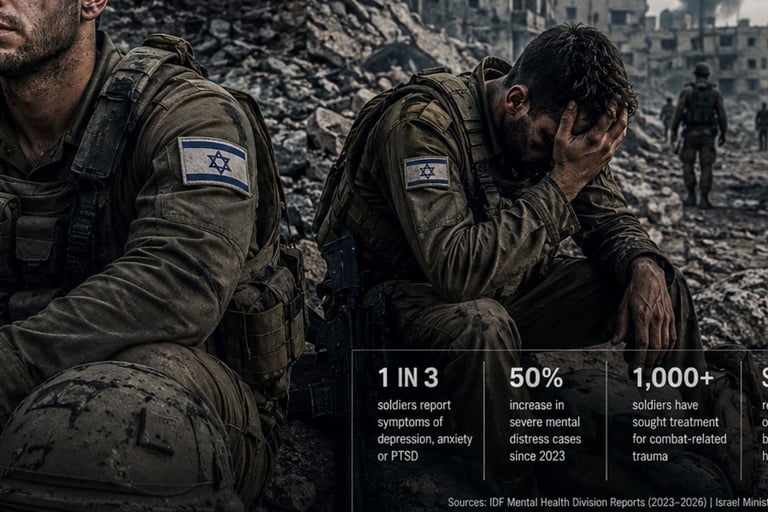
An overview of the mental health crisis affecting Israeli soldiers since 2023, including rising PTSD rates, moral injury,
FASTINGPSYCHOLOGY
Dr Hassan Al Warraqi
11/9/202411 min read
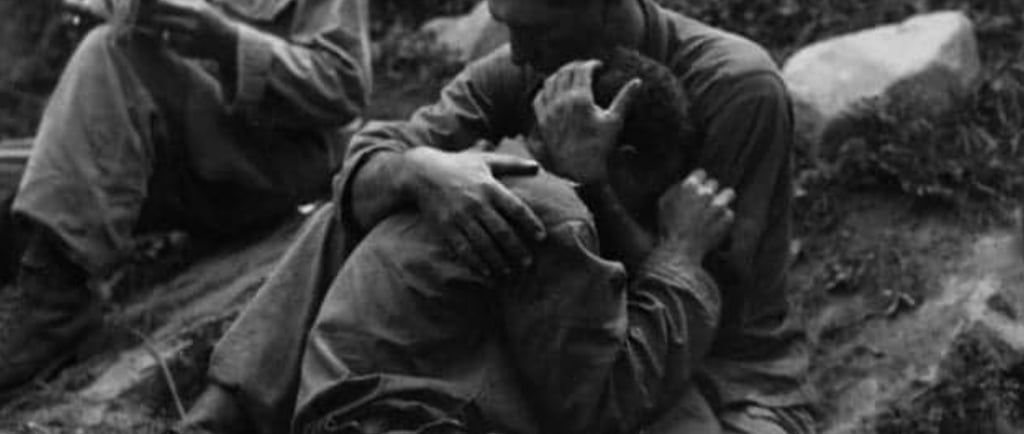
🧠The Mental Health Crisis Among Israeli Soldiers (2023–2026)
An overview of the mental health crisis affecting Israeli soldiers since 2023, including rising PTSD rates, moral injury,
Modern urban warfare, particularly in densely
populated areas like Gaza, has created unique psychological challenges for the Israel Defense Forces (IDF).
Unlike traditional combat, soldiers face close-range violence, moral dilemmas in civilian environments, and repeated deployments with insufficient recovery time.
Common Mental Health Conditions
PTSD: Flashbacks, hypervigilance, emotional numbness.
Major Depressive Disorder: Persistent sadness, loss of interest, suicidal ideation.
Anxiety Disorders: Panic attacks, GAD, social anxiety.
Moral Injury: Guilt over combat decisions, loss of trust in self or authority.
Key Risk Factors
Operational: Repeated deployments, sleep
deprivation, extended alertness.
Environmental: Combat in civilian areas, unclear enemy identification, media scrutiny.
Psychological: Cumulative stress, delayed-onset symptoms, substance abuse as coping.
Statistics (2023–2026)
300–400% increase in PTSD diagnoses compared to pre-2023 levels.
Overwhelmed military mental health services with months-long waiting lists.
Growing long-term disability claims and veteran burnout.
Gaza Civilians: Continuous Traumatic Stress (CTS)
Civilians in Gaza experience a fundamentally different trauma structure—Continuous Traumatic Stress (CTS)—defined by unrelenting exposure with no psychological recovery period.
Core Trauma Exposures
Continuous bombardment: Daily explosions, no warning systems or adequate shelters.
Repeated displacement: Multiple forced evacuations, loss of belongings and community.
Massive loss: Death of family members, inability to mourn properly.
Infrastructure collapse: No clean water, electricity, healthcare, or education.
Prevalence and Conditions
PTSD: Estimated at 50–70% in some areas.
Major Depression: High rates of suicidal ideation, functional impairment.
Anxiety: Panic attacks triggered by sounds, separation anxiety.
Complex PTSD (C-PTSD): Emotional dysregulation, disturbed self-perception.
What is Continuous Traumatic Stress (CTS)?
CTS results from ongoing, prolonged exposure to threat with no clear beginning, end, or safe period.
The brain never exits "survival mode," leading to:
Chronic hyperarousal of the nervous system.
Exhaustion of stress response systems.
Impaired cognitive functioning and physical health deterioration.
High risk of long-term psychological disability.
Soldiers vs. Civilians
Soldiers
Episodic combat exposure
Trained and armed role
Safe periods between missions
Access to military health services
Largely voluntary service
Children are not involved
Civilians
Continuous, environmental threat
No training, no control
No safe spaces available
Severely limited healthcare access
No choice, often trapped
Entire families including children affected
The higher degree of control that soldiers exercise over their situation — being trained, armed, and operating within a structured role
is itself a significant psychological buffer.
Civilians lack all of this.
Their helplessness is not merely emotional; it is structural.
Children & War Trauma: The Developmental Impact
Children are biologically more vulnerable because their developing brains are actively building architecture for lifelong functioning.
How Trauma Affects the Developing Brain
Brain Region Normal Function Effect of Trauma
Amygdala (Fear Center) Detects threats Becomes overactive and hypersensitive, causing constant alarm.
Hippocampus (Memory Center) Processes & stores memories Function disrupted; memories become fragmented; past/present confusion.
Prefrontal Cortex (Logic & Control) Regulates emotions, decisions Development impaired; poor emotional regulation, impulsivity.
Symptoms by Age Group
Ages 2–6
Nightmares, bedwetting, clinginess, repetitive trauma play, aggression.
Ages 7–12
Flashbacks, concentration problems, irritability, physical complaints (headaches, stomachaches).
Ages 13–18
Depression, risk-taking behaviors, substance abuse, self-harm, withdrawal.
Long-Term Risks of Prolonged Trauma
Without intervention, children face:
Psychological: Chronic PTSD, treatment-resistant depression, personality disorders.
Developmental: Delayed cognitive development, attachment disorders, social deficits.
Physical: Autoimmune disorders, cardiovascular disease, accelerated cellular aging.
Trauma, Learning, and IQ
Trauma does not reduce innate intelligence, but it significantly impairs brain performance under stress.
The brain in survival mode diverts resources from learning to threat detection. This results in:
Lower school performance and test scores.
Impaired working memory and concentration.
Slower cognitive development.
Important: These effects are often reversible when safety, stability, and appropriate interventions are restored.
Comparative Analysis: Gaza vs. Ukraine
While both regions face severe humanitarian crises, the pattern of trauma exposure differs significantly, leading to different psychological outcomes.
Continuous trauma (Gaza): Higher risk of chronic, deep developmental impact.
Interrupted trauma (Ukraine): More chances for recovery and resilience.
Both populations need immediate and sustained mental health support.
Evidence-Based Interventions & Treatments
Most Effective Interventions
What Does NOT Work Well Alone
Forcing children to talk about trauma early.
One-time debriefing sessions (CISD).
Medication alone (without therapy).
Unstructured "venting" sessions.
What Works Best at Different Stages
Immediate Crisis (Hours-Days): PFA, safety, basic needs.
Short-Term (Weeks): Routine, family support, stress regulation, CFS.
Long-Term (Months-Years): TF-CBT, CBT, EMDR, family therapy.
EMDR
Eye Movement Desensitization and Reprocessing uses bilateral stimulation — typically guided eye movements — to help patients process traumatic memories.
It is particularly effective at reducing the emotional intensity attached to specific memories and works faster than some traditional talk therapies.
It is recommended by the World Health Organization, the American Psychological Association, and numerous national health guidelines.
Approximately 60–70 percent of patients show significant improvement.
1. Stay safe
2. Stay together
3. Calm the body
4. Keep routine
5. Protect children
6. Use fasting only as supportive—not primary
Psychological First Aid (PFA): A Complete Guide
Psychological First Aid is an evidence-informed approach designed to reduce initial distress and foster short- and long-term adaptive functioning.
It is not therapy—it is humane, practical support.
Core Actions of PFA
Contact & Engagement: Establish human connection without being intrusive.
Safety & Comfort: Ensure physical safety, meet basic needs.
Stabilization: Calm disoriented or panicked individuals (use grounding techniques).
Information Gathering: Identify immediate needs, concerns, and supports.
Practical Assistance: Solve immediate problems (shelter, food, family contact).
Connection with Social Supports: Reunite families, reduce isolation.
Information on Coping: Normalize reactions, teach simple coping strategies.
Linkage with Services: Connect to medical, mental health, and other resources.
What PFA Avoids
Forcing people to talk about trauma.
Critical Incident Stress Debriefing (CISD).
Pathologizing normal reactions.
One-size-fits-all approaches.
PFA in War Zones
Safety first: Ensure your own safety.
Mass casualty: Prioritize the most distressed.
Ongoing threat: Acknowledge reality, don't give false reassurance, focus on controllable actions.
Limited resources: Use community-based approaches, train others.
Role of fasting in trauma situations
Fasting can play a supportive—but limited—role.
🟢 Potential benefits (in some people)
🧠 Mental clarity & control
Creates a sense of discipline and structure
May reduce chaotic eating patterns
How to Help a Traumatized Child: Step-by-Step Guide
When professional help isn't immediately available, caregivers and community members can provide crucial support.
The 10-Step Framework
Ensure Safety First: Move to a safe environment, reduce noise/chaos.
Be a Calm, Predictable Presence: Your calmness regulates their nervous system.
Help the Body Calm Down: Use slow breathing, grounding ("name 3 things you see"), comfort objects.
Let the Child Express—Don't Force It: Allow talking, drawing, play, or silence. Avoid interrogation.
Use Play as Therapy: Drawing, role-playing, storytelling, physical play.
Restore Routine Quickly: Regular sleep, meals, and daily activities.
Strengthen Attachment: Keep caregivers close, offer physical comfort, repeat reassurance.
Support Sleep: Nightlights, calm bedtime routines, respond to nightmares gently.
Watch for Warning Signs: Seek help if symptoms persist >2-4 weeks, worsen, or include self-harm.
Be Patient with Recovery: Healing is not linear; setbacks are normal.
What NOT to Do
❌ Say "be strong," "don't cry," or "it could be worse."
❌ Force details of the trauma.
❌ Punish trauma-related behavior (regression, clinginess).
❌ Rush the healing process.
How Therapy Rebuilds the Brain After Trauma
Through neuroplasticity, therapy can literally rewire traumatized brains.
Brain System Problem After Trauma What Therapy Does
Amygdala (Fear) Overactive, constant false alarms Gradual safe exposure; reduces firing intensity.
Prefrontal Cortex (Control) Weakened, poor emotion regulation Cognitive techniques, mindfulness; strengthens top-down control.
Hippocampus (Memory) Fragmented memories, past/present confusion Helps create coherent narrative; integrates memory.
HPA Axis (Stress) Dysregulated cortisol, constant high alert Breathing, grounding, relaxation; resets baseline.
What Neuroimaging Shows After Effective Treatment
Decreased: Amygdala reactivity, hypervigilance, intrusive memories.
Increased: Prefrontal cortex activity, hippocampal function, connectivity between regions.
What Therapy Does NOT Do
Erase memories or undo the past.
What Therapy DOES Do
Changes how the brain responds to memories.
Reduces emotional charge.
Integrates the experience.
Restores functioning and builds resilience.
The goal: Shift from "I'm in danger now" to "That happened, but I'm safe now."
Fasting & Mental Health: What Science Says
Potential Mechanisms (Early Research)
Metabolic shift: Brain uses ketones instead of glucose, possibly stabilizing mood for some.
Inflammation reduction: May lower markers linked to depression.
BDNF increase: Early evidence suggests possible neuroplasticity support.
Risks for Psychiatric Conditions
Condition
Risk
Anxiety May worsen nervousness, panic, irritability due to cortisol & adrenaline spikes.
Depression Can cause low energy, fatigue, worsening mood if too long or combined with stress.
Eating Disorders Absolute contraindication (anorexia, bulimia, binge eating).
Bipolar Disorder May destabilize mood, trigger mania; requires medical supervision.
Fasting is not a psychiatric treatment and should not replace evidence-based care.
In vulnerable individuals, it can worsen symptoms.
Medical supervision is essential for anyone with a mental health condition considering fasting.
Frequently Asked Questions (FAQs)
1. What is PTSD?
A condition developing after severe trauma, characterized by intrusive symptoms (flashbacks, nightmares), avoidance, negative changes in mood/thinking, and hyperarousal (hypervigilance, sleep problems).
Symptoms must last >1 month and impair functioning.
2. Why do soldiers develop PTSD?
Due to combat exposure (firefights, bombings, killing), moral injury, operational stressors (sleep deprivation, repeated deployments), and urban combat in civilian areas.
3. Why do civilians in war zones develop PTSD?
Due to direct threats (bombings, displacement, loss of loved ones), continuous exposure with no breaks, no control over the situation, and lack of basic needs.
4. How does PTSD affect children differently?
Children's developing brains are more vulnerable.
Effects include developmental delays, learning difficulties, regression (bedwetting, thumb-sucking), attachment disorders, and long-term cognitive impairment.
5. Does trauma reduce IQ?
No. Trauma impairs cognitive performance under stress (concentration, working memory), but not innate intelligence.
These effects are often reversible with safety and treatment.
6. Can PTSD be treated?
Yes. First-line treatments include TF-CBT, EMDR, and CBT. Recovery rates are 50-70% with treatment.
Early intervention improves outcomes.
7. Why is Gaza especially vulnerable psychologically?
Due to continuous exposure, repeated displacement, infrastructure destruction, massive loss, and a large child population experiencing developmental trauma with no access to care.
8. What is the role of Islamic law?
Gaza: Influences family law, governance, and social norms.
Israel: Secular state law; Islamic law applies only to Muslim citizens in personal status issues (marriage, divorce, inheritance).
Can fasting help with trauma or stress?
Sometimes—indirectly.
Possible benefits for some people:
Sense of control and discipline
Spiritual comfort
Mental clarity after adaptation
Who should avoid or be cautious with fasting?
People with severe stress or exhaustion
Those with anxiety or panic disorders
Individuals with Depression
Influenced by Islamic legal principles in governance
Family law (marriage, divorce, inheritance) heavily shaped by Islamic jurisprudence
Operates alongside civil-administrative structures
Social norms often guided by Islamic values
Governing authority: Hamas
Children and adolescents
Pregnant or ill individuals
How many Israeli soldiers have PTSD?
Over 30,000 treated for mental health issues since October 2023.
PTSD cases projected to rise by 180% by 2028
Are Israeli soldiers getting enough mental health support?
No. Despite 30,000+ treated, the system is overwhelmed.
Key Takeaways (SEO-Optimized Summary)
🔹 Israeli Soldiers (2023–2026)
✔ 30,000+ treated for mental health (PTSD, depression, anxiety).
✔ 40% rise in PTSD since October 2023, 180% projected by 2028.
✔ 76+ suicides among soldiers since the war began.
✔ Moral injury from combat decisions (civilian casualties, ethical dilemmas).
✔ System strain: Military mental health services overwhelmedtimesofisrael.com+5.
Key Statistics (2023–2026) Metric Data Source in israel
Soldiers treated for mental health
30,000+ (since Oct. 2023)
PTSD increase
40% rise (since Sept. 2023)
Projected PTSD rise by 2028
180%
Suicides among soldiers
76+ (since Oct. 2023)
Soldiers needing mental health support
39% (IDF personnel)
Sleep disorders
48% of IDF personnel
Widespread Exposure Across All Ages
Children
Bombings, loss of parents, displacement
PTSD, developmental delays, nightmares
Adults
Job loss, home destruction, grief
Depression, anxiety, burnout
Elderly
Cumulative trauma from past conflicts
Chronic PTSD, despair
Final Summary & Conclusions
War trauma is one of the most serious public health challenges of our time.
The psychological impact on both soldiers and civilians is real, measurable, and severe. However, the patterns differ critically:
Soldiers face episodic, combat-based trauma with access to structured recovery systems—though these systems are increasingly overwhelmed.
Civilians, especially in Gaza, endure Continuous Traumatic Stress (CTS)—unrelenting exposure with no safe haven, no recovery periods, and severely limited access to care.
Children are the most vulnerable, as trauma directly disrupts brain development, learning, and lifelong mental health.
Protecting them is a clinical and moral priority.
The Path to Recovery
The brain can be damaged by sustained trauma—but it can also heal.
Recovery depends on three fundamental elements:
Safety (physical and emotional).
Human connection (family, community, or therapeutic).
Time (and repetition of healthy patterns).
Where professional services exist, evidence-based therapies (TF-CBT, EMDR, CBT) can accelerate recovery.
Where they don't, community support, routine, calm presence, and Psychological First Aid are genuinely powerful tools—not consolation prizes.
Final reassurance
The effects of trauma are not permanent.
With safety, stability, and appropriate support, neuroplasticity allows the brain to heal.
Early intervention is not just valuable—it is transformati
🚀 SEO Keywords for Further Research
"PTSD in Israeli soldiers 2026"
"Gaza mental health crisis statistics"
"How war affects children’s brains"
"Moral injury in combat soldiers"
"Islamic law in Gaza vs Israel"
"Trauma and IQ in war zones"
"IDF mental health support 2026"
"Chronic stress in Gaza civilians"
"Ukraine vs Gaza child trauma"
"Long-term effects of war on mental health"
===========================================================================================================================================================================================================================
🧠The Mental Health Crisis Among Israeli Soldiers (2023–2026)
https://www.h-k-e-m.com/the-mental-health-crisis-among-israeli-soldiers-2023-2026
Since the 2023 escalation, the Israel Defense Forces have faced an unprecedented surge in mental health conditions. PTSD diagnoses rose by an estimated 300–400 percent compared to pre-war levels. Military mental health services have been overwhelmed, with waiting lists stretching to months, and reports of clinician burnout are widespread.
The conditions most commonly seen are PTSD, major depression, anxiety disorders, and moral injury — the last being particularly significant in urban warfare, where soldiers face complex ethical decisions amid civilian populations and are exposed to casualties they often cannot prevent.
Substance abuse has also increased as an informal coping mechanism.
Several factors make this conflict especially damaging psychologically.
Israel's reserve system means soldiers are called up repeatedly, without adequate recovery time between deployments.
Urban combat in densely populated areas creates constant moral ambiguity. Sleep deprivation, family separation, and sustained public and media scrutiny compound the operational stress.
Unlike trauma from a single event, many soldiers are accumulating layered, chronic stress across multiple deployments — which increases the risk of delayed-onset PTSD appearing months or years after service ends.
The longer-term picture is concerning.
Reserve soldiers in particular are showing trauma responses well after returning home, and the demand on veteran disability and rehabilitation systems is projected to grow significantly in the years ahead.
war trauma · soldiers mental health · military PTSD · combat stress · psychological impact of war · mental health 2024 · conflict zone
#PTSD #MoralInjury #CombatTrauma #MilitaryMentalHealth #IDFSoldiers #WarTrauma #VeteranHealth #UrbanWarfare #TraumaRecovery #MentalHealthCrisis #PsychologicalFirstAid #SoldierWellbeing #ConflictPsychology #EMDR #MentalHealth
=====================================================================================================================================================================================================================
💪🧠 Health Benefits of Cold Water Immersion ❄️🛁
Cold water immersion (cold plunges, ice baths, or cold showers) may trigger powerful physical and mental responses in the body.
⚡ Potential Benefits
🧠 Boosts alertness & mood
Cold exposure stimulates adrenaline, dopamine, and endorphins.🔥 Activates brown fat (BAT)
Helps the body generate heat and may support metabolism.💪 May reduce muscle soreness
Commonly used by athletes after intense exercise.🩸 Improves circulation
Blood vessels constrict and reopen during warming.🌱 May lower inflammation
Short-term cold exposure can influence inflammatory pathways.😌 Builds stress resilience
Controlled cold exposure may improve mental toughness and stress adaptation.🛌 Can improve recovery & sleep
Some people report deeper relaxation after cold immersion.
❄️ Common Methods
Ice baths
Cold plunges
Cold showers
Winter swimming
⚠️ Safety First
Cold immersion is not safe for everyone. Avoid or seek medical advice if you have:
Heart disease
Uncontrolled high blood pressure
Severe circulation problems
Cold-triggered asthma or conditions like Raynaud’s disease
🌿 Best Practice
Start gradually:
Begin with cool water
Limit exposure to short durations
Warm up naturally afterward
Never force extreme exposure
🧬 Research on cold exposure is growing, especially regarding metabolism, mood, inflammation, and nervous system regulation.
=====================================================================================================================================================================================================================




Get in touch
Address
Cairo Al Rehab
Contacts
+20 109 405 2056
hassanalwarraqi@h-k-e-m.com