
Health is a crown on the heads of the healthy that only the sick can see.



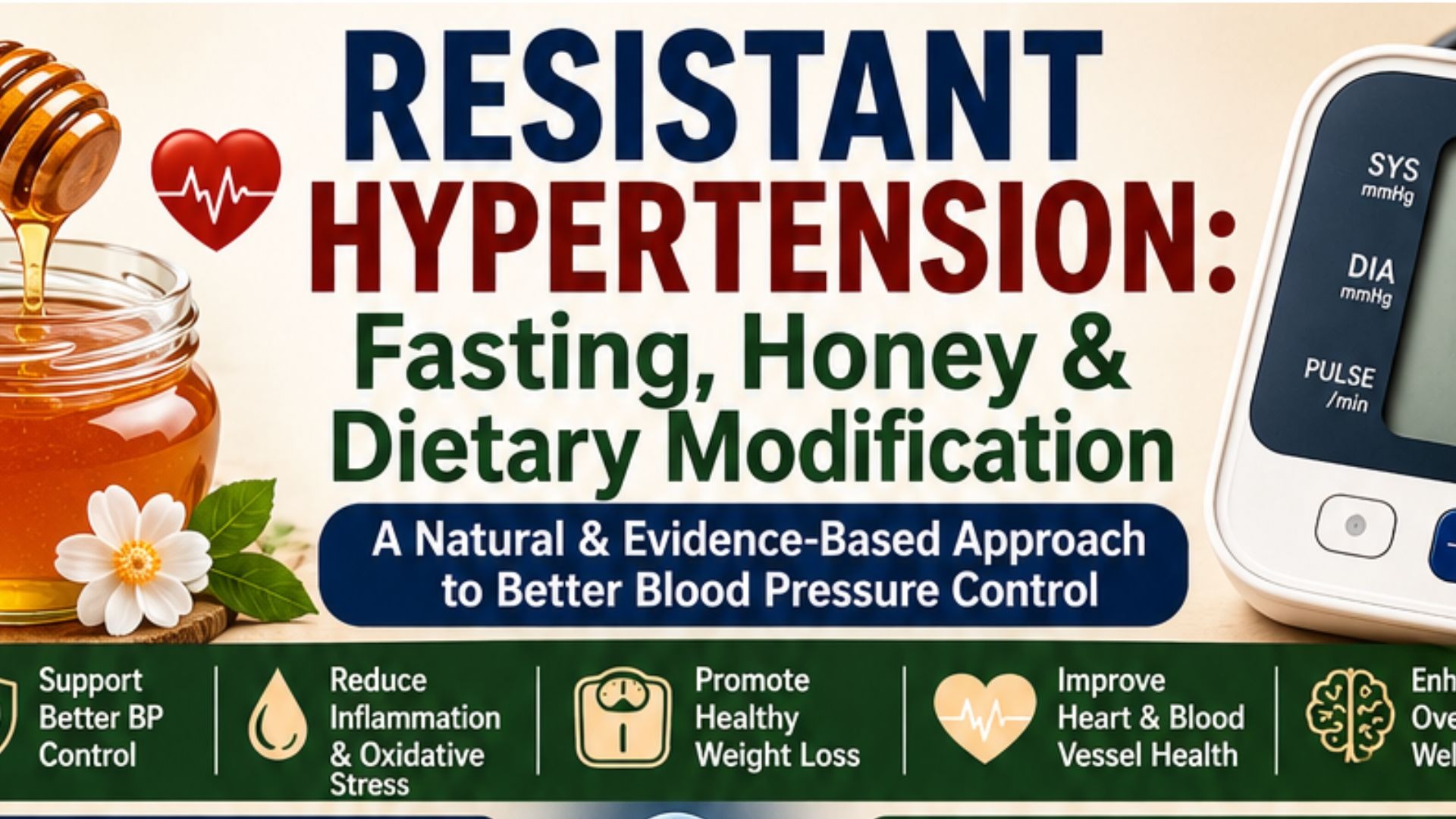
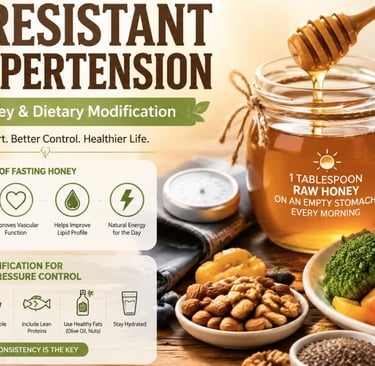
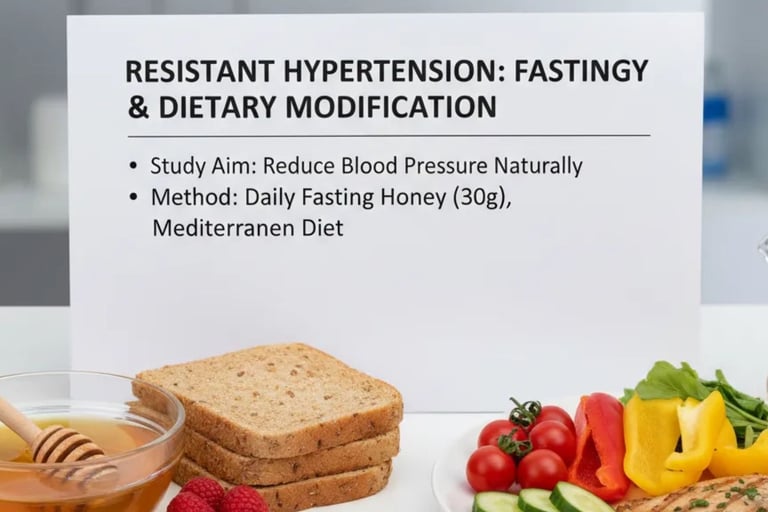
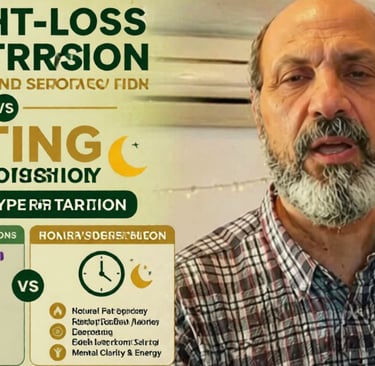
🍯Resistant Hypertension:Fasting Honey&Dietary Modification
Discover how intermittent fasting, natural honey in moderation, and dietary modification may contribute to supporting the control of resistant hypertension,
SUCCESS STORIES
Dr Hassan Al Warraqi
7/26/202612 min read
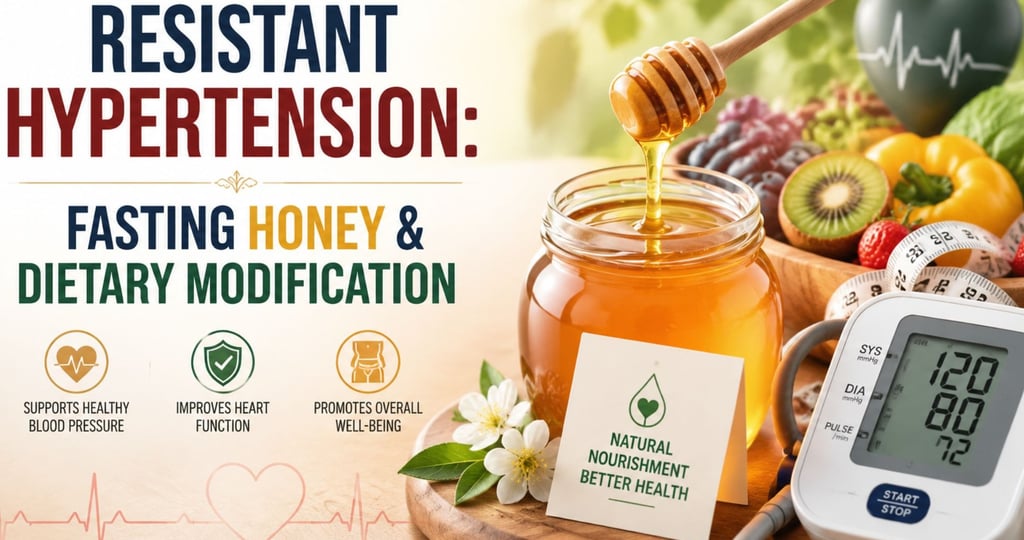
🍯Resistant Hypertension:Fasting Honey&Dietary Modification
Discover how intermittent fasting, natural honey in moderation, and dietary modification may contribute to supporting the control of resistant hypertension,
while understanding what scientific evidence supports and the importance of continuing medical treatment.
From Success Stories
Case Description:
A 42-year-old man suffering from resistant hypertension.
This means his blood pressure remains high despite taking three or more medications at optimal doses, including a diuretic.
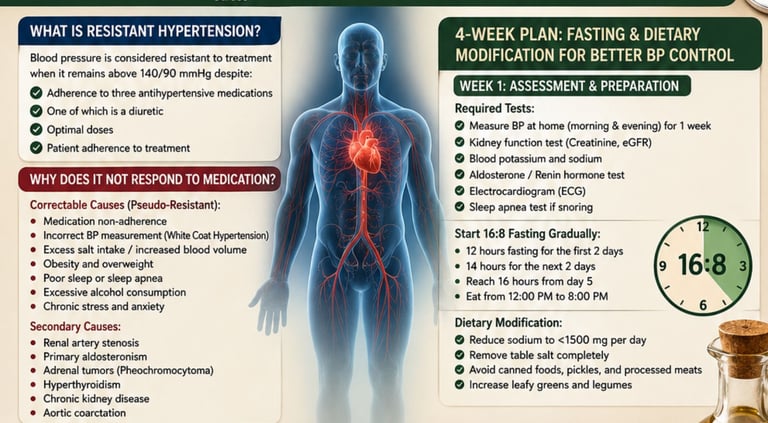
What is Resistant Hypertension?
Blood pressure is considered resistant when it remains above 140/90 mmHg despite:
Adherence to three antihypertensive medications.
One of these medications being a diuretic.
Optimal dosing.
Patient adherence to the treatment.
Why Doesn't It Respond to Medical Treatment?
Correctable Causes (Pseudo-Resistant):
Non-adherence to medication (irregular dosing).
Incorrect blood pressure measurement in the clinic (White Coat Hypertension).
Increased blood volume due to high salt intake.
Obesity and excess weight.
Fragmented sleep or Obstructive Sleep Apnea (OSA).
Excessive alcohol consumption.
Chronic stress and anxiety.
Secondary Causes (Secondary Hypertension):
Renal Artery Stenosis.
Primary Aldosteronism (excess aldosterone hormone).
Adrenal gland tumors (Pheochromocytoma).
Hyperthyroidism.
Chronic Kidney Disease (CKD).
Aortic Coarctation.
4-Week Treatment Plan: Fasting and Dietary Modification
Week 1: Assessment and Preparation
Required Tests:
Home blood pressure monitoring (morning and evening) for one week.
Kidney function tests (Creatinine, eGFR).
Blood potassium and sodium levels.
Aldosterone/Renin ratio test.
Electrocardiogram (ECG).
Sleep apnea screening if snoring is present.
Gradual 16:8 Fasting Initiation:
12-hour fast for the first two days.
Increase to 14 hours on days 3 and 4.
Reach 16 hours starting from day 5.
Break fast at 12:00 PM, dinner at 8:00 PM.
Dietary Modifications:
Reduce sodium to less than 1,500 mg daily.
Remove the salt shaker from the table entirely.
Avoid canned goods, pickles, and processed meats.
Increase leafy greens and legumes.
Week 2: Deepening the System
Stabilizing 16:8 Fasting:
Fast daily from 8:00 PM to 12:00 PM.
Drink 2–3 liters of water during the fasting period.
Strict DASH Diet Application:
4–5 servings of vegetables daily.
4–5 servings of fruits daily (especially bananas and oranges for potassium).
2–3 servings of whole grains.
2–3 servings of low-fat dairy (yogurt/milk).
Fish twice a week (salmon, sardines).
Daily nuts (a handful of almonds or walnuts).
Blood Pressure Monitoring:
Daily measurement at the same time.
Record readings in a logbook.
Week 3: Improvement and Review
Doctor Visit:
Present home blood pressure logs.
Review lab results.
Evaluate the need for medication dosage adjustment (dosage may need reduction if BP drops).
Assess the possibility of adding Spironolactone if not already used—this drug is considered the most effective for resistant hypertension.
System Enhancement:
Add light exercise (30 minutes of daily walking).
Ensure 7–8 hours of sleep.
Stress-reduction techniques (deep breathing, meditation).
Week 4: Final Evaluation
Comparison:
Compare blood pressure readings before and after the program.
Weight evaluation (goal: lose 1–2 kg).
Evaluate energy levels and overall well-being.
Next Steps:
If BP improves: Continue the system and consult the doctor for gradual medication adjustment.
If BP does not improve: Investigate deeper secondary causes (renal artery imaging, adrenal hormone tests).
Expected Results After 4 Weeks
Weeks 1–2: Slight drop of 2–5 mmHg.
Weeks 3–4: Drop of 5–10 mmHg.
After 12 weeks: Drop of 10–15 mmHg (with continued adherence).
In resistant hypertension cases, improvement may be slower.Patience and consistency are essential.
Special Warnings for This Case
Do not stop medication abruptly: Fasting may lower BP further, causing a dangerous drop. Any medication adjustment must be under medical supervision.
Monitor potassium: The DASH diet is rich in potassium. If the patient is taking a potassium-sparing diuretic (like Spironolactone) or a potassium-wasting diuretic, blood potassium levels may need close monitoring.
Sleep Apnea: 50% of resistant hypertension patients suffer from OSA. If the patient snores or wakes up tired, they must be evaluated immediately.
Hyperaldosteronism: The most common cause of secondary resistant hypertension. It is diagnosed with a simple test and treated with a simple medication (Spironolactone).
Summary
Resistant hypertension in a 42-year-old man requires a comprehensive approach:
Rule out secondary causes first.
Ensure medication adherence and correct measurement techniques.
Apply 16:8 intermittent fasting with a strict DASH diet.
Daily blood pressure monitoring.
Weekly doctor visits to adjust medical treatment.
Fasting and dietary modification are not substitutes for medical treatment in this case, but powerful complements that may help break the cycle of resistance and improve the body's response to medication.
Dietary Modification in Our Specific Case
General moderation in eating.
Meat, especially chicken, 1–2 times per week.
Moderation in sugar intake.
Weight loss if overweight.
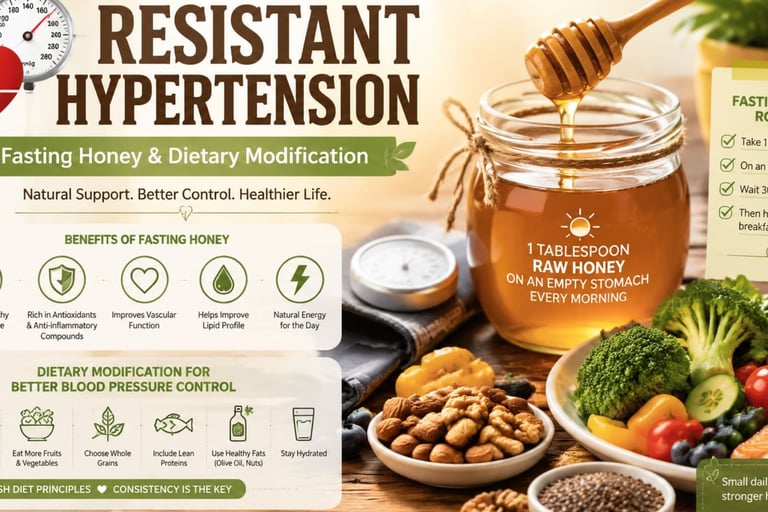
Incorporating natural honey into the diet.
Treating High Blood Pressure with Fasting and Dietary Modification
Intermittent fasting and dietary modification can significantly help lower high blood pressure, especially when combined.
🔬 What Science Says
Intermittent Fasting Lowers Blood Pressure:
A study on the 5:2 diet (fasting two days a week with calorie restriction) showed a greater reduction in systolic blood pressure compared to continuous calorie restriction.
After 12 weeks, the average systolic BP in the fasting group reached 123.78 mmHg compared to 127.62 in the continuous restriction group.
AI analysis of different fasting patterns found that Intermittent Energy Calorie Restriction (IECR) combined with low carbohydrates was most effective in lowering BP by 5 mmHg or more, especially when paired with flexible fasting.
How it works:
Metabolic Switching: After hours without food, the body depletes sugar stores and starts burning fat, reducing inflammation and improving insulin sensitivity.
Weight Loss: Losing excess weight (especially visceral fat) relieves pressure on the heart and blood vessels.
🍽️ Dietary Modification: The DASH Diet
The DASH (Dietary Approaches to Stop Hypertension) diet is the most recommended by the US National Institutes of Health.
What to Increase:
Potassium: Bananas, potatoes, spinach, dried apricots (balances sodium and relaxes blood vessels).
Magnesium: Nuts, seeds, oats, leafy greens (helps dilate blood vessels).
Calcium: Low-fat milk, yogurt, sardines (supports vessel contraction and relaxation).
Fiber: Whole grains, legumes, vegetables (improves cholesterol and weight).
Plant Protein: Legumes, nuts (a healthy alternative to red meat).
What to Decrease:
Sodium: Less than 2,300 mg daily (ideal: 1,500 mg).
Fatty red meats.
Sweets and sugary drinks.
Tropical oils (coconut oil, palm oil).
Saturated fats.
📋 Integrated Daily Model (Fasting + DASH)
16:8 System (16 hours fasting, 8 hours eating window):
Break Fast (12:00 PM): Green salad + 2 boiled eggs + 1 slice of whole-grain bread + low-fat yogurt.
Snack (3:30 PM): Handful of nuts (almonds, walnuts) + an apple.
Dinner (7:00 PM): Grilled fish (salmon/tuna) + brown rice + steamed vegetables + olive oil.
Suhoor Tips (for Ramadan fasting):
Boiled eggs + low-fat yogurt + whole-grain bread.
Avoid pickles and salty foods.
Drink adequate amounts of water.
⚠️ Important Warnings
Consult your doctor first: Especially if taking BP medications, as fasting may lower BP too much when combined with drugs.
Do not stop medication without consulting a doctor: Fasting is a complement to treatment, not a substitute.
Avoid prolonged fasting (24+ hours): It can be dangerous and trigger the body to store fat.
Continuous hydration: Drink plenty of water even during fasting.
Avoid salty foods when breaking the fast: They cause sudden BP spikes.
📊 Evidence Summary
5:2 Intermittent Fasting: Significant BP reduction, High level of evidence (recent studies).
16:8 Intermittent Fasting: Good reduction, Medium-High level of evidence.
DASH Diet: Clear reduction, Very High level of evidence (globally recommended).
Combination of Fasting + DASH: Best results, best clinical practice.
Conclusion
Intermittent fasting (especially 16:8 or 5:2) combined with the DASH diet represents a powerful approach to naturally lowering high blood pressure.
However, you must always consult your doctor before starting, especially if you are on BP medications or have other health conditions.
Frequently Asked Questions (FAQs): Fasting and Dietary Modification for High Blood Pressure
1. Can fasting lower blood pressure without changing the diet?
Yes,
fasting alone can lower BP due to metabolic switching, which reduces inflammation and improves insulin sensitivity.
However, results are much better when fasting is combined with a healthy diet like DASH.
Recent studies confirm that combining the two yields the best systolic BP reduction.
2. How long does it take for the body to start burning fat during fasting?
Usually between 8 to 12 hours after the last meal.
This is why the 16:8 system is effective—it gives the body at least 4 to 8 hours in a fat-burning state.
After this period, the body starts producing ketones, which improve vascular health and reduce inflammation.
3. Is prolonged fasting (more than 24 hours) better for blood pressure?
No,
it can be dangerous.
Prolonged fasting triggers a conservation mode, causing the body to store fat instead of burning it.
It may also cause a severe BP drop when combined with medication, leading to dizziness and fainting. 16:8 or 5:2 systems are the safest and most effective.
4. Can I exercise while fasting?
Yes,
but with caution.
Light to moderate exercise (like walking or yoga) is safe and beneficial during fasting.
Strenuous exercise is better postponed to the eating window to avoid hypoglycemia or hypotension.
Listen to your body; if you feel dizzy or severely fatigued, stop immediately.
5. What should I do if my blood pressure drops suddenly during fasting?
Break your fast immediately with a light snack containing simple carbohydrates (e.g., a date or natural juice).
Sit or lie down to prevent falling.
Drink slightly salted water (if you have no sodium restrictions).
Consult your doctor to adjust your medication dosage if you are on BP treatment.
6. Does the DASH diet require calorie counting?
Not necessarily.
DASH focuses more on food quality than quantity.
The goal is to increase vegetables, fruits, whole grains, and legumes, while reducing sodium and red meat.
However, if weight loss is also a goal, counting calories may help.
7. Can I drink coffee while fasting?
Black coffee without sugar or milk does not break the fast and is considered safe.
However, coffee may temporarily raise BP in some individuals.
If you notice your BP rising after coffee, reduce the amount or switch to green tea.
8. How long does it take to see tangible results?
With adherence to intermittent fasting and the DASH diet, improvements in blood pressure can be noticed within 4 to 12 weeks.
Studies show improvement begins gradually and increases over time.
Consistency is the key.
9. Is fasting suitable for diabetic patients with high blood pressure?
Diabetic patients must consult a doctor before starting fasting.
Fasting can affect blood sugar levels and may require medication dosage adjustments.
With medical supervision, fasting can be safe and beneficial for type 2 diabetes
.
10. What is the best time to fast if I am taking blood pressure medication?
It depends on the medication type.
Some are taken in the morning, others in the evening.
It is best to consult your doctor to determine the optimal fasting schedule that aligns with your medication times.
The doctor may need to adjust the dose or type of medication to avoid severe hypotension during fasting.
11. Is sea salt or Himalayan salt better than regular table salt?
No,
regarding blood pressure impact, there is no fundamental difference.
All types of salt contain sodium. Sea salt may contain trace minerals, but they do not offset sodium's effect on blood pressure.
The goal is to reduce total sodium intake, regardless of the salt type.
12. Can I drink plenty of water while fasting?
Yes,
it is highly recommended.
Water does not break the fast and helps:
Maintain blood volume and prevent hypotension.
Reduce hunger sensations.
Support kidney function in eliminating excess sodium.
13. Does fasting affect cholesterol as well?
Yes,
intermittent fasting usually improves cholesterol ratios:
Lowers LDL (bad cholesterol).
Raises HDL (good cholesterol).
Reduces triglycerides.
This is an added benefit, as high cholesterol and high blood pressure often coexist.
14. What is the difference between intermittent fasting and continuous calorie restriction?
study showed that intermittent fasting (5:2) led to a greater reduction in systolic BP compared to continuous calorie restriction.
The reason is the metabolic switching that occurs only during prolonged fasting periods, which is not achieved by continuous calorie reduction.
15. Can I take dietary supplements while fasting?
Supplements without calories (e.g., magnesium, potassium, vitamins) are safe during fasting.
Fat-soluble supplements (e.g., Omega-3) are best taken with meals.
Supplements that cause nausea on an empty stomach should be taken at break-fast.
Consult your doctor before adding any supplements, especially potassium and magnesium, as they may interact with BP medications.
Remember: Fasting and dietary modification are powerful tools, but they are not a substitute for medical treatment.
Always consult your doctor before making any lifestyle or medication changes.
====================================================================================================================================================================================================
🍯 Resistant Hypertension: Fasting, Honey, and Dietary Modification
What is it?
Blood pressure that remains above 130/80 mmHg despite taking 3 medications + a diuretic.
Fasting:
Study on 1,610 patients: 70% returned to normal BP.
Reduces BP by 4–37 mmHg.
Improves the microbiome and reduces weight.
Honey:
20 grams/day during fasting as an energy source.
Antioxidants improve blood vessel health.
It is a complement, not a replacement for treatment.
Dietary Modification:
Salt reduction: The most powerful intervention (drop of 22.7/9.1 mmHg).
DASH Diet: Vegetables, fruits, whole grains, fish.
Avoid: Fatty meats, full-fat dairy, sweetened beverages.
⚠️ Warning:
Consult your doctor before starting.
Do not stop medications abruptly.
Monitor your blood pressure daily.
SEO Metadata
Meta Title (SEO):
🍯 Resistant Hypertension: Can Fasting, Honey, and Dietary Modification Help?
Meta Description (SEO):
Discover how intermittent fasting, natural honey in moderation, and dietary modification may support the control of resistant hypertension, backed by scientific evidence and the importance of continuing medical treatment.
Focus Keywords:
Resistant hypertension, fasting and blood pressure, honey and blood pressure, dietary modification, high blood pressure treatment, intermittent fasting, heart health.
SEO Keywords:
High blood pressure, treatment-resistant hypertension, therapeutic fasting, intermittent fasting, natural honey, heart health, blood pressure improvement, healthy diet, DASH diet, sodium reduction, potassium, chronic inflammation, insulin resistance, healthy lifestyle, heart disease prevention, blood pressure control, therapeutic nutrition, vascular diseases, raw honey, metabolic health.
Hashtags:
#BloodPressure #Hypertension #ResistantHypertension #Fasting #IntermittentFasting #TherapeuticFasting #Honey #NaturalHoney #HealthyNutrition #HeartHealth #DietarySystem #ReduceSalt #HealthyLifestyle #PreventionIsBetterThanCure #Health #Nutrition #HealthyBloodPressure #MetabolicHealth #HealthyLifestyle #HeartHealth
====================================================================================================================================================================================================
🧠 Why are women more prone to Alzheimer's? And the role of fasting and the Quran?
Why are women more prone to Alzheimer's?
Shocking Numbers:
Two-thirds of Alzheimer's patients in the US are women (out of 7.4 million, 4.5 million are women vs. 2.9 million men).
A woman's lifetime risk at age 45 is 1 in 5, compared to 1 in 10 for men.
A woman in her 60s is twice as likely to develop Alzheimer's as she is to develop breast cancer.
Scientific Reasons:
Longer Lifespan: This is the primary reason. Women live longer than men, and Alzheimer's is an age-related disease. As more women reach older age groups (90+), the number of female patients increases.
Hormonal Changes (Menopause): Recent studies indicate that changes in a woman's brain during menopause may affect the risk of the disease. There is a link between declining estrogen levels and changes in brain glucose metabolism.
Genetic Factors (APOE4 Gene): Studies found that the APOE4 gene (the most significant genetic risk factor for Alzheimer's) increases risk more in women:
Woman with one copy of the gene: 4x the risk.
Woman with two copies: 10x the risk.
Man with one copy: Almost no increased risk.
Man with two copies: Only 4x the risk.
Social and Cultural Factors: Lower education levels in previous generations of women, disparities in healthcare access, and psychosocial factors related to caregiving (women make up 60%+ of caregivers).
🌙 The Role of Fasting in Alzheimer's Prevention
What Scientific Research Says:
Reducing Beta-Amyloid Accumulation: Animal studies show that calorie restriction (intermittent fasting) is linked to reduced accumulation of beta-amyloid protein, the primary pathological marker of Alzheimer's.
Improving Vascular Health: Vascular dysfunction plays a crucial role in Alzheimer's disease, and intermittent fasting enhances vascular health and reduces inflammation.
Resetting the Circadian Rhythm: A recent study found that time-restricted eating (18 hours fasting, 6 hours eating) helped:
Reset circadian rhythms (biological clock).
Reduce beta-amyloid plaques.
Reduce brain inflammation.
Improve memory in Alzheimer's-model mice.
Activating Autophagy: Intermittent fasting activates autophagy (cellular cleanup) by activating AMPK and suppressing mTOR, which helps remove toxic proteins from the brain.
Increasing Insulin Sensitivity: Fasting improves insulin sensitivity, which is important because insulin resistance is linked to an increased risk of dementia.
📖 The Role of Quran Recitation in Brain Protection
Cognitive and Neurological Benefits:
Strengthening Memory and Brain Functions: Memorizing the Quran enhances the brain's ability to adapt to new situations and helps strengthen both short-term and long-term memory. It protects against the effects of aging on cognition, such as dementia and Alzheimer's.
Activating Multiple Brain Regions: Reciting the Quran activates brain regions associated with language, memory, and emotional processing, enhancing neuroplasticity.
Reducing Stress and Anxiety: The rhythmic and calming tones of recitation reduce stress, improve focus and mental concentration, and support overall mental health.
Improving Sleep: Reciting or listening to the Quran before sleep creates a calm atmosphere that improves sleep quality, which is vital for brain health and repair.
Enhancing Self-Discipline: Committing to a daily recitation routine enhances time management, patience, self-control, and discipline.
💡 Summary of Preventive Recommendations for Women
🍽️ Fasting: Intermittent fasting (16:8 or 18:6) with medical consultation.
📖 Quran: Daily routine for recitation and memorization (even one page a day).
🏃♀️ Exercise: 150 minutes per week of moderate physical activity.
🥗 Nutrition: Mediterranean diet.
😴 Sleep: 7–8 hours of quality sleep.
👥 Socializing: Maintaining active social relationships.
🧠 Mental Stimulation: Learning new skills and regular reading.
⚠️ Important Note
Intermittent fasting and Quran recitation are supportive preventive factors, not a cure for Alzheimer's.
Researchers still need large-scale human studies to confirm the benefits of fasting.
You must consult a doctor before starting any fasting regimen, especially for women in menopause or those with chronic diseases.
"Prevention is better than cure" — These three factors (understanding the causes + fasting + Quran recitation) form an integrated approach to maintaining brain health.
================================================================================================================================================================================

Get in touch
Address
Cairo Al Rehab
Contacts
+20 109 405 2056
hassanalwarraqi@h-k-e-m.com