
Health is a crown on the heads of the healthy that only the sick can see.



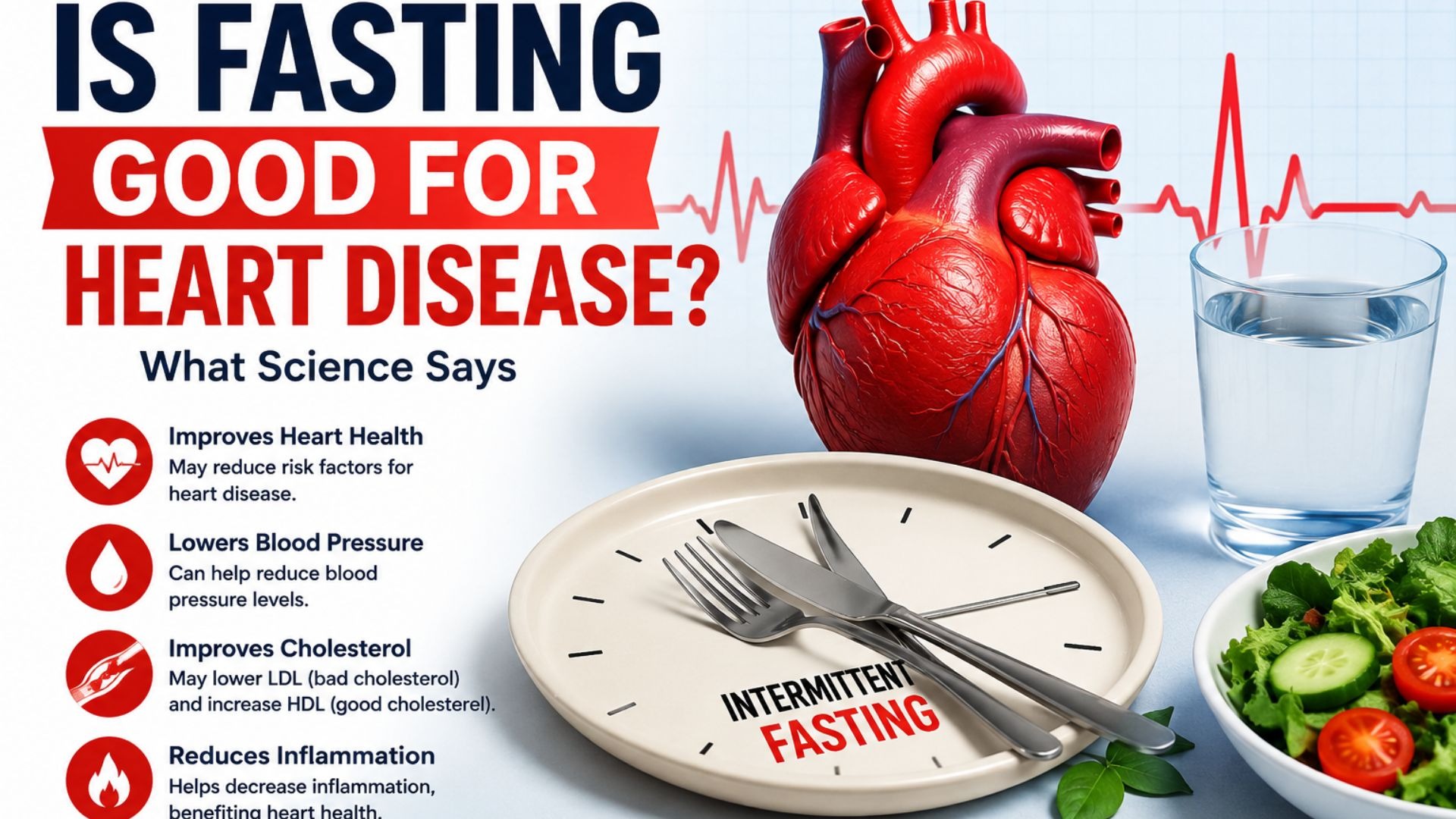
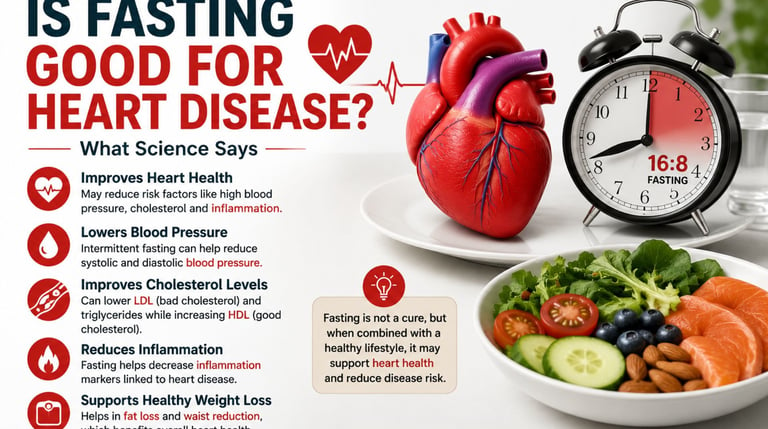
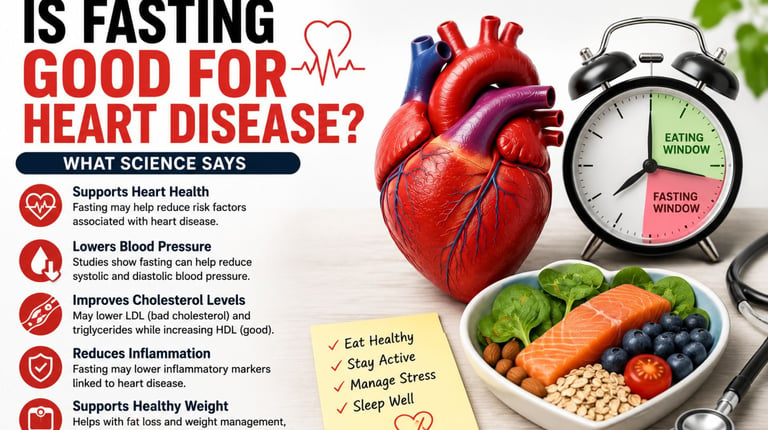
💓Is Fasting Good for Heart Disease?
Can fasting improve heart disease? Discover how intermittent fasting affects blood pressure, cholesterol, inflammation, insulin sensitivity, and heart health.
FASTINGHEAT DISEASES
Dr Hassan Al Warraqi
6/16/202611 min read
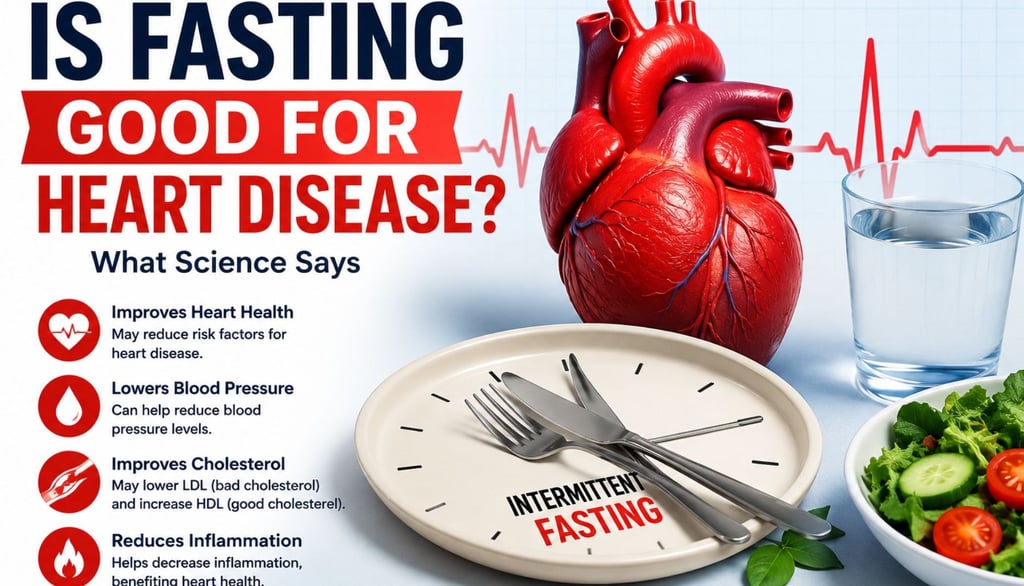
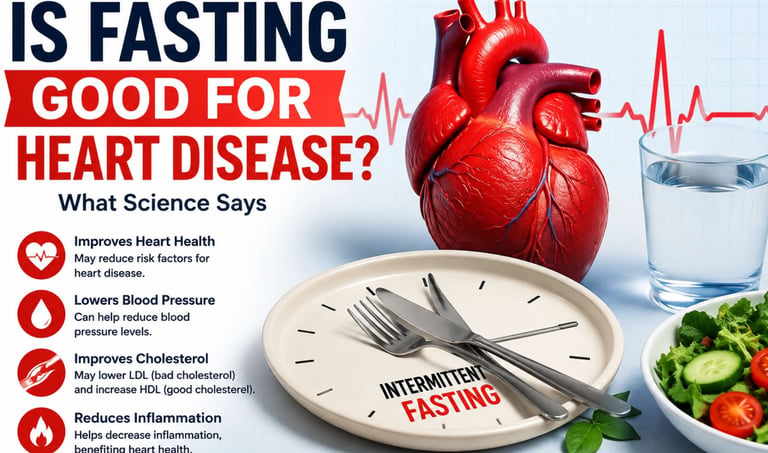
💓Is Fasting Good for Heart Disease?
Can fasting improve heart disease? Discover how intermittent fasting affects blood pressure, cholesterol, inflammation, insulin sensitivity, and heart health.
The Ultimate Science-Backed Guide to Cardiovascular Wellness 🫀🌙
Heart disease remains the leading cause of death globally, making cardiovascular protection a top priority for millions.
While a balanced diet, regular exercise, and quality sleep are the foundational pillars of heart health, fasting is rapidly emerging as a powerful, science-backed metabolic intervention to optimize cardiovascular wellness.
Improved insulin sensitivity reduces the risk of developing metabolic syndrome — a cluster of conditions (high blood pressure, high blood sugar, excess abdominal fat, abnormal cholesterol) that raises heart disease risk by up to 300%.
But how exactly does taking a scheduled break from eating protect your heart?
It’s not just about calorie restriction.
Let’s dive into the clinical evidence and explore the profound cellular and metabolic shifts that occur when you fast.
❤️ The Science: 4 Profound Ways Fasting Protects Your Heart
✅ 1. Lowers Oxidative Stress & Triggers Autophagy (Cellular Cleanup)
Oxidative stress and chronic inflammation are the primary drivers of atherosclerosis (clogged arteries) and cardiovascular aging.
When you fast for extended periods, you trigger a remarkable cellular repair process called autophagy—a "housecleaning" mechanism where cells clear out damaged proteins and dysfunctional components.
The Heart Benefit: This significantly reduces free radical damage and lowers systemic inflammatory markers like C-reactive protein (CRP), creating a healthier, less inflammatory environment for your blood vessels to heal and regenerate.
✅ 2. Reverses Insulin Resistance & Stabilizes Blood Sugar
Insulin resistance is a major, often hidden, risk factor for both type 2 diabetes and heart disease.
When you eat continuously, your insulin levels remain chronically elevated, leading to vascular damage and arterial stiffening.
The Heart Benefit: Fasting gives your pancreas a much-needed break, drastically lowering baseline insulin levels. This improves cellular insulin sensitivity, stabilizes blood sugar, and prevents glycation—a process where excess sugar physically damages and stiffens blood vessel walls.
✅ 3. Melts Visceral Fat & Builds Metabolic Flexibility
Not all fat is created equal.
Visceral fat—the dangerous fat stored deep around your abdominal organs—is highly inflammatory and directly impairs heart function.
The Heart Benefit: Fasting shifts your body from burning glucose to burning stored fat (ketosis).
This metabolic switch effectively targets stubborn visceral fat.
Furthermore, it builds metabolic flexibility—your heart and body's ability to seamlessly switch between fuel sources, reducing the daily metabolic burden on your cardiovascular system.
✅ 4. Optimizes Blood Pressure & Transforms
Cholesterol Profiles
Cardiometabolic markers are highly responsive to fasting protocols.
Studies indicate that intermittent fasting doesn't just lower numbers; it improves the quality of your blood lipids.
The Heart Benefit: Fasting helps lower resting blood pressure by improving endothelial (blood vessel) function.
Crucially, it shifts LDL cholesterol from small, dense particles (which easily penetrate artery walls and cause plaque) to large, buoyant particles (which are harmless), while simultaneously reducing heart-attack-linked triglycerides.
🕒 Choosing Your Protocol: 3 Fasting Methods for Heart Health
Not sure where to start?
Here are the most common, scientifically validated methods utilized for metabolic and cardiovascular health:
16/8 Method (Time-Restricted Eating): Fasting for 16 hours and eating within an 8-hour window (e.g., 12 PM to 8 PM). Excellent for beginners, highly sustainable long-term, and great for daily blood sugar regulation.
Circadian Fasting (Early TRE): Aligning your eating window with daylight hours (e.g., 8 AM to 4 PM). This aligns with your body's natural circadian rhythm, peaking insulin sensitivity in the morning and drastically improving blood sugar control and sleep quality.
5:2 Diet: Eating normally for five days and restricting calories (500-600) for two non-consecutive days. Ideal for those who prefer flexibility or struggle with daily time restrictions.
🥗 What to Eat: Maximizing Benefits During Your Window
Fasting is only half the equation; what you eat during your window dictates your cardiovascular results.
To maximize heart health:
Prioritize Anti-Inflammatory Foods: Focus on Omega-3 rich fatty fish (salmon, sardines), extra virgin olive oil, leafy greens, and polyphenol-rich berries.
Maximize Fiber: Aim for 30+ grams of fiber daily from legumes, seeds, and vegetables to bind and excrete excess cholesterol.
Break Your Fast Strategically: Never break a fast with refined carbs or sugar. Start with high-quality protein and healthy fats (e.g., eggs and avocado) to prevent a massive blood sugar spike that negates your fasting benefits.
Hydrate with Electrolytes: Drink plenty of water, black coffee, or unsweetened tea. A pinch of high-quality sea salt can help maintain blood pressure and prevent fasting headaches.
⚠️ Crucial Safety Precautions: Fasting with Chronic Conditions
Fasting is a powerful metabolic intervention, and its effects can be profound.
Many individuals managing complex health histories report remarkable clinical improvements after adopting a fasting lifestyle.
However, because fasting rapidly improves blood chemistry, it requires careful medical management.
🛑 Important Medical Note for Specific Conditions:
If you are managing diabetes, hypertension, hypercholesterolemia, or have a history of cardiovascular events such as a stroke or hemiplegia, you must consult your cardiologist or primary care physician before starting or changing your fasting protocol.
The Risk of Hypoglycemia: If you take blood sugar-lowering medications or insulin, fasting can cause your blood sugar to drop to dangerously low levels.
The Risk of Hypotension: If you take blood pressure medications, the natural blood-pressure-lowering effects of fasting can cause your pressure to drop too low, leading to dizziness, fainting, or falls (which is especially dangerous for those with a history of stroke or mobility issues like hemiplegia).
Medication Adjustment: Because fasting works so effectively, your doctor may need to proactively reduce or adjust your medication dosages to prevent dangerous over-correction. Never alter or stop your prescribed medications independently.
📊 How to Track Your Cardiovascular Progress
Don't just guess if fasting is working for your heart; track the data.
Ask your doctor to monitor these specific biomarkers before and 3–6 months into your fasting journey:
Fasting Insulin & HbA1c: To track insulin sensitivity and long-term blood sugar control.
hs-CRP (High-Sensitivity C-Reactive Protein): The gold standard for tracking systemic vascular inflammation.
Advanced Lipid Panel: Look beyond total cholesterol. Ask for ApoB, Triglycerides, and LDL Particle Size/Number.
Resting Blood Pressure & Heart Rate: Track your daily morning vitals.
💡 The Bottom Line
Fasting isn’t a magic bullet, but when paired with a nutrient-dense, whole-foods diet, regular movement, and professional medical guidance,
it is an invaluable tool for longevity and heart health.
By giving your cardiovascular system scheduled periods of rest, repair, and metabolic reset, you can fundamentally reshape your heart disease risk profile.
💬 Join the Conversation!
Have you incorporated intermittent fasting into your lifestyle to improve your metabolic or heart health?
What clinical benefits have you noticed in your own blood work or daily energy, and what challenges have you faced on your journey?
Share your personal experience and insights in the comments below! Your journey could be the exact insight someone else needs today. 👇
Conclusion
Intermittent fasting represents a robust, evidence-based strategy for improving cardiovascular longevity.
By addressing the root metabolic drivers of heart disease—inflammation, insulin resistance, and visceral adiposity—it provides the heart with the necessary recovery time to repair and thrive.
When integrated with a whole-foods diet and healthy lifestyle practices, fasting serves as a powerful tool for optimizing blood pressure and lipid profiles.
❓ Frequently Asked Questions (FAQ) About Fasting and Heart Health
1. How long does it take to see cardiovascular benefits from intermittent fasting?
The timeline for heart health improvements varies based on your starting metabolic health, but clinical studies show a clear progression:
1–4 Weeks: You may notice early improvements in resting blood pressure, reduced bloating, and decreased systemic inflammation (lower CRP levels).
4–8 Weeks: Fasting insulin levels drop significantly, and insulin sensitivity improves. Many people also see a 15–20% reduction in fasting triglycerides.
3–6 Months: More profound changes occur, including shifts in LDL cholesterol particle size (from small/dense to large/buoyant), significant visceral fat loss, and measurable improvements in endothelial (blood vessel) function.
2. Can intermittent fasting help lower high blood pressure?
Yes. Fasting is highly effective at lowering blood pressure through multiple mechanisms: it reduces insulin levels (which signals the kidneys to excrete excess sodium and water), decreases sympathetic nervous system ("fight or flight") activity, and improves the flexibility of your arteries.
⚠️ Crucial Safety Note: If you are already taking antihypertensive (blood pressure) medications, fasting can cause your blood pressure to drop too low (hypotension).
This can lead to dizziness or fainting. You must work with your doctor to proactively reduce your medication dosages as your natural blood pressure improves.
3. Does fasting raise or lower cholesterol?
Fasting generally improves your overall lipid profile, but the effects depend on the specific markers:
Triglycerides: Consistently decrease by 20–30%.
HDL (Good) Cholesterol: Typically increases or remains stable.
LDL (Bad) Cholesterol: Total LDL may stay the same or slightly increase in some individuals, but fasting dramatically improves LDL particle size. It shifts LDL from "small, dense" particles (which cause plaque) to "large, buoyant" particles (which are harmless). It also lowers ApoB, a much more accurate marker for heart disease risk than standard LDL.
4. Is fasting safe if I have a history of stroke or hemiplegia?
Many individuals with a history of stroke successfully use fasting to manage the root metabolic causes of cardiovascular disease—namely diabetes, hypertension, and hypercholesterolemia.
Improving these markers is vital for preventing secondary strokes.
However, safety and fall prevention are paramount.
Because fasting naturally lowers blood pressure and blood sugar, combining it with standard medications can cause sudden dizziness or fainting.
For someone with hemiplegia or mobility challenges, a fall can be devastating.
You must only fast under strict medical supervision so your doctor can carefully taper your blood pressure and diabetes medications to prevent dangerous drops.
5. Can I take my heart, diabetes, or blood pressure medications while fasting?
You should never stop taking prescribed medications without a doctor's order, but your dosages will likely need to change.
Because fasting rapidly improves insulin sensitivity and lowers blood pressure, taking your usual dose of diabetes medication (like insulin or sulfonylureas) can cause severe, life-threatening hypoglycemia (low blood sugar).
Similarly, taking full-dose blood pressure medication while fasting can cause dangerous hypotension.
Work with your physician to adjust the timing and dosage of your medications to align safely with your fasting window.
6. What is the best fasting protocol for cardiovascular health?
For most people, especially beginners, the 16:8 Time-Restricted Eating (TRE) method is the most sustainable and effective.
Fasting for 16 hours and eating within an 8-hour window provides excellent benefits for blood sugar and blood pressure without being overly stressful on the body.
For those looking to maximize metabolic and heart health benefits, Circadian Fasting (Early TRE)—where you eat earlier in the day (e.g., 8 AM to 4 PM)—is considered the gold standard, as it aligns with your body's natural peak insulin sensitivity.
7. Will fasting cause muscle loss, including heart muscle?
No. A common myth is that fasting burns muscle for fuel.
In reality, short-term fasting triggers a spike in Human Growth Hormone (HGH)—sometimes increasing by up to 5x—which actively preserves lean muscle mass.
Furthermore, the heart muscle is highly adaptable and actually thrives on the ketones produced during fasting, which are a highly efficient, clean-burning fuel source for cardiac tissue.
To ensure you preserve skeletal muscle, simply ensure you eat adequate, high-quality protein during your eating window.
8. Does black coffee or tea break a fast, and are they good for the heart?
No, black coffee and plain tea do not break a fast (as long as there is no sugar, milk, or cream).
In fact, they are highly beneficial for cardiovascular health during a fast. Coffee and green tea are packed with polyphenols and antioxidants that reduce oxidative stress, promote autophagy (cellular cleanup), and support healthy blood vessel function.
Just be mindful of your caffeine intake if you are sensitive to it or if it elevates your heart rate.
9. Why do I feel dizzy or lightheaded when I fast? Is it dangerous?
Mild hunger or fatigue is normal in the first few weeks as your body adapts to burning fat (metabolic flexibility).
However, dizziness, lightheadedness, or feeling faint when standing up is NOT normal and is usually a sign of hypotension (low blood pressure) or hypoglycemia (low blood sugar).
The Fix: First, ensure you are drinking enough water and getting adequate electrolytes (a pinch of sea salt in water can help).
If you are on blood pressure or diabetes medications, this dizziness is a major red flag that your medication dose is now too high for your fasted state.
Contact your doctor immediately to adjust your medications.
Disclaimer
The FAQs provided above are for educational purposes only and do not substitute for professional medical advice.
If you have a history of stroke, hemiplegia, diabetes, or hypertension, always consult your cardiologist or primary care physician before beginning a fasting regimen or altering your medication schedule.
================================================================================================================================================================================
🚨Can Fasting Improve heart disease?
🚨 Can Fasting Improve Heart Disease? The Science-Backed Truth 🫀📉
The short answer is YES—but not in the way a pharmaceutical drug does. Fasting doesn’t just mask the symptoms of heart disease; it targets and reverses the root metabolic drivers that cause cardiovascular damage in the first place.
While heart disease is often treated as an inevitable part of aging, modern metabolic science shows that the cardiovascular system is highly responsive to the timing of our meals.
Here is exactly how strategic fasting can improve, and in many cases help reverse, the progression of heart disease.
🛑 How Fasting Attacks the Root Causes of Heart Disease
Heart disease is rarely just a "cholesterol problem." It is a metabolic crisis driven by insulin resistance, chronic inflammation, and oxidative stress. Fasting acts as a powerful intervention across all these fronts:
✅ 1. Reverses Insulin Resistance (The #1 Driver)
Chronically high insulin levels damage the endothelial lining of your blood vessels, making them stiff and prone to plaque buildup. Fasting gives your pancreas a break, dropping insulin levels to their baseline. This allows your cells to resensitize to insulin, halting the vascular damage caused by metabolic syndrome and type 2 diabetes.
✅ 2. Transforms Your Cholesterol Profile
Fasting doesn't just lower total cholesterol; it changes the physical structure of it. It shifts your LDL from small, dense particles (which easily penetrate artery walls and cause heart attacks) to large, buoyant particles (which are harmless). It also drastically lowers triglycerides and raises protective HDL.
✅ 3. Lowers Blood Pressure Naturally
By lowering insulin, fasting signals your kidneys to excrete excess sodium and water. Combined with reduced sympathetic nervous system (stress) activity and improved arterial flexibility, fasting can significantly lower both systolic and diastolic blood pressure.
✅ 4. Triggers Autophagy (Cellular Cleanup)
During a fast, your body initiates autophagy—a process where cells "eat" and recycle damaged components. In the cardiovascular system, this means clearing out dysfunctional mitochondria, reducing oxidative stress, and lowering systemic inflammation (CRP levels), allowing your blood vessels to heal.
🧠 Fasting with a History of Stroke, Diabetes, or Hypertension
For individuals managing complex health histories—such as a history of stroke, hemiplegia, diabetes, hypertension, and hypercholesterolemia—fasting can be profoundly life-changing. Many patients report dramatic clinical improvements, reduced brain fog, better mobility, and a decreased reliance on medications after adopting a fasting lifestyle.
However, there is a massive catch: Medication Management.
Because fasting is so effective at lowering blood sugar and blood pressure, taking your standard doses of diabetes or hypertension medications while fasting can cause dangerous over-correction (severe hypoglycemia or hypotension).
Hypotension (Low Blood Pressure): Can cause dizziness or fainting, which is especially dangerous for individuals with hemiplegia or a history of stroke, as it increases the risk of devastating falls.
Hypoglycemia (Low Blood Sugar): Can lead to confusion, weakness, or medical emergencies.
The Golden Rule: If you have a history of cardiovascular events, you must fast under the direct supervision of a knowledgeable physician. Your medication dosages will likely need to be proactively reduced or eliminated as your metabolic health improves.
💡 The Bottom Line
Fasting is not a magic wand, but it is one of the most powerful, scientifically validated tools we have to improve heart disease. By shifting your body out of constant "storage and damage" mode and into "repair and regeneration" mode, you give your cardiovascular system the exact environment it needs to heal.
Have you or a loved one used fasting to manage or improve heart disease, diabetes, or blood pressure? What changes did you see in your lab work or daily life?
Share your story in the comments below! Your experience could inspire someone else to take control of their heart health. 👇
#HeartDisease #ReverseHeartDisease #IntermittentFasting #CardiovascularHealth #MetabolicHealth #InsulinResistance #StrokeRecovery #Hemiplegia #BloodPressureControl #FastingBenefits #Autophagy #HeartHealthJourney #LifestyleMedicine #PreventiveCardiology
Tags
Heart Disease, Heart Health, Intermittent Fasting, Therapeutic Fasting, Cardiovascular Health, Blood Pressure, Cholesterol, Inflammation, Insulin Resistance, Weight Loss, Metabolic Health, Preventive Medicine, Healthy Lifestyle, Wellness, Nutrition
Hashtags
#HeartHealth #HeartDisease #IntermittentFasting #Fasting #CardiovascularHealth #TherapeuticFasting #MetabolicHealth #HealthyLifestyle #BloodPressure #Cholesterol #Inflammation #InsulinSensitivity #WeightLoss #PreventiveMedicine #Nutrition #Wellness #Longevity #HealthEducation #LifestyleMedicine #EvidenceBasedMedicine
===============================================================================================================================================================================================================================
🐝💉 Bee Venom as a Natural Remedy: Between Myths and Scientific Facts
🔬 The Truth: Bee venom contains active compounds like melittin, which possess anti-inflammatory and immunomodulatory properties.
✅ May Help With:
Relieving certain types of pain and inflammation.
Supporting some cases of arthritis.
Improving certain symptoms as an adjunct therapy under medical supervision.
❌ Common Myths:
Bee venom cures all diseases.
It is safe for everyone without exception.
It replaces conventional medical treatment.
⚠️ Important Warning:
Bee venom can cause severe allergic reactions, including anaphylactic shock. Therefore, it must only be used under the strict supervision of a specialist.
🌿 Conclusion:
Bee venom shows promising therapeutic potential in specific cases, but it is not a magic cure. Research is ongoing to accurately determine its benefits and limitations. 🐝🔬💚

Get in touch
Address
Cairo Al Rehab
Contacts
+20 109 405 2056
hassanalwarraqi@h-k-e-m.com