
Health is a crown on the heads of the healthy that only the sick can see.



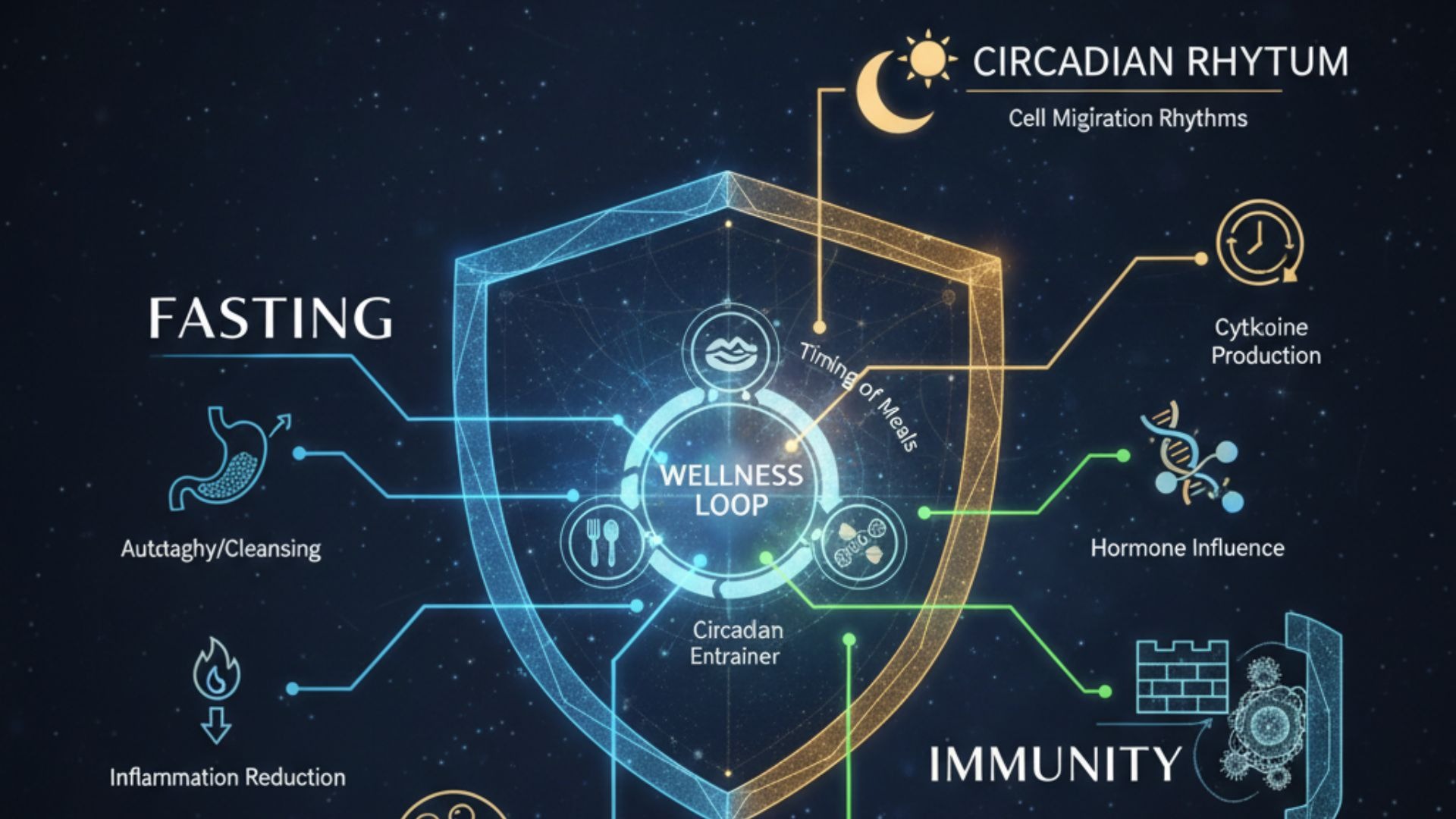
🛡️Fasting,Circadian Rhythm,and Immunity🌙
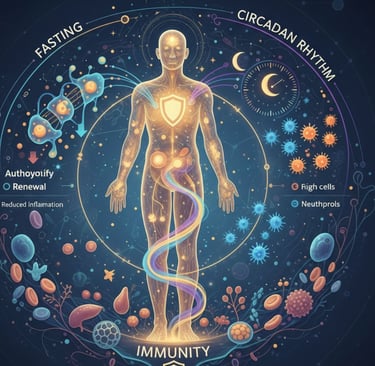
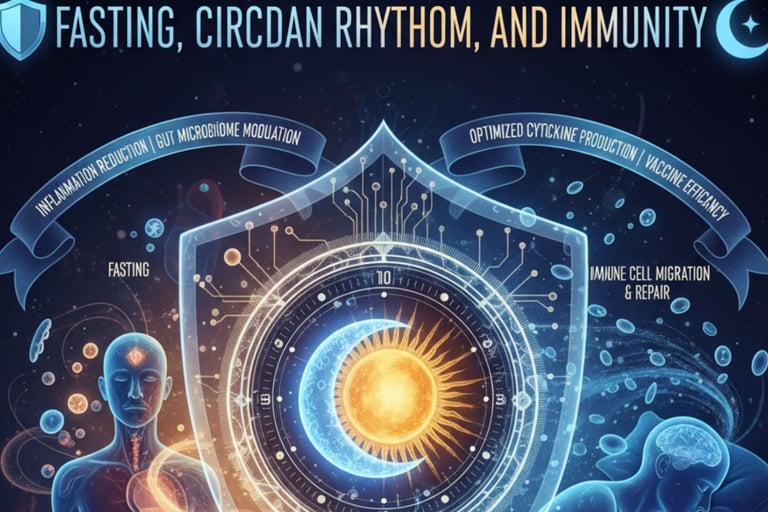
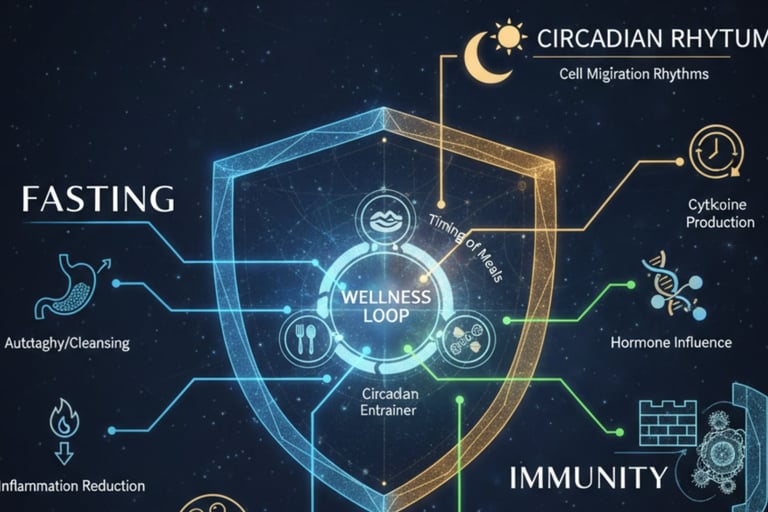
Discover how Circadian Fasting supports immune health by aligning with your body's biological clock, reducing inflammation, improving metabolism, and promoting cellular repair
FASTINGGENERAL CIRCADIAN RHYTHM
Dr Hassan Al Warraqi
6/18/202610 min read
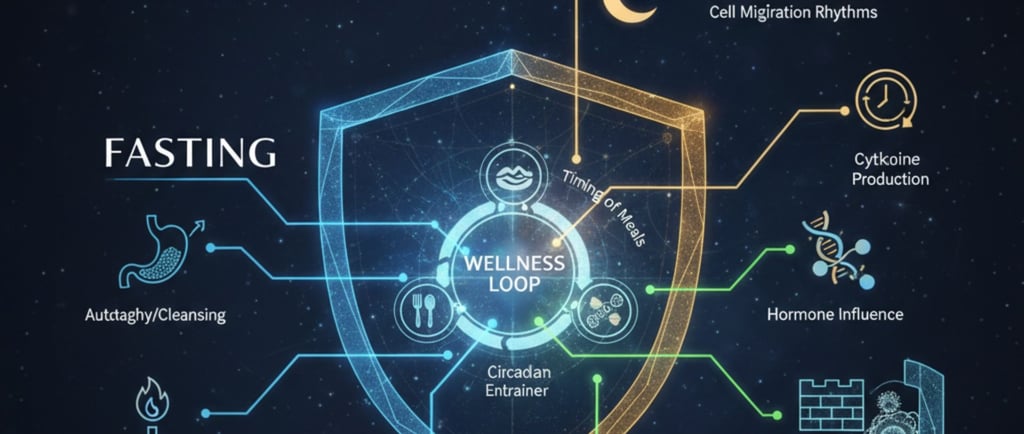
🛡️Fasting,Circadian Rhythm,and Immunity🌙
Discover how Circadian Fasting supports immune health by aligning with your body's biological clock, reducing inflammation, improving metabolism, and promoting cellular repair
Fasting and Immunity: Discover how Circadian Fasting supports the immune system, reduces inflammation, and improves metabolic health based on the latest scientific evidence.
Circadian Fasting is one of the most harmonious fasting patterns with the body's natural rhythm, focusing on eating during daylight hours and fasting at night.
Research indicates that this pattern can enhance immune efficiency when practiced in a balanced way.
Amid growing interest in health and wellness, Circadian Fasting has emerged as a promising dietary strategy whose benefits extend far beyond weight management to include enhancing vital body functions, most notably supporting the immune system.
This fasting pattern aligns with the body's natural daily rhythms, allowing it the opportunity to restore balance and repair at the cellular level.
This approach is based on a simple yet profound idea:
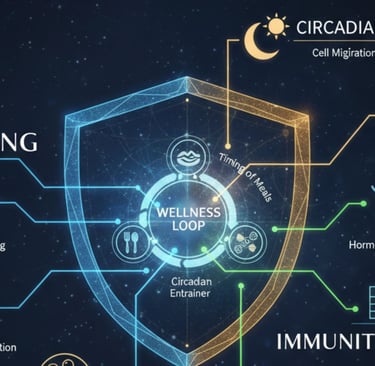
our bodies follow an internal biological clock that regulates most physiological processes, including hormone secretion, energy metabolism, and immune cell activity.
When we eat at times that align with this clock, we enhance the body's ability to digest and absorb nutrients, reduce inflammation, and improve immune function.
This article aims to explore the relationship between Circadian Fasting and the immune system, based on the latest scientific evidence.
How Does Circadian Fasting Affect Immunity?
Recent studies show that Circadian Fasting affects the immune system through several complex and interconnected mechanisms, including:
1. Reducing Chronic Inflammation
Chronic inflammation is a major factor that weakens the immune system and increases the risk of chronic diseases such as diabetes, heart disease, and stroke.
Circadian Fasting helps lower inflammatory markers such as Interleukin-6 (IL-6) and Tumor Necrosis Factor-alpha (TNF-α), supporting immune response balance and reducing systemic inflammation.
Research has also indicated that intermittent fasting can reduce neuroinflammation and protect against age-related cognitive decline.
Furthermore, reducing chronic inflammation lightens the burden on immune cells, allowing them to focus on defending against infections rather than managing a continuous inflammatory state.
2. Improving Gut Health
A large part of the immune system is linked to gut health, where gut microbes play a crucial role in regulating the immune response.
The digestive tract is home to over 70% of the immune system's cells, making gut health a pivotal factor in overall immunity.
The digestive rest periods during fasting give the gut a chance to restore balance, promote the growth of beneficial bacteria, and improve the function of the intestinal barrier, which positively reflects on immune efficiency.
Fasting also helps reduce the leakage of harmful molecules from the gut into the bloodstream—a phenomenon known as "leaky gut"—which is one of the main triggers of chronic inflammation.
3. Regulating the Circadian Clock and Immune Cell Activity
Immune cell activity synchronizes with the body's daily rhythm, and the circadian clock plays a pivotal role in regulating immune responses.
Studies show that immune cells—such as T-cells and Natural Killer (NK) cells—fluctuate in number and activity throughout the day.
Eating at the right times, in line with the circadian clock, can improve immune cell performance and enhance their ability to fight infections.
For example, the immune response against viruses is more effective at certain times of the day, and eating at the wrong times may weaken this response.
4. Improving Metabolic Health and Cellular Renewal
Fasting helps improve insulin sensitivity and regulate blood sugar levels, which positively reflects on immune efficiency.
Chronically high blood sugar levels—as seen in diabetes—weaken the immune response and increase the risk of infection.
Fasting also stimulates cellular renewal processes, such as Autophagy, which removes damaged cells and renews healthy ones, including immune cells.
Autophagy is a vital process where the body "cleans" damaged cells and recycles their components, preventing the buildup of toxins and maintaining immune cell function.
Studies have shown that fasting can stimulate the production of new immune cells, boosting and strengthening the immune system.
This process is particularly important with aging, as the production of new white blood cells declines.
Does Fasting Always Boost Immunity?
Not necessarily.
While balanced fasting can support immunity, excessive or prolonged fasting, malnutrition, or a deficiency in essential proteins, vitamins, and minerals can weaken the immune response and increase the risk of infection.
It is very important to practice fasting mindfully and responsibly.
People with chronic health conditions—such as diabetes, high blood pressure, high cholesterol, or a history of stroke—must be especially cautious and adopt a gradual approach under medical supervision.
For Best Results
To maximize the benefits of Circadian Fasting for immune support, it is recommended to follow these guidelines:
Eat a balanced diet rich in protein: Protein is essential for building and repairing immune cells.
Diversify protein sources between lean meats, fish, eggs, legumes, and nuts.
Eat plenty of vegetables and fruits:
They provide the vitamins, minerals, and antioxidants necessary for immune function.
Focus on diverse colors—orange, dark green, red, purple—to ensure a variety of nutrients.
Stay well-hydrated: Drinking enough water supports overall body functions, including immunity.
It is recommended to drink 2-3 liters daily, increasing the amount during fasting periods.
Get enough sleep: Good sleep is vital for regulating the circadian clock and immune function.
Aim for 7-9 hours of sleep daily, ensuring you sleep at regular times.
Exercise moderately: Regular exercise boosts circulation and supports the immune system. Brisk walking, yoga, or light resistance training are preferred.
How to Practically Apply Circadian Fasting
To effectively apply Circadian Fasting, multiple models can be followed, where the numbers indicate fasting hours versus eating hours:
12/12: 12 hours fasting / 12 hours eating. Suitable for beginners, easy to apply.
14/10: 14 hours fasting / 10 hours eating. An intermediate step, recommended to start with.
16/8: 16 hours fasting / 8 hours eating.
The most common model, highly effective for immunity.
It is preferable to start with shorter fasting periods and gradually increase them.
For example, you can start by eating between 8 AM and 8 PM (12/12 model), then gradually narrow the window to between 10 AM and 6 PM (16/8 model).
Fasting Period: Abstaining from any calories, while allowing water, unsweetened tea, and black coffee.
Eating Period: Consuming healthy, balanced meals rich in essential nutrients.
Additional Practical Tips
Break your first meal slowly: Start with a light meal, then move to larger ones.
Avoid processed foods: Focus on whole, unprocessed foods.
Eat balanced meals: Every meal should contain protein, fiber, healthy fats, and complex carbohydrates.
Avoid late-night eating: It is preferable to finish your last meal 3-4 hours before bedtime.
Conclusion
Current evidence suggests that Circadian Fasting may indirectly support immune system health by reducing inflammation, improving metabolism, enhancing circadian rhythm regularity, and promoting cellular renewal.
However, its impact depends heavily on the quality of nutrition and overall lifestyle, and it is not a substitute for medical treatment or proper nutrition.
It is always recommended to consult a healthcare professional before starting any new diet, especially for those with certain health conditions such as diabetes, high blood pressure, high cholesterol, or a history of stroke.
Correct and gradual application of Circadian Fasting—under medical supervision—can be a valuable tool in a sustainable health journey.
Frequently Asked Questions (FAQs) 🛡️ Fasting, Circadian Rhythm, and Immunity: The Secret to the Body's Natural Rhythm 🌙
1. What is the difference between Intermittent Fasting and Circadian Fasting?
Intermittent Fasting (IF) is a general term that includes any pattern alternating between eating and fasting periods.
Circadian Fasting is a specific type of IF that focuses on eating during daylight hours (when the body is most prepared for digestion) and fasting during nighttime hours (when the body is in repair and renewal mode).
The fundamental difference is that Circadian Fasting takes the body's internal biological clock into account, not just the number of hours.
2. Can people with diabetes practice Circadian Fasting?
Yes, but only under strict medical supervision. Circadian Fasting can improve insulin sensitivity and help regulate blood sugar levels.
However, diabetics—especially those taking blood sugar-lowering medications or insulin—must monitor their blood sugar continuously and adjust doses under a doctor's supervision to avoid severe hypoglycemia.
It is recommended to start gradually with the 12/12 model.
3. Is fasting safe for people with high blood pressure?
Circadian Fasting may help lower blood pressure by improving insulin sensitivity and reducing inflammation.
However, hypertension patients taking diuretics or ACE inhibitors should be cautious of changes in fluid and potassium levels.
It is recommended to consult a doctor and monitor blood pressure daily during the application period.
4. What is the effect of fasting on high cholesterol?
Studies indicate that Circadian Fasting may positively improve the lipid profile: it lowers LDL (bad) cholesterol and improves HDL (good) cholesterol.
This effect is partly due to improved metabolism and reduced inflammation.
However, prescribed medications must be continued, and fasting should not be relied upon as a substitute for treatment.
5. Can fasting be practiced after a stroke?
It depends on several factors: time elapsed since the stroke, severity of the injury, presence of hemiplegia, and current medications.
After a period of medical stability (usually 6-12 months), Circadian Fasting may be beneficial in reducing inflammation and improving metabolism.
However, explicit medical approval must be obtained before starting, especially if the patient is taking blood thinners (like warfarin) or medications for blood pressure and diabetes.
6. How does fasting affect immunity in the elderly?
With aging, the immune system naturally declines (a phenomenon known as Immunosenescence).
Circadian Fasting can help slow this process by reducing chronic inflammation (Inflammaging) and stimulating the production of new immune cells.
However, the elderly must be more cautious to avoid malnutrition.
7. What are the warning signs that fasting is harming immunity?
Watch for these signs and consult your doctor immediately:
Constant fatigue and weakness
Frequent infections (colds, mouth ulcers)
Slow wound healing
Excessive hair loss
Severe mood swings
Frequent dizziness or fainting
8. Can I drink coffee and tea during the fasting period?
Yes, black coffee and unsweetened tea are allowed during the fasting period and do not break the fast.
However, adding sugar, milk, or artificial sweeteners should be avoided.
Black coffee may help reduce appetite and promote autophagy.
9. How long does it take to see the results of fasting on immunity?
Results vary from person to person. Some improvements—such as reduced inflammation—may appear within 2-4 weeks of regular practice.
Improvements in immune cell renewal may take 3-6 months.
Consistency and proper nutrition are the most important factors.
10. Can I combine fasting and exercise?
Yes, but in moderation.
Light to moderate exercises (like walking or yoga) can be practiced during the fasting period.
Intense workouts are best done during the eating window or an hour before breaking the fast.
It is recommended to drink extra water.
11. What is the best time to start the 16/8 model?
The most common model is eating between 10 AM and 6 PM, and fasting from 6 PM to 10 AM. This timing aligns with the body's natural circadian rhythm.
It can be adjusted according to work and sleep schedules, but it is always preferable to avoid late-night eating.
12. Does fasting affect the timing of my medication?
It may require adjusting medication schedules. Medications that must be taken with food should be taken during the eating window.
Medications taken on an empty stomach can be taken at the beginning of the fasting period.
Do not change medication schedules without consulting your doctor.
Final Conclusion
Current evidence suggests that Circadian Fasting may indirectly support immune system health by reducing inflammation, improving metabolism, enhancing circadian rhythm regularity, and promoting cellular renewal.
However, its impact depends heavily on the quality of nutrition and overall lifestyle, and it is not a substitute for medical treatment or proper nutrition.
It is always recommended to consult a healthcare professional before starting any new diet, especially for those with certain health conditions.
===================================================================================================================================================================================
🛡️ Fasting, Circadian Rhythm, and Immunity: The Secret to the Body's Natural Rhythm 🌙
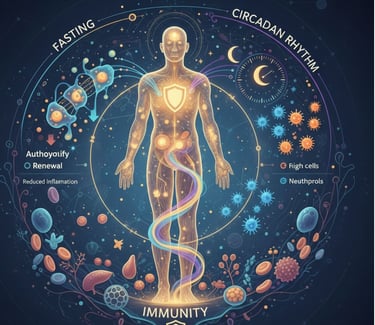
The human body operates on a circadian clock, an internal timer that regulates sleep, wakefulness, hormones, metabolism, and even immune system activity. When fasting aligns with this natural rhythm, it can achieve health benefits that go beyond simply abstaining from food.
🧬 How Does Fasting Affect Immunity?
✨ Regulates Immune Response: Helps support the normal performance of immune cells.
🔥 Reduces Inflammation: May help lower markers of chronic, low-grade inflammation, which is linked to many diseases.
🩸 Improves Metabolic Health: Enhances insulin sensitivity and helps stabilize blood sugar levels, supporting immune functions.
🦠 Supports Gut Health: Gives the digestive system a rest, helping maintain microbiome balance, a key element for immune health.
😴 Enhances Sleep: Regular sleep and fasting at appropriate times support the circadian clock and boost immune efficiency.
🌞 How to Benefit?
✔️ Eat during daylight hours.
✔️ Avoid late-night meals.
✔️ Ensure a balanced diet rich in protein, fiber, and healthy fats.
✔️ Drink enough water during the eating window.
✔️ Maintain regular sleep and moderate physical activity.
⚠️ Important Note
Despite its potential benefits, excessive or unbalanced fasting, or fasting accompanied by malnutrition, can weaken immunity. Those with chronic diseases, pregnant women, the elderly, and those taking regular medications should consult a doctor before following any fasting regimen.
💡 Conclusion
Circadian Fasting may support the immune system by improving the body's daily rhythm, reducing inflammation, and enhancing metabolic and gut health. These benefits are maximized when combined with proper nutrition, adequate sleep, and a healthy lifestyle.
SEO Keywords
Fasting and immunity, Circadian Fasting, therapeutic fasting, immunity, inflammation, gut health, circadian rhythm, boosting immunity, healthy fasting, fasting and inflammation, immune system.
Hashtags
#FastingAndImmunity #Fasting #CircadianFasting #CircadianRhythm #Immunity #Health #Inflammation #GutHealth #TherapeuticFasting #HealthyNutrition #MetabolicHealth #HealthyLifestyle
==================================================================================================================================================================================
👃🍯 Nose Picking and Infection: Does Honey Have a Role?
🦠 How Does Nose Picking Contribute to Infection?
Repeated nose picking can lead to:
🔹 Small scratches in the sensitive nasal lining.
🔹 Transfer of bacteria and viruses from the hands into the nose.
🔹 Irritation of the mucous membranes and loss of part of their defensive function.
🔹 Increased risk of nasal vestibulitis and frequent nosebleeds.
Studies have found that some people carry bacteria like Staphylococcus aureus inside their noses, and frequent picking can increase the chances of transmitting it or causing localized infections.
🍯 Does Honey Help?
Natural honey contains compounds with properties that are:
✅ Antibacterial against certain types of bacteria.
✅ Antioxidant.
✅ Soothing for irritated tissues.
✅ Supportive of superficial wound healing.
Medical-grade sterilized honey has been used in some specific medical applications for wounds and burns under medical supervision.
⚠️ Can Honey Be Put Inside the Nose?
It is not recommended to put regular dietary honey inside the nose routinely for the following reasons:
❌ Its effectiveness as a standard treatment for nasal or sinus infections is not proven.
❌ It may cause irritation in some individuals.
❌ Unsterilized honey may contain impurities or unwanted microorganisms.
Therefore, the medically recommended methods for moisturizing and cleaning the nose remain:
Nasal saline solutions.
Proper hydration.
Treating allergies and infections as directed by a doctor.
🌿 Where Might Honey's Role Be?
Honey can be beneficial by:
🍯 Consuming it as a natural food within a balanced diet.
🍯 Helping to soothe the throat if nasal inflammation is accompanied by a cough or throat irritation.
🍯 Benefiting from its nutritional and antioxidant properties.
🌟 Conclusion
Nose picking may increase the risk of infection and localized inflammation due to causing scratches and transferring germs into the nose.
While honey has antimicrobial and tissue-soothing properties, it is not a proven or recommended treatment for placing inside the nose to treat infections or sinusitis. 👃🍯
💡 The best prevention is: Stopping nose picking, maintaining hand hygiene, and moisturizing the nose with saline solutions when needed. 🩺🌿



Get in touch
Address
Cairo Al Rehab
Contacts
+20 109 405 2056
hassanalwarraqi@h-k-e-m.com