Health is a crown on the heads of the healthy that only the sick can see.


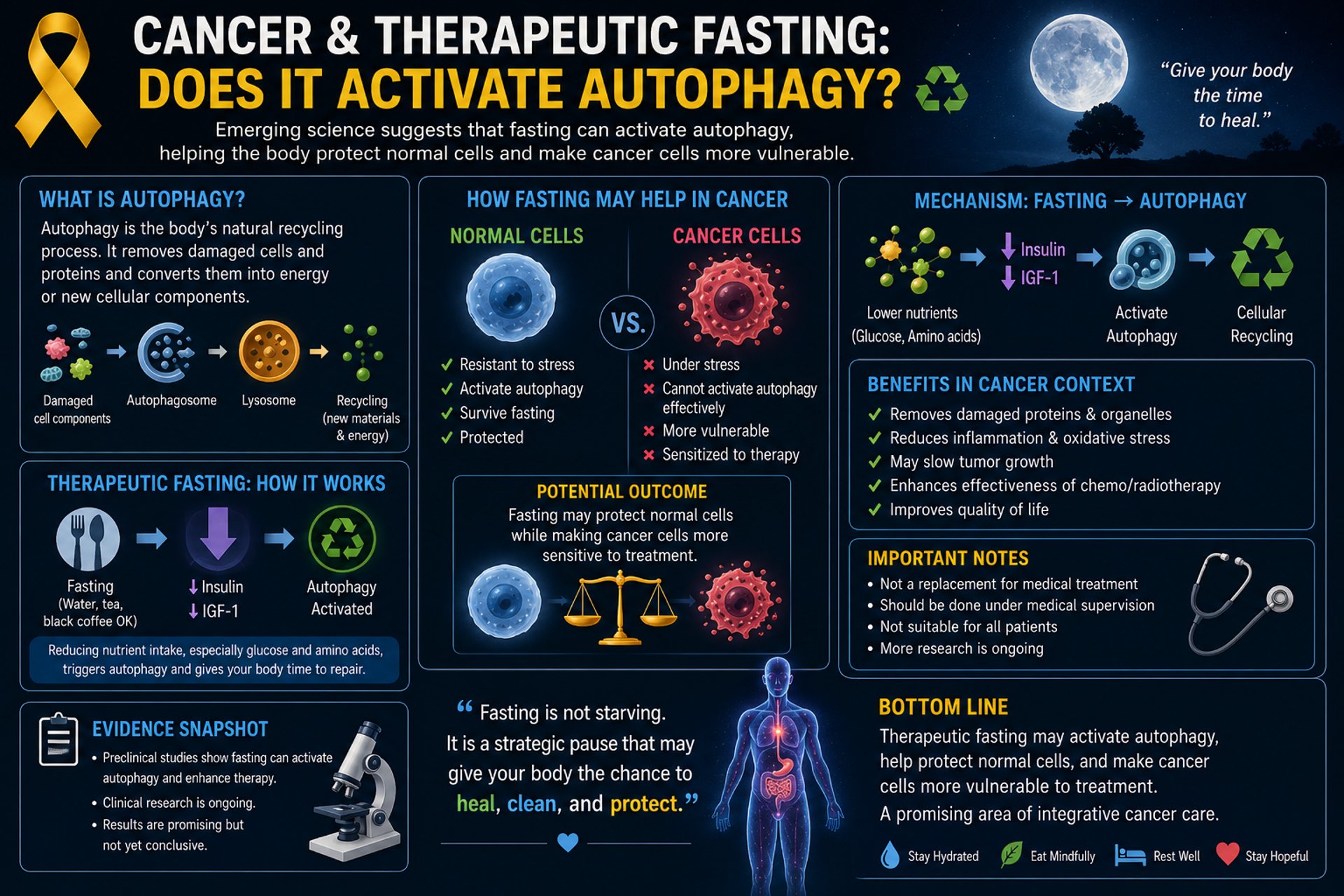
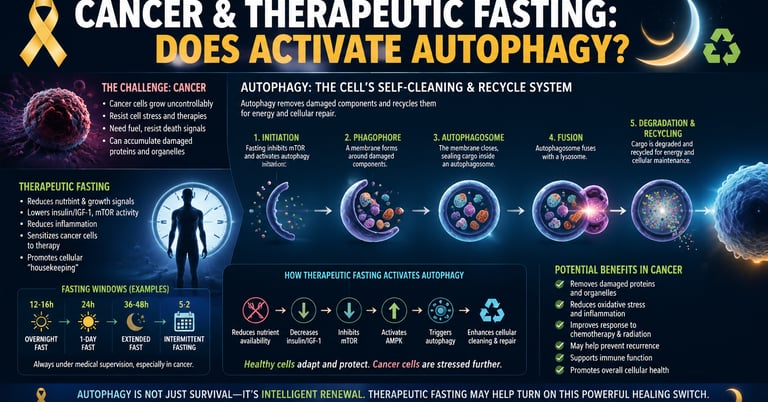
🎗️🌙Cancer&Therapeutic Fasting:Does Activate Autophagy?
A guide on therapeutic fasting, the Fasting-Mimicking Diet (FMD), Differential Stress Resistance (DSR), and the benefits of fasting for cancer patients.
CANCERFASTINGSUGARGENERAL
Dr Hassan Al Warraqi
5/21/2024
🎗️🌙Cancer&Therapeutic Fasting:Does Activate Autophagy?♻️
A guide on therapeutic fasting, the Fasting-Mimicking Diet (FMD), Differential Stress Resistance (DSR), and the benefits of fasting for cancer patients.
Does fasting cure cancer?
Evidence-based answers.
The Growing Role of Fasting-Based Dietary Interventions as a Supportive Strategy in Oncology
Research indicates that methods like intermittent fasting and fasting-mimicking diets may reduce the toxic side effects of chemotherapy, improve metabolic health, and stimulate autophagy to protect healthy cells.
While preliminary clinical data suggests these practices are generally safe and feasible, experts emphasize the need for caution to prevent malnutrition and muscle mass loss in at-risk patients.
Current findings suggest that severe caloric restriction may induce a "metabolic shock" that enhances the immune system's ability to fight tumors.
However, studies conclude that while fasting is a promising concept, larger-scale clinical trials are needed to establish standardized protocols and confirm long-term benefits.
Overall, this body of work highlights the transition from preclinical discoveries to evidence-based applications in cancer care.
How Does Fasting Protect Healthy Cells While Sensitizing Cancer Cells?
Fasting achieves a dual effect: protecting healthy cells and increasing the vulnerability of cancer cells through a phenomenon known as Differential Stress Resistance (DSR) and Differential Stress Sensitization (DSS).
This occurs because healthy and cancer cells respond to nutrient deprivation in entirely different ways.
Protecting Healthy Cells
When a person fasts, healthy cells enter a "maintenance mode" that prioritizes survival over growth. Key mechanisms include:
Drop in Growth Factors: Fasting significantly lowers blood insulin and Insulin-like Growth Factor-1 (IGF-1). This signals healthy cells to slow division and redirect energy toward cellular repair and protection.
Autophagy Activation: Nutrient deprivation triggers autophagy, a natural recycling process where cells break down damaged proteins and organelles. This helps healthy cells maintain homeostasis, clear potential toxins, and preserve genomic stability.
Oncogene Suppression: In healthy cells, fasting reduces the expression of certain oncogenes, such as RAS and the AKT signaling pathway, helping shield them from chemotherapy toxicity.
Sensitizing Cancer Cells
Cancer cells generally lack the flexibility to adapt to starvation due to their oncogenic mutations.
This leads to their sensitization via several pathways:
Inability to Adapt: Unlike healthy cells, cancer cells are often "locked" in a growth state due to mutations in pathways like PI3K/Akt/mTOR. They continue attempting rapid replication even when nutrients are scarce, leading to severe cellular stress.
Glucose Deprivation: Most cancer cells rely heavily on glucose for energy (the Warburg Effect). Fasting lowers blood glucose, effectively starving the tumor of its preferred fuel, while healthy cells easily switch to alternative fuels like ketones.
Increased Starvation Stress: The combination of nutrient deprivation and persistent growth signals makes cancer cells highly susceptible to DNA damage and oxidative stress caused by chemotherapy or radiation.
Immune Activation: Fasting-based diets can reduce immunosuppressive cells and increase the infiltration of activated T-cells into the tumor microenvironment, boosting the body's ability to attack the cancer.
In Summary
Fasting creates a metabolic environment that healthy cells interpret as a signal to protect themselves, while cancer cells view it as an insurmountable stressor, making them more vulnerable to anti-cancer treatments.
What is the Role of Autophagy in Protecting Healthy Cells?
Autophagy, a highly conserved intracellular degradation process, plays a vital role in protecting healthy cells by maintaining cellular homeostasis and ensuring cell integrity.
It acts as a natural recycling system.
1. Cellular Maintenance and Quality Control
Waste Clearance: Removes damaged cytoplasmic components, misfolded proteins, and protein aggregates.
Organelle Quality: Clears dysfunctional organelles, such as mitochondria damaged by reactive oxygen species (ROS), helping curb oxidative stress and chronic inflammation.
Cellular Homeostasis: By recycling macromolecules (glucose, fatty acids, amino acids), autophagy helps cells maintain energy balance, especially during energy deficits.
2. Cancer Prevention and Genome Stability
Tumor Suppression: In early or pre-cancerous stages, autophagy acts as a tumor suppressor by maintaining genome stability and preventing cancerous mutations.
Regulating Senescence: Helps regulate oncogene-induced cellular senescence by breaking down nuclear lamins.
Inflammation Control: Negatively regulates inflammasome activation and removes tumor-promoting factors, creating a less favorable environment for cancer growth.
3. Differential Stress Resistance (DSR)
Adapting to Fasting: When nutrients are scarce, healthy cells activate autophagy via sensors like AMPK while inhibiting growth pathways like mTOR.
Therapeutic Protection: This process is fundamental to DSR, protecting normal cells from the toxicity of high-dose chemotherapy or oxidative stress, while making cancer cells more vulnerable.
4. Protecting Long-Lived Cells
Neurons and Heart Cells: Autophagy is crucial for terminally differentiated, long-lived cells that cannot clear damaged components via cell division.
Neuroprotection: Prevents the accumulation of toxic proteins that cause neurodegenerative diseases like Alzheimer's and Parkinson's.
Cardiovascular Health: Protects heart tissue from age-related functional decline, ischemia, and cardiac hypertrophy.
5. Longevity and Aging
Anti-Aging Mechanism: Autophagy is a fundamental mechanism supporting longevity.
Preventing Dysfunction: Declining autophagy activity is closely linked to accelerated aging and the development of metabolic and neurodegenerative diseases.
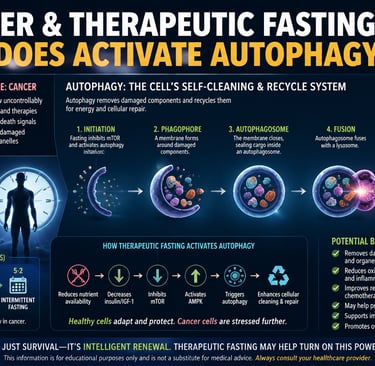
How Does Fasting Activate Autophagy?
When the body is deprived of nutrients during fasting, cellular signaling shifts:
Drop in Growth Sensors: Levels of mammalian target of rapamycin (mTOR), the nutrient availability sensor, decrease.
Activation of Energy Sensors: AMP-activated protein kinase (AMPK), the energy deficit sensor, activates, sparking autophagy.
Fasting Duration: Sources indicate this process may take anywhere from 12 hours to 4 days of fasting in humans to activate effectively.
Weakening and Sensitizing Cancer Cells
Unlike healthy cells, cancer cells struggle to adapt to fasting:
Severe Stress: While normal cells slow down, cancer cells try to keep dividing despite lack of food, making them prone to collapse.
Reduced Fuel: Fasting lowers glucose and growth factors (like IGF-1), the preferred sources for tumor growth, increasing cancer sensitivity to chemo/radiation.
Immune Activation: Studies show Fasting-Mimicking Diets (FMD) increase T-cell infiltration into the tumor to attack it.
The Challenge and Paradox in Cancer Treatment
Despite autophagy's preventive benefits, its role is complex:
A Double-Edged Sword: In early stages, it prevents cancer by cleaning cells. But in advanced stages, some cancer cells may hijack autophagy as a "survival mechanism" to compensate for intra-tumoral nutrient deprivation and resist therapy.
Ongoing Research: Current research focuses on how to use fasting or drugs to selectively regulate autophagy to kill cancer while protecting normal tissue.
Conclusion
Fasting is a powerful natural tool to activate autophagy, creating an environment that supports healthy cell repair and increases pressure on cancer cells, potentially improving treatment outcomes and reducing side effects.
What is the Required Fasting Duration to Trigger Autophagy?
Fasting duration is a critical factor in triggering autophagy, varying by organism and tissue response.
In Humans: Current scientific studies suggest autophagy typically begins after a period ranging from 12 hours to 4 days of continuous fasting.
In Animals (Mice): Conclusive evidence shows autophagy is remarkably stimulated after 24 to 48 hours of fasting.
Tissue Variation: The stimulatory effect of fasting varies by tissue; what liver cells need may differ from neurons or heart cells.
Therapeutic Purposes & Cancer
To ensure significant biological changes (like lowering IGF-1 to achieve DSR), clinical studies often use more intensive protocols:
Short-Term Fasting (STF): Typically lasting 24 to 72 hours.
Fasting-Mimicking Diet (FMD): Lasting 5 consecutive days to ensure the required metabolic effects are reached.
The Bottom Line: While autophagy may start as early as 12 hours for some, longer fasts (over 24 hours) show more consistent results in clinical studies for deep cellular recycling benefits.
Which Tissues Benefit Most from Autophagy?
Autophagy is most vital for tissues composed of long-lived, terminally differentiated cells:
1. Neurons (Brain and Nervous System)
Neurons benefit most because they do not divide; they cannot dilute damaged proteins/organelles via cell division.
Neuroprotection: Prevents toxic protein accumulation linked to Alzheimer's, familial Parkinson's, and ALS.
Environmental Stability: Intermittent fasting enhances autophagy in neurons, increasing resistance to neural stress.
2. Heart Cells (Cardiac Muscle)
Slowing Functional Aging: Activating autophagy slows age-related cardiac functional decline.
Reversing Hypertrophy: Studies show dietary interventions (like fasting) that stimulate autophagy can reverse age-related cardiac hypertrophy and protect against ischemia.
3. General Healthy Tissues (Pre-Cancer Stages)
Genetic Stability: Prevents cancerous transformations by clearing damaged mitochondria (which produce harmful ROS) and protecting DNA.
In Summary
While all cells benefit, the nervous and cardiovascular systems rely on it most heavily for long-term survival, as their cells cannot renew via continuous division.
Which Neurodegenerative Diseases Does Autophagy Help Prevent?
Autophagy plays a fundamental role in maintaining nervous system integrity, effectively preventing or delaying:
Alzheimer's Disease: Prevents the accumulation of toxic proteins (like amyloid-beta and tau) that cluster in neurons.
Familial Parkinson's Disease: Clears dysfunctional organelles and proteins that secrete neurotoxins.
Amyotrophic Lateral Sclerosis (ALS): Mutations in genes regulating autophagy are linked to an increased risk of ALS.
Why is Autophagy Vital Here?
Because neurons are "terminally differentiated" (non-dividing), they rely entirely on autophagy as a permanent "cleaning" and maintenance mechanism to clear biological waste.
Fasting boosts this, delaying disease onset.
Potential Side Effects of Fasting for Cancer Patients
Clinical studies show fasting-based interventions are generally safe and feasible, with side effects usually mild and transient.
However, risks must be considered:
1. Common Side Effects (Mild to Moderate)
Fatigue: Most common, rarely severe.
Headache: Noted in several studies, especially during FMD.
Hunger & Dizziness: Linked directly to caloric deficit.
Nausea/Vomiting: Reported in short-term fasting combined with chemotherapy.
Diarrhea: Observed in specific dietary integrations.
2. Major Medical Risks (Require Strict Caution)
Malnutrition: A primary concern; repeated fasting can worsen it, reducing treatment response.
Sarcopenia (Muscle Loss): A real risk linked to increased chemo toxicity and poor prognosis.
Sarcopenic Obesity: Unregulated fasting might ignore patients who are overweight but lack muscle mass, leading to negative outcomes.
3. Severity Statistics
In a large clinical trial of 101 patients, severe side effects related to FMD occurred in about 12.9%.
Weight loss from fasting is often recoverable during refeeding periods.
Medical Recommendations:
Fasting is NOT recommended for patients already suffering from malnutrition or at high nutritional risk.
Must be done within specific clinical protocols.
Beware of "misinformation" promoting extreme fasting without scientific backing.
Fasting-Mimicking Diet (FMD) Reduces Chemotherapy Side Effects
FMD reduces chemo toxicity through biological mechanisms centered on DSR:
1. The DSR Mechanism: Healthy cells enter "maintenance mode," protecting them from chemo. Cancer cells cannot adapt and collapse.
2. Protective Metabolic Changes: Lowering IGF-1 and glucose signals healthy cells to reduce division, protecting their DNA. Downregulates oncogenes (RAS, AKT).
3. Reduction of Specific Clinical Symptoms: Patients on FMD (e.g., 4-day cycles every 21 days) showed reduced severe vomiting (Grade 3), reduced severe neutropenia (low white blood cells), and decreased fatigue.
4. Immune Support: Reduces immunosuppressive cells and increases active T-cell infiltration, preventing immune collapse.
Note: FMD must be applied under strict medical supervision to avoid sarcopenia.
Fasting Leads to a Significant Drop in IGF-1 and Blood Glucose
1. Effect on IGF-1:
FMD protocols record massive clinical drops in IGF-1.
In a 48-hour fast, IGF-1 dropped by 33%, while insulin dropped by up to 56%.
This drop signals healthy cells to enter "maintenance mode," protecting their DNA.
2. Effect on Glucose:
Starves the tumor (Warburg Effect).
Coordinates with low IGF-1 to inhibit the PI3K/Akt/mTOR pathway and activate autophagy.
3. Therapeutic Importance (DSR):
These metabolic shifts are responsible for DSR—shielding healthy tissue while sensitizing cancer cells.
What are Caloric Restriction Mimetics (CRMs)?
CRMs are drugs aiming to achieve the biological effects of fasting (like autophagy) without actual food deprivation or weight loss.
Key CRMs:
Hydroxycitrate: Stimulates autophagy to improve chemo efficacy.
Spermidine: Natural compound; depletes regulatory T-cells from the tumor environment.
Metformin: Activates AMPK (energy sensor), sparking autophagy.
Rapamycin: Inhibits mTOR (growth sensor), triggering autophagy.
Torin 1: Inhibits mTOR, mimicking starvation.
Mechanism
They trick the cell into believing it is nutrient-deprived, inhibiting growth (mTOR) and activating recycling (AMPK/Autophagy).
❓ Frequently Asked Questions (FAQs) 🎗️🌙
🩸 Blood Sugar, Insulin, and Fasting
Q1: Why does blood sugar rise during fasting even if I haven't eaten?
This is the "Biological Paradox" of fasting. The liver breaks down glycogen and creates new glucose (gluconeogenesis). In insulin-resistant individuals, the liver doesn't "hear" the insulin signal to stop, releasing glucose.
This is normal—not a failure of fasting.
Q2: What is the Dawn Phenomenon?
A natural rise in hormones (cortisol, glucagon, growth hormone) between 3:00–8:00 AM signals the liver to release glucose for waking up.
Insulin-resistant individuals see a morning spike. Management: Eat dinner early, reduce evening carbs, walk after dinner.
Q3: What is the Somogyi Effect?
A rebound high caused by a dangerous nighttime low.
Blood sugar drops too low → body releases emergency adrenaline/glucagon → liver dumps glucose → morning high.
Test: Check sugar at 2:00–3:00 AM.
If low, it's Somogyi. If normal/high, it's the Dawn Phenomenon.
Q4: Which fasting protocol is best for Type 2 Diabetes?
Best for Insulin Resistance (HOMA-IR) & BMI: Twice-a-week fasting (5:2).
Best for Fasting Blood Sugar: Continuous Caloric Restriction (CR).
Best for HbA1c: Periodic Fasting (PF).
Best for Adherence: Time-Restricted Eating (TRE) like 16:8.
Q5: Is fasting safe with diabetes medications?
NO—not without medical supervision. Fasting naturally lowers sugar.
Continuing normal doses of insulin or sulfonylureas risks severe hypoglycemia.
Doses must be adjusted by a doctor.
Q6: What are the warning signs to break a fast immediately?
Blood sugar < 70 mg/dL (tremors, sweating, confusion, rapid pulse).
Dizziness, lightheadedness, or fainting.
Chest pain, shortness of breath, or sudden severe headache.
Extreme weakness preventing basic tasks.
Q7: How many liters of water should I drink?
Minimum 1.5–2 liters daily. Dehydration concentrates blood glucose, causing falsely high readings.
For multi-day fasts, add sugar-free electrolytes (consult your doctor if you have hypertension).
Q8: How to safely break a long fast?
Your digestive system is rested, and insulin sensitivity is high.
Start: Bone broth or light vegetable soup.
Wait 30-60 mins, then: Small portion of easily digestible protein (eggs, steamed fish) + cooked non-starchy veggies.
Avoid for 24 hours: Sugars, refined carbs, heavy/fatty foods.
Q9: Is a slight morning sugar spike normal?
Yes, the Dawn Phenomenon. If it's moderately high (110–130 mg/dL) but drops during the day, it's physiological. If consistently >130 mg/dL, consult your doctor.
Q10: How often to get blood tests?
Every 3–6 months.
Check: HbA1c, Comprehensive Metabolic Panel (kidney/liver/electrolytes), Lipid Panel, CBC.
🧠 Stroke and Hemiplegia
Q11: Does fasting cause muscle loss, especially with hemiplegia?
Short-term fasting (<24-48h) increases Human Growth Hormone (HGH), which preserves muscle.
Prolonged, consecutive fasting may cause breakdown.
Protect muscle: Eat adequate protein during eating windows and do doctor-approved safe exercises for the affected side.
Q12: Does fasting cause dangerous drops in blood pressure upon standing?
Yes—orthostatic hypotension is common, especially with BP meds.
Because of hemiplegia, a fall could be catastrophic.
Stand up slowly, and ensure adequate salt/electrolytes if approved by your doctor.
Q13: How does fasting benefit my brain and recovery post-stroke?
Fasting boosts ketone production (a superior brain fuel that crosses the blood-brain barrier), activates autophagy (cellular cleaning), and reduces systemic inflammation and oxidative stress.
These are neuroprotective and may help prevent further vascular damage.
🎗️ Cancer and Fasting
Q14: Does fasting cure cancer?
No. There is no clinical evidence that fasting alone cures cancer.
It is a supportive strategy to enhance chemo and reduce side effects—strictly under medical supervision.
Q15: How does fasting protect healthy cells during chemo?
Via DSR. Healthy cells enter "maintenance mode," slowing division and activating repair.
Cancer cells, locked in "growth mode" by mutations, cannot adapt and become vulnerable.
Q16: What is the Fasting-Mimicking Diet (FMD)?
A 5-day, low-calorie program that mimics fasting physiology while providing limited nutrients.
It has shown promise in reducing chemo side effects (fatigue, nausea, neutropenia) and protecting healthy tissue.
Q17: What are the side effects of fasting for cancer patients?
Common: Fatigue, headache, hunger, dizziness, nausea.
Severe Risks: Malnutrition, sarcopenia (muscle loss), delaying treatment. Not recommended for malnourished patients.
Q18: How long to fast for autophagy?
In humans, usually 12 hours to 4 days. For cancer therapeutic protocols, 24–72 hours (STF) or 5 days (FMD) are commonly used in studies.
Q19: Can cancer cells use autophagy to survive?
Yes—this is the paradox. Early stage: prevents cancer.
Late stage: some tumors hijack autophagy as a survival mechanism to resist starvation and treatment.
Research is ongoing to control this selectively.
🍯 Honey and Natural Remedies
Q20: Is honey safe for diabetics?
Only in strict moderation.
It raises blood sugar, though slightly slower than refined sugar due to fructose.
Limit to 1 tsp max, consume with protein/fat to slow absorption, and monitor sugar.
Do not use as a sugar substitute without medical guidance.
Q21: Does honey cure cancer?
No.
No clinical evidence supports honey as a cancer cure. Some lab studies show it induces apoptosis, but this does not translate to a human cure
Q22: Does honey spoil?
Pure,
natural honey has an indefinite shelf life due to low moisture and high acidity.
However, contamination or added water can spoil it.
Q23: How to distinguish real from fake honey?
Real: Thick, flows slowly, crystallizes over time, doesn't dissolve instantly in cold water, floral scent.
Fake: Thin, flows quickly, never crystallizes, dissolves instantly, cheap price.
⚕️ General Health and Safety
Q24: What are normal blood sugar levels by age?
Age Group
Fasting (mg/dL)
Postprandial (mg/dL)
Infants (0–3 yrs)
60–110
60–180
Children/Teens (3–18)
70–140
70–180
Adults (19–60 yrs)
70–130 (Ideal: <100)
< 140
Seniors (60+ yrs)
70–110 (up to 120 ok)
< 150
Q25: Symptoms of High vs. Low Blood Sugar?
Hyperglycemia (High): Extreme thirst, frequent urination, fatigue, blurred vision, headache.
Hypoglycemia (Low): Tremors/sweating, rapid pulse, dizziness/confusion, weakness, excessive sweating.
Q26: Long-term complications of uncontrolled blood sugar?
Heart disease (heart attack, stroke), kidney failure (nephropathy), vision loss (retinopathy), nerve damage (neuropathy, foot ulcers), weakened immunity (frequent infections, slow wound healing).
Q27: What are Caloric Restriction Mimetics?
Drugs that mimic fasting biology without actual food deprivation.
Examples:
Metformin (activates AMPK), Rapamycin (inhibits mTOR), Spermidine, Hydroxycitrate.
Status: Experimental for long-term cancer treatment; natural fasting is currently preferred.
⚕️ Medical Disclaimer: All information is for educational purposes only. Always consult your healthcare provider before making changes to your diet, fasting routine, or medication—especially if you have diabetes, heart disease, a history of stroke, or cancer.
===============================================================================================================================================================================
⚡ Quick Summary Infographic
⚡ What is Autophagy?
Cellular cleaning mechanism that breaks down and recycles damaged proteins/organelles.
Starts: 16–24 hours of fasting.
Peaks: 24–48 hours of continuous fasting.
⚡ Does Fasting Cure Cancer?
❌ No. No clinical evidence.
✅ But: It enhances chemotherapy efficacy and reduces side effects.
Condition: Strict medical supervision only.
⚡ How Does Fasting Protect Healthy Cells?
DSR Mechanism (Differential Stress Resistance):
Healthy Cells: Enter "maintenance mode", slow division, activate repair.
Cancer Cells: Locked in "growth mode", keep multiplying, collapse under stress.
⚡ Why Do Cancer Cells Collapse?
Glucose Deprivation: They rely on sugar (Warburg Effect).
Low IGF-1: Their preferred growth factor drops by 33%.
Inability to Adapt: mTOR mutations prevent them from responding to starvation.
⚡ What is FMD?
Fasting-Mimicking Diet: 5 days, low-calorie. Mimics fasting physiology. Reduces chemo nausea, neutropenia, and fatigue. Increases T-cell tumor infiltration.
⚡ When is Fasting Dangerous?
🚫 Contraindicated for: Malnourished patients, during actual chemo infusion days, without medical supervision.
⚠️ Risks: Sarcopenia (muscle loss), delayed healing. 12.9% severe adverse events in one FMD study.
⚡ The Dangerous Paradox
Autophagy = A Double-Edged Sword:
Pre-Cancer: Prevents cancer (cleaning + DNA repair).
Established Tumor: May feed it! (Survival mechanism for cancer).
Solution: Ongoing research for selective regulation.
⚡ Therapeutic Fasting Durations
Touch Autophagy: 16–18 hours.
Effective Activation: 24–48 hours.
Clinical Studies: 24–72 hours (STF) or 5 days (FMD).
⚡ Fasting-Mimicking Drugs (CRMs)
Metformin: Activates AMPK.
Rapamycin: Inhibits mTOR.
Spermidine: Boosts immunity.
Hydroxycitrate: Stimulates autophagy.
Status: Experimental; natural fasting is currently superior.
⚡ Final Verdict
Fasting is not a miracle—but it's not a myth either.
✅ Prevention: Excellent for healthy individuals.
✅ Adjuvant Therapy: Promising under medical supervision.
❌ Alternative to Treatment: Absolutely rejected.
Top Benefiting Tissues: Brain and Heart (non-dividing cells).
SEO Keywords & Meta Tags:
Cancer and fasting, Autophagy, Therapeutic fasting, Fasting-Mimicking Diet, FMD, Differential Stress Resistance, DSR, Intermittent fasting, Fasting and chemotherapy, Benefits of fasting for cancer, Activating autophagy, How fasting protects healthy cells, Sensitizing cancer cells, IGF-1, AMPK, mTOR, Warburg effect, Short-term fasting, Chemotherapy side effects, Immune support for cancer, Caloric restriction mimetics, Metformin and cancer, Rapamycin and autophagy, Does fasting cure cancer, Fasting duration for autophagy, Fasting before chemotherapy pros and cons, Best fasting protocol for cancer patients 2026.
#Hashtags:
#CancerAndFasting #Autophagy #TherapeuticFasting #FMD #IntermittentFasting #DifferentialStressResistance #DSR #Chemotherapy #CancerCells #IGF1 #AMPK #mTOR #ImmuneSystem #Health #Nutrition #NaturalTherapy #CancerPrevention #HealthyLifestyle #2026 #CancerFasting #FastingMimickingDiet #MetabolicTherapy #CellularHealth
============================================================================================================
🐝💉 Bee Venom as a Natural Remedy: Between Myths and Scientific Facts
🔬 The Truth: Bee venom contains active compounds like melittin, which possess anti-inflammatory and immunomodulatory properties.
✅ May Help With:
Relieving certain types of pain and inflammation.
Supporting some cases of arthritis.
Improving certain symptoms as an adjunct therapy under medical supervision.
❌ Common Myths:
Bee venom cures all diseases.
It is safe for everyone without exception.
It replaces conventional medical treatment.
⚠️ Important Warning:
Bee venom can cause severe allergic reactions, including anaphylactic shock. Therefore, it must only be used under the strict supervision of a specialist.
🌿 Conclusion
Bee venom shows promising therapeutic potential in specific cases, but it is not a magic cure. Research is ongoing to accurately determine its benefits and limitations. 🐝🔬💚
==================================================================================================================================================================================




Get in touch
Address
Cairo Al Rehab
Contacts
+20 109 405 2056
hassanalwarraqi@h-k-e-m.com