
Health is a crown on the heads of the healthy that only the sick can see.



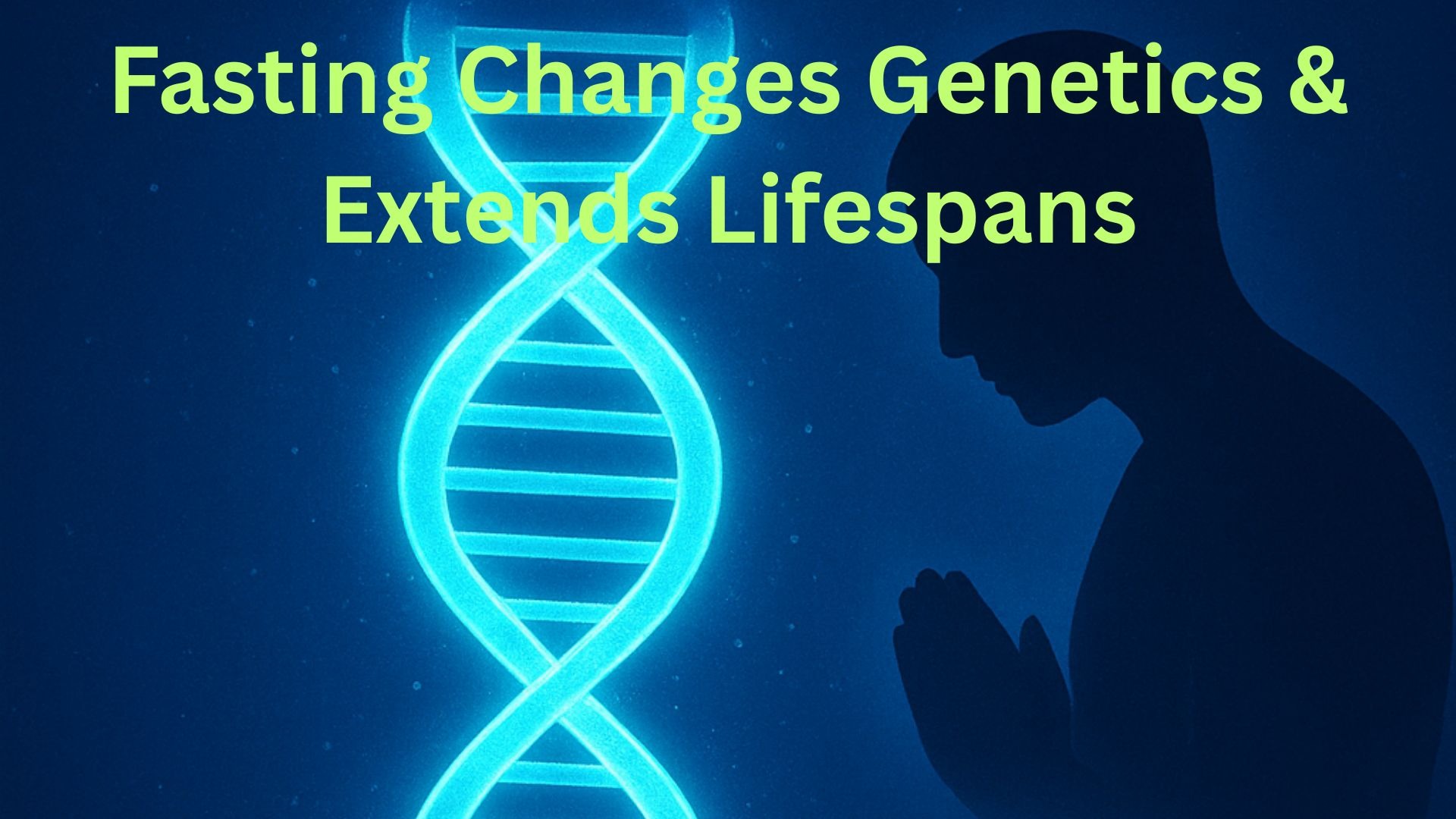
⏳ The Fasting : Can It Rewrite Your Longevity Genes? 🧬
Discover the profound effects of prolonged fasting on gene expression, autophagy, and longevity. Learn why voluntary Islamic fasting is highly beneficial, along with the crucial role of hydration and mineral intake. Explore how sirtuins, mTOR, and circadian genes contribute to disease prevention.
FASTINGGENE SCIENCE
Dr Hassan Al Warraqi
2/6/2025
🧬Fasting : Can It Rewrite Your Longevity Genes? 🕰️
Discover the profound effects of prolonged fasting on gene expression, autophagy, and longevity. Learn why voluntary Islamic fasting is highly beneficial, along with the crucial role of hydration and mineral intake. Explore how sirtuins, mTOR, and circadian genes contribute to disease prevention.
Fasting and Genes: How Intermittent Fasting Influences Genetic Expression for Health
Fasting reshapes gene activity, unlocking pathways tied to longevity, metabolism, and disease resistance.
Here’s how fasting interacts with your genes for SEO-optimized clarity:
1. Fasting and Gene Expression Changes
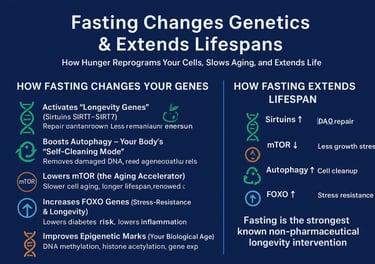
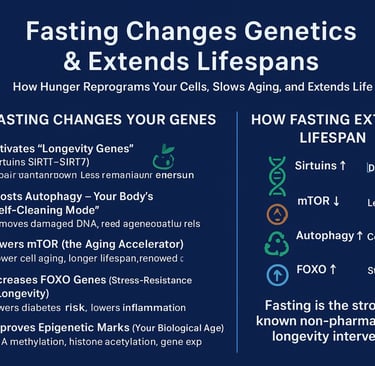
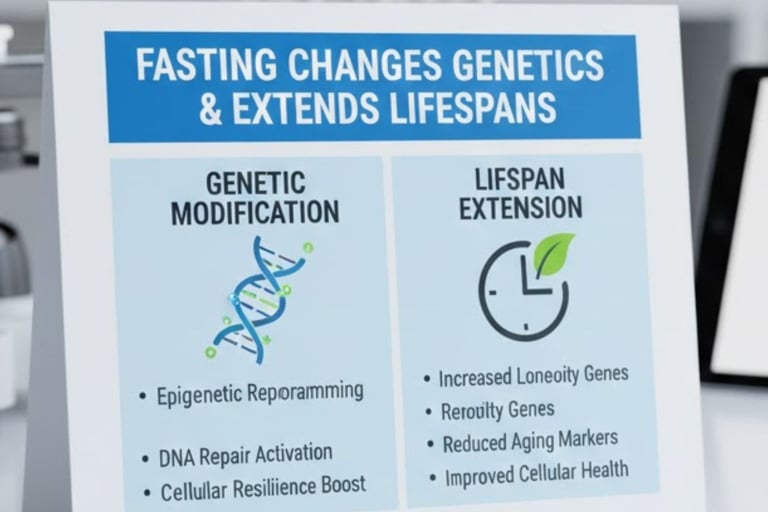
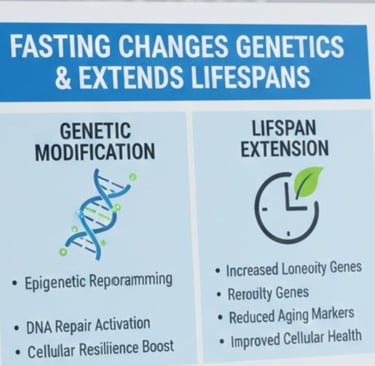
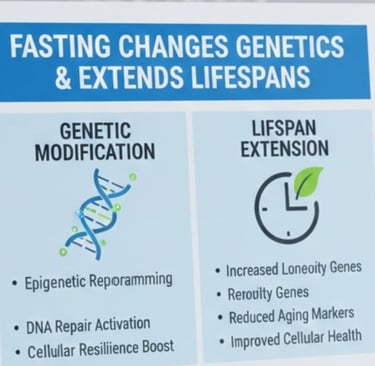
Fasting triggers shifts in gene expression, activating autophagy (ATG5, LC3) and mitochondrial efficiency while silencing fat-storage genes. This reprogramming enhances cellular repair and energy use.
2. Sirtuins (SIRT1/SIRT3) and Longevity
Fasting boosts NAD+ levels, activating sirtuins—proteins that regulate aging genes like FOXO3 and SOD2. These genes strengthen DNA repair, reduce inflammation, and extend cellular lifespan.
3. MTOR, AMPK, and Metabolic Genes
MTOR inhibition during fasting promotes autophagy and stress resilience.
AMPK activation fuels fat burning via PGC-1α and improves insulin sensitivity.
FOXO genes ramp up detoxification and antioxidant defenses.
4. Epigenetic Modifications
Fasting alters DNA methylation (reducing inflammatory genes like IL-6) and histone acetylation, silencing disease-linked genes while activating stress-resistance pathways.
5. Circadian Rhythm Genes (CLOCK/BMAL1)
Fasting syncs circadian genes, optimizing metabolic health, sleep cycles, and hormone balance—key for weight management and energy regulation.
6. Ketogenesis and Inflammation Control
Fasting activates ketogenesis genes (HMGCS2, BDH1) for fuel switching and suppresses pro-inflammatory genes (NF-κB), easing chronic inflammation.
7. Genetic Variability in Fasting Responses
FTO gene variants affect fat loss efficiency during fasting.
APOE4 carriers may see altered lipid metabolism.
PPARG/ADIPOQ genes influence insulin responses.
8. Longevity and Disease Prevention
Fasting upregulates Nrf2 (antioxidants), downregulates IGF-1 (aging), and may slow telomere shortening. It also suppresses cancer genes (MYC) and boosts BDNF for brain health.
Practical Tips for Genetic Optimization
Short fasts (12–16h): Boost autophagy.
Prolonged fasts (24h+): Deepen metabolic/epigenetic shifts.
Genetic testing: Personalize fasting for FTO, APOE, or metabolic risks.
Physiological Effects of Daily Fasting (Dawn to Sundown)
Daily fasting, initiated after a predawn meal (Suhoor) and concluded at sundown (Iftar), induces systemic metabolic and cellular adaptations.
Key outcomes include:
Upregulated Processes & Pathways
Cellular & Metabolic Homeostasis
DNA Repair: Enhanced activity of repair mechanisms (e.g., base excision repair, nucleotide excision repair).
Glucose Metabolism: Improved insulin sensitivity and glucose uptake via AMPK activation.
Lipid Metabolism: Mobilization of fatty acids, reduction of hepatic steatosis (fatty liver), and enhanced β-oxidation.
Cytoskeletal Remodeling: Facilitation of glucose transport (GLUT4 translocation), mitigating insulin resistance.
Systemic & Neurological Benefits
Immune System Modulation: Activation of autophagy, anti-inflammatory cytokine production (e.g., IL-10), and lymphocyte regeneration.
Cognitive Function: Neurotrophic factor upregulation (e.g., BDNF), synaptic plasticity, and reduced oxidative stress.
Circadian Clock Synchronization: Alignment of metabolic rhythms with circadian gene expression (e.g., CLOCK, BMAL1).
Neuropsychiatric Improvements
Reduction in depressive symptoms, schizophrenia severity, and bipolar disorder episodes via neurotransmitter regulation (e.g., serotonin, dopamine).
Disease Risk Suppression
Cancer Inhibition: Downregulation of pathways driving liver, breast, cervical, lung, colon, brain cancers, and drug-resistant leukemia.
Metabolic & Neurodegenerative Protection:
Serum Proteome Shifts: Elevated protective proteins against metabolic syndrome, inflammation, Alzheimer’s disease, and neuropsychiatric disorders.
Blood Pressure Regulation: Improved endothelial function and nitric oxide bioavailability.
Molecular Mechanisms
Fasting upregulated key regulatory proteins governing:
Glucose/lipid metabolism (AMPK, SIRT1),
Insulin signaling (IRS-1, PI3K/Akt),
Circadian rhythm (PER/CRY),
DNA repair (PARP, XRCC1),
Cytoskeletal dynamics (Rho GTPases),
Immune response (FOXO3, NF-κB inhibition).
Clinical Implications
These adaptations occurred without calorie restriction or significant weight loss,
highlighting fasting’s unique role in metabolic reprogramming and disease prevention. The serum proteome profile suggests therapeutic potential against:
Cancer (via apoptosis induction and oncogene suppression),
Metabolic Dysfunction (insulin resistance, dyslipidemia),
Neurodegeneration (amyloid-β clearance, tau phosphorylation inhibition).
Conclusion
Time-restricted fasting synchronizes metabolic, immune, and circadian systems, producing a protective biochemical milieu against chronic diseases.
Its efficacy independent of caloric deficit underscores its viability as a non-pharmacological intervention for metabolic, oncological, and neurological disorders.
This synthesis integrates molecular mechanisms with clinical outcomes, emphasizing fasting as a holistic modulator of human health.
Takeaway for SEO
Fasting optimizes gene expression across pathways like MTOR/AMPK/sirtuins, targeting autophagy, inflammation, and longevity. Individual genetics (FTO, APOE) shape outcomes, making personalized fasting a key tool for metabolic health, disease prevention, and aging. Always consult a healthcare provider before starting.
Does Fasting Change Your Genes
Frequently Asked Questions (FAQs)
What is fasting and what are its potential benefits on the body?
Fasting, including intermittent fasting, is a dietary pattern that involves alternating between eating periods and fasting periods.
Its potential benefits include improving insulin sensitivity, enhancing autophagy (the cellular cleanup process), and reducing inflammation. Fasting can also contribute to better cardiovascular health and cognitive function.
Studies have shown positive effects on biomarkers related to inflammation and aging genes.
Which genes are affected by intermittent fasting and how?
Fasting influences gene expression in various ways. For example, certain genes like ATG5 and ULK1, which are involved in the autophagy process, are activated, while others related to aging, such as p21, p16, and p53, may be downregulated over time.
Fasting also affects inflammation-related genes like NLRP3 and IL-1β, with initial increases in expression followed by a decrease.
Additionally, fasting activates pathways such as mTOR, AMPK, and Sirtuins, which play a role in regulating metabolism, stress resistance, and longevity.
What is the role of autophagy in fasting and how is it triggered?
Autophagy is a natural process in which cells clean themselves by breaking down damaged or unnecessary components.
This process is triggered during fasting due to reduced cellular energy levels and inhibition of the mTOR pathway.
During autophagy, structures called autophagosomes form, surrounding and breaking down cellular waste, which helps renew cells and maintain their health.
How does intermittent fasting affect inflammation in the body?
Intermittent fasting can reduce inflammation by influencing the gene expression of various inflammatory molecules.
For example, fasting reduces levels of tumor necrosis factor-alpha (TNF-α) and certain inflammatory proteins like NLRP3 and IL-1β in the long term.
These changes may help in preventing chronic diseases associated with inflammation.
Is there a connection between fasting and aging? What are the related biomarkers?
Yes, studies suggest that fasting can impact the aging process.
Fasting helps reduce the expression of aging-related genes like p16INK4A, p21, and p53 over time, indicating the potential to slow down cellular aging.
Additionally, fasting can enhance longevity-associated pathways such as Sirtuins and the FOXO pathway, which regulate DNA repair processes and protect against oxidative stress.
What is the ideal duration of fasting to achieve health benefits?
The ideal duration of fasting depends on individual goals. Intermittent fasting for 16-18 hours daily (with a 6-8 hour eating window) is effective for stimulating autophagy and improving metabolism.
Prolonged fasting for 24 hours or more may provide additional benefits, such as stem cell activation and reduced cancer/tumor risk.
It’s important to listen to your body and consult with a specialist before starting any long fasting regimen.
Islamic fasting is undoubtedly the best and most beneficial.
What happens to the body after 24, 48, and 72 hours of fasting?
After 24 hours of fasting: The body starts depleting glycogen stores and shifts to using ketones for energy, with reduced appetite, increased antioxidants, and improved fuel efficiency.
After 48 hours: Stem cells are activated, the risk of cancer/tumors is reduced, and the number of mitochondria increases.
After 72 hours: There is further stem cell activation and enhanced immune function.
Prolonged fasting should be done periodically, not continuously, with attention to mineral intake and hydration during fasting periods.
Voluntary Islamic fasting is the most suitable and beneficial.
===================================================================================================================================================================================================
⏳ The Fasting Switch: Can It Rewrite Your Longevity Genes? 🧬
⏳ The Fasting Switch: Can It Rewrite Your Longevity Genes? 🧬
Fasting has become one of the most discussed topics in longevity science. The exciting idea is simple: can periods of not eating “switch on” genes that support longer, healthier life?
The scientific answer is more precise—and more interesting—than a simple yes or no.
🧬 Your Genes Don’t Change… But Their Activity Can
Fasting does not rewrite DNA or change your genetic code.
What it may influence is gene expression, meaning:
Which genes are active (“on” or “off”)
How strongly they are expressed
How cells respond to stress, energy, and nutrients
This field is called epigenetics.
🌙 What Happens in the Body During Fasting?
When food intake stops temporarily, the body shifts from “growth mode” to “repair mode”:
⚡ Energy switching
Glucose use decreases
Fat becomes the main fuel source
🧹 Cellular cleanup
Increased autophagy (cellular recycling)
Removal of damaged proteins and organelles
🔥 Lower growth signaling
Reduced insulin signaling
Reduced IGF-1 activity in some contexts
🧬 Longevity-Linked Pathways Under Study
Researchers focus on several key biological systems:
🛠️ AMPK (Energy Sensor)
Activated when energy is low, AMPK helps:
Improve energy efficiency
Support mitochondrial health
Promote cellular maintenance
🚫 mTOR (Growth Pathway)
When nutrient intake drops:
mTOR activity decreases temporarily
This shift is linked to reduced cellular “overgrowth signaling”
🧹 Autophagy (Cell Recycling System)
Fasting may enhance autophagy, which:
Clears damaged cell components
Supports cellular renewal
🧬 Sirtuins (Stress Resistance Proteins)
These proteins are involved in:
DNA repair
Metabolic regulation
Cellular stress adaptation
🧪 What Does Science Actually Show?
🐁 In animals:
Fasting and calorie restriction can extend lifespan in multiple species
🧑 In humans:
Evidence shows improvements in:
Insulin sensitivity
Weight regulation
Blood pressure
Inflammatory markers
Metabolic flexibility
But:
❗ There is no confirmed proof that fasting significantly extends human lifespan.
⚖️ The Reality Behind the “Longevity Switch” Idea
Fasting is best understood not as a magic switch, but as a metabolic signal that:
Tells the body to conserve energy
Activates repair pathways
Improves stress resilience
It supports health—but does not override genetics or guarantee longevity.
🚨 Important Clarification
Fasting:
❌ Does not rewrite genes
❌ Does not stop aging
❌ Does not guarantee disease prevention
But it may:
✅ Improve metabolic health
✅ Support cellular maintenance
✅ Reduce some risk factors linked to aging
🌟 The Bottom Line
Fasting does not rewrite your longevity genes—but it may influence how your genes behave. By shifting the body into a repair-oriented state, fasting can activate biological pathways linked to metabolic health, cellular maintenance, and healthy aging.
The real power of fasting is not “gene rewriting,” but gene regulation through lifestyle.
🏷️ Hashtags
#Fasting #Longevity #Epigenetics #HealthyAging #Autophagy #MetabolicHealth #mTOR #AMPK #Sirtuins #Biohacking #CellularHealth #Wellness #AgingScience #PreventiveHealth #LifestyleMedicine
🔑 Keywords
fasting and genes, longevity pathways, epigenetics fasting, autophagy and aging, mTOR and fasting, AMPK activation fasting, sirtuins and longevity, fasting benefits aging, cellular repair fasting, does fasting extend life, metabolic health longevity, fasting science, aging biology, healthy aging strategies
✍️ About the Author
Hassan Al-Warraqi is the founder of H-K-E-M.com, a health researcher and educator focused on the intersections of epigenetics, fasting, and regenerative therapies. He is dedicated to simplifying complex biology for readers seeking sustainable, science-backed approaches to longevity and healing.
Keywords:
Fasting and genes, gene expression, autophagy, sirtuins (SIRT1/SIRT3), MTOR/AMPK/FOXO pathways, epigenetic modifications, circadian genes (CLOCK/BMAL1), ketogenesis, inflammation (NF-κB), genetic variability (FTO/APOE), longevity, disease prevention.
===================================================================================================================================================================================================
===================================================================================================================================================================================================
🧠🌙 📖 Why Alzheimer’s Hits Women Harder — and the Role of Fasting & the Qur’an
🧠🌙📖 Discover why Alzheimer’s disease affects women more severely and how fasting and the Qur’an may protect memory and brain health through science, faith, and holistic well-being.
🧠🌙 📖 Why Alzheimer’s Hits Women Harder — and the Role of Fasting & the Qur’an
Alzheimer’s disease is the most common form of dementia and disproportionately affects women. Understanding why this happens requires looking at biology, hormones, lifespan differences, and brain resilience factors. Alongside medical science, some people also explore spiritual practices—such as fasting and reflection on the Qur’an—as supportive lifestyle elements for cognitive health.
🧠 Why Women Are More Affected
Women make up nearly two-thirds of Alzheimer’s cases worldwide. Several factors may contribute:
🧬 1. Longer Life Expectancy
Age is the strongest risk factor for Alzheimer’s disease. Since women generally live longer, they naturally have a higher lifetime risk.
🧠 2. Hormonal Changes (Estrogen Decline)
After menopause, estrogen levels drop significantly. Estrogen is thought to have protective roles in the brain, including:
Supporting synaptic function
Reducing inflammation
Helping glucose metabolism in the brain
🧬 3. Genetic and Biological Differences
Certain genetic risk factors, such as APOE-ε4, may affect women more strongly in terms of disease risk and progression.
🔥 4. Inflammation and Metabolic Factors
Chronic inflammation, insulin resistance, and vascular health all play roles in cognitive decline, and these pathways can differ between men and women.
🧠 Brain Health and Metabolic Resilience
Modern research increasingly views Alzheimer’s disease as a metabolic and inflammatory brain disorder, not only a neurological one.
Key contributing factors include:
Impaired glucose utilization in the brain
Chronic inflammation
Mitochondrial dysfunction
Vascular damage
🌙 The Role of Fasting in Brain Health (Emerging Science)
Fasting is being studied as a potential supportive lifestyle strategy for brain health.
🔬 Possible mechanisms:
⚡ Improved metabolic flexibility
Fasting encourages the body to shift from glucose to ketones, which the brain can use as an alternative fuel.
🧹 Autophagy activation
May support the removal of damaged proteins, including those implicated in neurodegenerative processes.
🔥 Reduced inflammation
Fasting may lower some inflammatory markers linked to cognitive decline.
🧠 Insulin sensitivity
Improved insulin signaling may support brain energy metabolism.
⚠️ However:
Fasting is not a treatment or cure for Alzheimer’s disease, and evidence in humans is still evolving.
📖 Qur’an, Reflection, and Cognitive Wellbeing
Spiritual practices, including Qur’anic recitation and reflection, may support mental well-being through:
🧘 Stress reduction
Lower stress and anxiety can positively affect memory and attention.
🧠 Attention and mindfulness
Regular reflection may support cognitive engagement and emotional regulation.
🌿 Lifestyle structure
Spiritual routines often encourage:
Better sleep habits
Social connection
Reduced harmful behaviors
While these effects are supportive, they are complementary—not medical treatments for dementia.
⚖️ Putting It Together: A Balanced View
Factor Role in Alzheimer’s
Aging Strongest risk factor
Hormones Significant in women
Metabolic health Increasingly important
Fasting Potential supportive lifestyle tool
Qur’anic reflection Supports mental wellbeing (indirect)
🌟 The Bottom Line
Alzheimer’s disease affects women more often due to a combination of lifespan, hormonal changes, and biological susceptibility. Emerging science suggests that metabolic health—and possibly lifestyle tools like fasting—may influence brain resilience. Spiritual practices such as Qur’anic reflection may also support emotional and cognitive wellbeing.
However, the most evidence-based protection for brain health remains:
Physical activity
Healthy diet (e.g., Mediterranean pattern)
Good sleep
Social engagement
Control of vascular risk factors
Fasting and spiritual practices can be meaningful supportive tools—but they work best alongside, not instead of, medical and lifestyle foundations.
🏷️ Hashtags
#Alzheimers #BrainHealth #Dementia #WomenHealth #Fasting #Neuroscience #CognitiveHealth #HealthyAging #MetabolicHealth #Neurodegeneration #LifestyleMedicine #Quran #MindBodyMedicine #Wellness #MemoryHealth
🔑 Keywords
Alzheimer’s women risk, fasting and brain health, dementia prevention, estrogen brain protection, APOE4 women, metabolic brain disease, autophagy brain, ketones brain fuel, Qur’an mental health, cognitive decline prevention, neuroinflammation, healthy aging brain, Alzheimer’s lifestyle factors



Get in touch
Address
Cairo Al Rehab
Contacts
+20 109 405 2056
hassanalwarraqi@h-k-e-m.com