
Health is a crown on the heads of the healthy that only the sick can see.



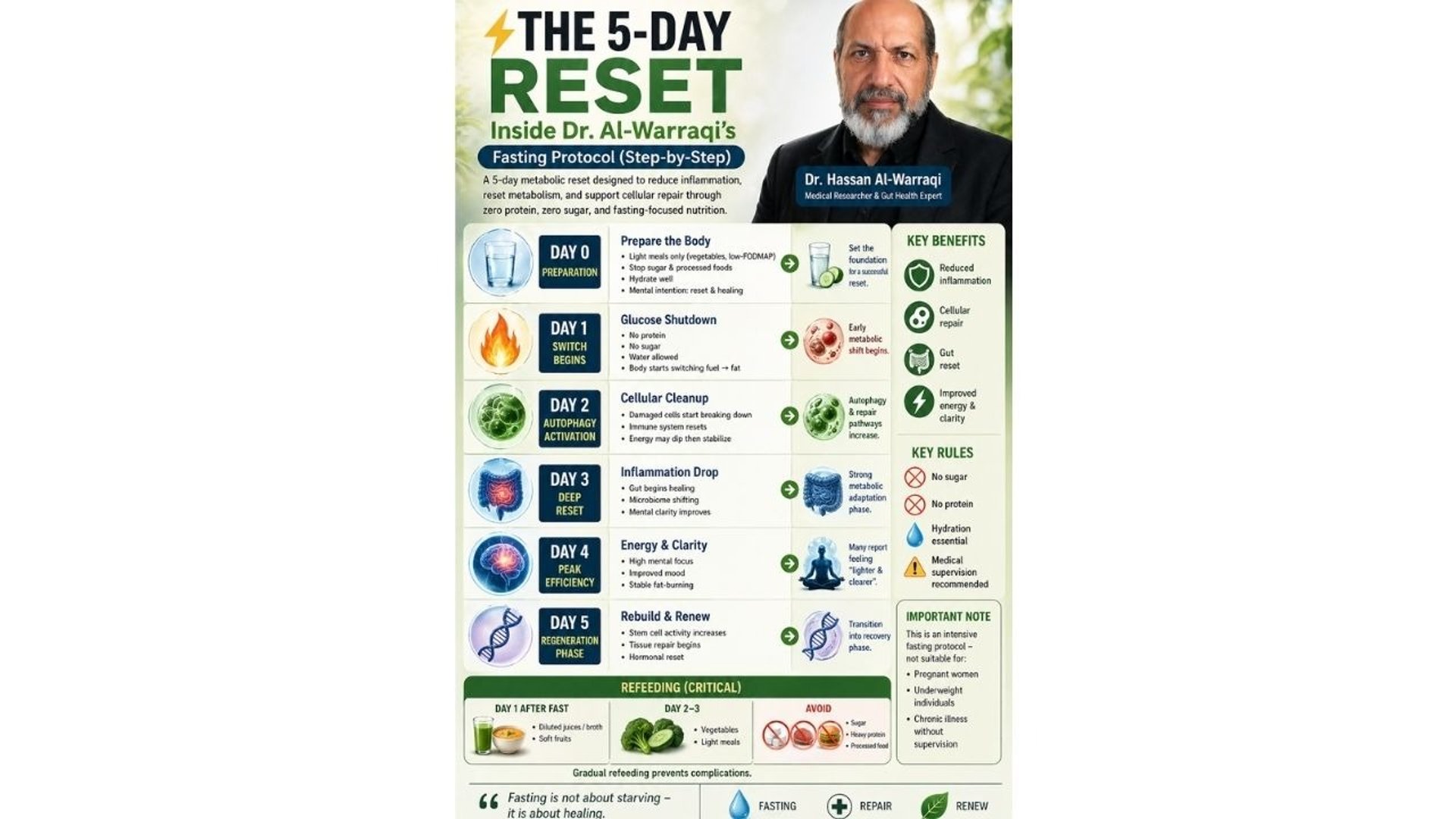
⚡ The 5-Day Reset : Dr. Al-Warraqi’s Fasting Protocol
Discover a structured fasting approach designed to support metabolic switching, cellular repair, and inflammation balance with safe refeeding strategies.
POLICY
Dr Hassan Al Warraqi
4/25/202611 min read
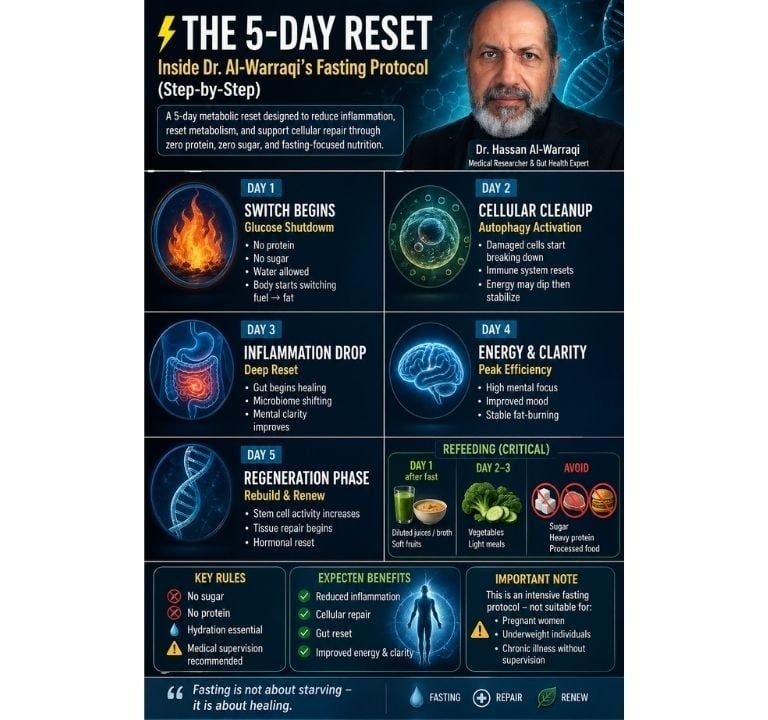
⚡ The 5-Day Reset : Dr. Al-Warraqi’s Fasting Protocol
Discover a structured fasting approach designed to support metabolic switching, cellular repair, and inflammation balance with safe refeeding strategies.
This document outlines the fasting protocol developed by Dr. Hassan Al Warraqi, which emphasizes a five-day fasting regimen.
The protocol includes complete cessation of protein and sugar intake, with specific guidelines on water consumption during fasting hours.
This fasting method aims to promote health and well-being through structured dietary practices.
Overview of the Fasting Protocol
The fasting protocol is designed to last for five consecutive days, during which participants will abstain from all forms of protein and sugar.
The fasting period extends from Fajr (dawn) to Maghrib (sunset).
If participants find it challenging to adhere to the fasting requirements, water is permitted during the fasting hours.
Key Components of the Fasting Protocol
Duration :
The fasting period lasts for five days.
Fasting hours are from Fajr to Maghrib.
to evaluate after this period .
Dietary Restrictions :
Complete cessation of protein and sugar intake.
No solid foods or caloric beverages are allowed during fasting hours.
water will allowed for those who cannot fast .
Water Intake :
Water is permitted during fasting hours if participants are unable to fast completely.
It is recommended to stay hydrated, especially in warmer climates or during physically demanding activities.
Oral rehydration solution used as rehydration .
Breaking the Fast:
At Maghrib, participants can break their fast with a light meal.
It is advisable to start with dates and water, followed by a balanced meal that includes proteins, carbohydrates, and healthy fats.
Benefits of the Fasting Protocol
The fasting protocol is designed to provide several health benefits, including :
Detoxification: The absence of protein and sugar allows the body to detoxify and eliminate waste products.
Weight Management: By restricting caloric intake, participants may experience weight loss and improved body composition.
Mental Clarity: Many individuals report enhanced focus and mental clarity during fasting periods.
Spiritual Growth: Fasting is often associated with spiritual reflection and growth, providing an opportunity for participants to engage in self-discipline and mindfulness.
healing of disease expected .
Guidelines for Successful Fasting
To maximize the benefits of the fasting protocol, participants are encouraged to follow these guidelines :
Preparation:
Gradually reduce food intake in the days leading up to the fasting period.
Ensure adequate hydration before the fasting begins.
During the Fast:
Stay busy with activities that do not require excessive physical exertion.
Engage in light exercise, such as walking or stretching, if energy levels permit.
Post-Fast Nutrition:
Focus on nutrient-dense foods when breaking the fast.
Avoid heavy, greasy meals that may cause digestive discomfort.
Listen to Your Body:
If you experience dizziness, extreme fatigue, or other concerning symptoms, consider breaking the fast and consulting a healthcare professional.
Conclusion
Dr. Hassan Al Warraqi's five-day fasting protocol offers a structured approach to fasting that emphasizes health and well-being.
By adhering to the guidelines of complete cessation of protein and sugar intake, participants can experience various physical and mental benefits.
The inclusion of water during fasting hours provides flexibility for those who may struggle with complete fasting.
As with any dietary regimen, it is essential to listen to your body and consult with a healthcare professional if needed.
if you cannot fast ,drink only water ,eat at the time of breakfast .
don't stop your regular medicine .
Omit the dose in fasting period .
For more information and resources related to this fasting protocol, please visit [h-k-e-m.com](http://h-k-e-m.com).
🩺 Disease-Specific Benefits
✅ For Inflammatory Bowel Disease (IBD)
Mucosal Healing: Low-FODMAP approach prevents mechanical irritation while the 5-day fast "starves" pathobionts, allowing the gut lining to rebuild
Reduced Fermentation: Excluding high-FODMAP foods (garlic, onions) prevents gas and bloating
Microbiome Support: Small doses of fermented brine gently re-inoculate beneficial bacteria without triggering symptoms
✅ For Rheumatoid Arthritis (RA)
Inflammatory Pathway Suppression: BHB suppresses the NLRP3 inflammasome; Oleocanthal in EVOO inhibits COX-1/COX-2 enzymes
Joint Lubrication: High-polyphenol lipid intake (EVOO, avocado) acts as pharmacological "grease" for inflamed joints
Edema Reduction: Daylight fasting helps reduce joint swelling through fluid regulation
✅ For Metabolic Health
Diabetes Risk Reduction: Fasting once a month may cut diabetes risk by ~40%; those with diabetes <5 years may see remission
Weight Management: Targets stored fat while preserving 20-25% more muscle mass than calorie restriction alone
Blood Pressure: Noticeable reductions through weight loss and improved vascular function
✅ For Brain Health
Neuroprotection: Fasting increases BDNF (brain-derived neurotrophic factor), supporting neuronal survival and plasticity
Alzheimer's/Parkinson's Support: May slow disease progression by reducing amyloid plaques and neuroinflammation
Brain Fog Clearance: Autophagy activation clears damaged cellular components, improving cognitive clarity
✅ For Cancer Support (Adjunct Therapy)
Tumor Growth Modulation: 5-day fasting may slow tumor proliferation and enhance chemotherapy tolerance
Healthy Cell Protection: Fasting may protect normal cells from chemo-induced damage while sensitizing cancer cells
Reduced Treatment Side Effects: Patients report fewer nausea, fatigue, and immune suppression symptoms
✅ For Skin & Allergies
Inflammatory Skin Conditions: Reduced systemic inflammation may improve eczema, psoriasis, and acne
Allergy/Asthma Support: Immune modulation through autophagy may reduce hypersensitivity responses
🧬 Systemic "Frontier" Outcomes
Dr. Al Warraqi describes three levels of impact
:
Systemic Level: High BHB maintains HDAC inhibition, "resetting" gene expression for longevity and antioxidant defense
Gut Level: Low-FODMAP + fasting prevents irritation while allowing mucosal regeneration
Joint Level: Polyphenol-rich lipids (Oleocanthal) mute pain pathways and reduce swelling
⏱️ Additional Protocol Advantages
Muscle Preservation: Elevated HGH and BHB spare lean mass during the short 5-day window
Hydration Flexibility: Water permitted during fasting hours if needed, with electrolyte support
Circadian Synergy: Aligning food intake with daylight hours enhances autophagy peaks during sleep
Structured Re-Entry: 3-day "Maintenance Bridge" prevents inflammatory rebound post-fast
⚠️ Important Considerations
📋 Medical Supervision Strongly Recommended
Consult your healthcare provider before starting, especially if you have diabetes, kidney disease, are pregnant/breastfeeding, or take medications
Not suitable for: children, severely malnourished individuals, active eating disorders, or acute illness requiring oxygen support
Monitor symptoms: morning stiffness (RA) or stool changes (IBD); revert to Day 6 protocol if symptoms return
❓ Frequently Asked Questions: Dr. Hassan Al Warraqi's Fasting Protocol
🎯 Protocol Basics
Q: What exactly is the 5-Day Anti-Inflammatory Autoimmune Reset Protocol?
A: It's a precision nutritional intervention that strategically deactivates growth pathways (mTOR and insulin) by eliminating protein and sugar for 5 days while fasting from Fajr to Maghrib.
This promotes autophagy (cellular recycling) and elevates beta-hydroxybutyrate (BHB) to reprogram gene expression for longevity and repair
.
Q: Can I drink water during the fasting hours?
A: Yes.
Water is permitted during the Fajr-to-Maghrib window, especially if you cannot tolerate complete abstinence.
Add electrolytes (Himalayan salt, lime, magnesium) to maintain cellular balance
add ors oral hydration solution .
.
Q: Why fast from Fajr to Maghrib specifically?
A: This timing phase-locks your metabolic state with your circadian rhythm.
Stopping food at Maghrib aligns your deepest metabolic repair with the 2:00 AM autophagy peak.
Eating late at night dampens this peak and interferes with epigenetic "cementing" during deep sleep
.
Q: Will I lose muscle mass without protein for 5 days?
A: No.
In healthy individuals, the spike in Human Growth Hormone (HGH) and the muscle-sparing effects of BHB are evolutionary mechanisms that protect lean tissue during brief nutrient scarcity.
Your body recycles damaged proteins, not healthy muscle
.
🩺 Disease-Specific Questions
Q: Is this protocol safe during an active IBD flare?
A: Yes,
provided you follow the "Low-Residue" and "Low-FODMAP" adjustments.
By removing mechanical irritants (fiber/seeds) and chemical triggers (sugar), you allow the mucosal layer to rebuild.
The focus is on mucosal healing, not just caloric restriction
.
Q: How does the protocol specifically help Rheumatoid Arthritis?
A: It acts as a "Biological Fire Extinguisher" through three mechanisms:
BHB suppresses the NLRP3 inflammasome
Daylight fasting reduces joint edema (swelling)
Oleocanthal from Extra Virgin Olive Oil acts as a natural analgesic by muting pain pathways
Q: Can fasting help with diabetes?
A: Yes.
Research shows:
Monthly one-day fasting can reduce diabetes risk by ~40%
Two-week therapeutic fasting may reverse Type 2 diabetes diagnosed within 5 years
Significantly improves insulin sensitivity and may reduce medication needs
Q: Does fasting help brain conditions like Alzheimer's or Parkinson's?
A: Studies indicate:
Two-day fasting increases nerve-activating cells
The U.S. National Institute on Aging confirms fasting slows Alzheimer's onset
Muhammad Ali documented 60%+ improvement in Parkinson's symptoms after a 3-week fast
⚠️ Safety & Contraindications
Q: Who should NOT try this protocol?
A: Absolute contraindications include:
Pregnant or breastfeeding women
Children and adolescents
Severely malnourished individuals
Active eating disorders
Uncontrolled Type 1 diabetes
Advanced kidney or liver disease
Active infections or acute illness requiring oxygen support
Q: Do I need medical supervision?
A: Yes,
strongly recommended, especially if you:
Have any chronic disease (diabetes, hypertension, kidney issues)
Take regular medications (doses may need adjustment)
Plan to fast longer than 3 days
Are over 65 or under 18
Medical supervision includes pre-fasting evaluation, monitoring during the fast, and supervised refeeding
.
Q: What are common side effects?
A: Mild, temporary effects (especially days 2-3) may include:
Hunger (peaks day 2-3, then decreases)
Headaches (often from caffeine withdrawal or dehydration)
Fatigue, dizziness, or irritability
Bad breath (from ketone production—normal)
These typically resolve with adequate hydration, electrolytes, and rest
.
Q: How do I safely break the fast?
A: Follow the 3-Day Maintenance Bridge
Day 6: Collagen peptides or bone broth (low-leucine protein) + continue EVOO/avocado
Day 7: Introduce resistant starch (cooled sweet potato) + small plant proteins
Day 8: Reintroduce quality animal proteins (fish, eggs) + low-glycemic berries
Avoid refined sugars and processed oils permanently to maintain gains.
🧬 Science & Mechanisms
Q: How does eliminating protein and sugar create benefits?
A: Two key pathways
:
mTOR Deactivation: Absence of protein (especially leucine) prevents mTORC1 activation, initiating autophagy—the body's cellular recycling process
Insulin Suppression: Zero sugar maintains low insulin, shifting metabolism to fat oxidation and enabling ketone production
Q: What is BHB and why does it matter?
A: Beta-hydroxybutyrate (BHB) is a ketone body produced during fasting that acts as a Class I Histone Deacetylase (HDAC) inhibitor.
This "unlocks" genes associated with longevity, antioxidant defense (e.g., SOD2), and DNA repair—effectively reprogramming cellular expression
.
Q: How does this relate to the gut microbiome?
A: Voluntary fasting reshapes the microbiome by:
Increasing beneficial bacteria like Akkermansia and Bifidobacterium
Reducing harmful, inflammation-linked microbes
Enhancing microbial diversity for resilience
Fasting may also prepare the gut for better outcomes with interventions like Fecal Microbiota Transplantation (FMT)
.
🔄 Long-Term Practice
Q: Can I fast regularly for ongoing benefits?
A: Yes. Dr. Al Warraqi personally practices a sustainable pattern:
Summer: 3 consecutive days of fasting per week
Winter: 4 consecutive days per week
Maintained continuously for 5+ years under medical supervision
Common sustainable approaches:
Daily fasting (16:8 window)
Weekly 24–36 hour fasts
Monthly 3–5 day therapeutic fasts
Quarterly 7–14 day intensive resets
plus or minus taking regular medications
Q: Will I regain weight after fasting?
A: Weight maintenance depends on post-fast lifestyle.
Fasting preserves 20–25% more muscle than calorie restriction alone, supporting long-term metabolism.
To prevent regain:
Transition to whole-food, anti-inflammatory eating
Continue some form of intermittent fasting
Address emotional/behavioral eating patterns
Maintain physical activity and sleep hygiene
Q: What diet should I follow after the protocol?
A: Emphasize:
Mediterranean-style or plant-forward whole foods
Abundant vegetables, healthy fats (EVOO, avocado), lean proteins
Fermented foods for microbiome support
Minimal processed foods, refined sugars, and industrial
seed oils
Combine with time-restricted eating (e.g., 14:10 or 16:8) for sustained benefits
.
📞 Getting Started
Q: How do I prepare for the protocol?
A: 1–2 weeks before:
Consult your healthcare provider
Gradually reduce caffeine, processed foods, and portion sizes
Increase water intake and establish consistent sleep
Clear your schedule of demanding obligations
Prepare electrolytes, quality water, and a symptom journal
❓ Can Dr. Hassan Al Warraqi's Fasting Protocol Be Applied to Any Disease?
Short Answer: yes —
while therapeutic fasting has broad potential applications across many conditions,
it is universally safe or appropriate for every disease, especially serious conditions like renal failure or active cancer.
as long as
if you cannot fast ,drink only water ,eat at the time of breakfast .
don't stop your regular medicine .
Omit the dose of medicine in fasting period .
Its use must be individualized, medically supervised, and evidence-informed.
Can Be Used Alone?
Must Be Combined With Medicine?
Simple Viral Illnesses (influenza, common cold)
May support immune function via autophagy; "feed a cold, starve a fever" concept
====================================================================================================================================================================================================================
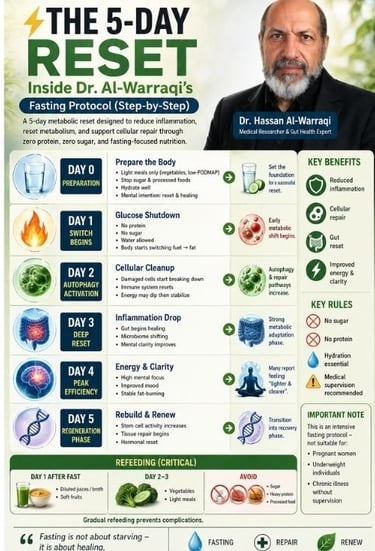
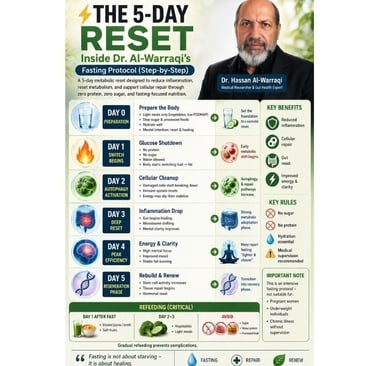
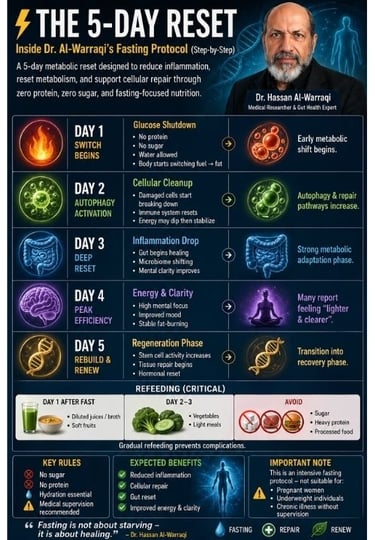
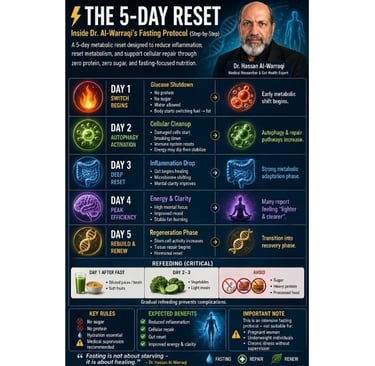
⚡ The 5-Day Reset : Inside Dr. Al-Warraqi’s Fasting Protocol (Step-by-Step)
⚡ The 5-Day Reset : Inside Dr. Al-Warraqi’s Fasting Protocol (Step-by-Step)
✅ Possibly, if mild & hydrated
❌ Not required, but monitor closely
Metabolic Conditions (Type 2 diabetes, obesity, hypertension)
Improves insulin sensitivity, reduces inflammation, aids weight loss
Moderate-High (clinical trials)
⚠️ Only under supervision
✅ Often needed initially; meds may be reduced
Autoimmune Diseases (RA, IBD, lupus)
Reduces inflammatory cytokines; promotes mucosal/joint healing
Moderate (mechanistic + case reports)
❌ Not recommended alone
✅ Essential for disease control
Neurodegenerative (Alzheimer's, Parkinson's)
May slow progression via BDNF, autophagy, reduced neuroinflammation
Low-Moderate (preclinical + observational)
❌ Not curative
✅ Standard care remains primary
Cancer (adjunct therapy)
May enhance chemo tolerance, reduce side effects, sensitize tumor cells via metabolic stress
Emerging (Phase I/II trials)
❌ Never as standalone treatment
✅ Must be combined with oncology care
Chronic Kidney Disease (CKD)
⚠️ High Risk: Dehydration, electrolyte imbalance, worsened function
Low (cautionary evidence)
❌ Contraindicated in Stage 3+
✅ Nephrology supervision mandatory
Acute Infections / Sepsis
⚠️ Controversial: May impair immune response if malnourished
Very Low / Theoretical
❌ Not recommended during acute phase
✅ Antibiotics/supportive care essential
⚠️ Critical Contraindications: When Fasting Is NOT Safe
Per HKEM guidelines, the following are absolute contraindications — fasting should be avoided entirely
:
Condition
Why It's Dangerous
Advanced CKD (Stage 3b–5) / Renal Failure
Kidneys cannot concentrate urine or regulate electrolytes; fasting → dehydration → acute kidney injury
Active Cancer with Cachexia
Fasting may accelerate muscle wasting; malnutrition worsens prognosis
Uncontrolled Type 1 Diabetes
Risk of severe hypoglycemia, ketoacidosis
Pregnancy / Breastfeeding
Nutrient demands for fetal/infant development cannot be met
Active Eating Disorders
Fasting may trigger relapse or worsen psychological distress
Severe Liver Disease
Impaired gluconeogenesis and detoxification capacity
Acute Infection with Fever / Sepsis
Body requires increased calories/protein to fight infection
🔴 Renal Failure Specific Warning:
"CKD patients of stage 3 and above are advised not to fast because the kidneys at this stage are unable to retain body fluids, which can lead to severe dysfunction and significant damage."
🎯 Key Principles for Safe Application
Fasting Is an Adjunct, Not a Replacement
For serious diseases (cancer, advanced CKD, autoimmune flares), fasting should never replace standard medical therapy
.
Its role is supportive: reducing treatment side effects, enhancing metabolic resilience, or promoting remission in early-stage conditions.
Medical Supervision Is Non-Negotiable
All therapeutic fasting protocols require:
Pre-fasting evaluation (labs, medication review)
Monitoring during the fast (electrolytes, symptoms)
Supervised refeeding protocol
Coordination with your treating specialist (oncologist, nephrologist, rheumatologist, etc.)
Hydration Strategy Is Critical
For mild illnesses (influenza): Water is permitted during fasting hours if needed
For kidney conditions: Fluid restriction may be medically required — fasting without water can be dangerous
Electrolyte support (Himalayan salt, magnesium) is essential for any fast >24 hours
🌡️ Specific Guidance: Influenza vs. Renal Failure vs. Cancer
🤧 Influenza / Mild Viral Illness
✅ May benefit from short-term fasting (24–48 hrs) to support autophagy and immune reset
💧 Water is strongly encouraged to prevent dehydration from fever
🚫 Stop fasting if weakness, dizziness, or inability to hydrate occurs
🩺 Resume normal nutrition once acute symptoms improve
🫁 Renal Failure (CKD Stage 3+)
❌ Do NOT fast without explicit nephrology approval
💧 Even water fasting risks fluid/electrolyte catastrophe
🔄 If medically cleared for very short fasts: strict monitoring of creatinine, potassium, urine output
🥗 Focus shifts to kidney-protective nutrition (low sodium, controlled protein) rather than fasting
🎗️ Cancer (Any Stage)
✅ Fasting may be used only as an adjunct to chemotherapy/immunotherapy under oncology supervision
📉 Strongest evidence: Fasting-mimicking diets (FMD) to reduce chemo toxicity in breast/colorectal cancer
🚫 Never use fasting to delay or replace surgery, chemo, radiation, or immunotherapy
⚖️ Contraindicated in cachexia, weight loss >5%, or poor performance status
🔚 Bottom Line
🌟 Fasting is a powerful metabolic tool — but like any tool, it must be used with precision, knowledge, and respect for individual physiology.
✅ Can help: Early metabolic disease, autoimmune modulation, cancer adjunct therapy, mild viral support
❌ Cannot replace: Standard medical care for serious or advanced disease
⚠️ High risk: Renal failure, cachexia, uncontrolled diabetes, acute infection
🩺 Always: Consult your healthcare team before starting any therapeutic fasting protocol
Dr Hassan Al Warraqi fasting protocol, 5 day fasting reset, therapeutic fasting plan, metabolic reset fasting, autophagy fasting method, cellular repair fasting, intermittent fasting advanced, prolonged fasting benefits, fasting for inflammation, fasting and gut health, safe fasting protocol, refeeding after fasting, fat metabolism fasting, fasting science 2026
#FastingProtocol #5DayReset #TherapeuticFasting #MetabolicReset #Autophagy #CellularRepair #IntermittentFasting #FastingScience #GutHealth #Inflammation #Longevity #Biohacking #HealthOptimization #Wellness2026 #NutritionScience #MindBodyReset #FatBurning #HolisticHealth
ℹ️ Disclaimer: This protocol is intended for therapeutic use under medical guidance. Always consult a qualified healthcare provider before starting any fasting regimen, especially if managing chronic disease or taking medications.
============================================================================================================
🍯🎯 Helicobacter pylori: Therapeutic Honeys (in short)
Best type: Manuka honey (high MGO) + raw unprocessed honey
Main action: Natural antibacterial → may help reduce Helicobacter pylori load
Extra benefit: Coats & soothes the stomach lining
How to use: 1 teaspoon on empty stomach (morning or during fasting window)
Synergy: Works better with fasting + gut-friendly diet
Important: Supportive only—not a full replacement for medical treatment
Bottom line: 🍯 Honey = gentle, natural support for gut healing + H. pylori control.
==================================================================================================
==============================================================================================================================================================================================================
Get in touch
Address
Cairo Al Rehab
Contacts
+20 109 405 2056
hassanalwarraqi@h-k-e-m.com