Health is a crown on the heads of the healthy that only the sick can see.

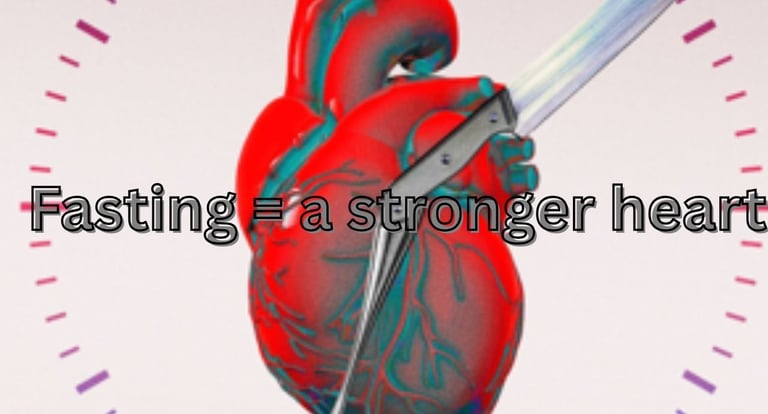
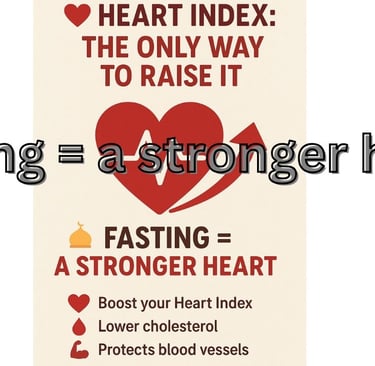
Heart Index ,Only Way to Raise,Fasting=a stronger heart
Discover how fasting 🕌 can boost your Heart Index ❤️, lower cholesterol, and strengthen cardiovascular health naturally — a simple yet powerful way to protect your heart.
CARDIOVASCULAR
Dr Hassan Al Warraqi
8/22/202411 min read
Heart Index ,Only Way to Raise,Fasting=a stronger heart
Discover how fasting 🕌 can boost your Heart Index ❤️, lower cholesterol, and strengthen cardiovascular health naturally — a simple yet powerful way to protect your heart.
Learn about the significance of heart index, ways to increase it, and the impact of Islamic fasting. Discover symptoms like shortness of breath, fatigue, and swelling in the legs, along with treatment options including blood pressure medications and surgery.
It is used to describe the size of the heart relative to the size of the body
It is calculated through chest X-ray measurements
Especially those taken during chest radiography
Its Importance
Heart Size: Whether the heart is larger or smaller than normal
Heart Failure: Where the heart has to work harder to pump blood
Heart Valves: Which affect blood flow within the heart
Heart Muscle: Such as cardiomyopathy
Treatment: It can be used to monitor the heart's response to treatment
A healthy heart index reduces the risk of heart disease and stroke, which are two of the leading causes of death in the world.
A healthy heart contributes to a feeling of vitality and activity, and reduces feelings of fatigue and exhaustion.
People with a good heart index live longer and healthier lives
The heart index is calculated by dividing the maximum width of the heart by the internal width of the chest at the level of the left atrium
The normal value of the heart index varies slightly depending on age and gender, but in general, it should be less than 0.5
Influencing the heart index
Gender: Men tend to have a slightly higher heart index than women
Age: The heart index may increase slightly with age
Physical condition: Sports people may have a slightly higher heart index
Pregnancy: The heart index naturally increases during pregnancy
The heart index is an indirect measure of the size of the heart, and may not always be accurate
The heart index value can be affected by factors other than the size of the heart, such as the quality of the radiograph and the position of the patient
The heart index results should not be interpreted alone. They should be evaluated along with other symptoms and other results of medical examinations.
Heart Index and Diseases
An important measure of the size of the heart relative to the size of the body
When this index is outside the normal range, it can indicate a health problem with the heart
High heart index affects the heart
High heart index usually means that the heart has become enlarged
High blood pressure: The heart has to work harder to pump blood, which leads to an enlargement of the heart muscle
Heart valves: When the heart valves do not work properly, the pressure on the heart increases, which leads to an enlargement
Heart muscle diseases: such as cardiomyopathy, where the heart muscle is damaged and loses its ability to contract effectively
Heart failure: A condition in which the heart's ability to pump blood to the body deteriorates adequately
Difficulty pumping blood: An enlarged heart may find it difficult to pump blood efficiently to all parts of the body, leading to symptoms
Shortness of breath: Especially with exertion
Fatigue and exhaustion: Even when doing simple tasks
Swelling in the legs and ankles: Due to fluid accumulation
Congestive heart failure: This is the most common disease associated with a high index Heart
Coronary artery disease: narrowing of the arteries that supply blood to the heart
In addition to measuring the heart index, the doctor may need to perform other tests to diagnose the condition
Electrocardiogram (ECG): to measure the electrical activity of the heart.
Blood tests: to measure the levels of heart enzymes and other indicators
Imaging tests: such as ultrasound of the heart, magnetic resonance imaging, or computed tomography
Cardiac catheterization: to measure the performance of the heart and arteries
Treatment
Medications: such as blood pressure-lowering medications, medications that help the heart pump blood better, and medications that prevent blood clotting
Lifestyle changes: such as eating a healthy diet, exercising regularly, and maintaining a healthy weight
Heart surgery
Pacemaker implantation or artificial heart implantation
How to raise the heart index
Regular exercise: such as brisk walking, running, swimming, and cycling.
Healthy diet: Eat foods rich in fiber, proteins, and vitamins.
Maintain a healthy weight: Avoid obesity and excess weight
Quit smoking and alcohol: They negatively affect heart health
Reduce stress: Practice relaxation techniques such as yoga and meditation
My heart indicators and fasting
There is no one answer that applies to everyone.
Fasting is the best solution to raise the heart index
Islamic fasting is preferred, but if there is an obstacle to Islamic fasting, a person may fast intermittently
It is safe and free, meaning that no money is spent on it, and in addition to that, it has a great reward
We should not listen to those who say that it has harms and that it has such and such
Because doctors took their knowledge from the West, and the West does not guide you to good
You know best what benefits you and what harms you, and you must fast and what preserves the medications prescribed to you
https://www.mayoclinic.org/ar/diseases-conditions/heart-failure/diagnosis-treatment/drc-20373148
msdmanuals
https://www.msdmanuals.com/ar/home/
clevelandclinicabudhabi
https://www.clevelandclinicabudhabi.ae/ar-ae/health-byte/heart-and-vascular-health/what-is-cardiac-screening-and-why-should-i-do-it
https://www.uchealth.com/en/media-room/articles/5-steps-to-strengthen-your-heart-and-avoid-heart-disease
https://www.sciencedirect.com/topics/nursing-and-health-professions/cardiac-index
Questions and Answers About Heart Health: Heart Index – Raise It, the Only Way FAQS
What is cardiac output, and how is it related to stroke volume and heart rate?
Cardiac output is the amount of blood pumped by each ventricle per minute. It is the product of stroke volume (the amount of blood ejected per heartbeat) and heart rate (the number of heartbeats per minute). An increase in stroke volume or heart rate raises cardiac output, and vice versa.
Example: During exercise, the heart beats faster to pump more blood in response to the body’s increased demand.
What are end-diastolic volume (EDV) and end-systolic volume (ESV), and how do they relate to stroke volume and ejection fraction?
End-diastolic volume (EDV): The volume of blood in the ventricle at the end of filling (diastole).
End-systolic volume (ESV): The volume of blood remaining in the ventricle after contraction (systole).
Stroke volume = EDV – ESV.
Ejection fraction is the percentage of blood ejected from the ventricle per heartbeat, calculated as:
Ejection Fraction (%)=Stroke VolumeEDV×100
Ejection Fraction (%)=
EDV
Stroke Volume
×100
Example: If EDV = 100 mL and ESV = 40 mL, stroke volume = 60 mL, and ejection fraction = 60%.
What are the three main factors that determine stroke volume?
Contractility: The force of the heart muscle’s contraction.
Preload: The degree of stretch in the heart muscle cells at the end of diastole.
Afterload: The resistance the ventricle must overcome to eject blood.
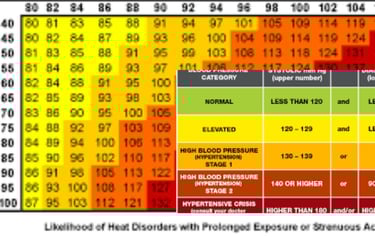
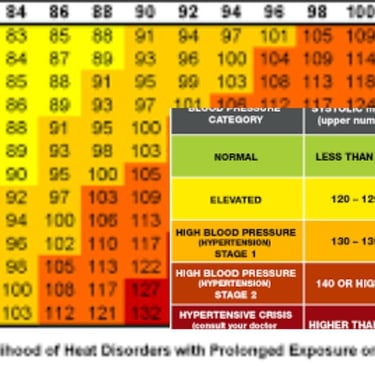
What is the heat index, and how do temperature and humidity affect perceived heat?
The heat index reflects how hot the body feels when humidity is combined with air temperature.
Sweating cools the body through evaporation.
High humidity reduces evaporation, impairing the body’s ability to cool itself.
Example: At 95°F (35°C) air temperature (close to body temperature), heat loss via radiation and convection becomes ineffective.
How does high atmospheric pressure contribute to heatwaves and affect the body’s cooling ability?
High-pressure systems act like a "dome," trapping heat near the ground.
Reduced evaporation under such conditions increases the risk of heat-related illnesses.
How does the human body dissipate heat, and why are these methods less effective in hot, humid weather?
Heat dissipation methods include:
Adjusting blood flow (vasodilation).
Sweating.
Panting.
Limitation: In hot, humid weather (e.g., 95°F/35°C), evaporation slows, reducing cooling efficiency.
What is the cardiac index, and how is it measured?
The cardiac index measures heart size relative to body size. It is calculated by dividing the maximum heart width by the inner chest width at the left atrial level.
Normal value: <0.5.
Use: Helps diagnose heart enlargement or failure.
How to improve the cardiac index, and what are the fasting recommendations?
Improve through:
Regular exercise.
Healthy diet.
Weight management.
Quitting smoking/alcohol.
Stress reduction.
Fasting: Voluntary fasting (e.g., Islamic fasting) may improve heart health, but consult a doctor first.
Comprehensive Role of Voluntary Fasting in Raising the "Heart Index"
What is the "Heart Index"?
A collection of biomarkers reflecting heart health, including:
Blood pressure.
Cholesterol levels (total, LDL, HDL, triglycerides).
Resting heart rate.
Blood sugar levels.
BMI and weight.
Vascular function.
Inflammatory markers (e.g., hs-CRP).
How Voluntary Fasting Improves the Heart Index
Blood Pressure: Balances the autonomic nervous system, lowering stress-related sympathetic activity.
Cholesterol: Reduces LDL and triglycerides by promoting fat burning.
Heart Rate: Lowers resting heart rate via reduced stress.
Blood Sugar: Improves insulin sensitivity.
Weight Loss: Reduces visceral fat and BMI.
Vascular Health: Enhances arterial flexibility and reduces oxidative stress.
Inflammation: Lowers inflammatory markers like hs-CRP.
Scientific Evidence: Studies show fasting (e.g., intermittent fasting) improves these markers.
Important Considerations
Medical Consultation: Essential for individuals with health conditions (diabetes, heart disease, etc.).
Moderation: Focus on balanced nutrition during non-fasting periods.
Types of Fasting: Options include intermittent fasting (16/8, 5:2), alternate-day fasting, or supervised extended fasting.
Conclusion
Voluntary fasting can raise the "heart index" by improving key cardiovascular biomarkers. However, it must be practiced safely, under medical guidance, and as part of a holistic healthy lifestyle.
"O you who believe! Seek help through patience and prayer. Indeed, Allah is with the patient." (Quran 2:153)
The heart index, its importance, how to raise it, and the only way, there is an obstacle to Islamic fasting, a person may fast, intermittent fasting, shortness of breath, especially when exerting effort, fatigue and exhaustion, even when doing simple tasks, swelling in the legs and ankles, due to fluid accumulation, treatment, blood pressure medications, blood clotting, surgery, the presence of a health problem in the heart, its importance, the size of the heart,
===========================================================================================================================================================================
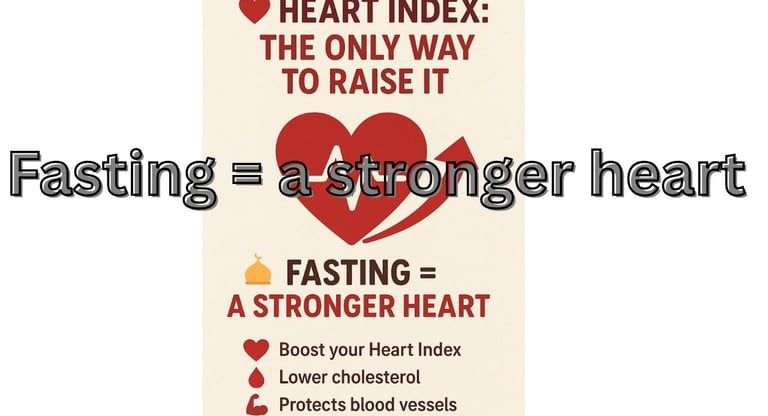
❤️Heart Index Only Way to Raise:Fasting=a stronger heart
❤️ Heart Index: Is Fasting the Only Way to Raise It? A Stronger Heart Through Metabolic Health 🌙
The term "Heart Index" can refer to several cardiovascular measurements, such as cardiac index, heart rate variability (HRV), or overall cardiovascular fitness. No single intervention—including fasting—can universally "raise" every heart-health metric. However, fasting has attracted scientific interest because of its potential effects on multiple cardiovascular risk factors.
🔬 How Fasting May Support Heart Health
Research suggests that appropriately practiced fasting may contribute to:
⚖️ Improved Metabolic Health
Fasting can help reduce excess body fat, particularly visceral fat, which is strongly associated with cardiovascular disease risk.
🩸 Better Blood Sugar Control
Periods of fasting may improve insulin sensitivity in some individuals, helping the body regulate glucose more efficiently.
❤️ Reduced Cardiovascular Risk Factors
Some studies have found improvements in:
Blood pressure
Triglyceride levels
LDL cholesterol (in certain individuals)
Markers of systemic inflammation
🧠 Enhanced Autonomic Balance
Fasting may influence the autonomic nervous system, and some research suggests it can improve measures related to heart rate variability, a marker associated with cardiovascular resilience.
🏃 Other Proven Ways to Strengthen the Heart
Fasting is not the only way to improve cardiovascular health. Strong scientific evidence supports:
Regular aerobic exercise
Resistance training
Maintaining a healthy weight
Adequate sleep
Smoking cessation
Managing stress
Following a heart-healthy dietary pattern, such as the Mediterranean diet
These interventions often work together and may have a greater overall impact than any single strategy alone.
⚠️ Important Considerations
Fasting is not suitable for everyone. People with certain medical conditions—especially those taking medications for diabetes, blood pressure, or heart disease—should consult a healthcare professional before beginning a fasting regimen.
Potential risks may include:
Low blood sugar
Dehydration
Electrolyte imbalances
Medication-related complications
🌟 Key Takeaway
Fasting can be a useful tool for improving several factors linked to heart health, including weight management, blood sugar regulation, and inflammation. However, it is not the only way to build a stronger heart. The greatest cardiovascular benefits typically come from combining healthy nutrition, physical activity, adequate sleep, stress management, and, when appropriate, medically supervised fasting.
A stronger heart is usually the result of consistent long-term habits, not a single intervention. ❤️💪🌿
❤️💪 Heart Index: Raise It – And the Only Way That Works
It’s not about blood pressure or pills.
Your real heart strength comes from deep metabolic fitness, not medication.
💧 Hydrate
⏳ Fast
🏃♂️ Move
🍯 Nourish
😌 Rest
🌿 Heal
Discover how fasting, honey, sunlight, and breathwork can reset your Heart Index and restore true cardiovascular resilience.
✍️ Dr. Hassan Al Warraqi | @hkem.health
🔗 www.h-k-e-m.com
#HeartIndex #NaturalHeartHealth #FastingForHealing #HoneyForHeart #HKEM #DrHassanAlWarraqi #CardiacResilience #LessMedicineMoreHealing
🐦 Twitter / X
The real heart metric isn't cholesterol—it's your Heart Index.
Fasting. Zone 2 walking. Honey. Potassium.
These rebuild heart strength from the inside out.
Raise your Heart Index the right way.
🔗 www.h-k-e-m.com
#FastingForHeart #HeartHealth #HKEM #NaturalHealing
💊 Modern medicine manages numbers.
But if you want to raise your Heart Index, you need a different approach:
Fasting for metabolic reset
Breathwork for heart rhythm
Honey and minerals for clean fuel
Movement for mitochondrial strength
Dr. Hassan Al Warraqi shares how ancient wisdom and modern science combine to regenerate the cardiovascular system—naturally.
🔗 www.h-k-e-m.com
#HeartHealth #CardiovascularWellness #FunctionalMedicine #IntegrativeHealing #DrHassanAlWarraqi #HKEM
Dr. Hassan Al Warraqi
د. حسن الوراقي – طبيب وباحث في الطب والصحة التكاملية عبر h-k-e-m.com، يسلط الضوء على دور الصيام كعلاج وقائي لتعزيز صحة القلب وخفض عوامل الخطر المرتبطة بأمراضه.https://h-k-e-m.com/-heart-index-only-way-to-raise-fasting-a-stronger-heart
🔗 www.h-k-e-m.com
📸 @hkem.health
===================================================================================================================================
🦴 Rheumatoid Arthritis (RA): A Multidisciplinary Approach 💪
What Is Rheumatoid Arthritis?
Rheumatoid Arthritis (RA) is a chronic autoimmune disease in which the immune system mistakenly attacks the lining of the joints, causing inflammation, pain, swelling, stiffness, and progressive joint damage. Unlike osteoarthritis, which primarily results from wear and tear, RA is driven by immune dysfunction and can affect multiple organs throughout the body.
RA most commonly affects:
Hands and wrists
Feet and ankles
Knees
Elbows
Shoulders
It often occurs symmetrically, meaning the same joints on both sides of the body are affected.
🔬 Understanding the Disease
In RA, the immune system targets the synovium (joint lining), leading to:
Chronic inflammation
Thickening of the synovial membrane
Cartilage destruction
Bone erosion
Joint deformity over time
Systemic inflammation may also affect:
❤️ Heart and blood vessels
🫁 Lungs
👁️ Eyes
🧠 Nervous system
🩸 Blood vessels
⚠️ Common Symptoms
Early Symptoms
Morning stiffness lasting more than 30 minutes
Fatigue and weakness
Joint pain and tenderness
Mild swelling
Low-grade fever
Advanced Symptoms
Persistent joint swelling
Reduced mobility
Joint deformities
Muscle loss
Chronic fatigue
👨⚕️ The Multidisciplinary Team
Successful RA management often requires collaboration among multiple healthcare professionals.
🩺 Rheumatologist
The primary specialist responsible for:
Diagnosis
Medication management
Monitoring disease activity
🏥 Primary Care Physician
Coordinates overall health management and preventive care.
🏃 Physical Therapist
Helps maintain:
Joint flexibility
Muscle strength
Mobility
Balance
✋ Occupational Therapist
Assists with:
Joint protection techniques
Adaptive devices
Daily activity modifications
🥗 Dietitian
Provides nutritional guidance to support:
Healthy weight
Cardiovascular health
Anti-inflammatory dietary patterns
🧠 Mental Health Professional
Addresses:
Anxiety
Depression
Chronic pain coping strategies
💊 Medical Treatment
Modern RA treatment focuses on controlling inflammation early to prevent permanent joint damage.
Disease-Modifying Antirheumatic Drugs (DMARDs)
Examples include:
Methotrexate
Sulfasalazine
Hydroxychloroquine
Biologic Therapies
Examples include:
Adalimumab
Etanercept
Rituximab
Other Medications
Nonsteroidal anti-inflammatory drugs (NSAIDs)
Corticosteroids for short-term control
🥗 Nutrition and Lifestyle
Although diet cannot cure RA, healthy habits can help reduce inflammation and improve overall health.
Helpful Dietary Patterns
Mediterranean-style diet
Fruits and vegetables
Whole grains
Fish rich in omega-3 fatty acids
Nuts and olive oil
Lifestyle Measures
✅ Regular physical activity
✅ Adequate sleep
✅ Stress management
✅ Smoking cessation
✅ Weight management
🌙 Fasting and Rheumatoid Arthritis
Some studies suggest that carefully supervised fasting may temporarily reduce inflammatory markers and improve symptoms in certain individuals with RA. Benefits may be related to:
Reduced inflammatory signaling
Improved insulin sensitivity
Changes in immune cell activity
However:
Fasting is not a replacement for medical treatment.
Responses vary among individuals.
Patients taking medications should consult their healthcare provider before major dietary changes.
🐝 Bee Venom Therapy and RA
Bee venom therapy has been investigated as a complementary approach due to its anti-inflammatory compounds such as melittin.
Research findings:
Some small studies report pain reduction and symptom improvement.
Evidence remains limited and inconsistent.
Serious allergic reactions, including anaphylaxis, can occur.
Therefore, bee venom therapy should not replace evidence-based RA treatment and should only be considered under qualified medical supervision.
🕌 A Holistic Perspective
Living with RA requires attention to physical, emotional, and spiritual well-being.
Many patients benefit from:
Strong family and social support
Regular physical activity
Balanced nutrition
Adherence to treatment
Patience and perseverance during disease flares
🌟 Key Takeaway
Rheumatoid Arthritis is a complex autoimmune disease that requires a multidisciplinary approach involving medical treatment, rehabilitation, nutrition, mental health support, and healthy lifestyle habits.
Early diagnosis and appropriate therapy can:
Reduce pain
Prevent joint damage
Preserve function
Improve quality of life
With modern treatments and comprehensive care, many people with RA are able to lead active, productive, and fulfilling lives. 💪🦴🌿










Get in touch
Address
Cairo Al Rehab
Contacts
+20 109 405 2056
hassanalwarraqi@h-k-e-m.com